

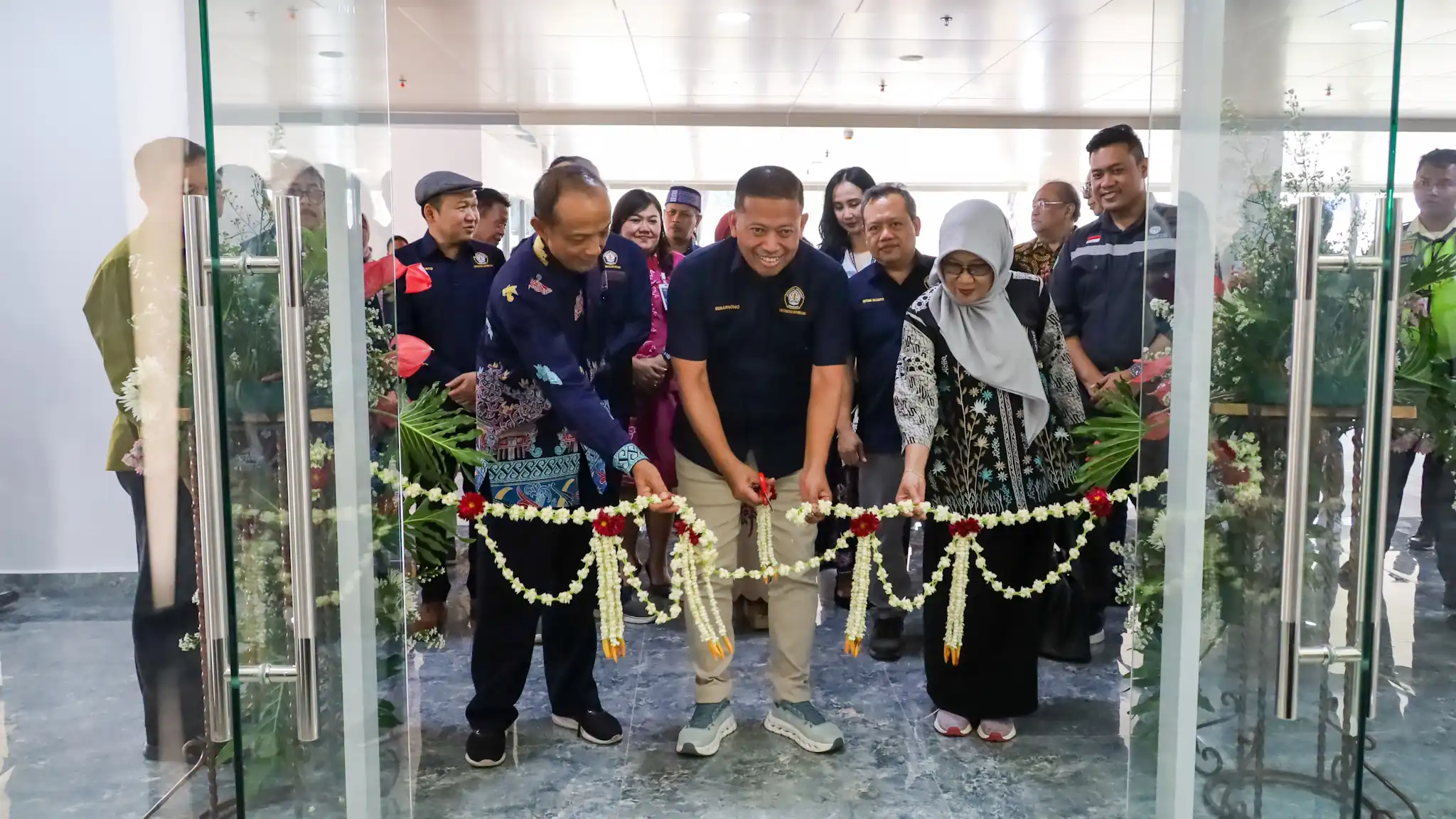
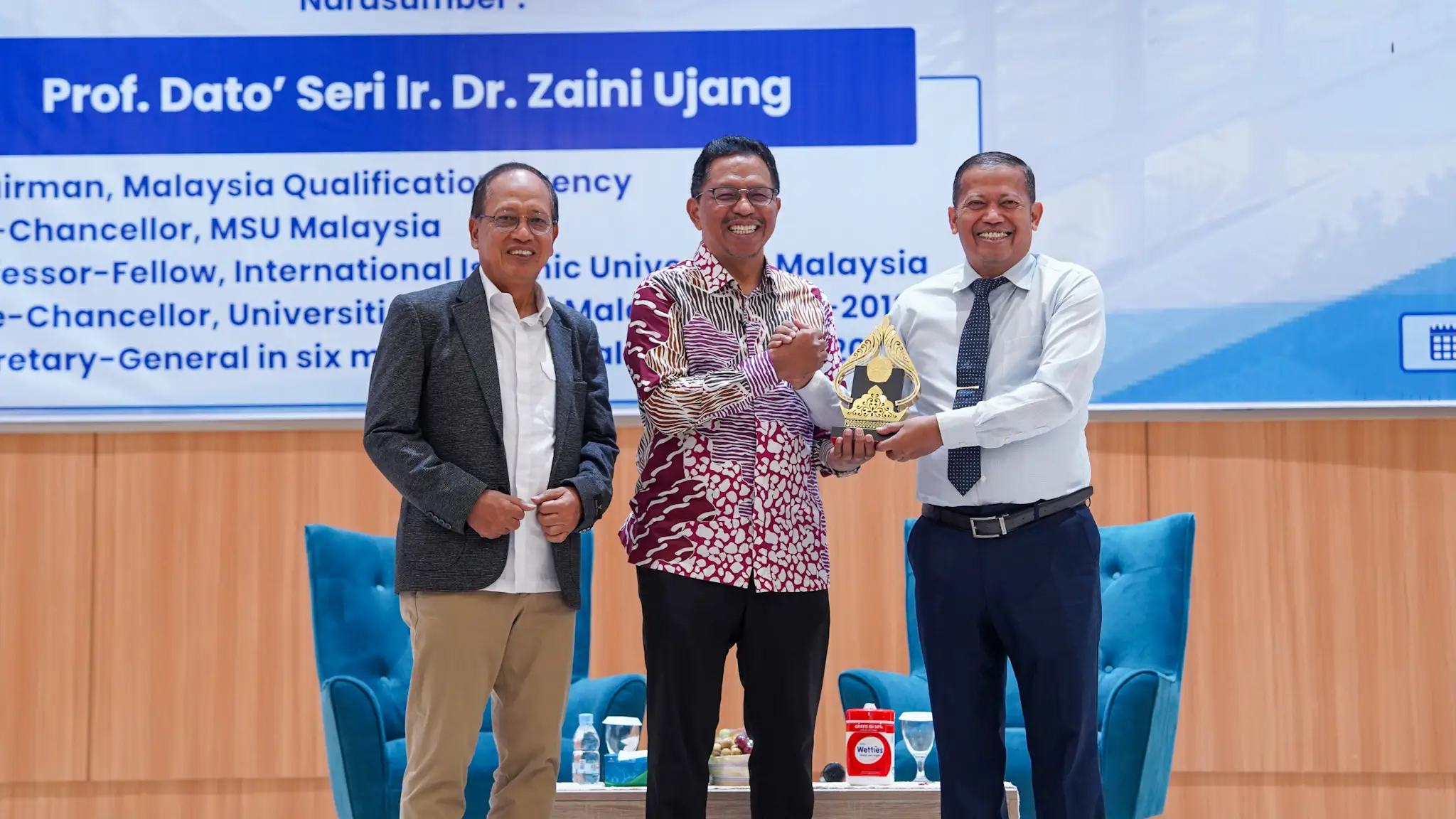


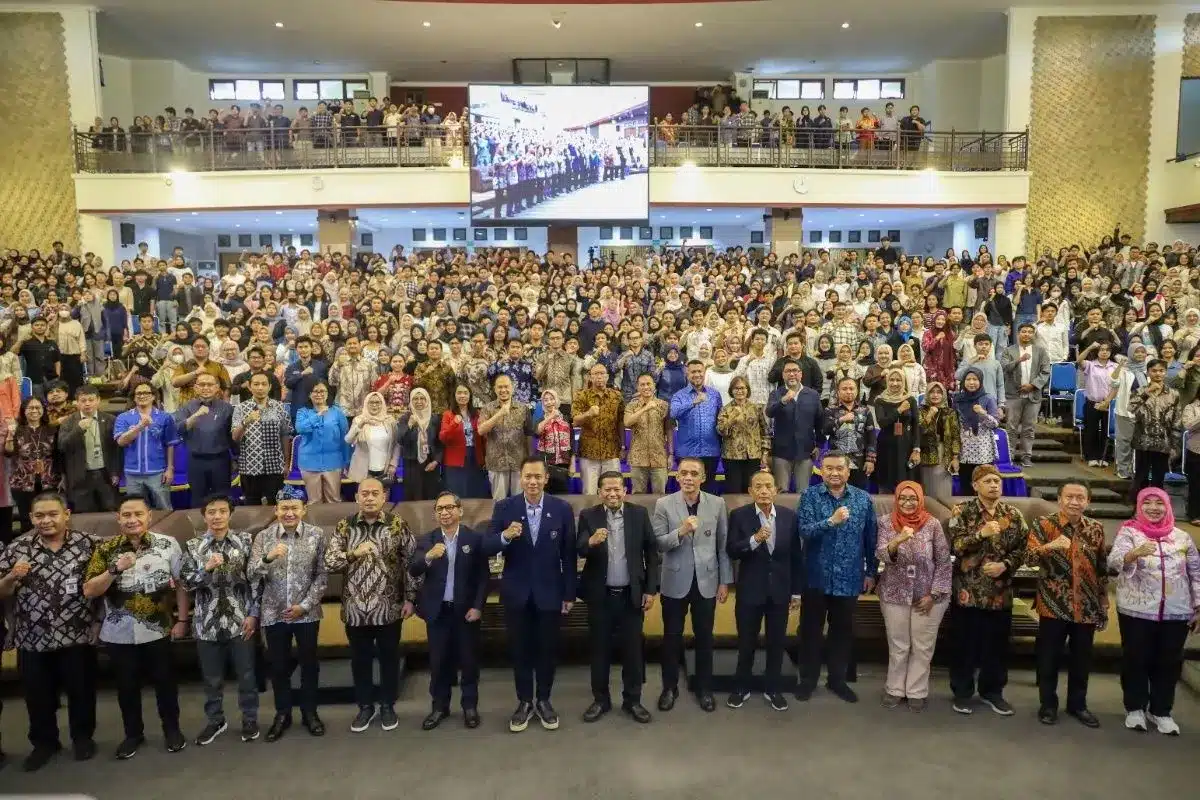
UNDIP, Semarang (November 27, 2025) – Universitas Diponegoro successfully held a Public Lecture featuring the Coordinating Minister for Infrastructure and Regional Development of the Republic of Indonesia, Dr. H. Agus Harimurti Yudhoyono, M.Sc., MPA, M.A., on Thursday, November 27, 2025, at the Prof. Sudarto Hall, UNDIP Tembalang Campus. Carrying the theme “Spatial Planning and Disaster-Adaptive Infrastructure Development”, this program is part of UNDIP’s support for the Diktisaintek Berdampak policy direction and the national commitment to inclusive and sustainable development.
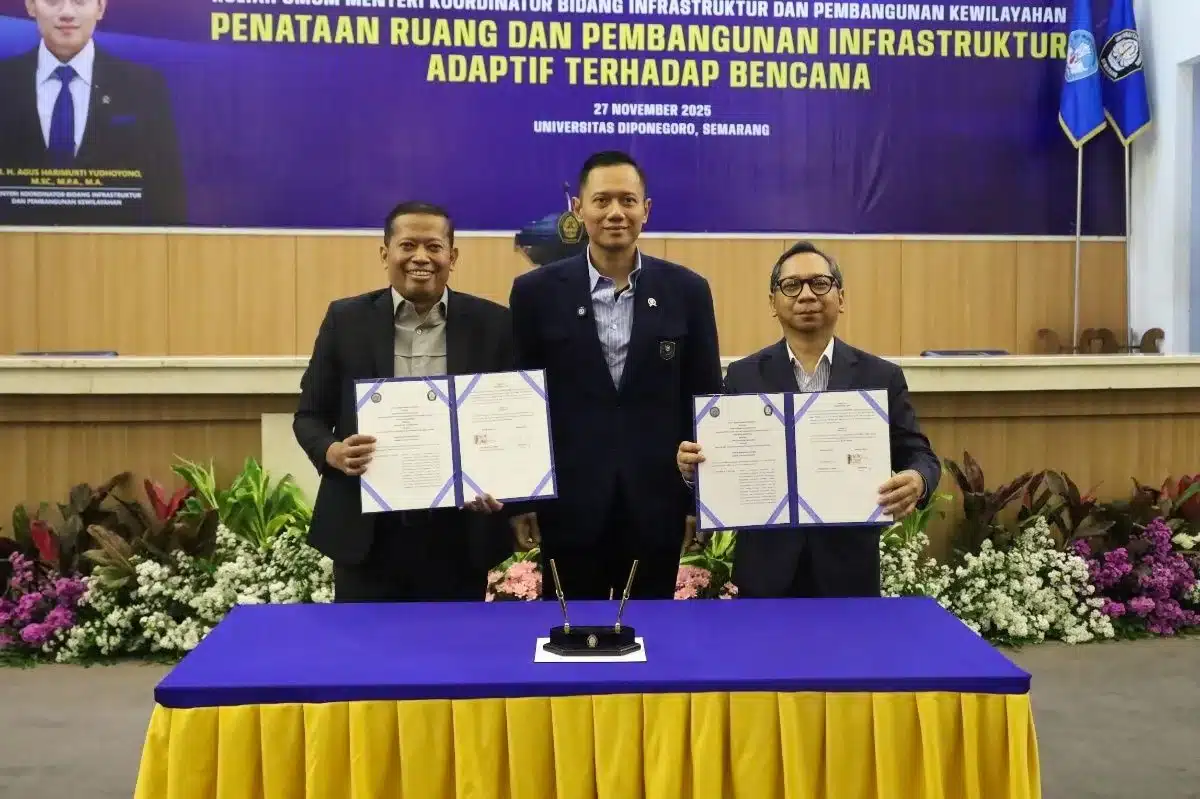
The event, held in collaboration with ISPASI (Indonesian Spatial Policy & Administration Society), was attended by ministry representatives, local governments, cross-faculty academics, more than 1,000 students from various disciplines, and a network of spatial planning practitioners—all reaffirming their shared commitment to building a more resilient and just Indonesia. The moment also marked the announcement of the International Conference on Spatial Planning and Infrastructure for Sustainable Development 2026, alongside the signing of a Memorandum of Understanding (MoU) between the Coordinating Ministry for Infrastructure & Regional Development and Universitas Diponegoro.
In his remarks, UNDIP Rector Prof. Dr. Suharnomo, S.E., M.Si. emphasized that the public lecture strengthens the university’s real contribution to the nation.
“Today, we gather for a critical agenda. UNDIP is strongly committed to being a noble and valuable university. The best of people are those who bring benefit to many, and the best of universities are those that generate knowledge and real work for society,” he said.
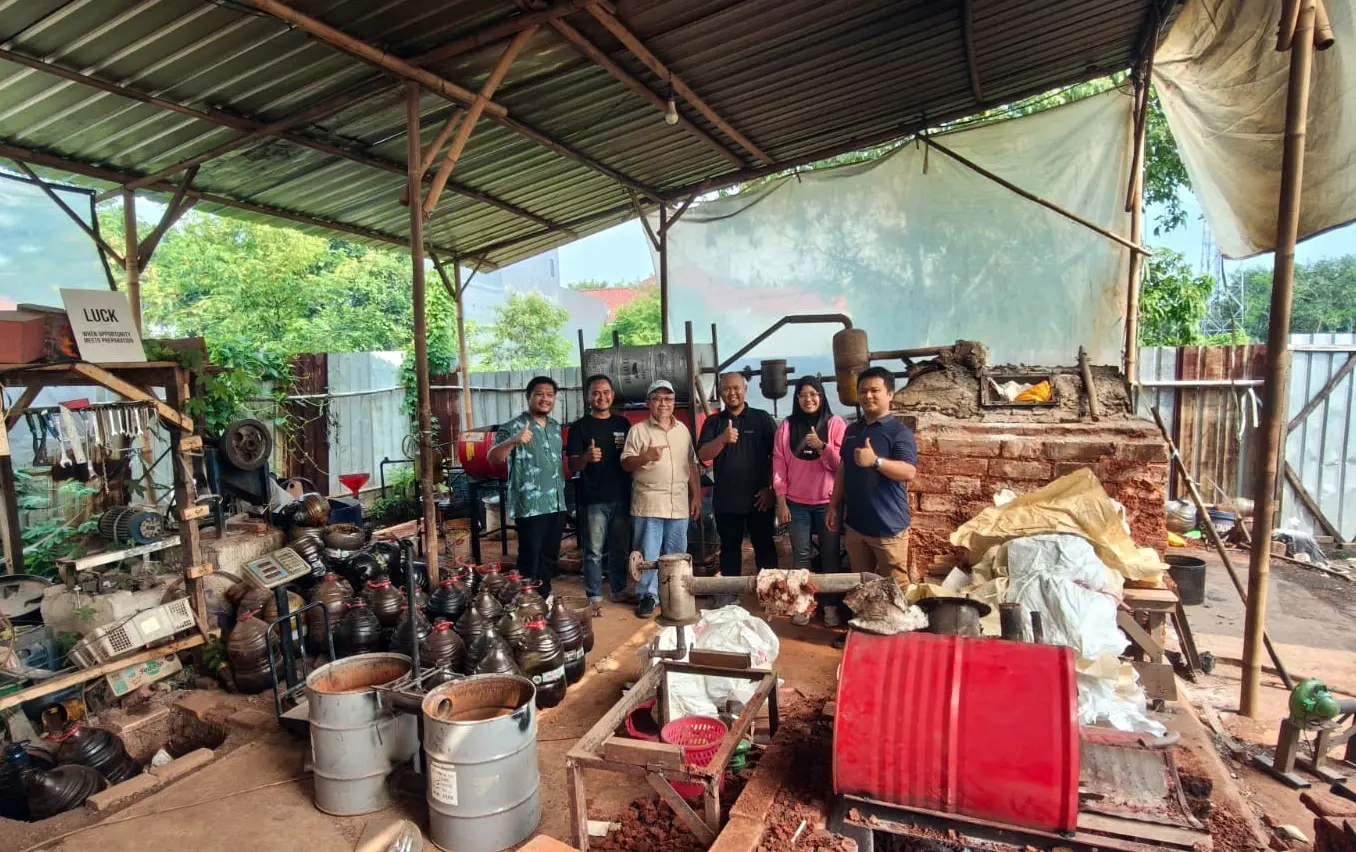
Prof. Suharnomo also highlighted UNDIP’s initiatives across the North Coastal area of Jawa Tengah Province (Pantura), particularly in desalination technology and solar-hybrid energy solutions for coastal areas affected by tidal flooding, abrasion, and clean water crises.
“UNDIP’s desalination machines are now operating in various locations from Brebes, Pemalang, and Pekalongan to Jepara and Demak Regencies. BNPB has even ordered five units to accelerate post-disaster distribution of safe drinking water. We aim to ensure that each village can access safe drinking water through UNDIP technology,” he explained.
He also expressed appreciation to Minister Agus Harimurti for previously reviewing UNDIP’s technology on-site, reaffirming UNDIP’s commitment to supporting coastal communities in Jawa Tengah and 3T regions through technological innovation and multidisciplinary research.
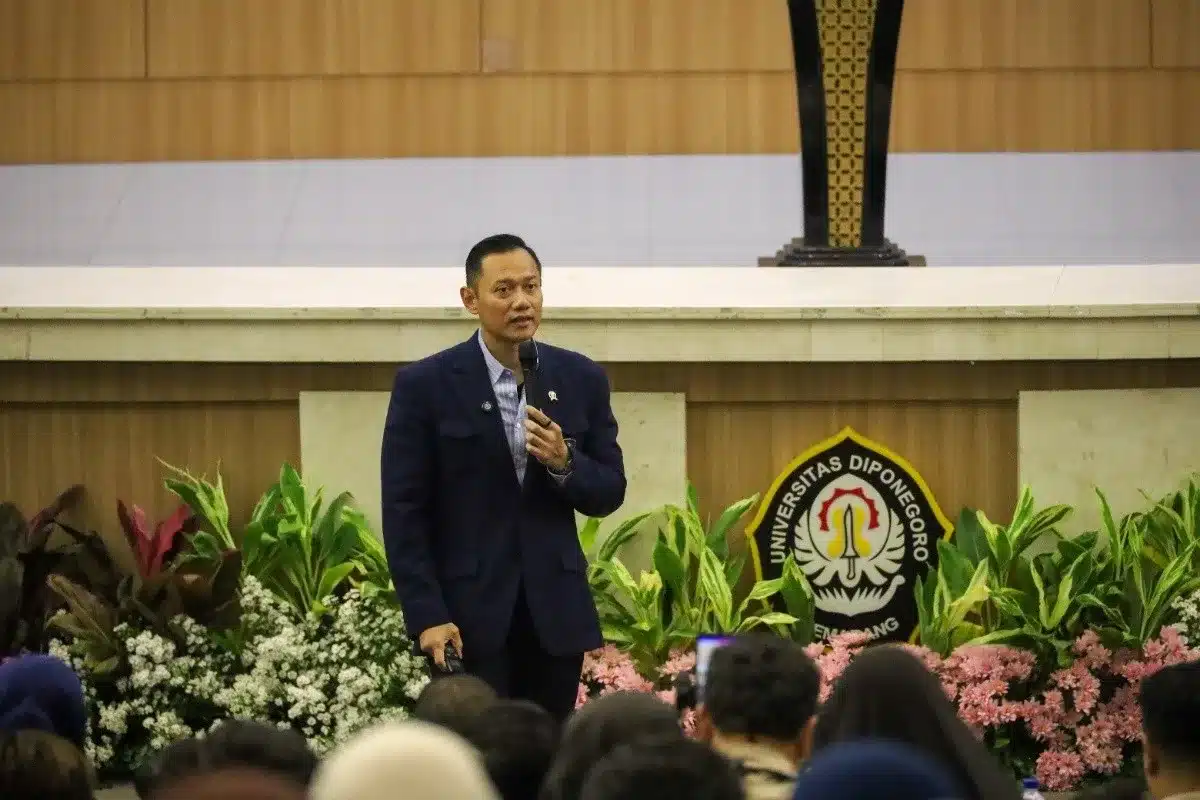
In his presentation, Minister Agus Harimurti Yudhoyono (AHY) invited participants to reflect on recent floods and landslides in Aceh, North Sumatra, and West Sumatra, emphasizing the urgency of building an Indonesia that is not only advanced and prosperous but also disaster-resilient. He linked this reflection to the journey toward Golden Indonesia 2045, stressing the importance of leveraging the nation’s once-in-history demographic bonus.
Minister AHY outlined three main agenda points, including understanding global megatrends, mapping Indonesia’s disaster challenges, and strengthening adaptive and sustainable infrastructure development. He highlighted five global megatrends—geopolitical tensions, massive urbanization, natural resource scarcity, global inequality, and the climate crisis—all of which directly impact Indonesia. Extreme weather, coastal abrasion, and rising sea levels, he noted, are no longer predictions but present-day realities.
“Indonesia lies within the Ring of Fire. Therefore, mitigation and preparedness are critical components of national resilience,” he stressed.
He further elaborated on the triple challenges of development: geological vulnerability, climate change, and socio-economic pressures. He cited the Pantura area as an example of an area affected by land subsidence and sea-level rise, where planning must shift from reactive to preventive. Evidence-based spatial planning, earthquake- and flood-resistant building design, elevated bridges in high-risk zones, and integrated technology for risk monitoring must become priorities.
“Rehabilitation costs far more than mitigation. We must not wait for disasters to strike before we act,” Minister AHY warned.
Ending his presentation, Minister AHY reiterated that Indonesia’s development direction must become greener, more resilient, smarter, and more integrated. He underscored the importance of green infrastructure, mangrove-based coastal protection, resilient infrastructure, and strengthening smart infrastructure through geospatial technology, IoT, and risk-monitoring systems. He also invited UNDIP students to play active roles in shaping Indonesia’s future, and formally invited UNDIP to participate in Spatial Infra Conex 2026 in Jakarta. “UNDIP is a strategic partner in building Golden Indonesia 2045. May UNDIP continue producing outstanding national leaders and growing as a world-class university,” he said.
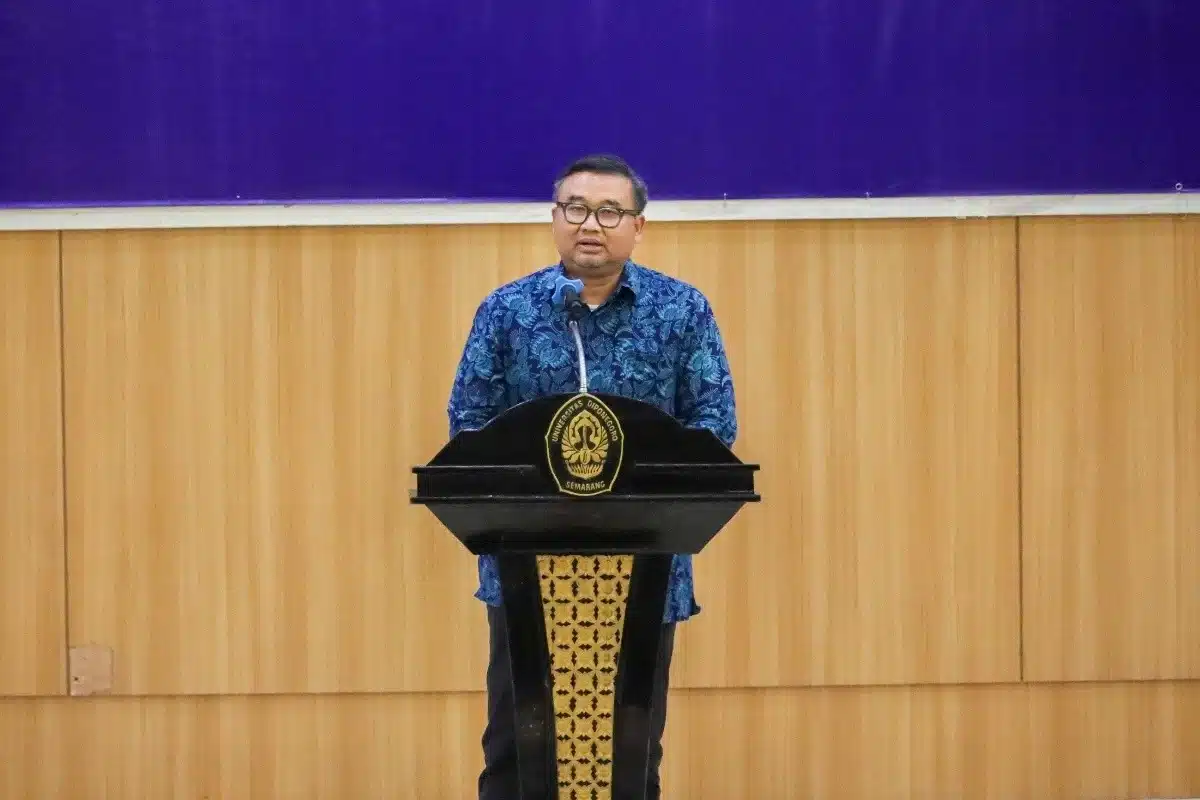
ISPASI Chairman Tiyok Prasetyoadi emphasized the importance of vital, evidence-based national spatial planning. He expressed condolences for the recent disasters in Sumatra and stressed that Indonesia needs strong coordination among stakeholders to develop effective, sustainable spatial policies. “ISPASI stands as an independent organization providing a strategic dialogue space among government, academia, professionals, and communities to bridge technical needs, scientific studies, field practices, and public policy,” he stated. Thus, he encouraged broad participation in Spatial Infra Conex 2026.
“We hope all networks, including UNDIP, can be actively involved. Your presence will enrich dialogue, expand collaboration, and accelerate the realization of infrastructure that is not only grand but resilient, inclusive, and sustainable.”
Through this public lecture, UNDIP reaffirms its position as a university that drives change and provides tangible benefits to society. The spirit of Noble and Valuable UNDIP shines through academic contributions, research, and technological innovations that address environmental and disaster challenges across Indonesia. (Public Communication/UNDIP/DHW)