
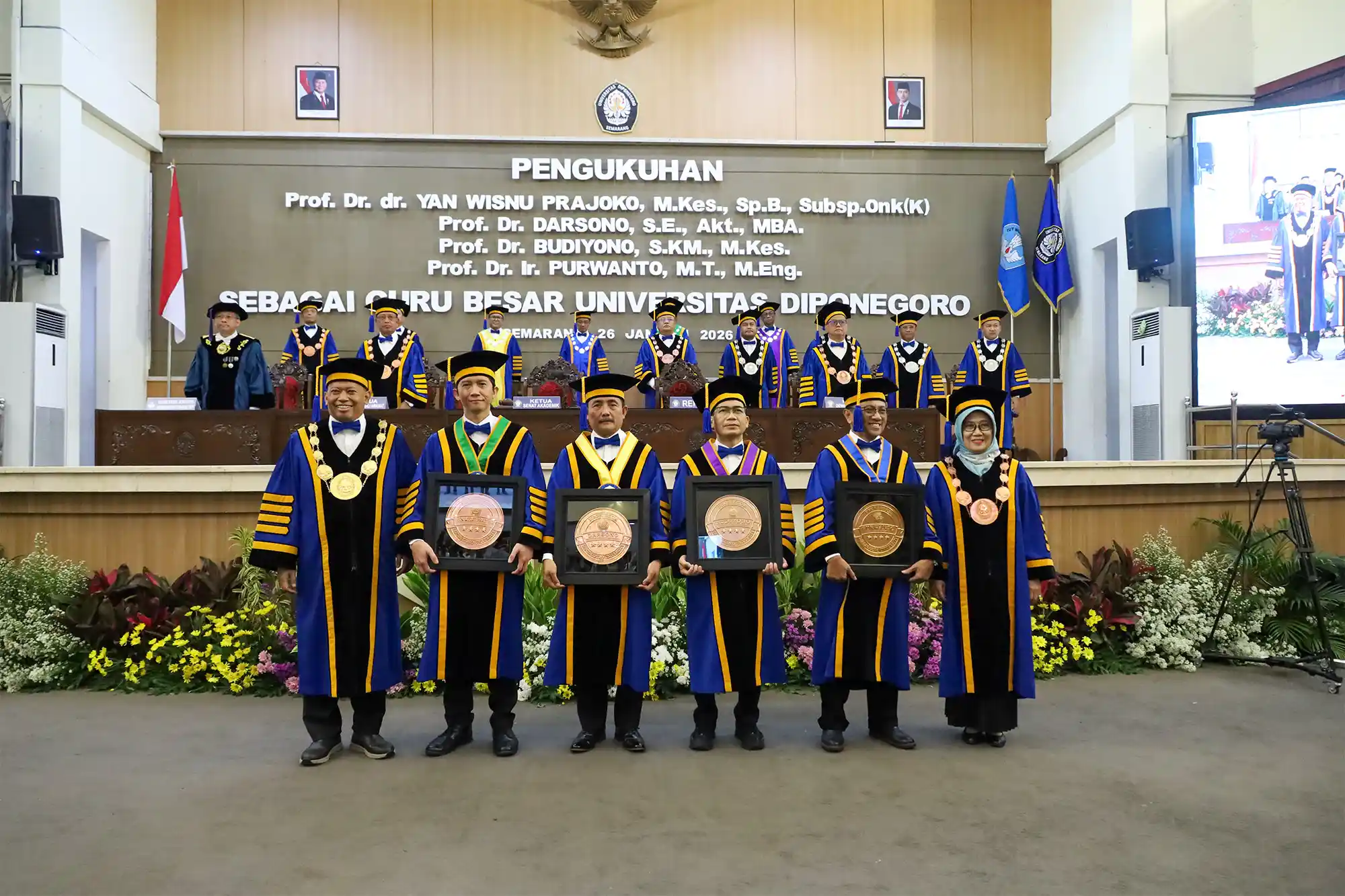
UNDIP, Semarang (26/1) – Universitas Diponegoro (UNDIP) today commenced a series of inauguration ceremonies for 18 UNDIP Professors, scheduled to take place toward the end of January 2026. The event was held at Prof. Sudarto, S.H. Building on the UNDIP Tembalang Campus. On the first day, UNDIP inaugurated four professors who presented their research findings that address global challenges in health, the environment, infrastructure, and corporate governance.
The four newly inaugurated professors are: Prof. Dr. dr. Yan Wisnu Prajoko, M.Kes., Sp.B., Subsp.Onk(K) from the Faculty of Medicine; Prof. Dr. Darsono, S.E., Akt., MBA. from the Faculty of Economics and Business; Prof. Dr. Budiyono, S.KM., M.Kes. from the Faculty of Public Health; and Prof. Dr. Ir. Purwanto, M.T., M.Eng. from the Faculty of Engineering.
In her opening remarks, the Chair of the UNDIP Academic Senate, Prof. Ir. Tri Winarni Agustini, M.Sc., Ph.D., stated that the inauguration of new professors increases the total number of professors at UNDIP and serves as an indicator of the strengthening quality of the Tri Dharma of Higher Education. “Currently, UNDIP has 248 active professors, consisting of 244 permanent professors and 4 non-permanent professors,” she explained.
She added that the appointment of a professor is not merely recognition of academic excellence, but also carries responsibilities to develop and disseminate knowledge for the benefit of society and the advancement of the nation.
“A professor should serve as a mentor and protector for junior lecturers and students in deepening and developing their academic capabilities. A professor must also be a role model in daily life, both on and off campus,” she emphasized.
On this occasion, the Secretary General of the Ministry of Higher Education, Science, and Technology (Kemdiktisaintek), Prof. Ir. Togar Mangihut Simatupang, M.Tech., Ph.D., IPU., attended and delivered a keynote address. He stressed that the highest academic title carries great responsibility for national progress. “The inauguration of a professor is not merely a ceremonial peak of academic achievement, but an affirmation of intellectual and moral responsibility to the nation and the state,” he stated.
Prof. Togar further explained that current Kemdiktisaintek policies position universities as centers of solutions for national challenges. “Future national development requires evidence-based policies, sustainable innovation, and cross-sector collaboration. Universities must become the epicenter of superior human resource development,” he said.
Each professor then presented their research innovations and findings. Prof. Dr. dr. Yan Wisnu Prajoko, M.Kes., Sp.B., Subsp.Onk(K), an expert in Oncological Surgery, presented his research entitled Young-Age Breast Cancer in the Indonesian Population: Strategies to Reduce Incidence and Comprehensive Management Based on Specific Genetic Profiling. His research highlights strategies to address breast cancer in women under 40 through specific genetic profiling, emphasizing the role of PIK3CA mutations in therapeutic effectiveness while addressing systemic challenges such as delayed early detection and limited access to healthcare. Through a multidisciplinary approach, the study aims to reduce late-stage incidence and improve patients’ quality of life.
Meanwhile, Prof. Dr. Darsono, S.E., Akt., MBA, an expert in General Audit, presented his research titled Audit Challenges in Improving Corporate Reporting Quality in the Era of Sustainability. He emphasized the importance of independent auditors in verifying ESG reports to mitigate the risk of greenwashing. By adapting ISSA 5000 standards and IFRS S1 and S2, this approach aims to ensure transparency and credible corporate reporting as a basis for business decision-making in the sustainability era.
Prof. Dr. Budiyono, S.KM., M.Kes., whose expertise lies in Hazardous Environmental Substances, Health Risks and Their Control, presented The Threat of Pesticide Exposure to Human Resource Quality and Sustainable Control Technology Innovations. His research highlighted the dangers of pesticide exposure that can trigger hormonal disorders such as hypothyroidism and diabetes, with serious impacts on pregnant women and children, including risks of stunting, autism, and declining human resource quality that affects the national Human Development Index. As solutions, he proposed using ozone technology for pesticide residue removal and transitioning to organic agriculture, supported by government regulations.
The professor from the Faculty of Engineering, inaugurated on this day, Prof. Dr. Ir. Purwanto, M.T., M.Eng., an expert in Green Concrete, presented Application of Environmentally Friendly Geopolymer Concrete in the Form of Haunch Beams for Reinforcement of Reinforced Concrete Structures. He developed cement-free geopolymer concrete based on Fly Ash and Bottom Ash (HVFA) waste. His key innovations include Self-Compacting Geopolymer Concrete (SCGC) and the use of haunch beams to strengthen building and bridge structures. To reduce costs, the research uses local materials, such as seashells and rice husk ash, as substitutes for imported chemical activators, creating economical, environmentally friendly construction solutions.
In his remarks, the Rector of UNDIP, Prof. Dr. Suharnomo, S.E., M.Si., expressed appreciation for the four newly inaugurated professors for their dedication and exemplary commitment in achieving the professorial rank.
“Becoming a professor means reaching the highest level of self-mastery in knowledge and becoming a role model for society. May the knowledge produced not remain within laboratories alone, but be beneficial and dignified in everyday life,” he stated.
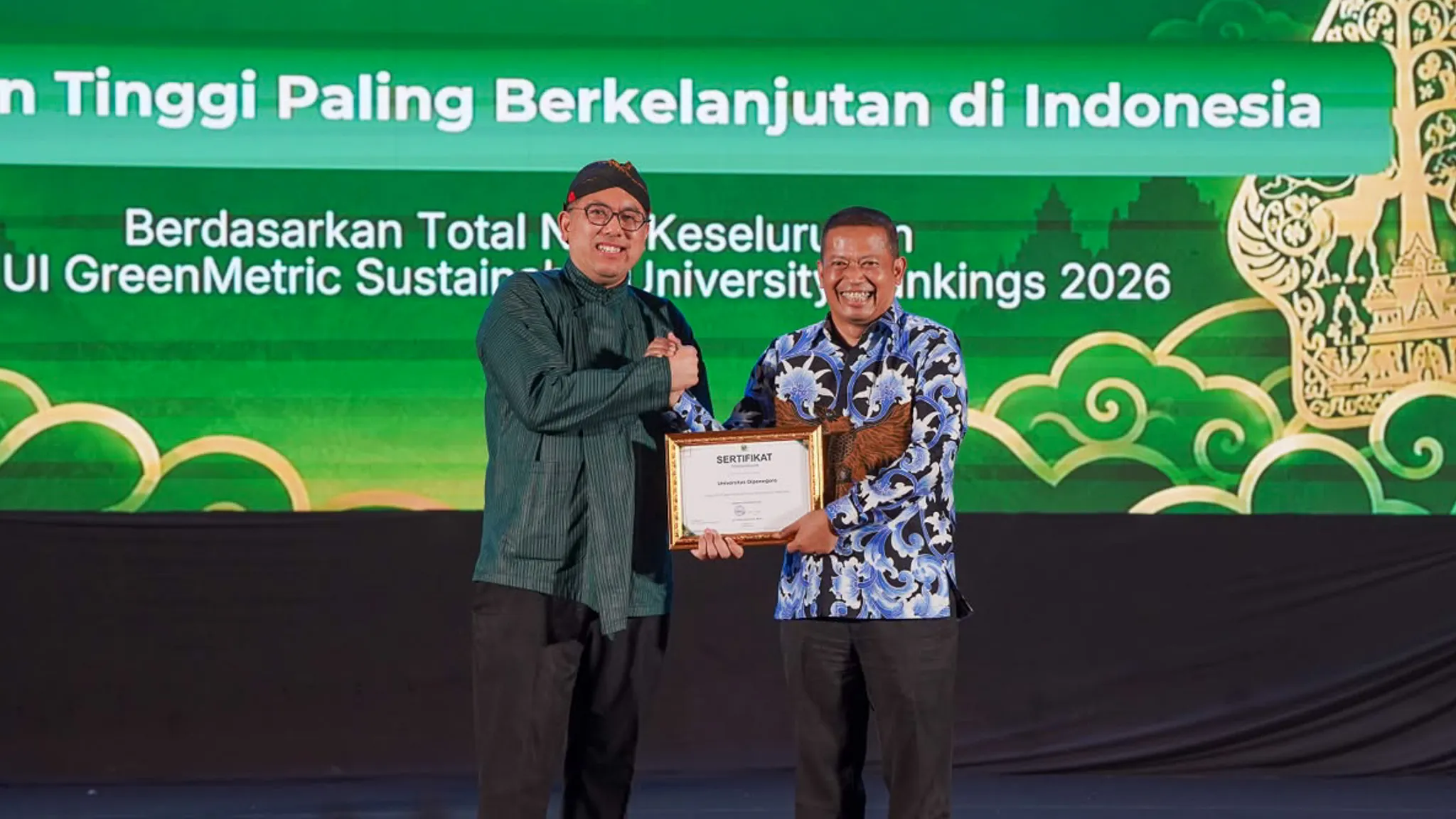
On the same occasion, Prof. Suharnomo also highlighted UNDIP’s growing international competitiveness. Currently, UNDIP is ranked 624th globally and continues to strengthen its reputation as a sustainable campus, achieving second place in Indonesia in the UI GreenMetric rankings.
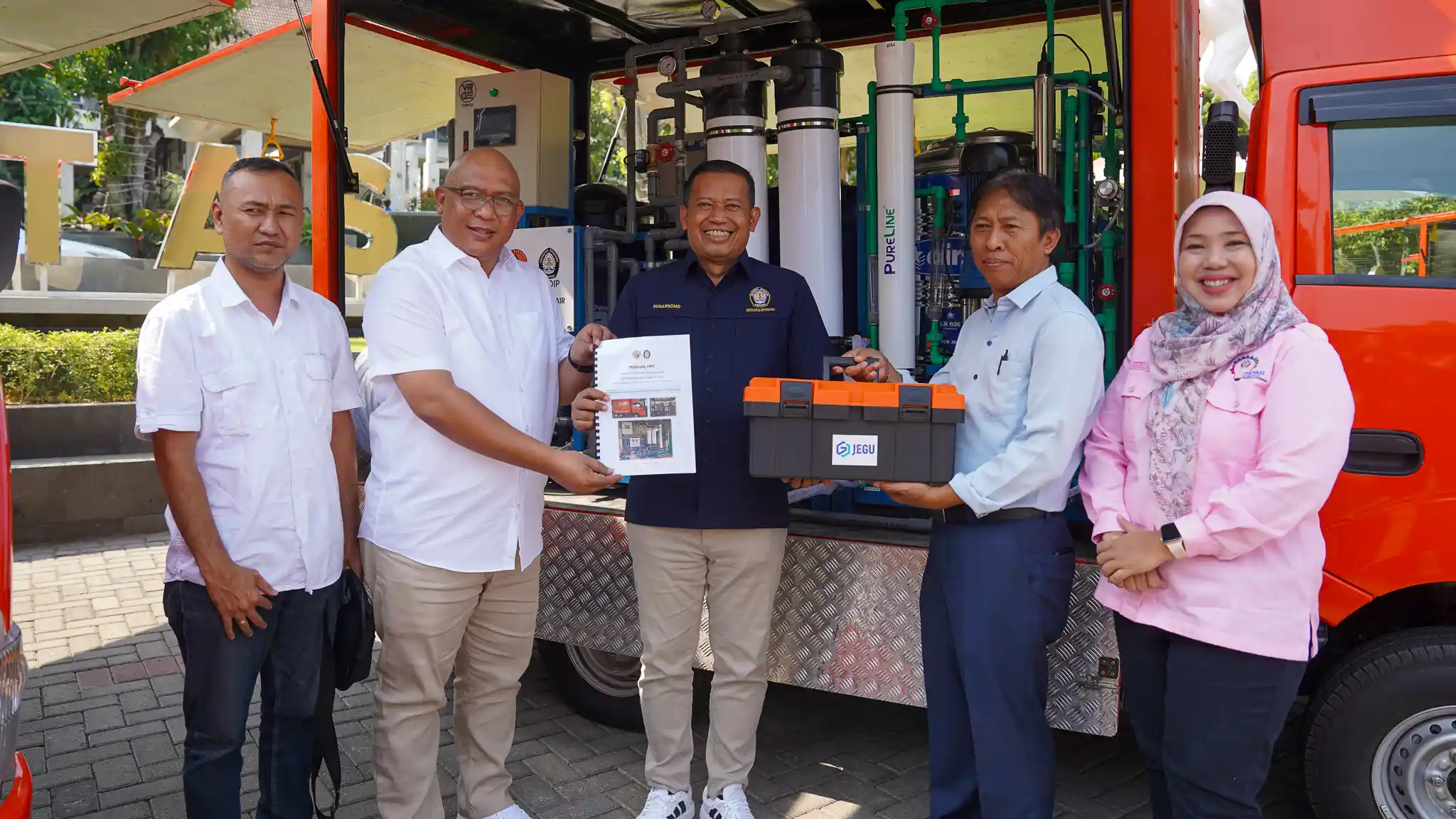
He further reaffirmed UNDIP’s commitment to a Green Campus and Zero Waste initiative through water treatment management, solar panels, and pyrolysis technology to eliminate waste residue sent to the city. He also encouraged downstream technology implementation, such as expanding desalination facilities across regions to address water crises.
Prof. Suharnomo added that UNDIP consistently responds to national crises as a form of civic empathy.
“As part of the Unitary State of the Republic of Indonesia, we are highly responsive to disasters in Sumatra. We have deployed more than ten teams to the region,” he said. In closing, the Rector expressed hope that the newly inaugurated professors would contribute significantly to enhancing UNDIP’s global reputation and serve as leading actors in realizing a Noble and Valuable UNDIP. (Public Communication/UNDIP/Riri)