

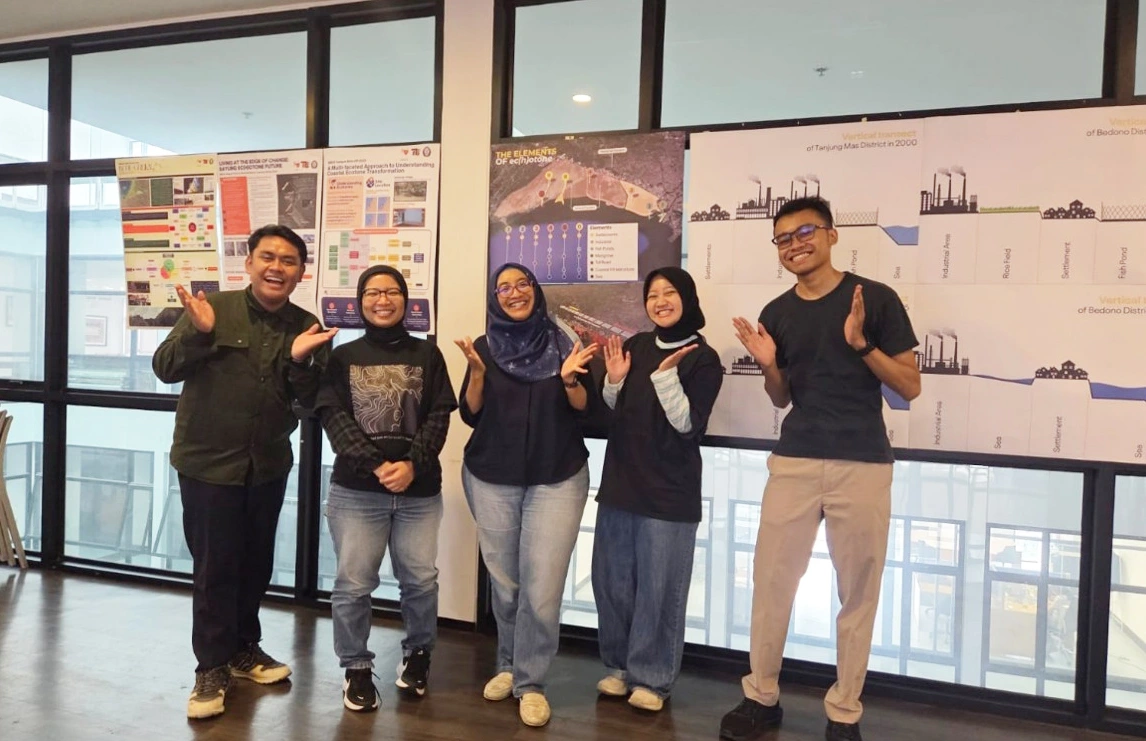

UNDIP, Semarang (31/01) – Universitas Diponegoro (UNDIP) continues to strengthen its commitment to community service through the Thematic Community Service Program (KKNT). One such initiative is carried out by the 35th Team of KKNT UNDIP, which actively assists local communities in establishing a Disaster-Resilient District (Kecamatan Tangguh Bencana/Kencana) in the West Semarang area.
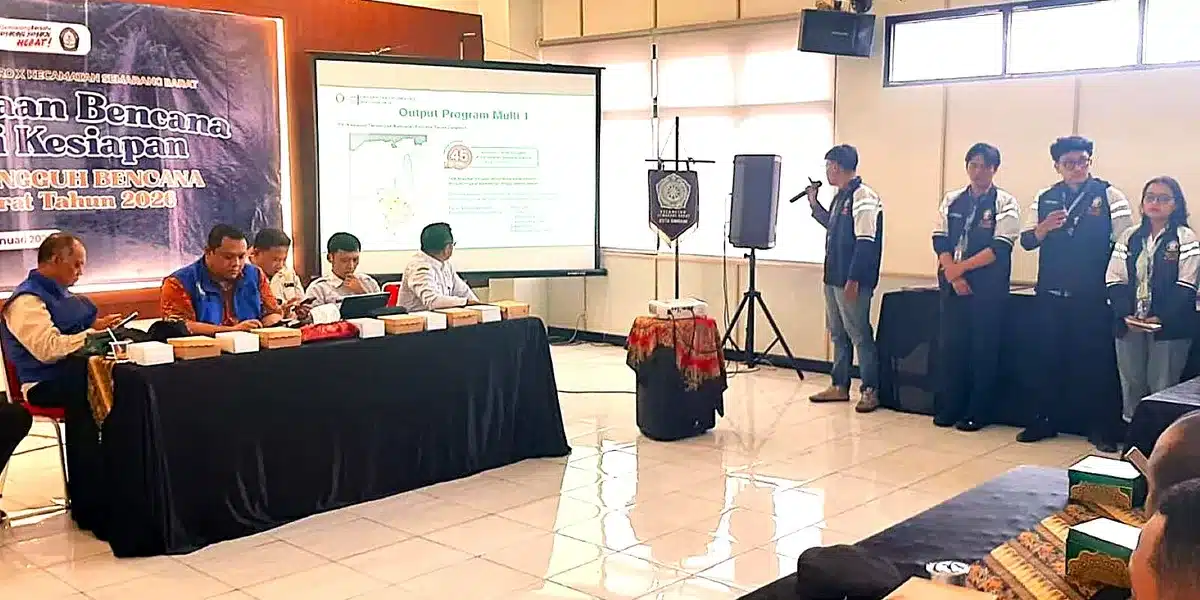
The 35th Team of KKNT UNDIP was officially deployed on Wednesday, January 28, 2026, to implement an integrated disaster preparedness assistance program tailored to local community needs. The activities began with a disaster preparedness roll call and the declaration of readiness for a Disaster-Resilient District, held in the courtyard of the West Semarang District Office.
The Coordinator of the 35th Team of KKNT UNDIP, Dr. Anang Wahyu Sejati, S.T., M.T., a lecturer in the Department of Urban and Regional Planning, Faculty of Engineering, UNDIP, explained that this thematic KKN program is designed to strengthen community capacity to address disaster risks in their area.
“Through this thematic community service, we seek to encourage community empowerment so that residents develop disaster awareness and preparedness, especially in areas with certain levels of vulnerability,” said Dr. Anang after the preparedness roll call.
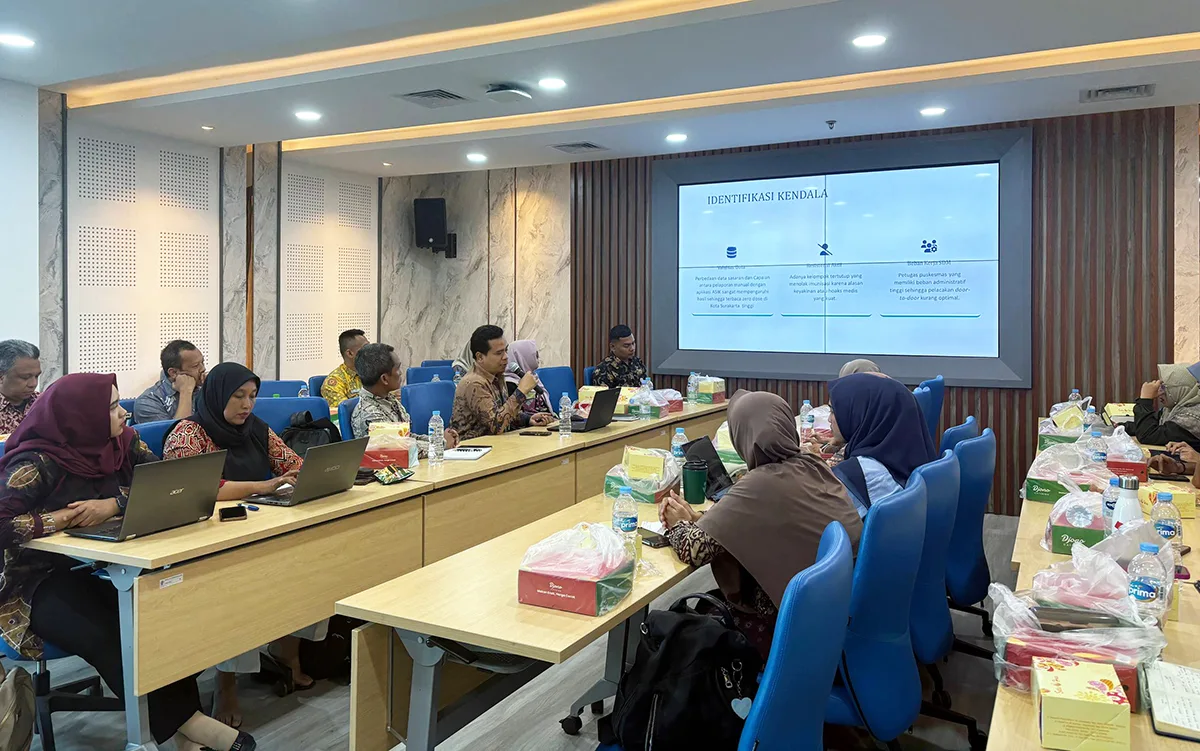
The event involved various stakeholders, including disaster response volunteers, students, lecturers, the Indonesian National Armed Forces (TNI), the National Police (Polri), officials from the Semarang City Government, and other community elements. On the same occasion, UNDIP Professor Prof. Dr.rer.nat. Imam Buchori, S.T., was also present and provided on-site support.
In its implementation, the 35th Team of KKNT UNDIP will conduct a range of disaster-related assistance activities, including mapping flood-prone and landslide-prone areas. This program is supported by cross-faculty collaboration among UNDIP’s academic community, involving the Faculty of Engineering, the Faculty of Public Health, the Faculty of Law, the Faculty of Science and Mathematics, the Faculty of Economics and Business, and the Vocational School.
This interdisciplinary approach covers a range of topics, including topographic analysis, measurement of land subsidence, environmental health, logistics systems, legal policy, and the development of disaster information systems. The outcomes of this collaboration will be compiled into a planning document referred to as a master plan for disaster-resilient districts and sub-districts.
“The final product we are preparing is a master plan for Disaster-Resilient Districts and Sub-Districts, including mapping of nine urban villages that require special attention due to their potential flood and landslide risks,” Dr. Anang explained.
Meanwhile, Prof. Imam Buchori emphasized that this activity represents a tangible implementation of the Tri Dharma of Higher Education, particularly in community service.
“A university must not become an ivory tower. Through the 35th Team of KKNT UNDIP, UNDIP is present to transfer knowledge and offer real solutions to the community,” he stressed. He also noted that UNDIP provides funding support as part of its institutional commitment to community service programs with direct societal impact.
Appreciation was also expressed by the Head of West Semarang District, Dr. Elly Asmara, S.STP, M.M. She viewed the collaboration between UNDIP and the community as a strategic step in strengthening disaster preparedness as part of public services.
“Disaster preparedness is a shared responsibility. In West Semarang, various mitigation and disaster management efforts have been undertaken, including the formation of a Rapid Response Team under the coordination and supervision of the Regional Disaster Management Agency (BPBD),” she said. As part of the activity series, the 35th Team of KKNT UNDIP students also presented their work plans for implementation during the service period. It is hoped that this synergy among higher education institutions, government, and the community will sustainably strengthen regional resilience in the face of potential disasters. (Public Communication/UNDIP/DHW)