
UNDIP, Semarang (18/6) – The Vocational School of Universitas Diponegoro (UNDIP) continues to strengthen its commitment to creating a sustainable campus through the establishment of the SV Zero Discharge Program, a strategic initiative that integrates the management of resources, waste, energy, and the campus environment into a unified and sustainable system.
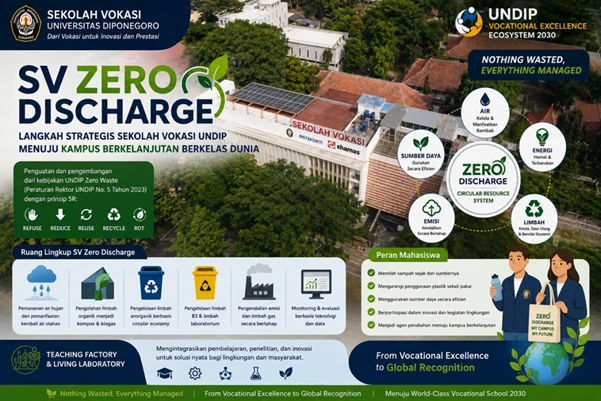
The program serves as an enhancement and expansion of UNDIP’s Zero Waste policy, as stipulated in the Rector’s Regulation of Universitas Diponegoro No. 5 of 2023 concerning Waste Management within the university environment. Through a more comprehensive approach, the Vocational School has developed the Zero Discharge concept—a campus management system designed to minimize waste discharged outside the system by treating and reusing it, and by implementing innovations grounded in circular economy principles.
The establishment of the SV Zero Discharge Program is formalized through the Dean’s Decree of the Vocational School of Universitas Diponegoro No. 026/UN7.M2/HK/IV/2026 concerning the Implementation of the SV Zero Discharge Program within the Vocational School. To support its implementation, the school has also issued separate guidelines outlining student behavior and responsibilities related to the program.
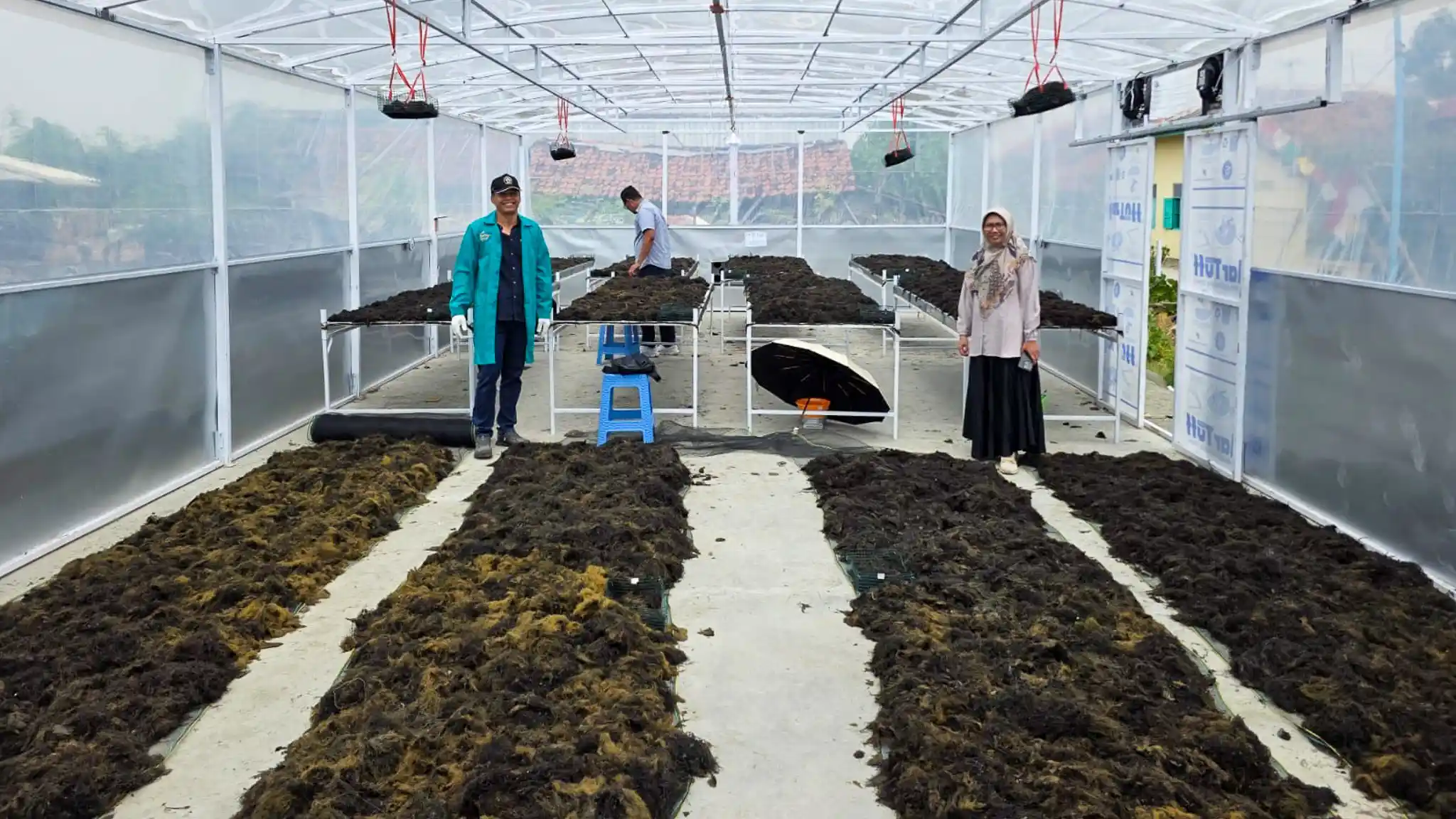
Unlike conventional waste management approaches, the SV Zero Discharge Program encompasses the management of all campus resources and waste streams, including wastewater, solid waste, hazardous and toxic waste (B3), and emissions. The program includes rainwater harvesting, wastewater treatment and reuse, biogas system development, organic and inorganic waste processing based on circular economy principles, laboratory waste management, and gradual emissions control.
The Dean of the Vocational School, Prof. Dr. Ir. Budiyono, M.Si., explained that SV Zero Discharge is not merely an environmental program but part of a broader institutional transformation toward the vocational campus of the future.
“The world is currently facing major challenges related to climate change, resource efficiency, and sustainable development. Vocational education must do more than produce technically competent graduates; it must also cultivate sustainable ways of thinking and working. Therefore, we position SV Zero Discharge as part of the Vocational School’s transformation toward a world-class sustainable campus,” he stated.
According to Prof. Budiyono, sustainability has become an increasingly important indicator in the global development of higher education institutions. Consequently, the initiatives developed by the Vocational School are intended not only to support environmental management on campus but also to serve as real-world learning opportunities for students.
One unique feature of the SV Zero Discharge Program is that it serves as both a Teaching Factory and a Living Laboratory. Students from various study programs can participate directly in the development of water treatment technologies, renewable energy systems, circular economy initiatives, environmental monitoring, waste management solutions and artificial intelligence and digital technology innovations that support sustainable campus development.
The program is also part of the UNDIP Vocational Excellence Ecosystem 2030, a development framework that integrates applied education, Teaching Factory initiatives, industry collaboration, global employability, innovation, digital visibility, and sustainability into a mutually reinforcing ecosystem.
“We want students not only to learn about sustainability in the classroom but also to experience it directly in their daily campus life. In this way, they will develop into graduates who are prepared to meet the needs of future industries while maintaining a strong commitment to environmental and social responsibility,” Prof. Budiyono added.
Through the SV Zero Discharge Program, the Vocational School of UNDIP aspires to become a model for sustainable vocational campus development—one that not only produces outstanding graduates but also delivers practical solutions to environmental and sustainable development challenges. (Public Communication/UNDIP/Vocational School)
Source: the official website of the Vocational School of Universitas Diponegoro.