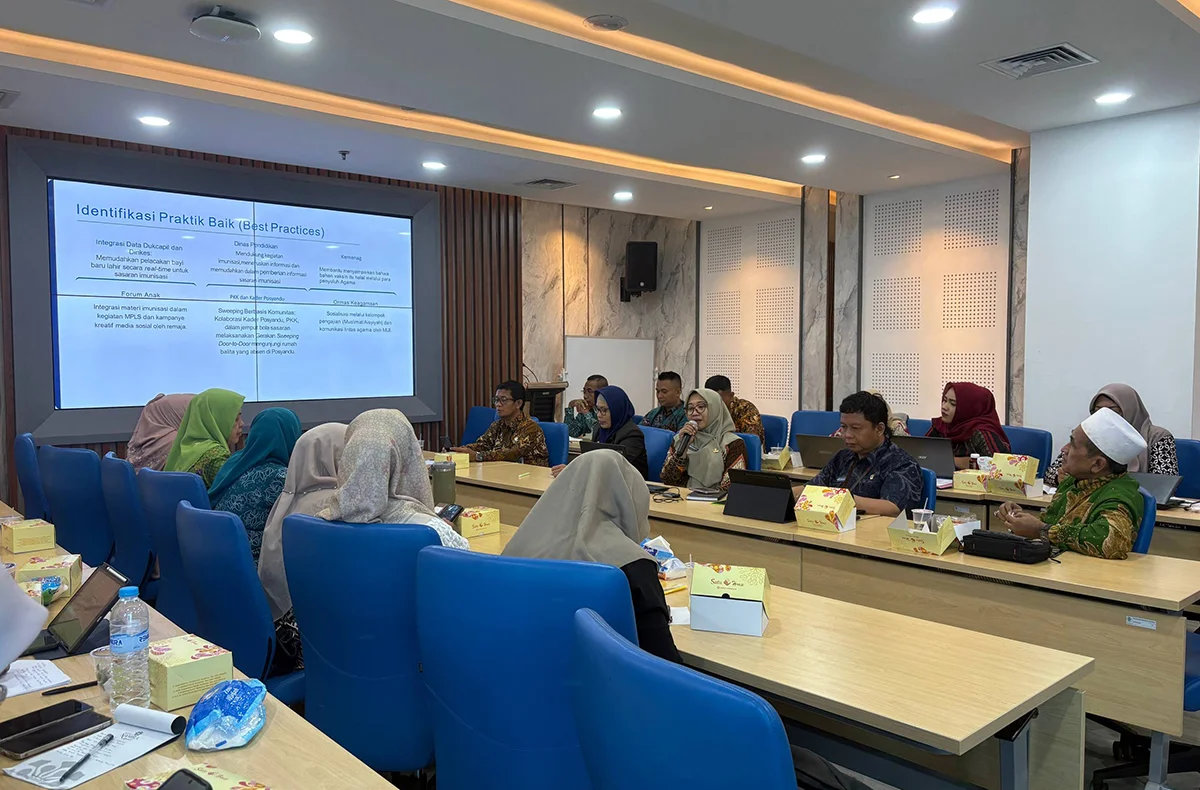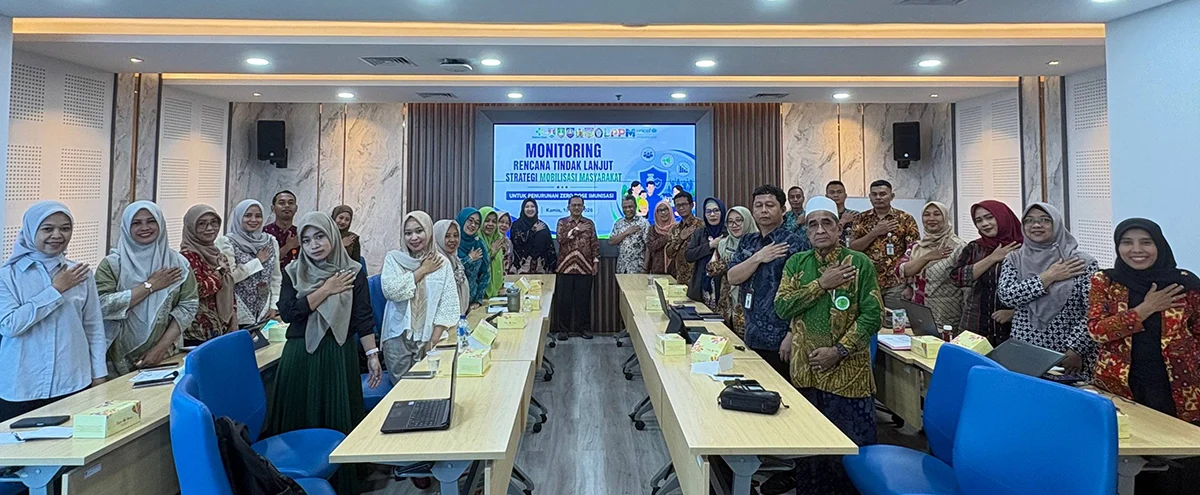




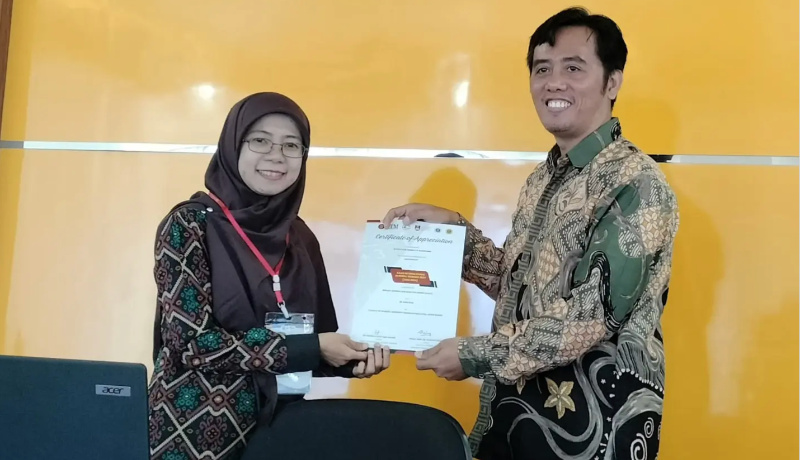
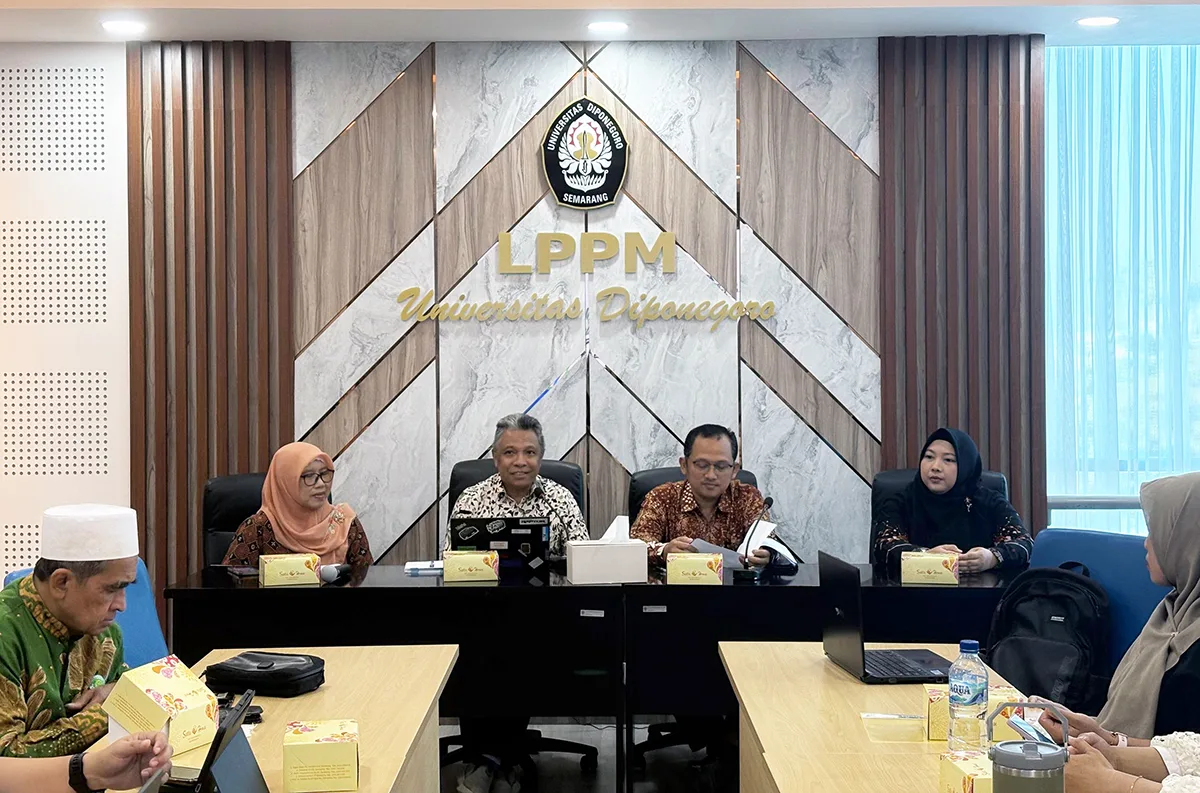
UNDIP, Semarang (23/6) – The Health Research Center(Puslitkes) of the Institute for Research and Community Service (LPPM), Universitas Diponegoro (UNDIP), in collaboration with UNICEF, organized a “Monitoring of Follow-Up Action Plans (RTL) for Community Mobilization Strategies to Reduce Zero-Dose Immunization” on Thursday, June 18, 2026, at the LPPM UNDIP Seminar Room, ICT Center Building, Semarang.
The activity is part of an ongoing effort to ensure implementation of the outcomes of the “Cross-Sector Capacity Building Program on Community Mobilization Strategies for Reducing Zero-Dose Immunization”, which was previously conducted in five target districts and cities in Central Java Province: Magelang, Surakarta, Tegal Regency, Wonosobo Regency, and Pekalongan Regency.
The monitoring activity aimed to assess progress in implementing the follow-up plans developed by each region, document best practices, and map challenges and opportunities to strengthen programs designed to accelerate immunization coverage.
The event was attended by representatives from the five target regions, local health offices, community organizations, mass media, children’s forums, and various stakeholders who have actively contributed to efforts to reduce the number of zero-dose children. Also present was Ermi Ndoen, Health and Nutrition Specialist at UNICEF Indonesia Surabaya Field Office, demonstrating UNICEF’s commitment to strengthening cross-sector collaboration to improve immunization coverage and reduce the number of zero-dose children in Central Java.
In his remarks, Prof. Dr. Ing. Suherman, S.T., M.T., Head of LPPM UNDIP, emphasized the importance of cross-sector collaboration in accelerating efforts to reduce the number of zero-dose children. According to him, the involvement of diverse stakeholders is essential to increasing immunization coverage and ensuring that no child is left behind in accessing immunization services.
During the presentation session, each participating region shared achievements and strategies they had implemented as part of their collective commitment to strengthening community mobilization efforts.
Tegal Regency highlighted its strengthened public communication strategy through collaboration with local media. Slawi FM Radio has hosted talk-show programs, while print media have helped disseminate information about the importance of immunization. The regency is also preparing a more intensive outreach approach for groups that remain hesitant or opposed to immunization, partnering with the Indonesian Ulema Council (MUI), Fatayat, and Muslimat. Data on communities resistant to immunization have already been identified and will be followed up jointly with local community health centers.
In Surakarta City, the use of digital technology has become a key strategy for expanding public education outreach. Various digital platforms are being utilized for communication, information, and education (CIE) campaigns related to immunization. However, misinformation and hoaxes remain significant challenges requiring ongoing attention and intervention.
To strengthen public trust, Surakarta has also collaborated with MUI to ensure accurate dissemination of information regarding vaccine halal certification. In addition, the Children’s Forum has been engaged as a strategic partner to reach elementary school–age children through more participatory and child-friendly approaches.
Meanwhile, Magelang City continues to expand its public communication efforts through multiple media channels. Activities that have been implemented or are planned include radio broadcasts, public service announcements, talk shows involving the Health Office on radio and social media platforms, and the development of educational content on YouTube. These initiatives are scheduled to continue through August 2026, alongside monitoring and evaluation activities that assess campaign outcomes.
The monitoring results indicate that accelerating the reduction in the number of zero-dose children cannot be achieved by the health sector alone. Active involvement from multiple sectors—including religious organizations, mass media, local governments, communities, and civil society groups—is crucial to building public confidence in immunization programs.
Through this initiative, the Health Research Center of LPPM UNDIP and UNICEF reaffirmed the importance of sustaining cross-sector collaboration as a foundation for increasing immunization coverage and ensuring that every child receives optimal health protection. The monitoring activity is also expected to serve as a learning platform for participating regions to exchange experiences, share best practices, and replicate effective strategies to accelerate the reduction in the number of zero-dose children across Central Java. (Public Communication/UNDIP/LPPM)