




UNDIP, Alor (2/7) – The coastal waters of Alor Kecil Village in Alor Regency, East Nusa Tenggara (NTT), are home to an extraordinary marine phenomenon found nowhere else in the world. During certain periods between August and November, the sea surface temperature can suddenly drop to nearly 10°C for one to two hours. Such an occurrence is unprecedented, as tropical waters are typically warm and do not experience such dramatic cooling.
Through research conducted since 2020, a research team from Universitas Diponegoro (UNDIP), led by Prof. Dr.Sc. Anindya Wirasatriya, S.T., M.Si., M.Sc. of the Department of Oceanography, Faculty of Fisheries and Marine Sciences (FPIK), successfully uncovered this phenomenon and named it ALaDin, an acronym for Air Laut Dingin (Cold Seawater). In oceanographic terms, ALaDin is an upwelling phenomenon—the movement of cold, deep ocean water rising to the sea surface.
Unlike conventional wind-driven upwelling, ALaDin is an extreme upwelling event generated by tidal currents interacting with the unique seabed topography of the Pantar Strait. Consequently, the phenomenon occurs only during spring tides and is confined exclusively to the waters of Alor Kecil Village.
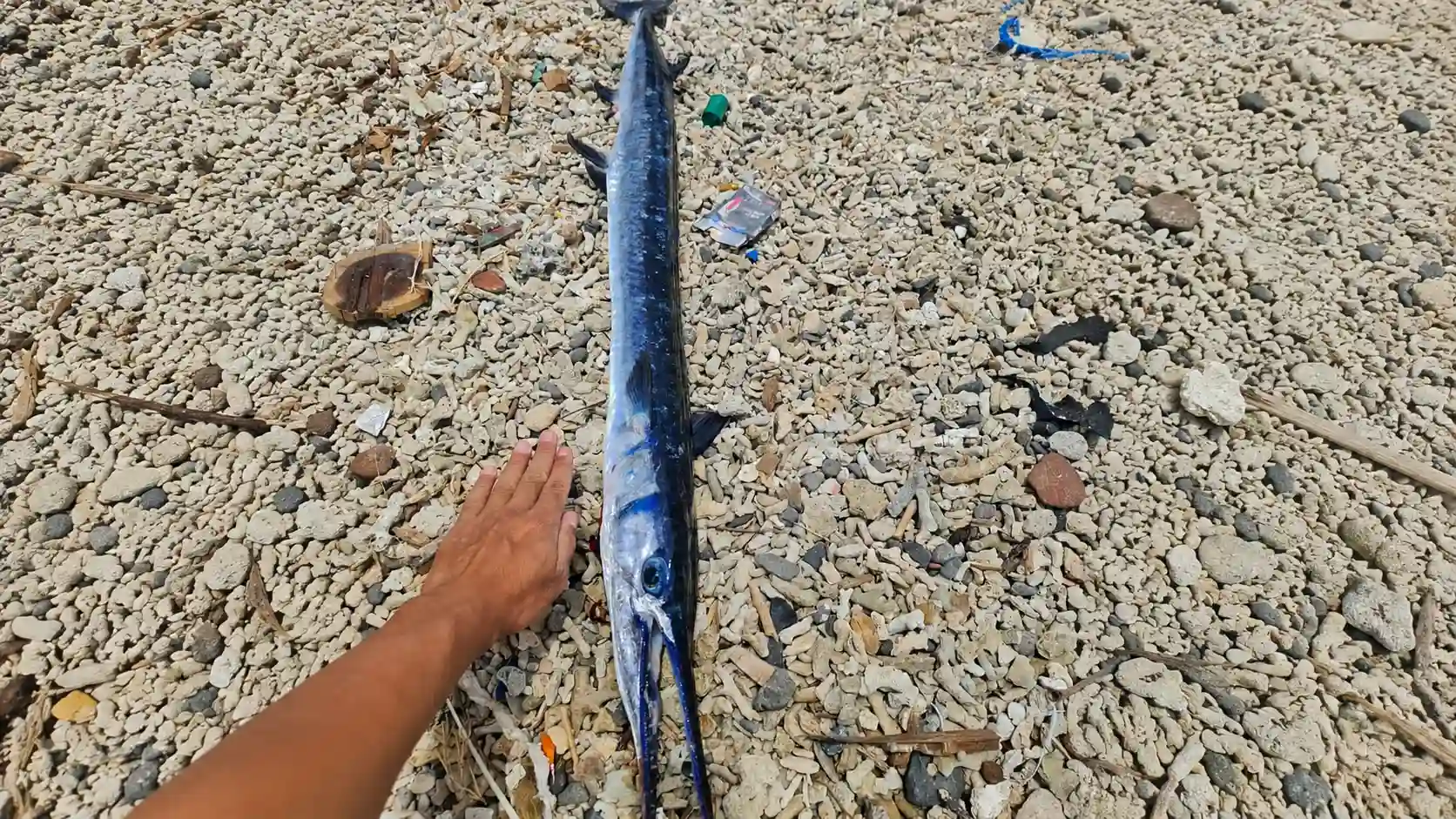
Beyond its unique formation mechanism, ALaDin produces remarkable ecological effects. When the cold water suddenly reaches the surface, fish become temporarily stunned, attracting pods of dolphins that gather to feed. This spectacular event has long fascinated residents, who enjoy the unusual sensation of cold seawater amid Alor’s tropical heat, catch the stunned fish using simple equipment, and watch dolphins hunting close to the shoreline.
According to Prof. Anindya, the greatest challenge in utilizing this unique phenomenon is its brief, unpredictable nature, which makes it difficult to manage. As a result, only residents have been able to enjoy ALaDin, while its economic potential has remained largely untapped.
“In the future, this paradigm must change. The primary beneficiaries of ALaDin should be tourists, while local communities should become providers of tourism services that enable visitors to experience the phenomenon and generate economic benefits. To achieve this, accurate forecasting and continuous real-time monitoring are essential to transform ALaDin into a tourism event in the waters of Alor Kecil,” he explained.


At the same time, under the 2025–2029 Regional Medium-Term Development Plan (RPJMD), the Alor Regency Government has identified three priority sectors, collectively known as TRI PALAWA—Agriculture, Marine Affairs, and Tourism. To accelerate tourism development, the regency has introduced the Pekan Wismaraya (Wisata Maju Rakyat Sejahtera) program, which integrates tourism events throughout Alor. As part of this initiative, ALaDin has been designated as a new tourism icon to be showcased through a dedicated tourism festival.
Si ALaDIN Technology Predicts the Arrival of the ALaDin Phenomenon
Through the 2026 Strategic Synergy Research Commercialization Program funded by Indonesia’s Education Endowment Fund (LPDP), UNDIP researchers are collaborating with Tribuana Kalabahi University (UNTRIB) and the Alor Regency Government to develop ALaDin as a sustainable tourism attraction.
The UNDIP research team is developing SI ALaDIN, an Internet of Things (IoT)-based monitoring and forecasting system that enables the public and stakeholders to monitor and predict ALaDin events directly from their digital devices. Since ALaDin is driven by tidal movements—and tides are predictable due to their periodic nature—the phenomenon itself can also be forecast accurately.
The forecasting model is based on the relationship between sea surface temperature and tidal cycles and has successfully predicted ALaDin occurrences during 2023–2025.
Meanwhile, the UNTRIB team will focus on strengthening the Alor Kecil community’s capacity to provide tourism services centered on the ALaDin phenomenon. Through a participatory approach grounded in local wisdom and sustainable tourism principles, the initiative aims to develop a competitive, sustainable flagship tourism product for Alor Kecil Village that aligns with the blue economy concept.
Residents will also receive training to prepare facilities and services for visitors during ALaDin events, promoting a community-based tourism model. Supported by accurate forecasting and community readiness, the Alor Regency Government is committed to launching the ALaDin Festival under the Wismaraya program in September 2026. The festival is expected to attract both domestic and international visitors, establishing itself as a signature tourism event that can increase regional revenue.
Prof. Anindya expressed his hope that the ALaDin Festival will become not only an iconic destination for Alor Regency but also one of Indonesia’s premier tourist attractions. “If Labuan Bajo has gained global recognition because it is home to the Komodo dragon—the world’s only giant lizard—then Alor can achieve the same recognition through ALaDin, the world’s only cold seawater phenomenon,” he concluded.
The discovery of ALaDin and the efforts to develop it into a tourism and economic asset demonstrate UNDIP’s commitment to its vision of being “Noble and Valuable”, while also supporting the university’s Principal Scientific Interest (PIP) in Coastal Region Eco-Development. (Public Communication/UNDIP/Prof. Anindya)