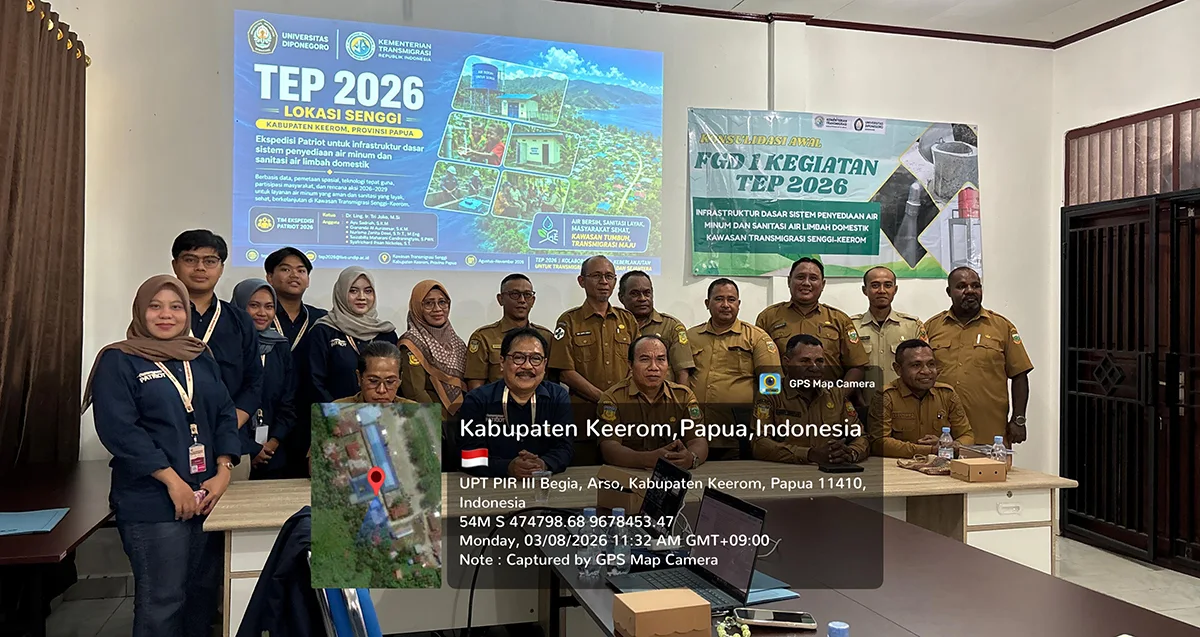
UNDIP, Keerom, Papua (26/8) – The Universitas Diponegoro (UNDIP) 2026 Patriot Expedition Team (Tim Ekspedisi Patriot / TEP UNDIP) held its first Focus Group Discussion (FGD 1) with officials from the Keerom Regency Public Works and Spatial Planning Agency (PUPR) on Monday (August 3, 2026). The activity marked the beginning of a consolidation and socialization process, as well as the initial mapping of key issues as part of a study on Basic Infrastructure for Drinking Water Supply Systems (Sistem Penyediaan Air Minum / SPAM) and Domestic Wastewater Sanitation in the Senggi Transmigration Area, Keerom Regency, Papua Province.
The first FGD aimed to establish a shared understanding between the implementation team and the local government regarding the planned activities, data verification, and the existing condition of infrastructure and facilities. Discussions focused on mapping service constraints, identifying the potential for area development, and determining the direction of the field study to ensure that the resulting recommendations are relevant and appropriately targeted.
Acting Head of the Keerom Regency PUPR Agency, Ferry Amo, S.IP., welcomed the study and expressed his appreciation for the collaboration, describing it as an important foundation for formulating regional infrastructure development policies based on factual data. “This FGD is an important step toward aligning the understanding and needs of all parties, particularly in providing drinking water and sanitation services in the Senggi Transmigration Area. The Keerom Regency Government fully supports the study, data collection, and field surveys to ensure that the resulting recommendations are truly aligned with community conditions and can serve as a basis for sustainable development planning,” Ferry said.
The FGD discussions went beyond aligning data and formal activity plans, also highlighting the actual conditions of drinking water and sanitation services in the community. Together with the local government, TEP UNDIP discussed the existing SPAM and sanitation infrastructure, service constraints, development potential, and community needs to inform the field study.
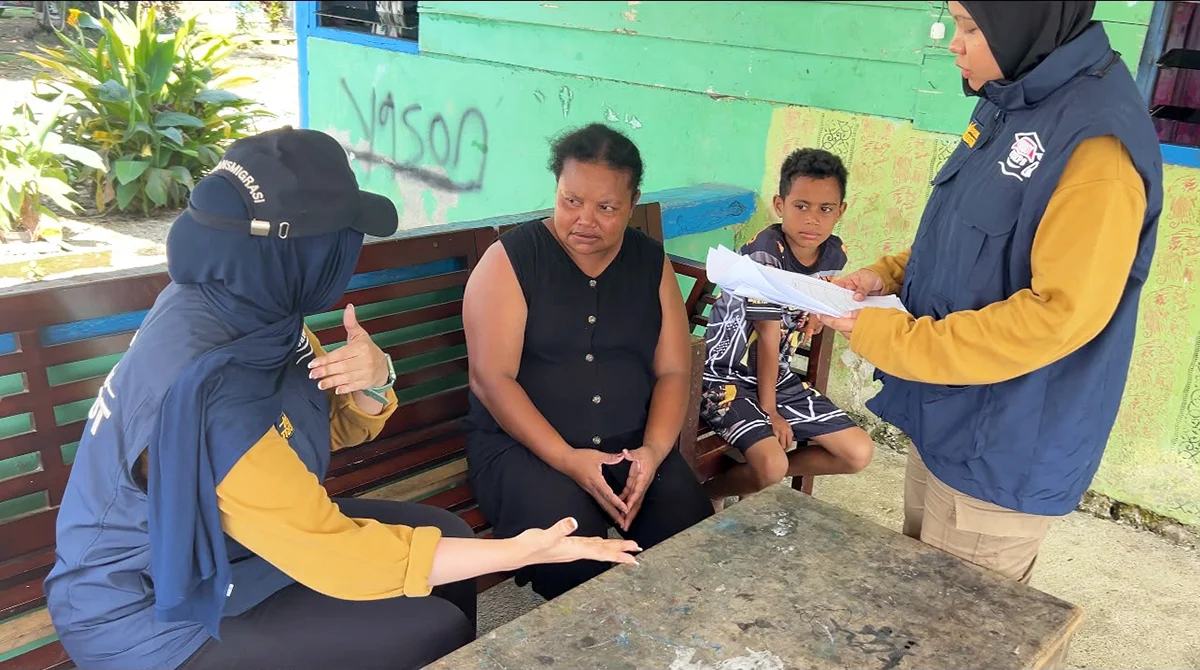
As a follow-up to the consolidation process, the team engaged directly with residents in Woslay Village, Settlement Unit (Satuan Permukiman / SP) 1, using a fact-based approach. The initiative sought to obtain a comprehensive picture of Clean and Healthy Living Behavior (PHBS), water-use patterns, household sanitation facilities, and basic service needs at the family level.
Based on field interviews, residents of Woslay SP 1 have begun to understand the importance of PHBS, although its implementation remains heavily influenced by the availability of basic facilities. “Water has become an essential need for our daily activities, from cooking, bathing, and washing to cleaning the home environment. Under certain conditions, limitations in water quality or availability mean that we have to adjust our use according to the water sources available,” explained Martina, a resident of Woslay SP 1.
This condition demonstrates that the implementation of PHBS cannot be separated from the availability of adequate clean water and sanitation facilities. For the community, living cleanly is not merely a matter of habits, but is also closely linked to access to safe water, proper toilets, and a healthy home environment. Field findings also indicate the need for ongoing assistance that is relevant to local wisdom, including waste management, preventing domestic wastewater from accumulating, and promoting regular handwashing with soap, particularly before eating and after using the toilet.
Therefore, PHBS education must go beyond merely increasing knowledge and be accompanied by adequate physical facilities. Residents’ aspirations provide empirical insights that complement government data, ensuring that the FGD is more than a ceremonial activity. By integrating data from the Keerom Regency Government with input from residents of Woslay SP 1, TEP UNDIP is developing SPAM and sanitation recommendations that are technically appropriate, easy to operate and maintain, and capable of directly improving public health in the Senggi Transmigration Area.
Through collaboration between the local government and the community, TEP UNDIP is committed to producing recommendations based on actual needs identified in the field. The voices of Woslay SP 1 residents serve as an important foundation for ensuring that planning for clean water infrastructure, sanitation, and PHBS education in the Senggi Transmigration Area is appropriately targeted.
The basic infrastructure activities and study conducted by TEP UNDIP support the achievement of the Sustainable Development Goals (SDGs), particularly SDG 6 (Clean Water and Sanitation), by ensuring the availability and sustainable management of clean water and sanitation for all; SDG 3 (Good Health and Well-being), through the promotion of clean and healthy living practices; SDG 11 (Sustainable Cities and Communities), by supporting the development of inclusive and livable transmigration areas; and SDG 17 (Partnerships for the Goals), through close collaboration among academics, local government, and local communities. (Public Communication/UNDIP/Patriot Expedition Team)