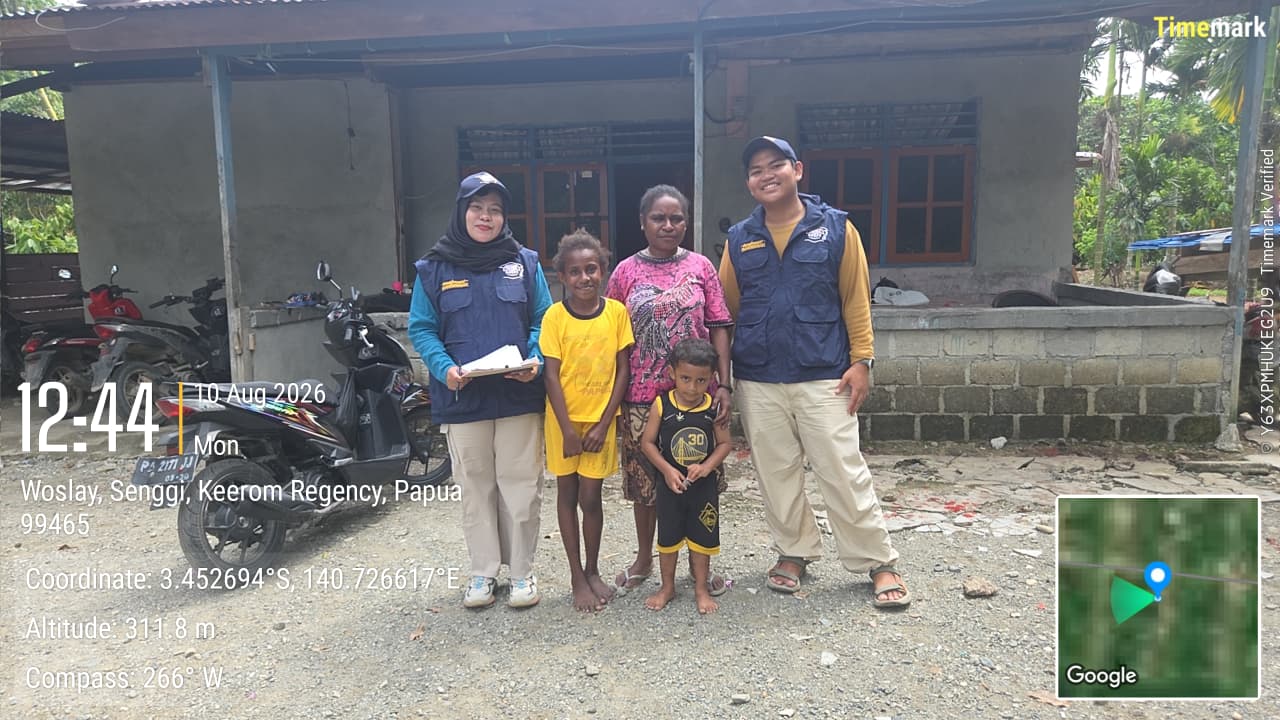
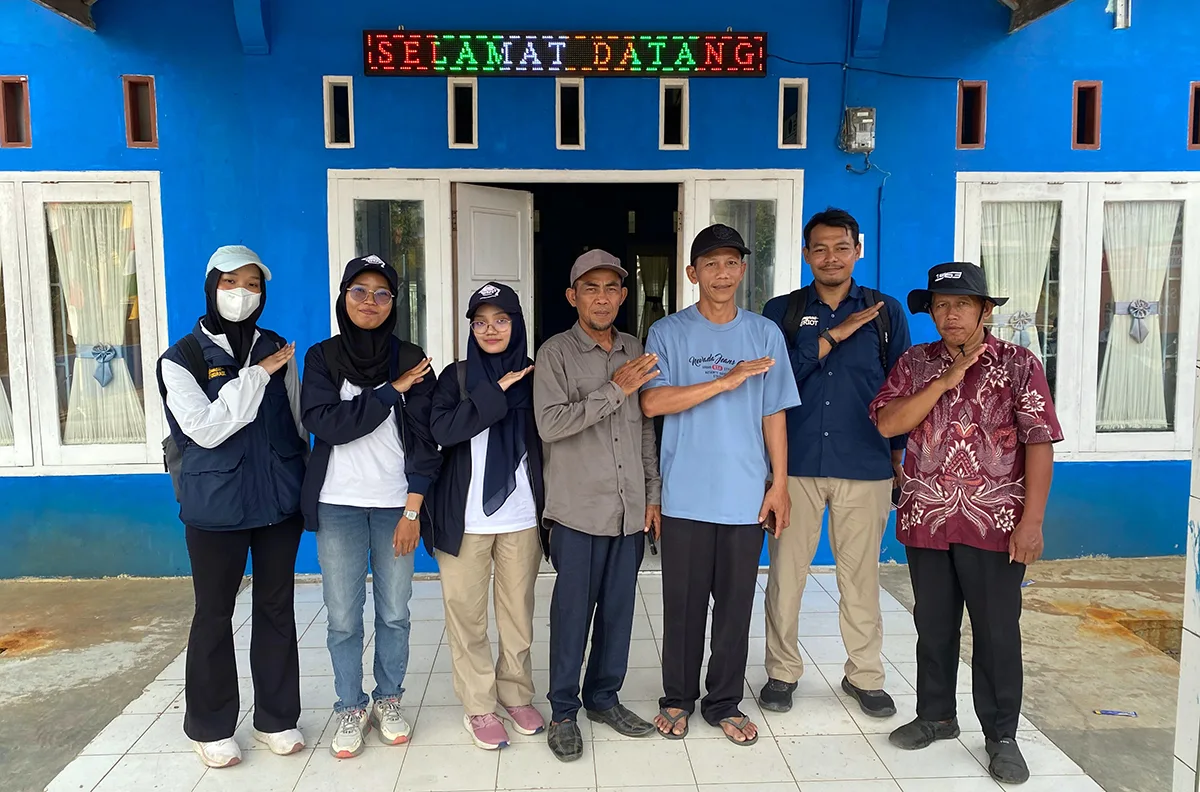

UNDIP, Senggi, Keerom Regency (11/9) – Team 18 of the Universitas Diponegoro (UNDIP) Patriot Expedition, led by Dr. Ling. Ir. Tri Joko, M.Si., along with team members Nurisma Zenita Dewi, S.Tr.T., M.Eng.; Ayu Sadriah, S.K.M.; Giananda, S.K.M.; Salzabila Maharani, S.PWK.; and Syafrichard Ihksan N, S.T., conducted a Clean and Healthy Living Behavior (Perilaku Hidup Bersih dan Sehat / PHBS) survey in the Senggi transmigration area, Keerom Regency, Papua. The activity involved direct visits to residents’ homes to identify environmental health conditions, access to clean water, sanitation facilities, and the community’s basic needs.
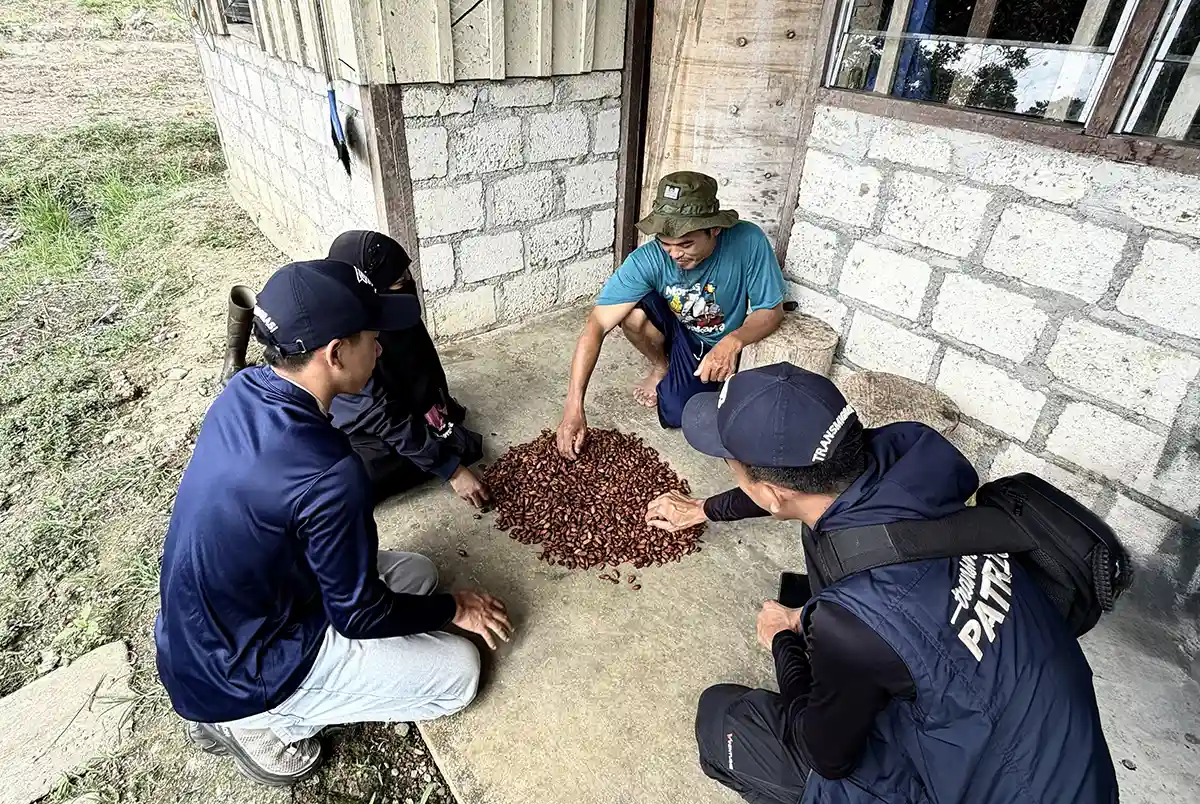
The survey was conducted comprehensively through in-depth interviews, direct observations of homes and surrounding environments, and interactive discussions with residents. This approach aimed to provide an accurate picture of residents’ daily habits and the adequacy of the facilities they use.
Household clean water management and sanitation were among the team’s main areas of focus. During the assessment, the team examined water sources, water use and storage practices, toilet conditions, wastewater management systems, and the cleanliness of residential areas. In addition to collecting data, the team provided education on the importance of keeping water containers clean, washing hands with soap, using proper sanitation facilities, and maintaining the surrounding environment.
Field interviews found that access to clean water and sanitation infrastructure remains a major challenge. The water from bore wells tends to be cloudy, prompting residents to use rainwater or purchase bottled water for consumption, while bore well water is used only for bathing and washing. “When we use bore wells, the water is usually cloudy. Almost every time we install or use a bore well, the water that comes out is not immediately clear,” said Budiyanto, a resident.
Meanwhile, household wastewater management still relies on manual collection behind homes, and regular handwashing has yet to become routine; residents generally wash their hands only when they feel their hands are dirty. “We rarely wash our hands before and after eating. Usually, we eat right away, especially when we are in a hurry,” said Andarwati, another resident.
These findings have become a key concern for the UNDIP Patriot Expedition Team in raising awareness about the importance of washing hands with soap and running water as a simple preventive measure. The practice needs to be consistently adopted to prevent potential diseases and improve health at the household level.
The field findings indicate that residents in the Senggi transmigration area continue to have a significant need for access to clean water and adequate sanitation infrastructure. Water availability, wastewater management, and awareness of clean and healthy living practices are important components that should be prioritized in planning spatial development and basic settlement infrastructure.
In addition to assessing clean and healthy living practices, the team collected data on electricity access and other supporting infrastructure to develop a comprehensive picture of the area. This two-way communication approach places residents’ voices and firsthand experiences at the center of developing targeted recommendations for future development.
Through this activity, the UNDIP Patriot Expedition Team hopes that the resulting mapping and field recommendations can contribute to sustainable improvements in the quality of life of the Senggi community. The team’s efforts also support the achievement of the Sustainable Development Goals (SDGs), particularly SDG 3 (Good Health and Well-Being) through public health education, SDG 6 (Clean Water and Sanitation) through mapping and strengthening clean water facilities, and SDG 11 (Sustainable Cities and Communities) through the development of basic infrastructure in the transmigration area. (Public Communication/UNDIP)