
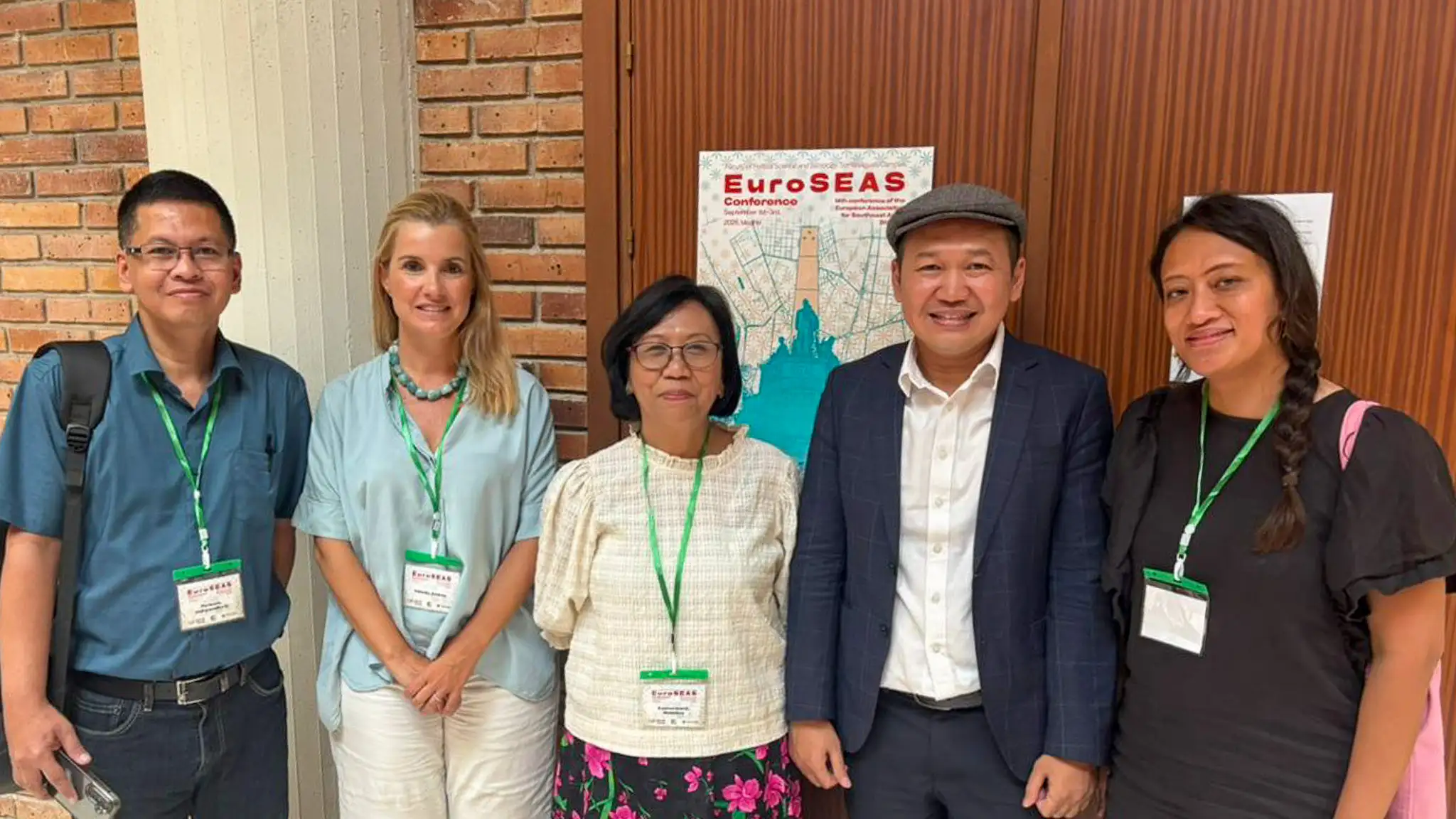
UNDIP, Madrid, Spain (14/9) – Universitas Diponegoro (UNDIP) once again demonstrated its engagement in the international academic arena. Wijayanto, Ph.D., an academic from the Department of Politics and Government and UNDIP Vice Rector for Research, Innovation, Cooperation, and Public Communication, presented research findings on climate change disinformation at the 2026 international conference of the European Association for Southeast Asian Studies (EUROSEAS), held at Universidad Complutense de Madrid (Complutense University of Madrid/UCM), Spain, on September 1–3, 2026.
At the international forum, Wijayanto, Ph.D., presented a paper titled “Beyond the Tide: Climate Disinformation, Religious Authority, and Coastal Vulnerability in Demak Regency.” The paper examines climate change issues in the northern coastal region of Java, with a particular focus on Demak Regency, Central Java, which faces significant vulnerability to climate and environmental change.
The paper explores how communities living amid the real and immediate threats of climate change understand and respond to the crisis as information and narratives circulate widely in the public sphere. The research specifically examines the relationship between climate change disinformation, religious authority, and the vulnerability of coastal communities.
In the context of Demak Regency, climate change is not merely a matter of sea-level rise, tidal flooding, coastal erosion, and environmental degradation. The crisis also unfolds within social and information environments, where communities develop their understanding of the causes of disasters and environmental changes, and of potential solutions, through various sources of information, including narratives circulating within communities and among religious authorities.
The presentation was part of an ongoing research project conducted in collaboration with researchers from the University of Amsterdam, Jaron Harambam and Lara De Poter. The research collaboration examines the relationships among climate change, information and disinformation, religious authority, and how communities understand and respond to the climate crisis in local contexts.
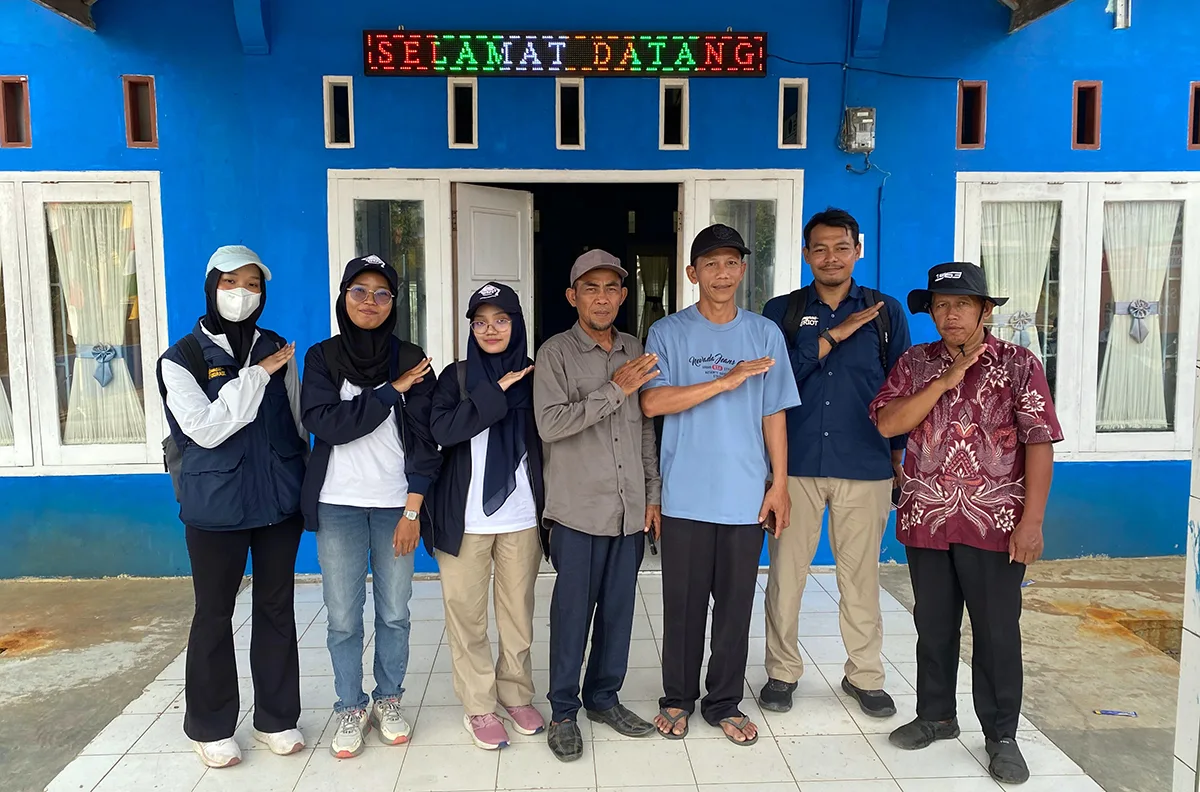
Previously, in mid-August 2026, Wijayanto, Ph.D., together with Jaron Harambam and Lara De Poter, visited research sites in Demak Regency. The field visit was an important part of the process of collecting and deepening research data. The research team observed conditions in coastal areas and explored community experiences in dealing with the impacts of climate change, as well as the various narratives surrounding the crisis.
Through this research, the team seeks to demonstrate that vulnerability to climate change is shaped not only by geographical and environmental conditions but also by information vulnerability. When communities directly experience the impacts of climate change, the quality of information and the sources of authority they trust can influence how they understand risks and make decisions.
“Climate crisis is not only an environmental issue but also an information issue. When communities directly face tidal flooding and various impacts of climate change, they also encounter different narratives that can influence their understanding of the causes, impacts, and possible solutions to these issues,” said Wijayanto, Ph.D.
The “Beyond the Tide” research also examines the role of religious authorities in shaping community understanding of environmental change and the climate crisis. In communities with strong social and religious ties, religious figures and institutions can serve as important sources for building understanding, trust, and collective responses to various challenges.
Therefore, the research does not view religious authorities solely as part of the problem but also as potential actors in public communication and climate change responses. Understanding the relationship between religion, information, and environmental vulnerability is important for developing more contextual climate adaptation and communication strategies.
“We need to view climate change more comprehensively. Adaptation efforts cannot rely solely on building physical infrastructure. We also need to understand how communities interpret this crisis, whom they trust, and what kinds of information shape their decisions,” Wijayanto, Ph.D., added.
Wijayanto’s presentation at EUROSEAS 2026 also provided an opportunity to bring local Indonesian issues into the global academic conversation. The experiences of communities along the northern coast of Java, particularly in Demak, offer important perspectives on how the climate crisis develops and is experienced differently at the local level.
He noted that international academic forums such as EUROSEAS provide an important platform for connecting local experiences with developments in global scholarship while fostering cross-country research collaboration. The collaboration between UNDIP and researchers from the University of Amsterdam also demonstrates the importance of international research networks in generating knowledge rooted in concrete issues faced by communities.
“The issues we face along the northern coast of Java may be local, but the challenges of climate change and disinformation are global. Therefore, it is important for us to bring the experiences of Indonesian communities into international discussions while also learning from experiences and research developments in other countries,” Wijayanto, Ph.D., explained.
The participation of UNDIP academics in the international conference aligns with Universitas Diponegoro’s commitment to strengthening the role of research and innovation in addressing strategic issues facing society.
UNDIP’s presence in the global academic arena is not only part of efforts to strengthen the university’s international reputation but also an effort to ensure that its research remains relevant and delivers tangible benefits.
This aligns with the spirit of “Noble and Valuable UNDIP”. Through research rooted in real-world community issues, UNDIP seeks to make strong and meaningful academic contributions internationally while producing knowledge and innovations that benefit society.
“For UNDIP, internationalization is not merely about participating in global forums or enhancing international reputation. More importantly, it is about how the knowledge we generate from the experiences and challenges faced by Indonesian communities can contribute to the world. At the same time, global networks can help us deliver better solutions for society,” Wijayanto, Ph.D., emphasized.
By addressing climate change disinformation, religious authority, and the vulnerability of coastal communities in Demak through the paper “Beyond the Tide: Climate Disinformation, Religious Authority, and Coastal Vulnerability in Demak,” UNDIP has reaffirmed its commitment to developing research rooted in local issues while maintaining global relevance.
Through collaboration with researchers from the University of Amsterdam, the research is expected to strengthen understanding of the relationship between climate change, information ecosystems, social authority, and communities, while contributing to the development of communication strategies, information literacy, and climate change adaptation policies that are more responsive to the needs of coastal communities. (Public Communication/UNDIP)