

UNDIP, Semarang (15/7) – Indonesia and China have marked a new chapter in maritime vocational education cooperation through the launch of the “Sino-Indonesian Shipbuilding Technology Academy (SISTA)” at the Vocational School of Universitas Diponegoro (SV UNDIP). The academy is expected to serve as a collaborative platform that connects higher education institutions, industry, and strategic partners from both countries to prepare highly skilled, adaptive, and globally competitive maritime human resources.
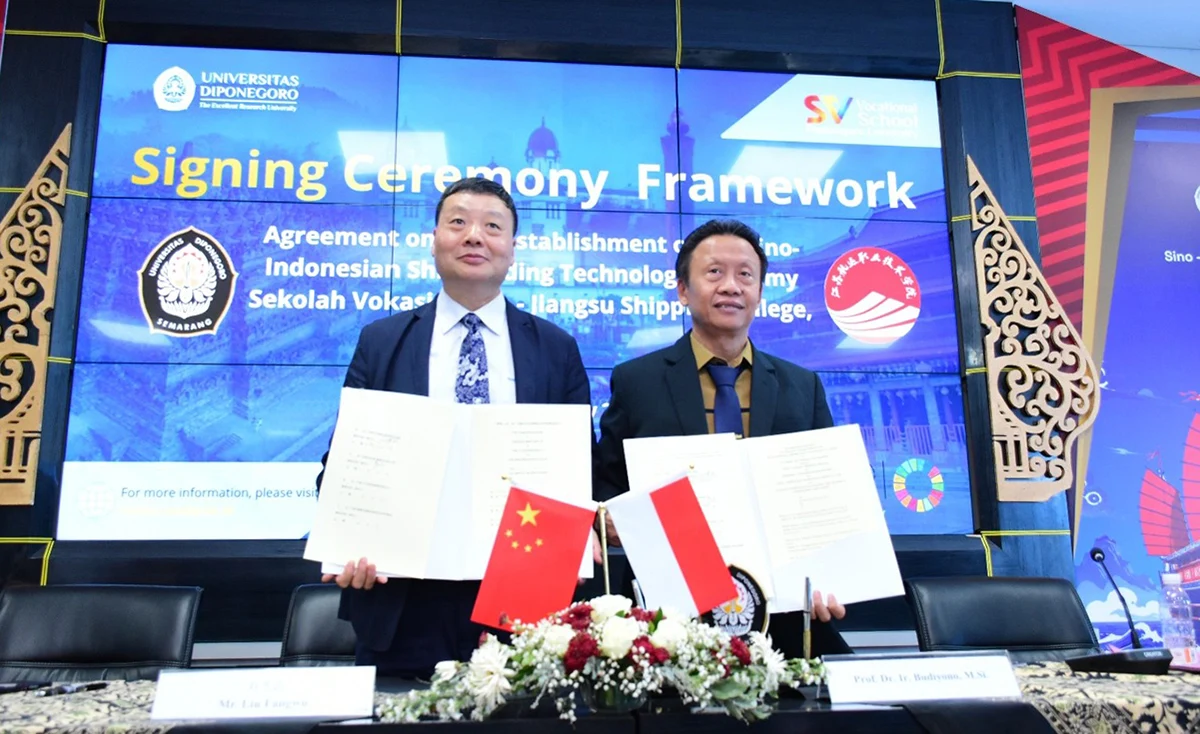
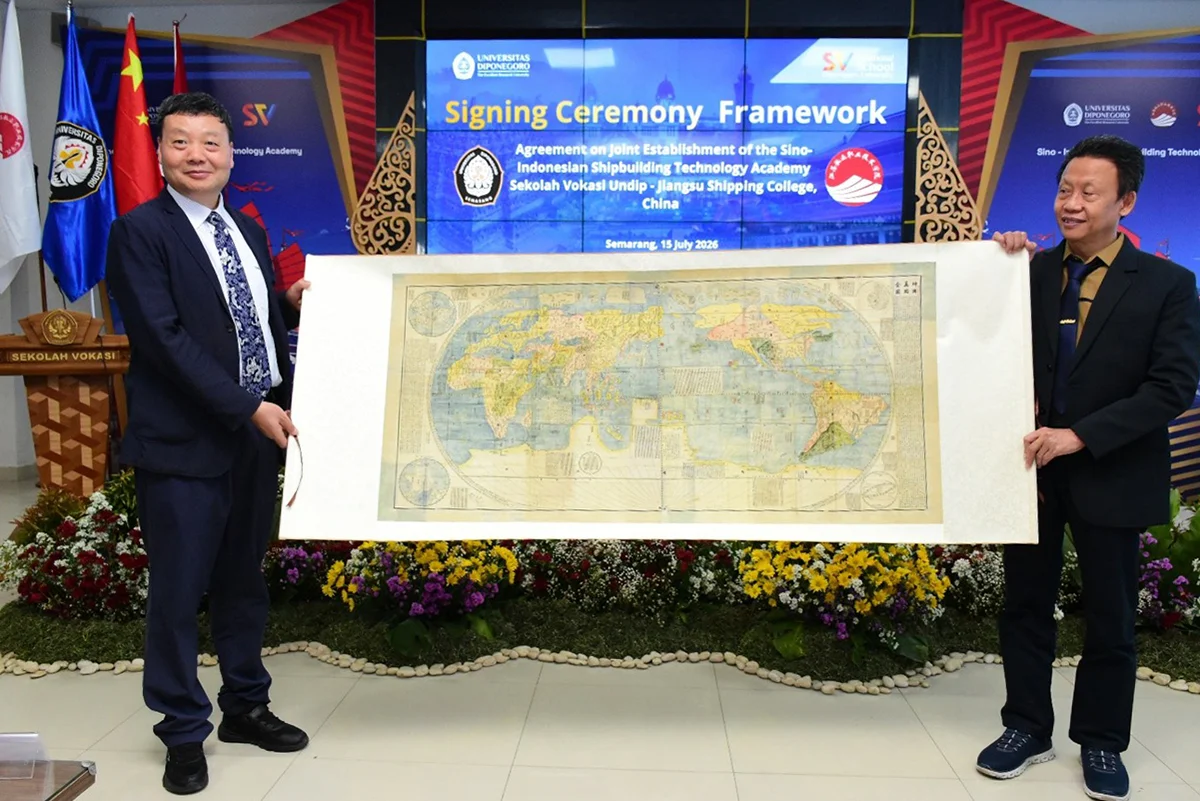
The launch of the academy was marked by the signing of a Framework Agreement by four institutions: Jiangsu Shipping College (JSSC), the Vocational School of Universitas Diponegoro, Zhongtian Technology Group Marine Engineering Co., Ltd., and the Nantong International Economic and Technical Cooperation Association (NTFEC). The event also featured the unveiling of the Sino-Indonesian Shipbuilding Technology Academy plaque, symbolizing the beginning of long-term Indonesia–China collaboration in maritime vocational education.
The Framework Agreement was signed by the Director of Jiangsu Shipping College, Mr. Liu Fangwu, and the Dean of the Vocational School of Universitas Diponegoro, Prof. Dr. Ir. Budiyono, M.Si., and witnessed by UNDIP Vice Rector IV, Wijayanto, S.IP., M.Si., Ph.D., together with university leaders, industry partners, lecturers, and students from Indonesia and China.
Collaboration Immediately Put into Action
Unlike many international partnerships that end with the signing of documents, the establishment of the Sino-Indonesian Shipbuilding Technology Academy was immediately followed by a range of implementation measures.
On the same day, an Implementation Agreement involving 14 institutions and companies was signed. The participating parties consisted of five schools/departments from Jiangsu Shipping College, five companies, the Politeknik Maritim Negeri Indonesia (Polimarin), and the Politeknik Ilmu Pelayaran (PIP) Semarang. This agreement represents a commitment to accelerate the implementation of academic programs, training, applied research, and maritime human resource development.
Cooperation agreements were also signed with three companies from China and two companies from Indonesia, ensuring that the collaboration not only connects higher education institutions but also strengthens industry involvement from the outset.
This cooperation model reflects a quadruple helix approach, bringing together higher education institutions, industry, professional organizations, and maritime education institutions within an integrated collaborative ecosystem.
International Summer Course as the First Implementation
The academy’s launch was held alongside the International Summer Course 2026, which was attended by 103 students from Jiangsu Shipping College, the Politeknik Maritim Negeri Indonesia, and the Vocational School of Universitas Diponegoro.
The Jiangsu Shipping College delegation consisted of 25 students who attended in person in Semarang, 50 students who participated online, and 10 lecturers from various fields of expertise.
The International Summer Course featured materials from five study programs with international perspectives from five countries: China, the United States, Germany, Japan, and Malaysia. The program was designed to broaden students’ academic perspectives, strengthen global competencies, and introduce developments in global maritime technology and industry.
As part of the program, participants also visited the Zheng He Exhibition, which presented Admiral Zheng He’s voyages and the history of maritime relations between Indonesia and China. The visit symbolized that the collaboration between the two countries is built not only on technology and education but also on a long history of friendship and cultural exchange.
Addressing National Challenges
Indonesia is the world’s largest archipelagic country, with more than 17,000 islands and a strategic position along international trade routes. At the same time, the development of the shipbuilding industry, maritime logistics, offshore energy, and marine transportation requires a workforce with global competencies and the ability to adapt to technological advancement.
In this context, international collaboration between higher education institutions and industry is becoming increasingly important for producing graduates who not only possess technical skills but also have international experience, cross-cultural working skills, and an understanding of global industry standards.
The establishment of the Sino-Indonesian Shipbuilding Technology Academy is expected to serve as a model for the development of vocational education, addressing these needs through synergy among education, applied research, innovation, and industry.
Building Global Maritime Talent
Dean of the Vocational School of Universitas Diponegoro, Prof. Dr. Ir. Budiyono, M.Si., stated that the establishment of the Sino-Indonesian Shipbuilding Technology Academy is a strategic step toward strengthening collaboration among higher education institutions, industry, and international partners to develop globally competitive maritime talent.
“We are not merely signing a cooperation agreement, but building a collaborative ecosystem that connects education, industry, and innovation. Through the Sino-Indonesian Shipbuilding Technology Academy, we want to provide more opportunities for students to gain international experience, develop global competencies, and become better prepared to enter the maritime industry of the future,” Budiyono said.
According to him, the future of vocational education depends on the ability to build international networks and strengthen connections with industry. “The future of vocational education is built through collaboration. When higher education institutions, industry, and international partners work together, we are not only educating students, but also preparing global talent who will shape the future of the maritime industry.”
Support from the University and International Partners
UNDIP Vice Rector IV, Dr. Wijayanto, expressed his appreciation for the expanding international network developed by the Vocational School of Universitas Diponegoro.
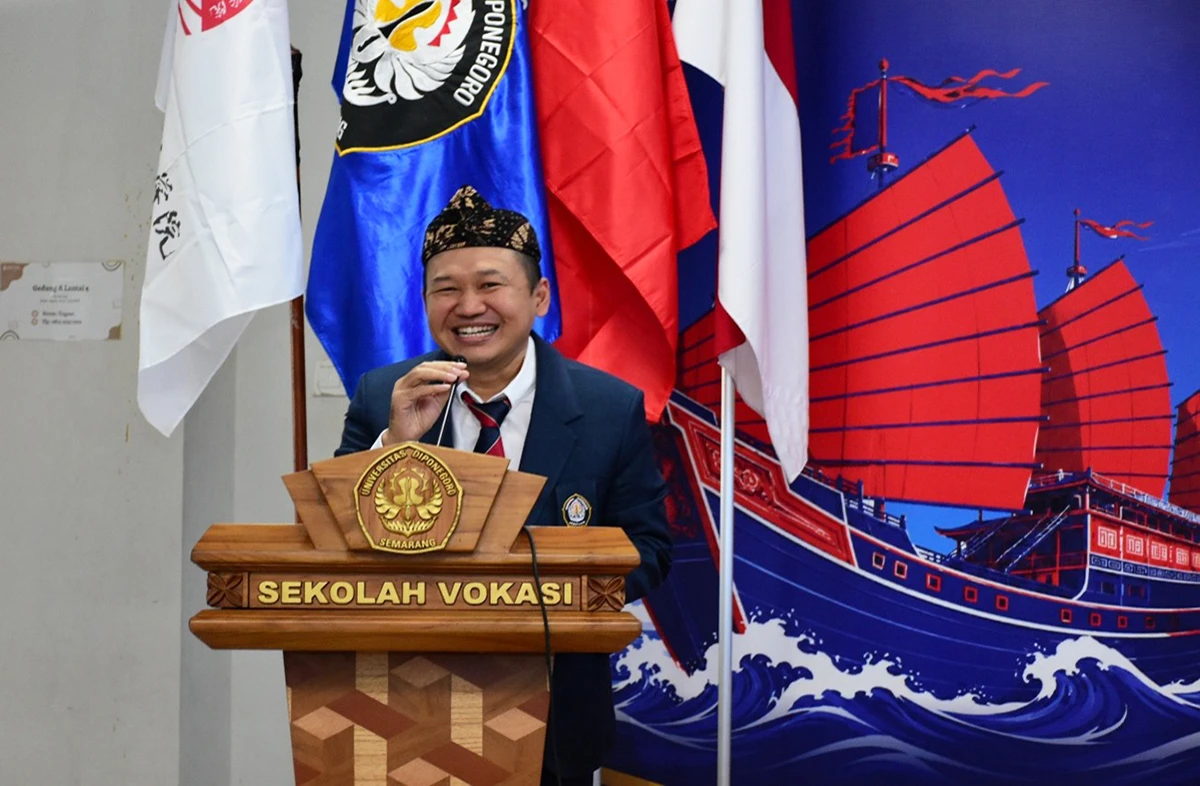
According to him, the collaboration further strengthens Universitas Diponegoro’s position as a university that is both noble and valuable, while also demonstrating that vocational education plays a strategic role in supporting national development through international cooperation.
Meanwhile, Director of Jiangsu Shipping College, Mr. Liu Fangwu, expressed optimism regarding the future of cooperation between the two institutions.
“Universitas Diponegoro is one of the well-known universities in Indonesia. We are confident this partnership will grow successfully. We warmly welcome lecturers and students from the Vocational School of Universitas Diponegoro to visit Jiangsu Shipping College for academic exchanges, study visits, and collaborative programs.”
A Symbol of Indonesia–China Friendship
On the occasion, the Jiangsu Shipping College delegation also presented a replica of the Silk Road Map to the Vocational School of Universitas Diponegoro as a symbol of friendship and the spirit of building new connectivity through education, technology, and innovation. The map serves as a reminder that maritime relations between Indonesia and China have existed since the voyages of Admiral Zheng He and are now entering a new chapter through collaboration in vocational education, shipbuilding technology development, and human resource development.
Collaboration for the Future
The Sino-Indonesian Shipbuilding Technology Academy is a collaborative platform that brings together higher education institutions, industry, and strategic partners from Indonesia and China to develop globally competitive maritime talent. The academy will develop a range of strategic programs, including student and lecturer exchanges, joint training, applied research, innovation in shipbuilding technology, curriculum development, competency certification, and international industry internships.
Through this collaboration, a new generation of maritime professionals is expected to emerge—highly skilled, innovative, and ready to address the challenges of the future maritime industry—while further strengthening sustainable cooperation between Indonesia and China in education, technology, and human resource development.
As reflected in the spirit of the academy’s launch: “Partnership creates opportunities. Opportunities develop talents. Talents build the future.”
(Public Communication/UNDIP)