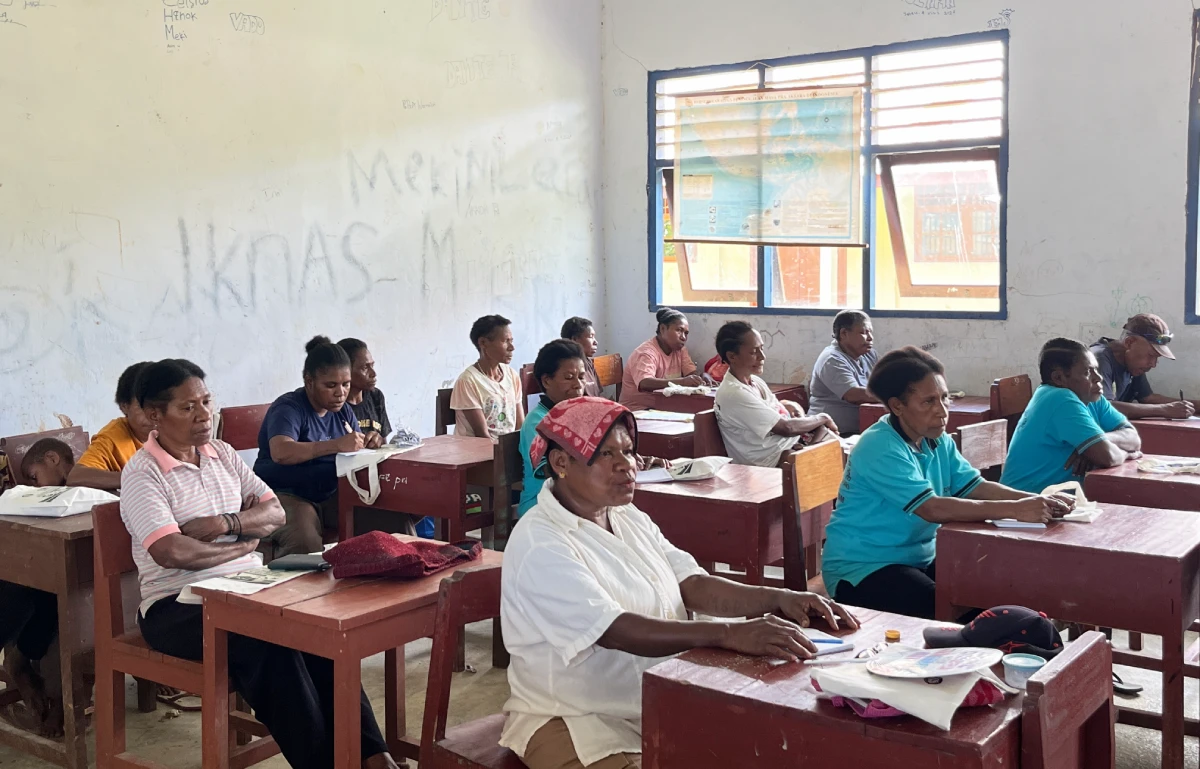
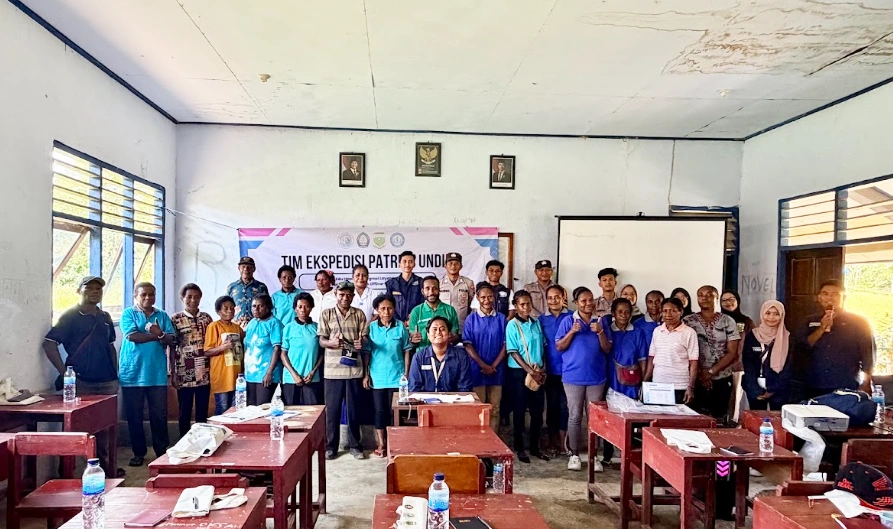
UNDIP, Yaffi, Keerom Regency (14/10) – The Universitas Diponegoro Patriot Expedition Team (TEP UNDIP), through Team 6 Edu-Health Yaffi, strengthened the capacity of community health cadres through a training program entitled “Strengthening the Role of Health Cadres in Community-Based Health Communication and Education,” held at SMP Negeri 2 Web, Yaffi District, Keerom Regency, Papua, on Thursday (10/9). The activity formed part of efforts to expand access to health education in areas with limited healthcare services.
The program was initiated in response to healthcare challenges in the Yaffi area. Long distances between villages, road conditions, weather, and limited communication infrastructure mean that healthcare services cannot always reach communities quickly. Under these circumstances, cadres who live among and interact directly with residents play an important role in ensuring that health information continues to reach the community.
TEP UNDIP’s Strategic Role in Training Health Cadres in Remote Areas
The training was attended by 30 participants, including village heads, the head of the community health center (Puskesmas), malaria cadres, and Posyandu cadres. Nella Tri, a health administration practitioner, served as the speaker, focusing on strengthening the role of cadres in maternal and child health education, Posyandu services, and malaria prevention.
The training emphasized that cadres are not substitutes for healthcare professionals. Instead, cadres serve as a bridge between communities, community health centers, and healthcare workers, particularly in recognizing conditions that require attention, communicating appropriate health messages, and encouraging residents to seek examinations and treatment from qualified professionals.
The close relationship between cadres and residents is an important asset because cadres come from the communities themselves, making them relatively easier to reach, listen to, and trust. However, their work continues to face challenges, particularly in hard-to-access villages. “Malaria cadres face difficulties in reaching communities due to challenging access conditions and communication barriers. This is one of the main challenges in carrying out their duties,” said Jakson, a representative of malaria cadres from Jifanggri Village.
According to Jakson, improving cadres’ knowledge must be accompanied by good communication skills so that health education can be effectively received by the community. “We hope the training can improve the cadres’ knowledge and confidence in providing health education. The better the cadres understand malaria, the better their ability to communicate information to the community,” he said.
Educational Media and Synergy to Strengthen Healthcare Resilience
Strengthening cadre capacity focuses not only on expanding knowledge but also on improving their ability to communicate information in simple, engaging ways appropriate to local conditions. The training introduced the use of modules, posters, flip cards, and flash cards as educational tools that can be reused during health outreach activities, community discussions, and village-level assistance.
During the malaria session, participants strengthened their understanding of recognizing symptoms, preventing mosquito bites, maintaining environmental cleanliness, and the importance of directing residents to consult healthcare professionals. Cadres were also reminded not to encourage self-medication based solely on symptoms. In this way, cadres can support early detection while helping communities access appropriate healthcare services.
Similar challenges are also experienced by healthcare service providers. Head of the Yaffi Community Health Center, Betty, highlighted the distance between several villages and healthcare facilities, as well as the impact of weather conditions on healthcare workers’ mobility. “Villages located far from the community health center face difficulties in accessing healthcare services. The Puskesmas also faces challenges in reaching these villages, especially during rain or poor weather conditions,” she said.
The question-and-answer and discussion sessions provided participants with opportunities to share field experiences, ranging from limited access to the need to strengthen communication among cadres, communities, the Puskesmas, local government, and other stakeholders. The discussion demonstrated that healthcare resilience in remote areas depends not only on the availability of facilities, but also on effective communication and coordination among all parties.
Through this activity, Team 6 Edu-Health Yaffi encourages cadres to become local champions in strengthening health promotion and preventive efforts within their communities. Equipped with communication skills, appropriate educational media, and stronger synergy with stakeholders, this capacity-building initiative is expected to overcome access limitations, ensuring that health information and services continue to reach residents, even in the most remote areas. Amid the geographical challenges of Yaffi District, healthcare services do not rely solely on facilities. Their strength also grows from cadres who live, work, and are trusted within the communities they serve.
In line with the spirit of community service and assistance in Papua’s border areas, Head of the UNDIP Institute for Research and Community Service (LPPM), Prof. Dr.-Ing. Suherman, S.T., M.T., reaffirmed the institution’s commitment:
“The UNDIP Patriot Expedition is a tangible manifestation of higher education institutions being directly present to respond to community needs. We want to ensure that UNDIP’s knowledge, innovations, and research findings provide tangible benefits, particularly in strengthening food security, improving nutrition, and creating economic opportunities based on local potential,” Prof. Suherman said.
Efforts to strengthen the role of health cadres also support the achievement of the Sustainable Development Goals (SDGs), particularly SDG 3 (Good Health and Well-Being) through stronger health education and access to public health information, SDG 4 (Quality Education) through capacity building for cadres in communication and education, and SDG 17 (Partnerships for the Goals) through collaboration among communities, cadres, community health centers, local government, and other stakeholders. (Public Communication/UNDIP)