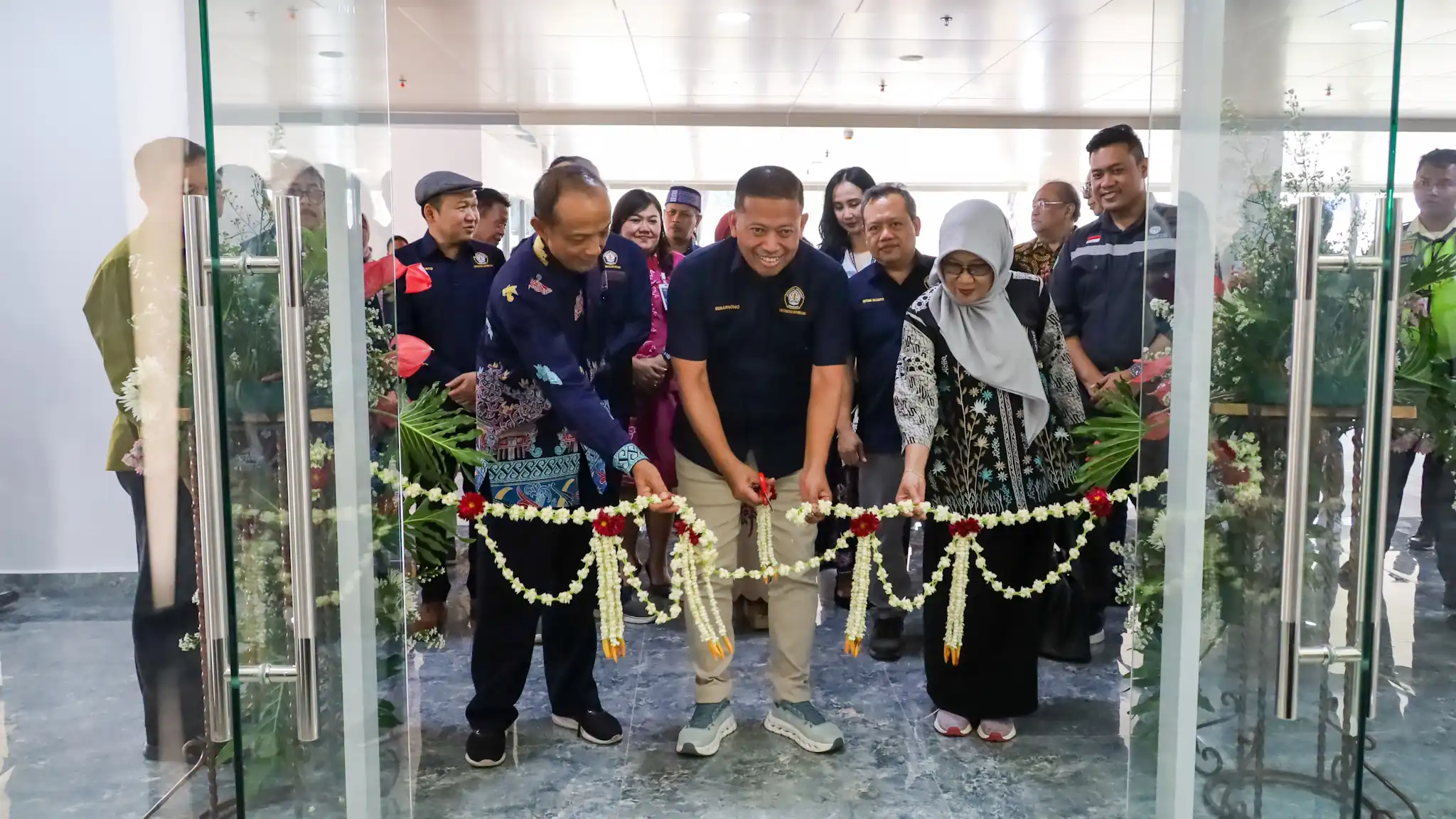
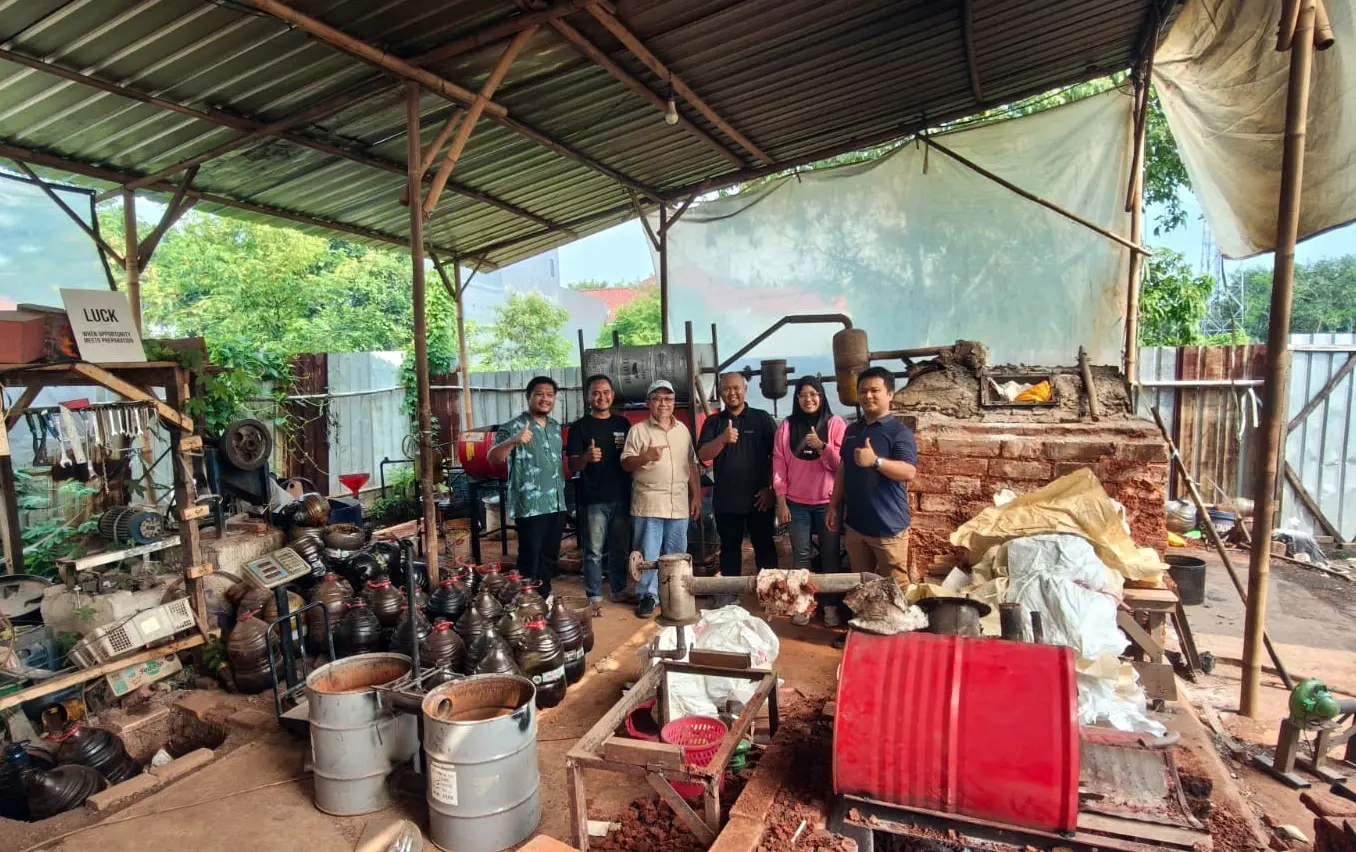
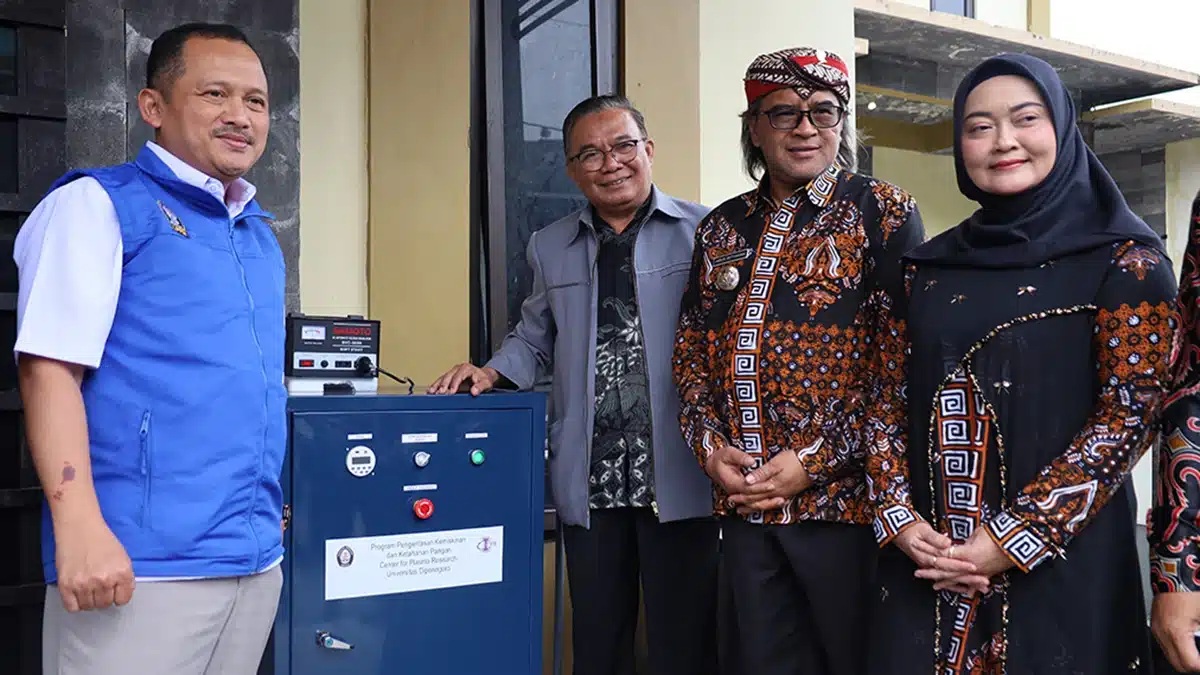
UNDIP, Temanggung (21/1) – Universitas Diponegoro, through the Institute for Research and Community Service (LPPM), handed over ozone plasma equipment and solar dryers to the Temanggung Regency Government. The handover ceremony took place at the Campurejo Village Hall, Tretep Subdistrict, Temanggung Regency. It was attended by regional leaders, representatives of the Regional House of Representatives (DPRD), and community figures. The provision of ozone plasma and solar dryer equipment aligns with the Tri Dharma of Higher Education, specifically community service programs aimed at strengthening food security, improving the quality of agricultural products, and enhancing the welfare of the people of Campurejo Village, Temanggung Regency.
The Head of LPPM UNDIP, Prof. Dr. Ing. Suherman, S.T., M.T., representing the Rector of Universitas Diponegoro, stated in his remarks that UNDIP, through LPPM, continues to develop research outcomes that are directly applicable to the community. The activities carried out in Temanggung Regency reflect UNDIP’s tangible commitment and contribution to society, realized through the Poverty Alleviation and Food Security Program initiated by the Rector of Universitas Diponegoro, Prof. Dr. Suharnomo, S.E., M.Si., and implemented through LPPM UNDIP.
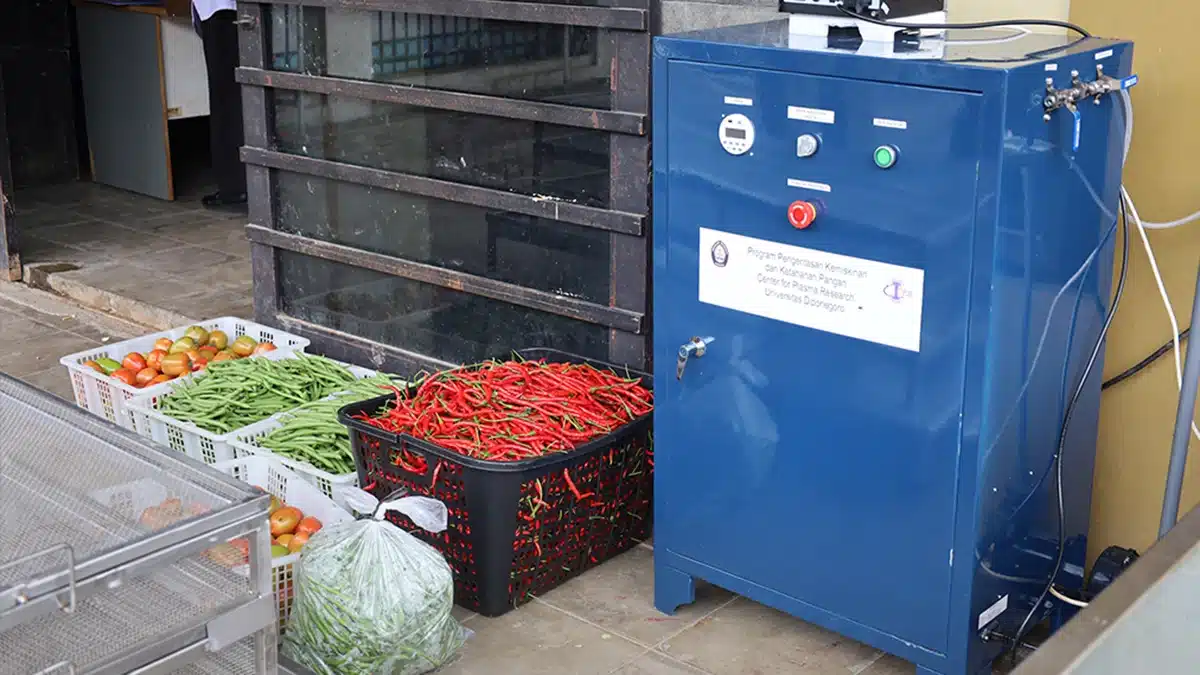
The Vice Head for Research at LPPM UNDIP, Prof. Firmansyah, S.E., M.Si., Ph.D., added that the ozone plasma device, an innovation by Prof. Dr. Muhammad Nur, DEA, a lecturer at the Faculty of Science and Mathematics (FSM) UNDIP, primarily functions to extend the shelf life of agricultural products such as chili peppers and various other vegetables. Chili peppers, which normally last only about three days, can be preserved for up to one week or more; when combined with cold storage, their shelf life can be extended to two to three months. With a longer shelf life, farmers are no longer forced to sell their harvest quickly during peak harvest periods, allowing prices to stabilize and farmers to control the timing of sales better. This condition directly impacts farmers’ income stability while keeping consumer prices reasonable and contributes to regional inflation control. Meanwhile, the solar dryer, an innovation by Prof. Dr. Ing. Suherman, S.T., M.T., can significantly shorten the drying time of agricultural commodities such as coffee, corn, rice grains, and others, making post-harvest processing far more efficient, especially during the rainy season.
The Regent of Temanggung, Agus Setyawan, expressed strong appreciation to Universitas Diponegoro, particularly the Institute for Research and Community Service, for its concern and contribution to community empowerment. He explained that Campurejo Village has diverse agricultural potential; therefore, the provision of ozone plasma and solar dryer equipment is considered well-targeted to support locally based, potential-driven rural economic development.
Meanwhile, UNDIP researcher Prof. Dr. Muhammad Nur, DEA, highlighted another advantage of ozone plasma technology—its ability to reduce spoilage and pesticide residues. Through ozone washing, conventionally grown agricultural products can achieve quality comparable to organic produce, thereby increasing market value and enabling acceptance in modern markets while maintaining quality and nutritional value.
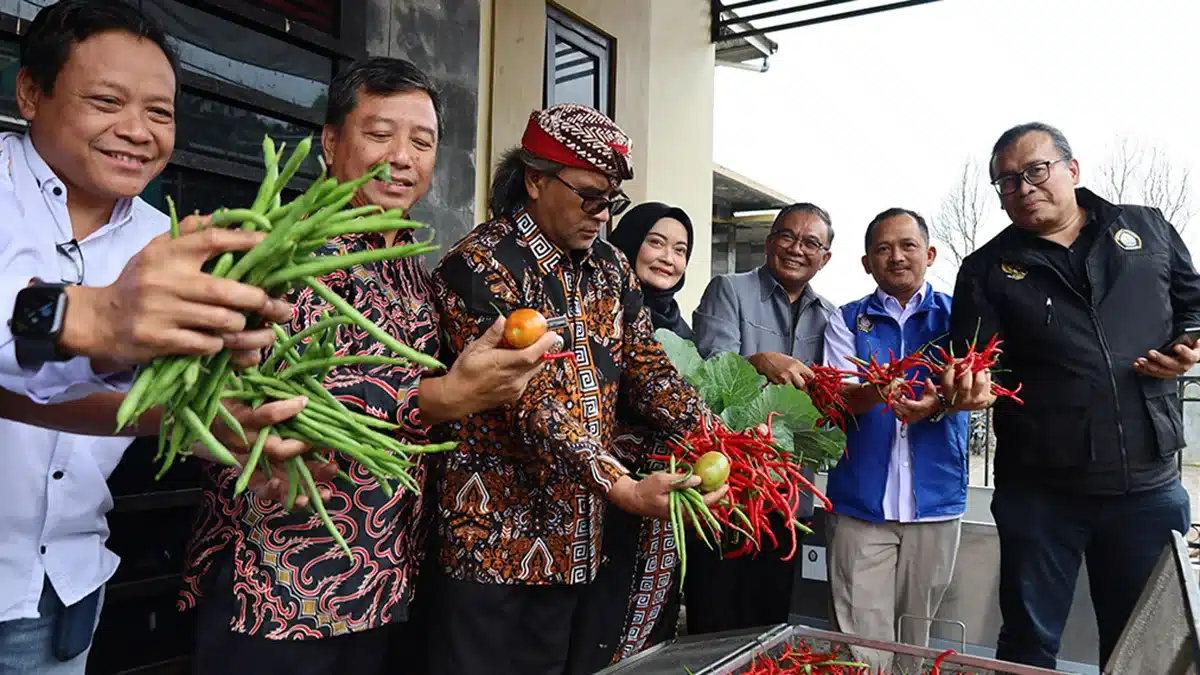
When combined with cold storage systems, ozone plasma technology can extend product shelf life by two to three months. This technology allows farmers to manage inventory gradually and avoid post-harvest losses (food loss), which have historically been quite significant.
Prof. Dr. Ing. Suherman, S.T., M.T., further explained that the solar dryer is designed using a hybrid system powered by solar energy and infrared technology. This dryer is expected to be highly beneficial for regional flagship commodities such as coffee and other agricultural products, as it accelerates the drying process and increases the added value of harvested produce.
On this occasion, only one unit of equipment was handed over, while the remaining units are still in progress.
This technology forms part of Universitas Diponegoro’s program to strengthen poverty alleviation and food security. The approach emphasizes the use of technology as a primary solution to increase the value and output of agricultural production without expanding land area, particularly for small-scale farmers in rural areas. (Public Communication/UNDIP/Ut & Sdq)