
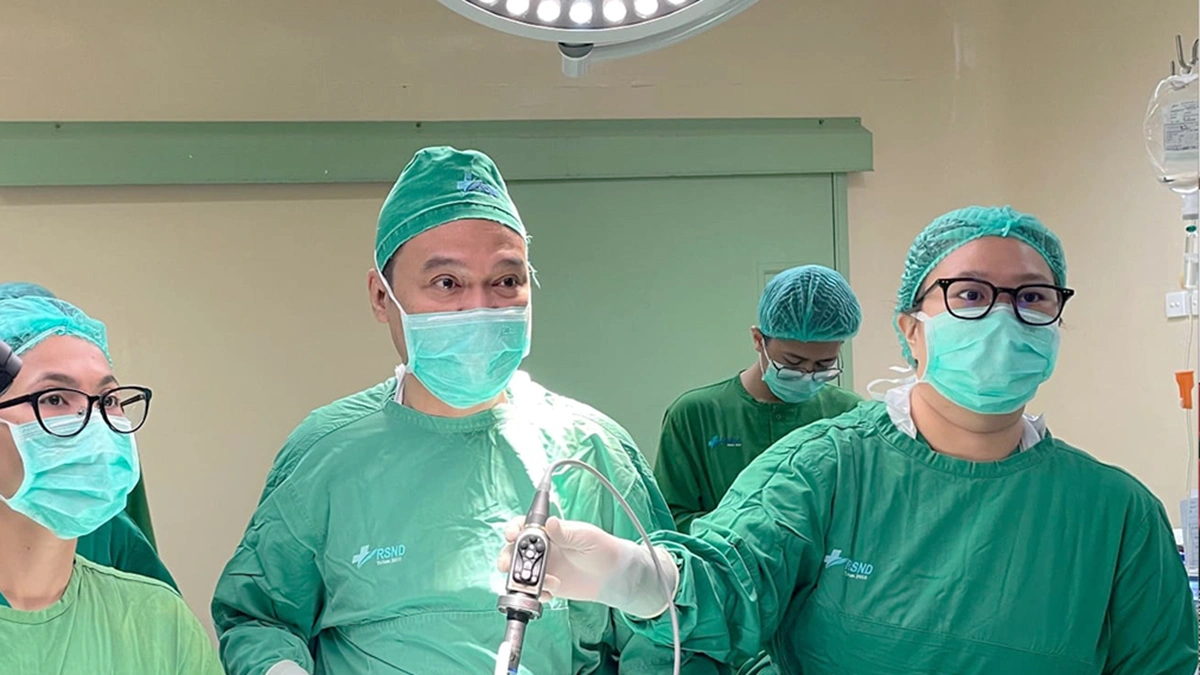
UNDIP, Semarang (2/7) – The Diponegoro National Hospital of Universitas Diponegoro (RSND UNDIP) has achieved a significant milestone in the development of pediatric surgical services in Indonesia. On Friday, June 26, 2026, RSND’s pediatric surgery team successfully performed a Video-Assisted Thoracoscopic Surgery (VATS) procedure to treat esophageal atresia in an infant. This surgery marks the first time the procedure has been carried out in Indonesia by RSND’s pediatric surgery team.
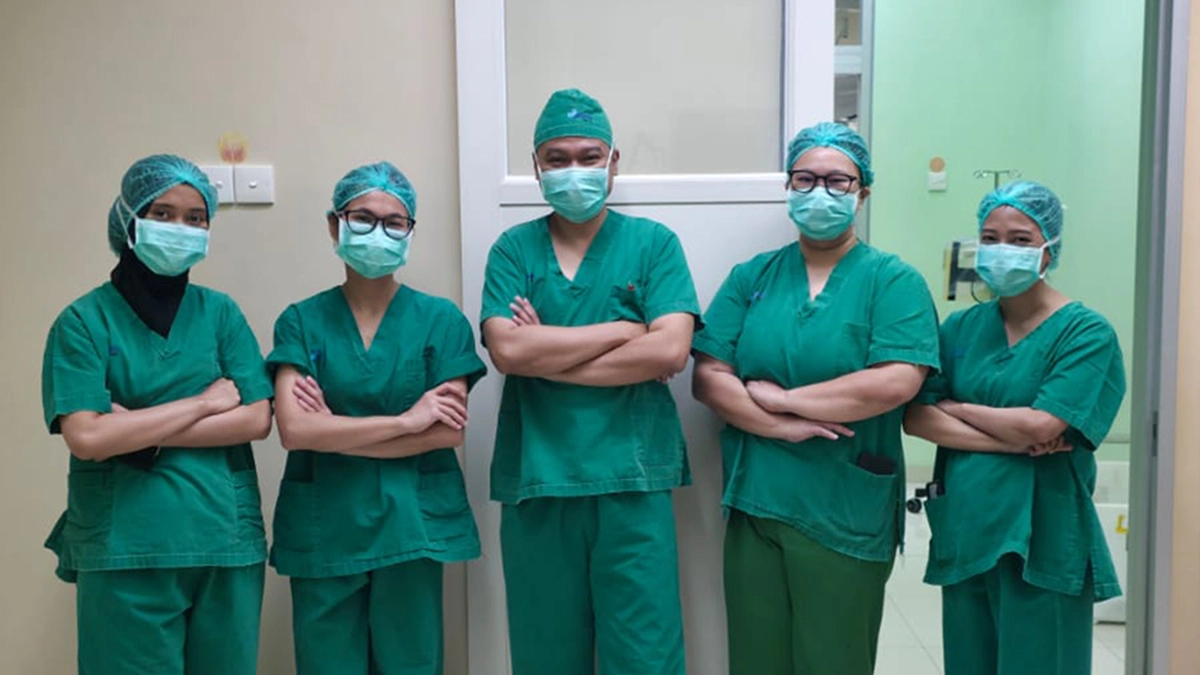
The surgery was led by Dr. dr. Agung Aji Prasetyo, M.Si.Med, Sp.BA, together with a multidisciplinary team consisting of pediatric surgeons, pediatric anesthesiologists, and neonatal consultants. This achievement represents a major step forward in RSND UNDIP’s efforts to develop technology-based, minimally invasive pediatric surgical services for infants with complex congenital disorders that require exceptional expertise, precision, and comprehensive neonatal and pediatric intensive care support.
Dr. Agung explained that esophageal atresia is a relatively rare congenital condition in newborns. In this condition, the esophagus fails to develop properly, preventing the baby from swallowing normally. In some cases, the lower segment of the esophagus may also be connected to the airway through a fistula, an abnormal passage. This condition can lead to aspiration, where fluids, breast milk, or stomach contents enter the lungs, causing serious respiratory complications.
According to dr. Agung, treatment for esophageal atresia cannot be delayed because it is directly linked to the infant’s survival. “In esophageal atresia, babies cannot swallow normally. Milk or fluids that should enter the digestive tract can reflux and potentially enter the lungs. Therefore, infants with this condition must receive immediate treatment,” dr. Agung stated on Thursday, July 2, 2026.
He emphasized that the greatest challenge in treating esophageal atresia lies not only in the surgical procedure itself but also in the readiness of the entire support system. Infants with this condition require access to NICU/PICU facilities, pediatric anesthesiologists, neonatal consultants, specially trained nurses, and strong multidisciplinary collaboration from the preoperative stage through recovery.
“A single individual cannot perform esophageal atresia surgery. It is truly a team effort. It requires pediatric surgeons, pediatric anesthesiologists, neonatal consultants, nurses, and comprehensive neonatal care facilities. Everything must work together seamlessly,” he explained.
Traditionally, esophageal atresia in Indonesia has been treated through open surgery. While technically less demanding, open surgery results in larger incisions and generally requires a longer recovery period. In infants—especially premature babies or those with low birth weight—the procedure is particularly challenging because the organs are extremely small and located near vital structures such as the lungs, aorta, major blood vessels, nerves, and airways.
“A baby’s esophagus is incredibly small—often much smaller than an adult’s little finger. It is located deep within the chest cavity and surrounded by critical organs and blood vessels. That is why every step must be performed with the utmost care,” dr. Agung noted.
Through the VATS approach, the procedure is performed using a camera and specialized instruments inserted through small incisions. This technique provides enhanced visualization while minimizing tissue trauma.
“With camera assistance, anatomical structures inside the chest cavity can be seen much more clearly, even when they are extremely small. This method allows us to work with greater precision, especially because the esophagus is located close to vital organs such as the lungs, major blood vessels, and nerves,” dr. Agung explained.
Despite its advantages, the procedure presents considerable challenges. The high level of technical difficulty, the need for experienced surgeons, and specialized anesthesia support for infants are all crucial factors in ensuring success. During the operation, one of the infant’s lungs must be carefully managed to provide adequate working space and visibility, requiring advanced expertise from the anesthesia team.
To date, RSND has successfully managed more than 20 cases of esophageal atresia with favorable outcomes. The adoption of VATS represents a strategic effort to improve service quality further while keeping pace with global medical practices, in which minimally invasive techniques have become increasingly standard.
“In many developed countries, this method has become routine practice. In Indonesia, its implementation remains limited due to factors such as resource readiness and cost considerations. Nevertheless, we believe innovations like this must continue to be developed so that healthcare services in Indonesia can meet international standards,” Dr. Agung concluded.
Following surgery, patients receive intensive care in the NICU with support from neonatal consultants and comprehensive medical facilities to ensure optimal recovery. This integrated approach plays a vital role in improving both treatment success rates and patients’ long-term quality of life.
Looking ahead, RSND is committed to further strengthening its medical teams’ capabilities and expanding the use of minimally invasive surgical technologies. These efforts are expected not only to provide better clinical outcomes but also to pave the way for broader healthcare innovation in Indonesia. This achievement further highlights the role of Universitas Diponegoro, through RSND, as an institution that actively advances medical science and delivers meaningful healthcare solutions to society. (Public Communication / UNDIP / DHW)