
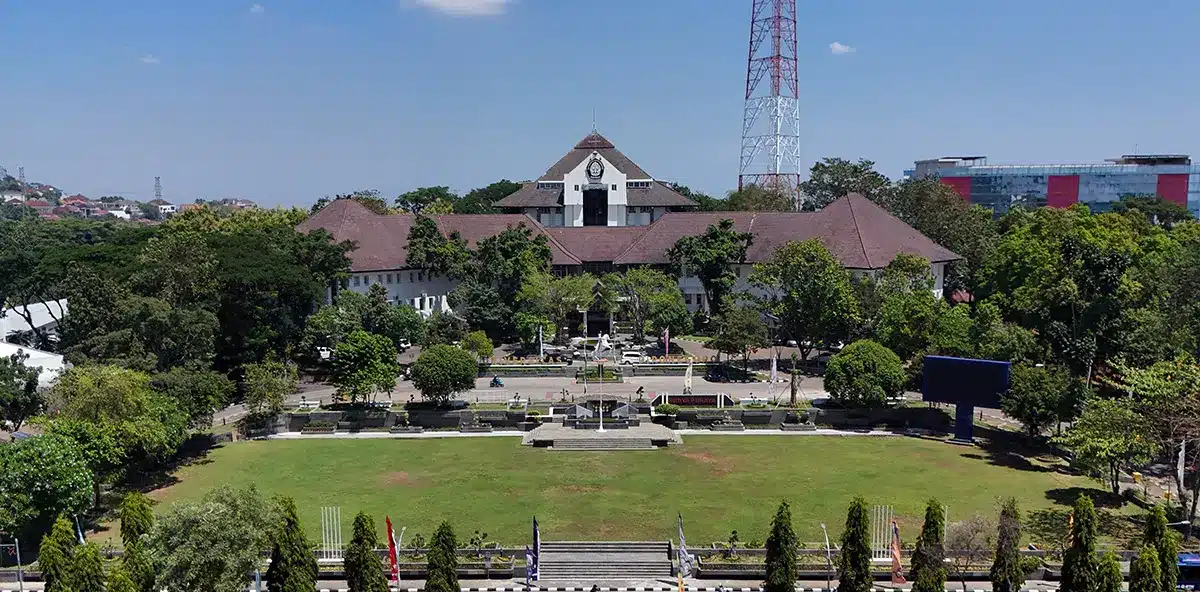
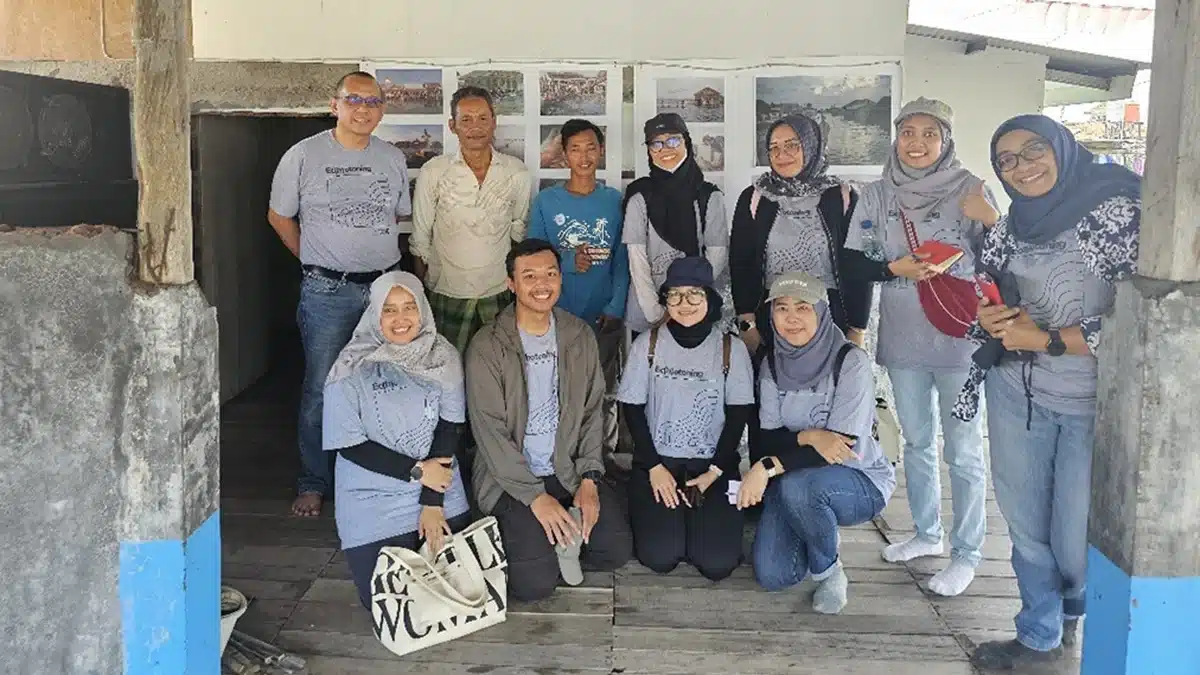
UNDIP, Semarang (21/2) – Flooding in Semarang City is a complex issue resulting from interconnected urban dynamics. Universitas Diponegoro (UNDIP), as an academic institution, supports efforts to address this problem through its role as a core partner in the international network Global Center of Spatial Methods for Urban Sustainability (SMUS – www.gcsmus.org), coordinated by Technische Universität Berlin and funded by the German government. The research aims to provide scientific and sustainable solutions. SMUS research focuses on wicked urban problems, namely complex urban issues that require interdisciplinary spatial approaches.
Flooding in Central Java represents a clear example of such wicked urban problems. A single factor does not cause the issue but arises from a combination of interrelated conditions. Prof. Dr.-Ing. Wiwandari Handayani, a member of the SMUS research team and an expert from UNDIP’s Department of Urban and Regional Planning, explained, “Coastal areas face various types of flooding, ranging from tidal flooding, upstream land-use changes, to the lack of preparedness of urban drainage systems, especially in rapidly growing cities. In addition, rainfall frequency in many regions has increased, sometimes becoming extremely heavy due to natural cycle changes, which further worsens flooding,” she stated.
According to the Meteorology, Climatology, and Geophysics Agency (BMKG), rainfall in Central Java, including Semarang City, increased from predominantly 101–500 mm (moderate to high category) in December 2025 to predominantly 301–500 mm or more in February 2026, categorized as high to very high. At the same time, watershed conditions have become increasingly critical due to the expansion of built-up areas without adequate strengthening of drainage networks and water-retention facilities. Sedimentation along river channels has reduced water capacity, while the expansion of settlements in areas intended for water infiltration has increased surface runoff accumulation, further aggravating flooding.
As an example, Prof. Wiwandari described flooding in Kendal Regency. Parts of Kendal located within the Bodrikuto and Jratengseluna watersheds have experienced significant land-use changes, with an average annual conversion of open land to built-up areas reaching 15 percent. If these changes are not balanced by adequate drainage systems and optimal water absorption management, the risk and severity of flooding will continue to increase.
This complex situation highlights the urgency of integrated flood management from upstream to downstream. In this regard, flood mitigation must address root causes comprehensively. “Flood management must be proactive and oriented toward long-term needs, making it a systemic and sustainable effort,” said Prof. Wiwandari. One policy that can be promoted is implementing zero delta Q, which involves managing water resources to retain runoff so that peak flood discharge does not increase. In addition, controlling groundwater extraction in coastal areas is an important step to reduce the risk of land subsidence and worsening tidal flooding. Furthermore, Prof. Wiwandari emphasized that although short-term measures remain necessary to assist affected communities, such efforts must be balanced with long-term strategies. Therefore, development planning and risk control must be designed integratively to produce more comprehensive and effective flood management. (Public Communication/UNDIP/SMUS Research Team)