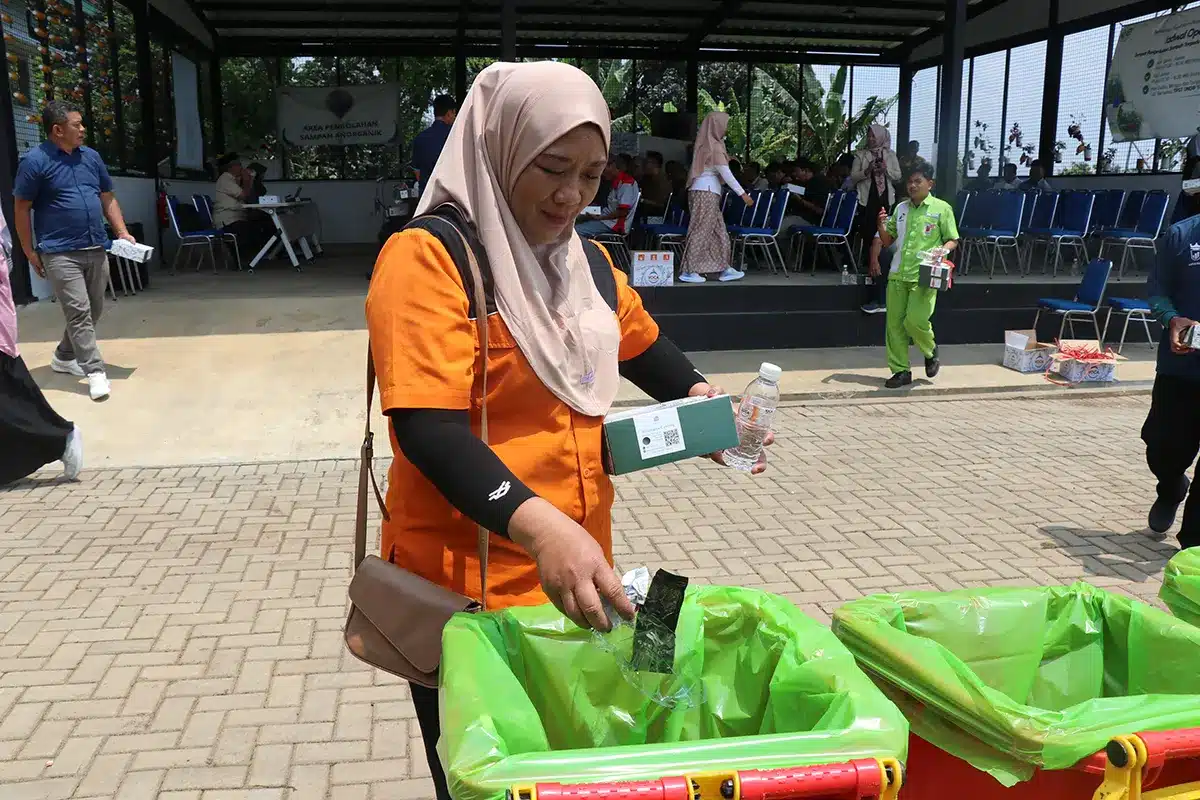
UNDIP, Semarang (4/4) – Universitas Diponegoro (UNDIP) reaffirmed its commitment to becoming a sustainable campus through a Socialization and Education Program on Residual Waste Sorting, held at the Integrated Waste Processing Facility (TPST) at UNDIP Tembalang Campus on Wednesday, April 1, 2026. This activity marks a concrete step in accelerating the implementation of the UNDIP Zero Waste program within its 100-day operational target.
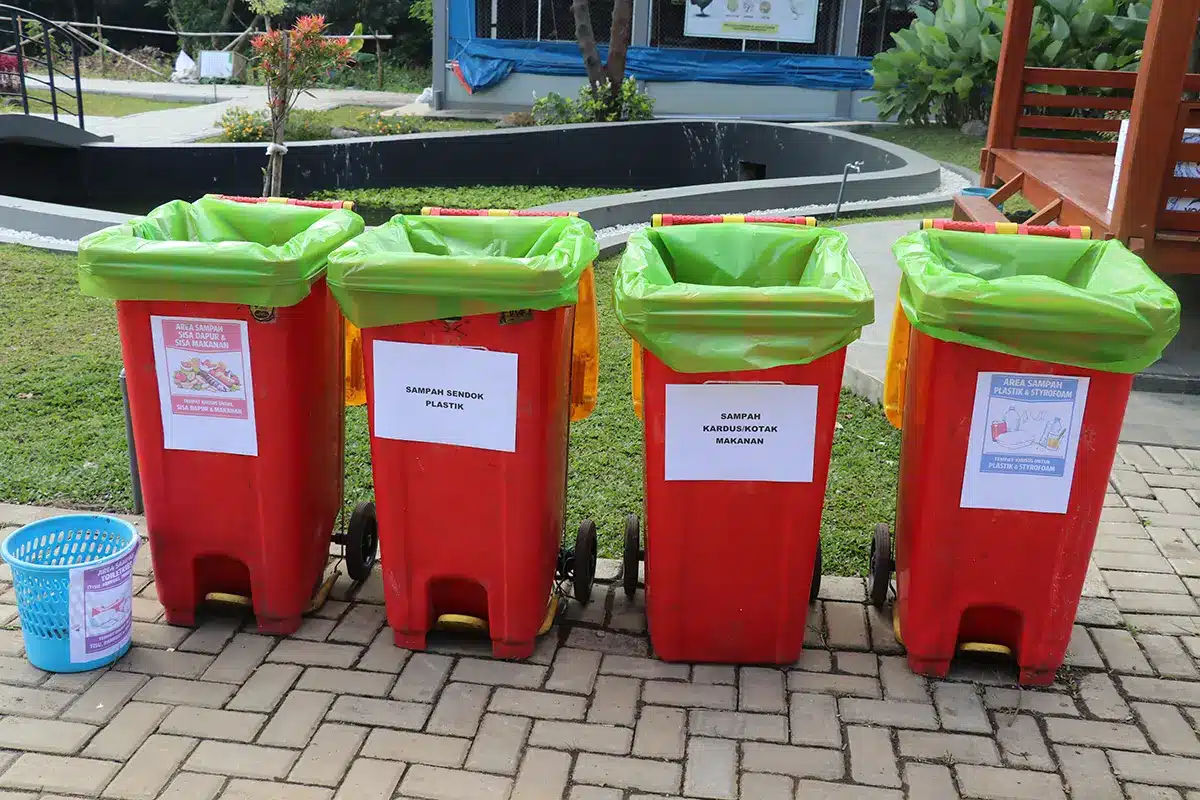
Initiated by the Occupational Safety, Health, and Environment Unit (K3L), the event was attended by leaders, managers, supervisors, and waste management personnel from various budget management work units (SUKPA). Participants received comprehensive insights into waste classification—covering organic, inorganic, residual, and hazardous (B3) waste—along with proper sorting practices as a foundation for an effective waste management system. The program emphasized behavioral change and strengthening source-based waste management systems.
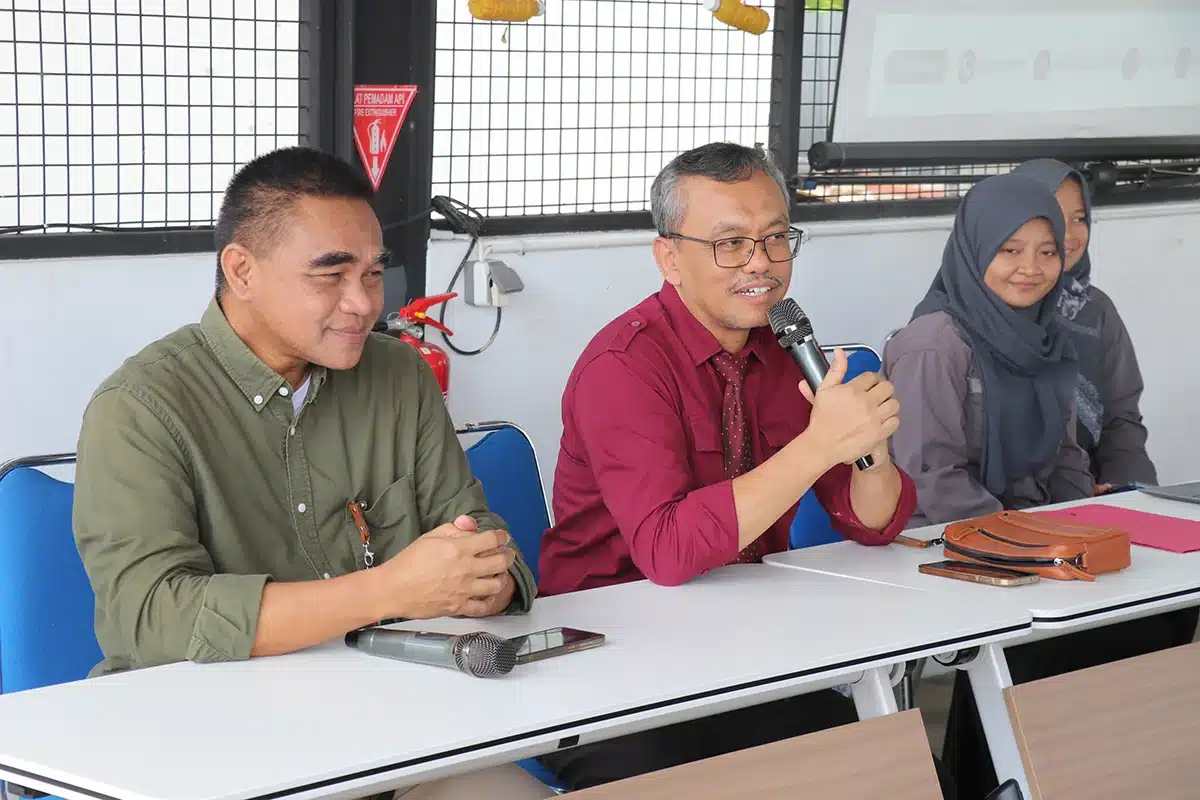
In his opening remarks, the Vice Rector II of UNDIP, Dr. Warsito Kawedar, S.E., M.Si., Akt., stressed that campus waste management should no longer rely on external parties but must be handled independently by each work unit.
“UNDIP is developing a satellite-based management system, where waste is sorted and handled directly at the source before being sent to centralized processing facilities,” he explained.
He noted that this approach is not only technical but also requires a shift in habits. Everyday campus activities—including food consumption in cafeterias—must be accompanied by responsibility for the resulting waste. He emphasized the importance of strictly separating organic and inorganic waste, as each follows different processing pathways, from composting to advanced processing technologies.
Dr. Warsito further stated that UNDIP is developing integrated waste processing facilities as the final stage of the system. However, the success of the Zero Waste program ultimately depends on the active participation of the entire academic community. “The key lies at the source. If sorting at the source does not work, the entire system will not function optimally,” he asserted.
Meanwhile, the Head of Occupational Safety, Health, and Environment Unit (K3L) UNDIP, Dr. Bina Kurniawan, S.KM., M.Kes. emphasized that the acceleration of the UNDIP Zero Waste program has moved beyond discourse and entered a concrete and measurable implementation phase. He highlighted that campus waste management must be conducted independently, with the primary goal of reducing—or even eliminating—waste sent to final disposal sites (TPA).
He explained that although sorting practices already exist, they need to be strengthened, especially for residual waste that has not been optimally managed. Through this initiative, all work units are encouraged to understand better waste types and processing flows, including technologies such as pyrolysis for plastic waste and maggot-based processing for food waste. “The key lies in accurate sorting from the source. If waste is still mixed, the entire processing system will not run effectively,” he said.
Dr. Bina also emphasized that waste management responsibility applies to all members of the academic community—students, lecturers and staff—as well as to third parties such as vendors and contractors. He highlighted the importance of changing daily habits, including reducing single-use plastics and implementing proper sorting standards across all campus activities. “This is not just a program, but a collective movement. We aim to build a new culture at UNDIP, where everyone is responsible for the waste they produce,” he concluded.
As part of strengthening technical understanding, the event featured educational sessions focused on innovative waste processing. Dr. Vivi Endar Herawati, S.Pi., M.Si., along with the team from the Faculty of Fisheries and Marine Sciences, introduced the concept of a Maggot House as a solution for processing food and kitchen waste. Organic waste is used as feed for Black Soldier Fly (BSF) larvae, which rapidly decompose it while producing economically valuable outputs such as animal feed and compost.
Meanwhile, Prof. Ir. Didi Dwi Anggoro, M.Eng., Ph.D., IPU, ASEAN Eng., together with the Pyroenergy Team, presented pyrolysis technology as an alternative method for processing residual plastic waste. He explained that not all plastic waste can be conventionally recycled, making pyrolysis a viable solution to convert certain types of plastic into fuel. He also stressed the importance of sorting plastic types at the source, as only specific materials can be effectively processed. These approaches demonstrate that waste is not merely residue but a resource that can be transformed through proper management.
Through this initiative, UNDIP aims to establish a shared understanding, standardized sorting practices across all work units, and concrete, measurable follow-up actions. More importantly, this effort is expected to foster a new culture within the campus—one that integrates environmental awareness into daily academic and operational activities—toward a more noble, sustainable, and valuable UNDIP. (Public Communication/UNDIP/DHW)