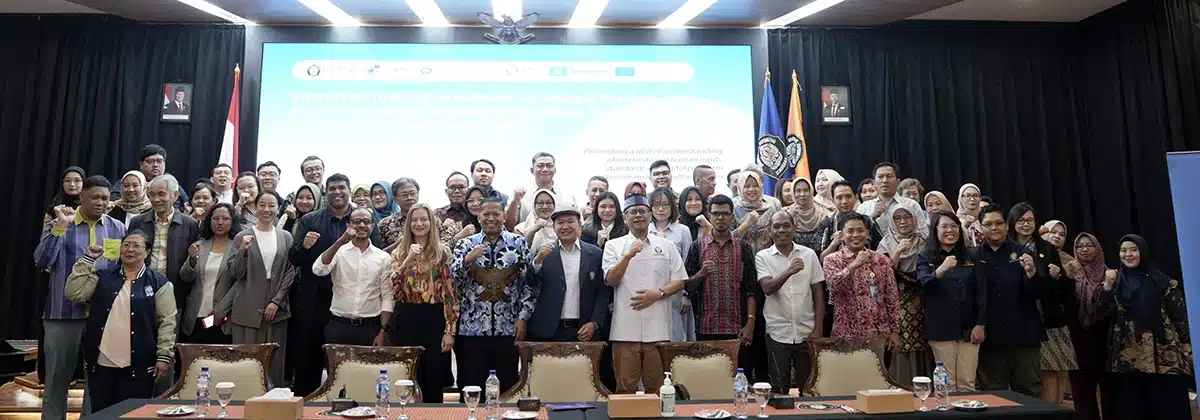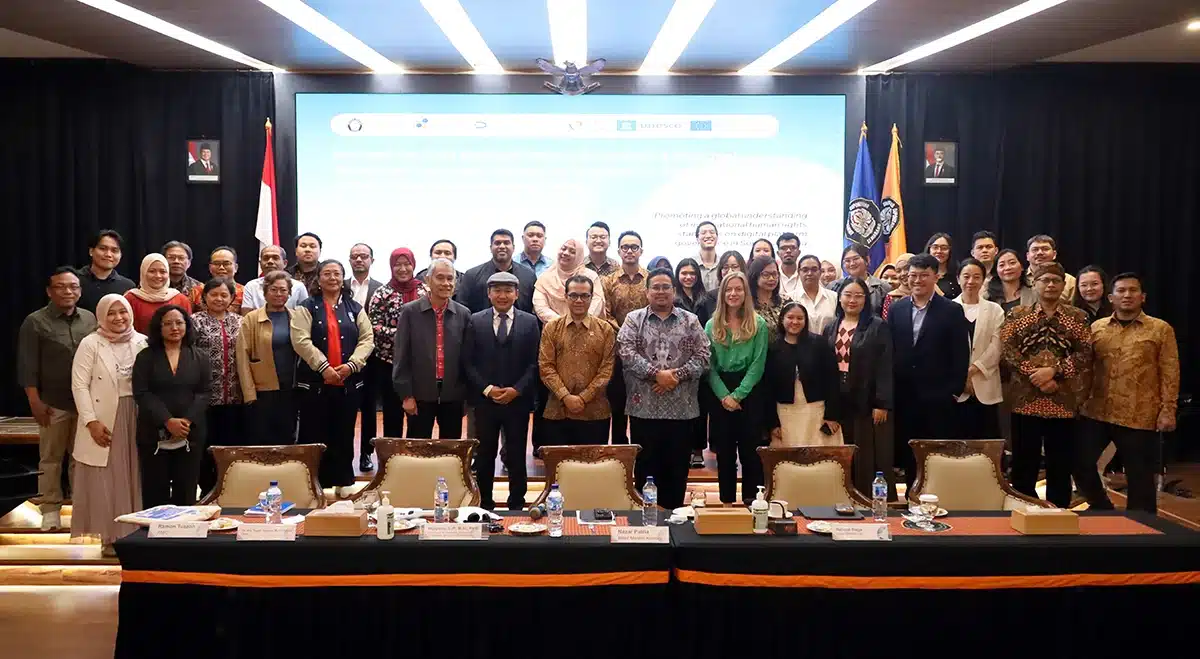

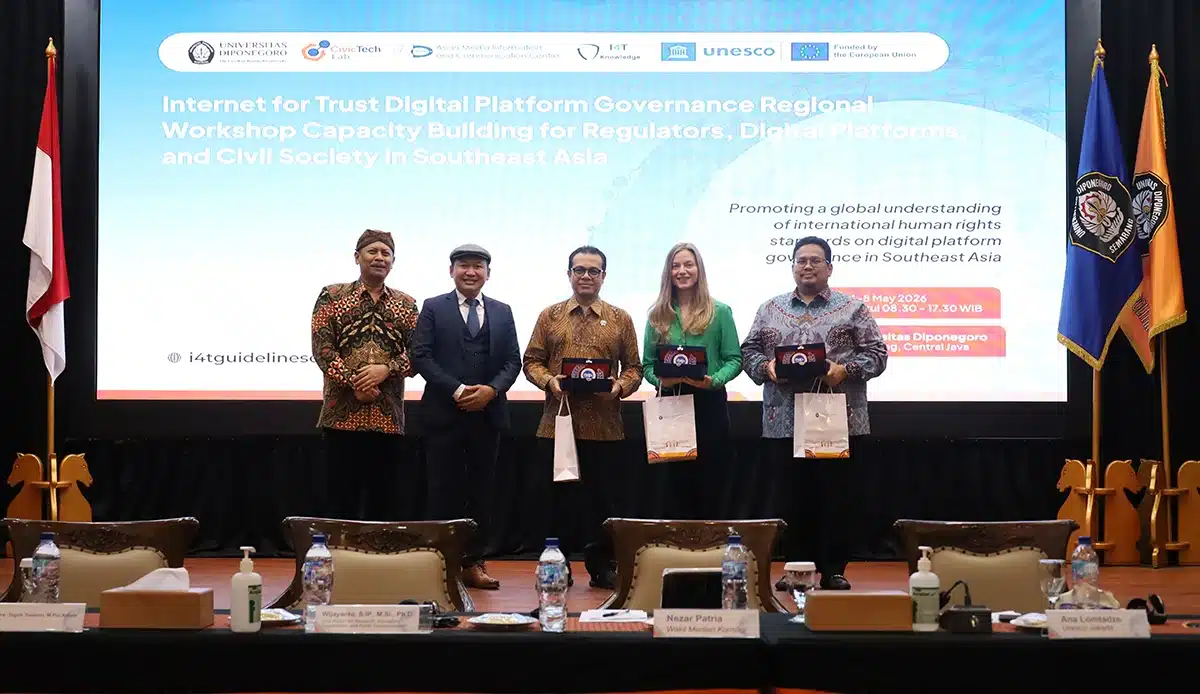
UNDIP, Semarang (8/5) – Universitas Diponegoro (UNDIP) hosted an international UNESCO workshop entitled “Internet for Trust Digital Platform Governance Regional Workshop: Capacity Building for Regulators, Digital Platforms, and Civil Society in Southeast Asia.” The event was organized in collaboration with the Asia Media Information and Communication Center (AMIC), CivicTech Lab and the National University of Singapore and was supported by KITLV Leiden. The workshop took place at Fimena FISIP UNDIP in Semarang from May 6–8, 2026.
The program further explored the “Guidelines for the Governance of Digital Platforms” developed by UNESCO, aiming to establish governance standards for digital platforms such as social media and online platforms to become more transparent, accountable, protective of human rights in digital spaces, and capable of addressing modern challenges, including disinformation and social polarization.
In his closing remarks, UNDIP Rector Prof. Dr. Suharnomo, S.E., M.Si. welcomed participants from various countries, including UNESCO representatives Ana Lomtadze, Lucas Novaes Ferreira, and Yekthi Hesthi Murthi, as well as representatives from AMIC and CivicTech Lab, Ramon R. Tuazon and Prof. Weiyu Zhang. “UNDIP is very proud to host this international workshop. This collaboration is our effort to translate UNESCO’s global guidelines into practical guidance, especially for Southeast Asia, by formulating a practical framework. We remain committed to contributing benefits to society at both national and international levels, in line with UNDIP’s tagline: Noble and Valuable UNDIP,” he explained.
Prof. Suharnomo continued, “Efforts to formulate practical guidelines and a roadmap for digital platform governance are important contributions to Southeast Asia. We hope the networks, ideas, and collaborations established in this workshop will continue beyond this forum and strengthen digital governance across the region—from Semarang for Southeast Asia.”
This workshop was also part of the Internet for Trust Global Knowledge Network, an international network consisting of academics, researchers, and digital activists aimed at strengthening digital space governance. UNDIP, through Vice Rector for Research, Innovation, Cooperation, and Public Communication Wijayanto, S.I.P., M.Si., Ph.D., who also serves as project director leading the drafting of the practical guidelines, stated,
“This workshop represents the culmination of the initiative to formulate practical digital platform governance guidelines, which began with research on the digital governance policy landscape in Southeast Asia at the end of last year. A practical governance guideline is expected to be formulated and widely implemented across Southeast Asia. Indonesia, as the largest country in ASEAN and the region’s largest internet user base, should naturally take a leadership role in this initiative.”
UNESCO representative Ana Lomtadze expressed admiration for UNDIP as a culturally rooted educational institution inspired by national hero Prince Diponegoro. Regarding the workshop’s theme, she stated, “This is our shared challenge: protecting freedom of expression, addressing disinformation, ensuring algorithm transparency and content moderation, and safeguarding people’s digital rights. Therefore, collaboration among governments, digital platforms, academics, and civil society is essential. Today, more than 80% of the world’s population uses the internet, which has encouraged UNESCO to create guidelines and toolkits for accountable, human rights-based governance of digital activity. From there, regional governments can formulate laws that protect users’ rights.”
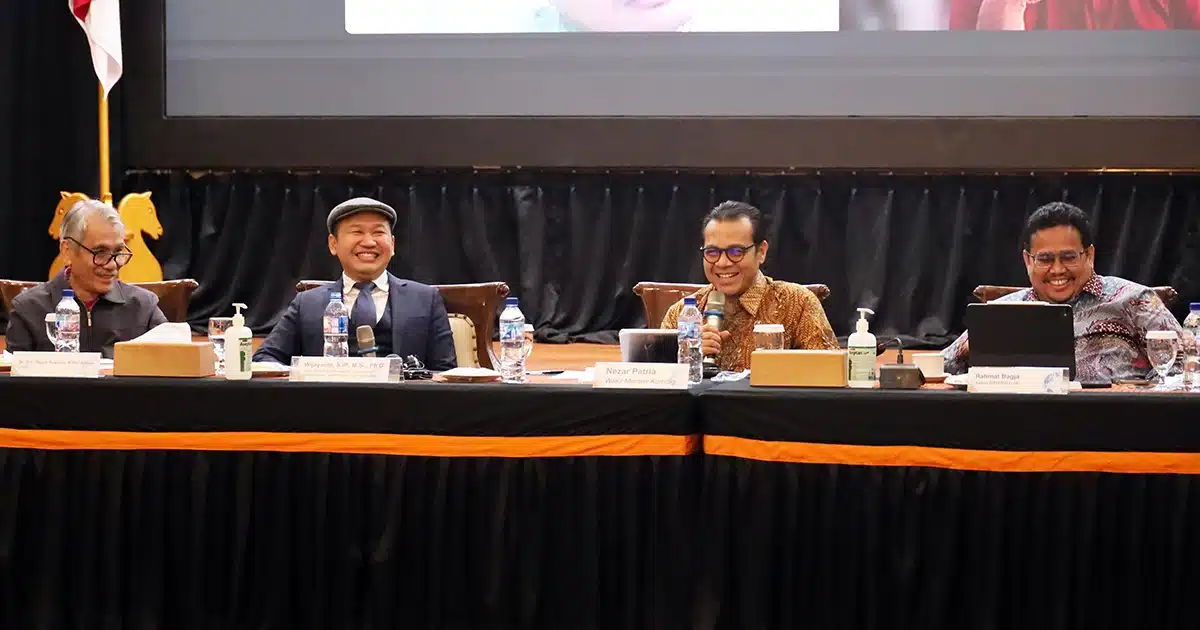
The UNESCO international workshop, fully funded by the European Union, was attended by representatives from Southeast Asian countries. On the second day, a hybrid panel discussion was held under the theme “Multi-Stakeholder Dialogue on The Sub-Regional Toolkit for The Governance of Digital Platform (Civil Society, Platform, Regulator).” Vice Rector for Research, Innovation, Collaboration, and Public Communication, Wijayanto, S.I.P., M.Si., Ph.D., moderated the panel discussion featuring the following speakers:
- Nezar Patria (Deputy Minister of Communication and Digital Affairs of Indonesia)
- Amelia Anggraini (Member of the Indonesian House of Representatives)
- Anita Wahid (Indonesia Representative to the ASEAN Intergovernmental Commission on Human Rights)
- Danny Ardianto (Head of Government Affairs and Public Policy, YouTube Indonesia and Southeast Asia)
- Prof. Chandrabhanu Pattanayak (Professor at Centurion University of Technology and Management and Co-Chair of the I4T Knowledge Network)
- Ramon R. Tuazon (Secretary General of the Asian Media Information and Communication Centre)
- Dr. Rahmat Bagja, S.H., LL.M. (Chairman of Indonesia’s Election Supervisory Board/Bawaslu for the 2022–2027 term)
- Atty. Jaypee Abella (Committee on Elections of the Philippines)
The discussion explored issues of digital governance in Southeast Asia, government oversight of digital content regulation, and governmental responses to risks arising from the growing digital ecosystem. Regional concerns included disinformation, influence operations, linguistic diversity, crisis response, gender equality, protection of vulnerable groups (activists, journalists, women, and children) in digital spaces, and platform transparency and accountability.
Deputy Minister Nezar Patria explained how governments should supervise digital activities while balancing social and economic considerations. In this context, citizens’ human rights must remain a priority, with safe and protected digital platforms created. “One of the policies already enacted is Law Number 27 of 2022 concerning Personal Data Protection (PDP Law), which regulates the processing of personal data by individuals, corporations, and public institutions, while also granting rights to data subjects regarding their data security,” he explained.
Amelia Anggraini from the House of Representatives added that implementing practical toolkits should ideally involve concepts and mechanisms that are accountable. “All decisions should be evidence-based and consider risk aspects,” she stated.
Panelist Anita Wahid highlighted that problems may arise when regulation is focused solely on regulation rather than on maintaining healthy digital platforms. “Many groups are vulnerable to digital crimes, especially women and children. Therefore, the solution we need goes beyond merely identifying perpetrators of digital crimes,” she noted.
Danny Ardianto emphasized that nearly everything now exists on social media. With the rise of AI, technology safety principles must be strengthened to prevent harm to users.
In light of the growing use of AI, Prof. Chandrabhanu Pattanayak agreed that society must be more cautious about sensitive topics, such as government issues and hate speech.
Furthermore, Ramon R. Tuazon stressed that digital service providers must respect users’ rights and data security.
Meanwhile, Dr. Rahmat Bagja emphasized the government’s important role in overseeing the dynamics of algorithms on digital platforms. He expressed support for the Ministry of Communication and Digital Affairs’ efforts to create a creative and safe digital space for both platform providers and the broader public.
Through ideal policy frameworks, the discussion is expected to contribute solutions that strengthen advocacy and oversight functions for digital platforms across Southeast Asia. The public is encouraged to use social media more responsibly, transparently, and in ways that continue to protect democracy and human rights.
Dean of FISIP UNDIP, Dr. Drs. Teguh Yuwono, M.Pol.Admin., added that UNESCO’s governance guidelines are urgently needed to protect vulnerable groups, such as journalists, women, and children, from digital exploitation. “Digital platforms should strengthen democratization and avoid becoming trapped in exploitation,” Dr. Teguh concluded. The discussion underscored that, in the future, algorithm transparency and government blocking policies will remain crucial battlegrounds for democracy in Indonesia. (Public Communication/UNDIP/Committee & Titis)