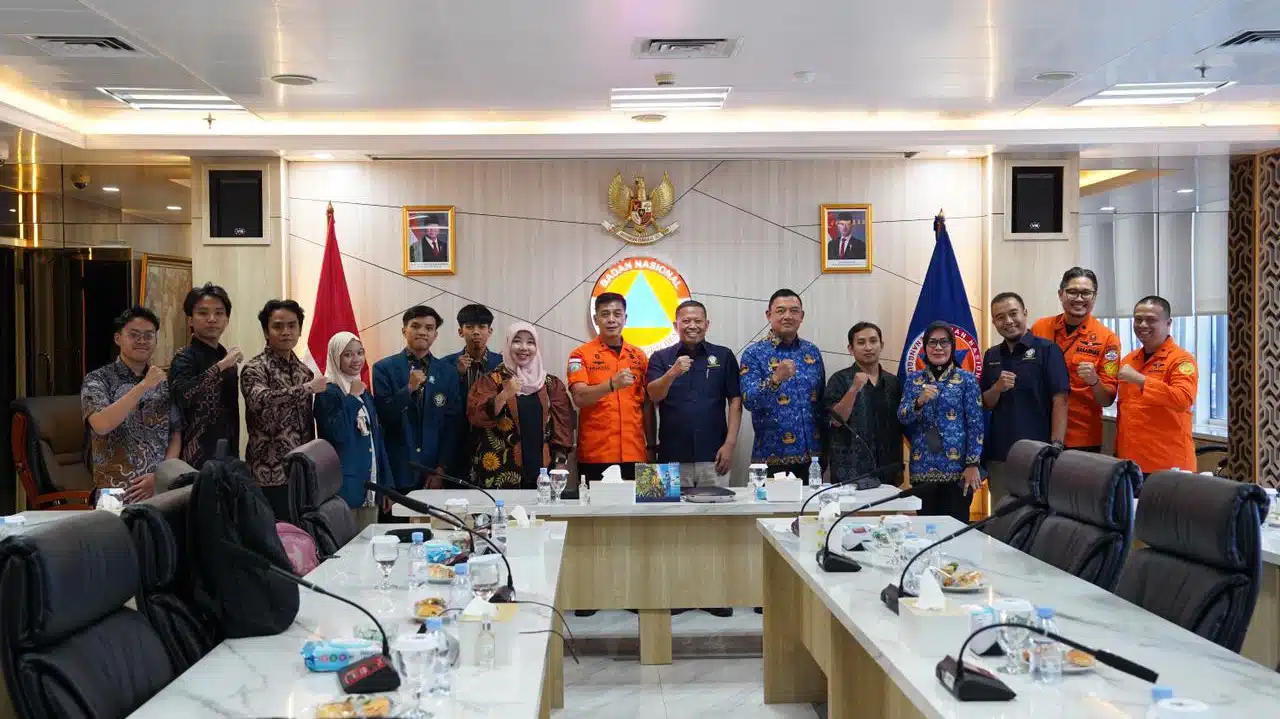

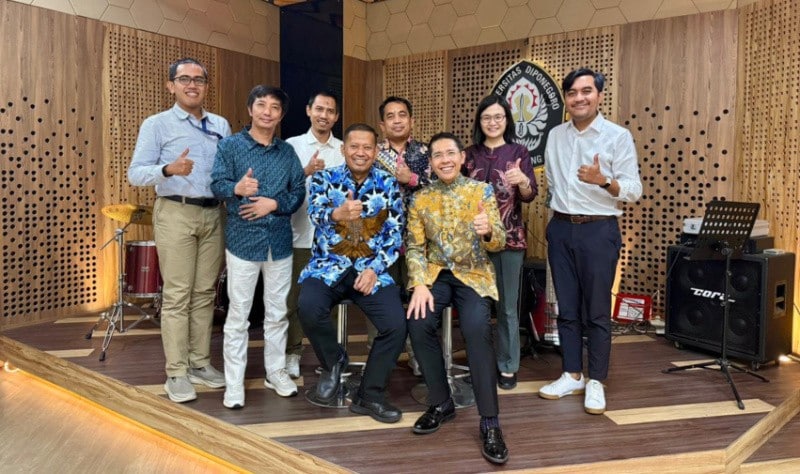
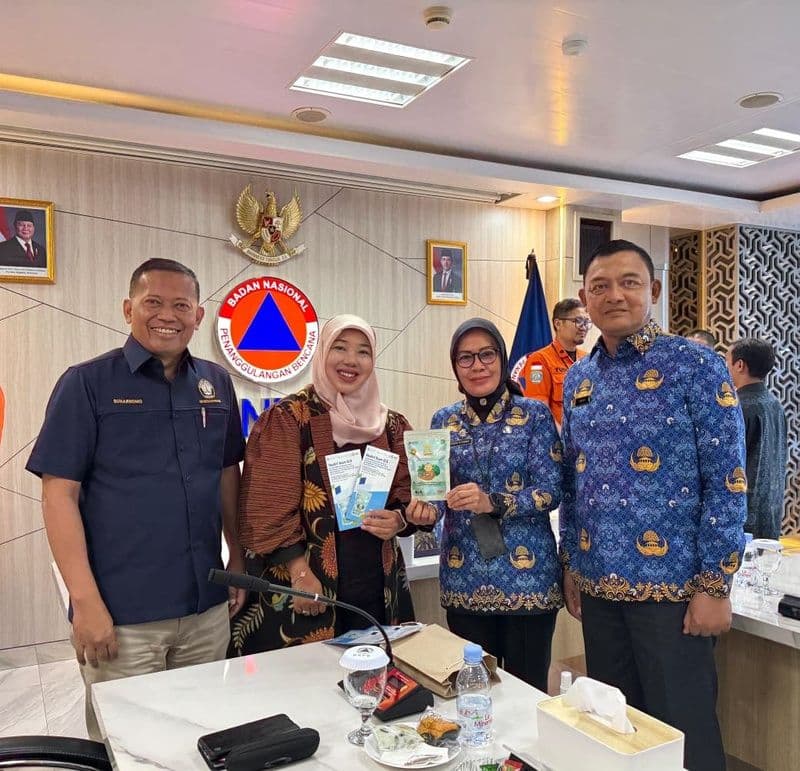

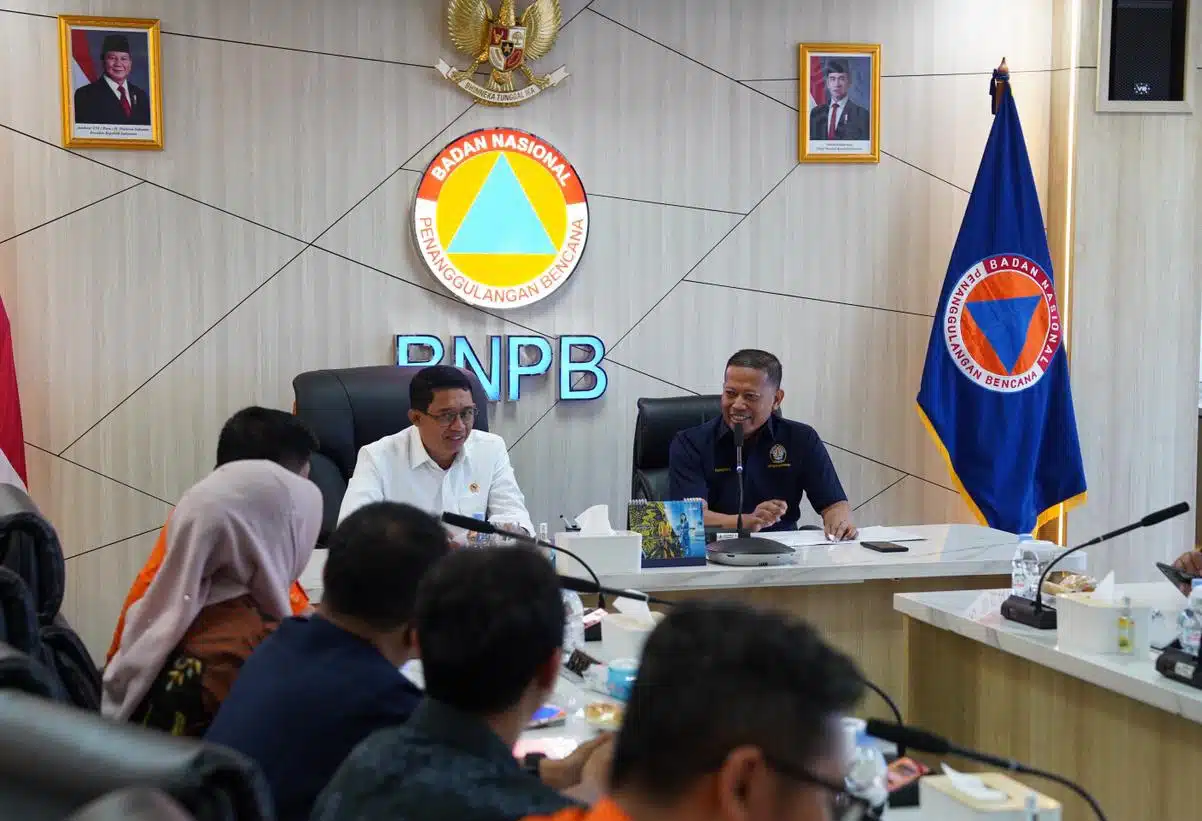
UNDIP, Jakarta (7/5) – The Cyborg Insect Team from the Faculty of Engineering, Universitas Diponegoro (UNDIP), demonstrated its technological innovation in the form of a “robot” cockroach in response to an invitation from the National Disaster Management Agency (BNPB). BNPB invited the team after its innovation won the Gold Award and Special Award at the Malaysia Technology Expo (MTE). TheROACH-DETECT innovation is designed to support search-and-rescue operations for disaster victims in difficult-to-access locations.
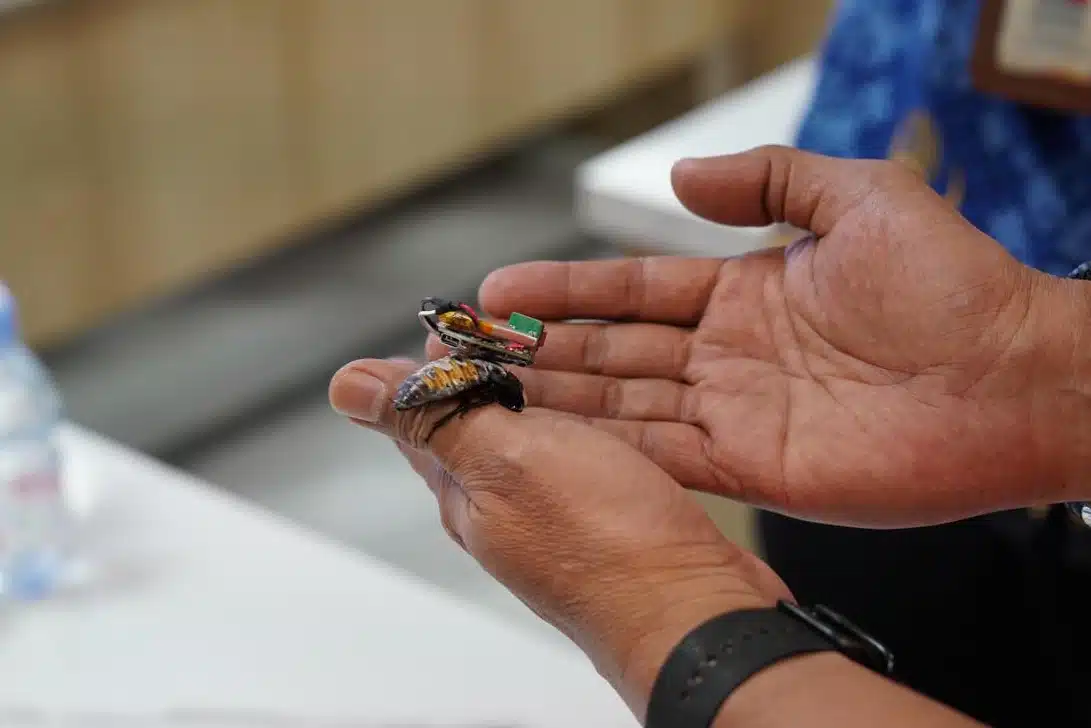
The “robot” cockroach, or Cyborg Insect, is the result of multidisciplinary research involving engineering, robotics, and artificial intelligence by students from the Faculty of Engineering, particularly from Mechanical Engineering and Electrical Engineering. With its small size and ability to move through narrow spaces, the cyborg insect can enter gaps in collapsed buildings to detect victims and transmit real-time data to rescue teams.
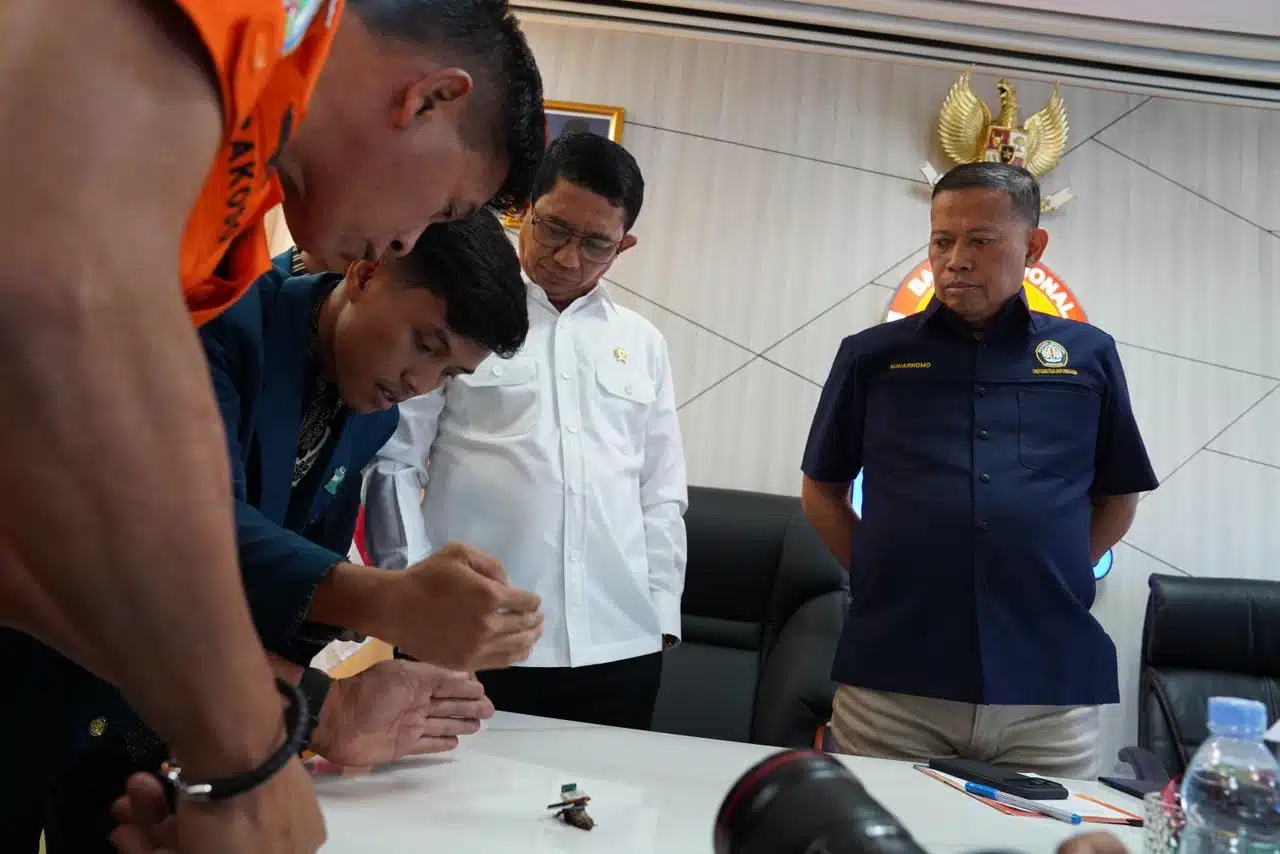
During the demonstration, UNDIP innovator Mochammad Ariyanto, S.T., M.T., Ph.D., showcased the cyborg insect’s ability to navigate a simulated disaster area, including passing through narrow obstacles, uneven terrain, and low-light conditions. The robot cockroach is equipped with sensors, a micro camera, and a communication system that enables the transmission of images and field information in real time. Ariyanto completed his Ph.D. at the University of Osaka in 2024 and currently serves as a visiting academic staff member at the University of Osaka, Japan.
UNDIP Rector Prof. Dr. Suharnomo, S.E., M.Si., stated that the development of the robot cockroach aims to improve the effectiveness of search and rescue (SAR) operations in locating survivors. This technology is expected to become an innovative solution for disaster management in Indonesia, a country highly vulnerable to earthquakes, landslides, and other disasters.
Head of BNPB, Letjend TNI Dr. Suharyanto, S.Sos., M.M., expressed appreciation for the innovation and welcomed potential collaboration between universities and government institutions, which is crucial for strengthening national disaster response capacity.
Moving forward, UNDIP is committed to further developing adaptive, applicable cyborg insect technology while expanding collaboration with various stakeholders to support safety and assist disaster victims.
About Roach-Detect Technology
This innovation was born from real field challenges: during disasters, many victims are trapped in narrow spaces within collapsed structures that are unreachable by humans, conventional robots, or even SAR dogs. In such conditions, time is critical, as international INSARAG standards define the first 72 hours as the golden time for finding survivors.
As a solution, the Cyborg Insect Team developed a biohybrid approach using the Madagascar Hissing Cockroach, which naturally explores tight spaces. The cockroach is equipped with a lightweight electronic device that controls its movement and collects field data.
The system can detect victims based on human body temperature patterns, even in dark, dusty, or gas-filled environments. The collected data is then transmitted to a web-based monitoring platform that can be accessed directly by SAR teams.
ROACH-DETECT offers a new approach to search-and-rescue operations by combining the advantages of living organisms with modern technology. The system is designed to be lightweight, adaptive, and capable of reaching previously inaccessible areas, thereby accelerating the identification of survivors trapped under rubble. With this approach, ROACH-DETECT is expected to become an effective alternative solution to improve the success of SAR operations.
Cyborg Insect Team at the Malaysia Technology Expo (MTE)
- Mochammad Ariyanto, S.T., M.T., Ph.D. – UNDIP Innovator
- Muhammad Faizul Kirom – Electrical Engineering
- Helmi Yusuf – Electrical Engineering
- Verrill Varian Jaya Kusuma – Electrical Engineering
- Mega Adinda Ramadhani – Electrical Engineering
- Septhian Kallolangi – Electrical Engineering
- Hasna Fadhilah Aulia – Electrical Engineering
- Nicholas David Marsen – Electrical Engineering
Research Partners
- Oscar David Sulistya Nugraha – Mechanical Engineering
- Arif Ainurrofiq – Mechanical Engineering
- Hafiz Akbar Simanjorang – Mechanical Engineering
(Public Communication/UNDIP/Ut)