
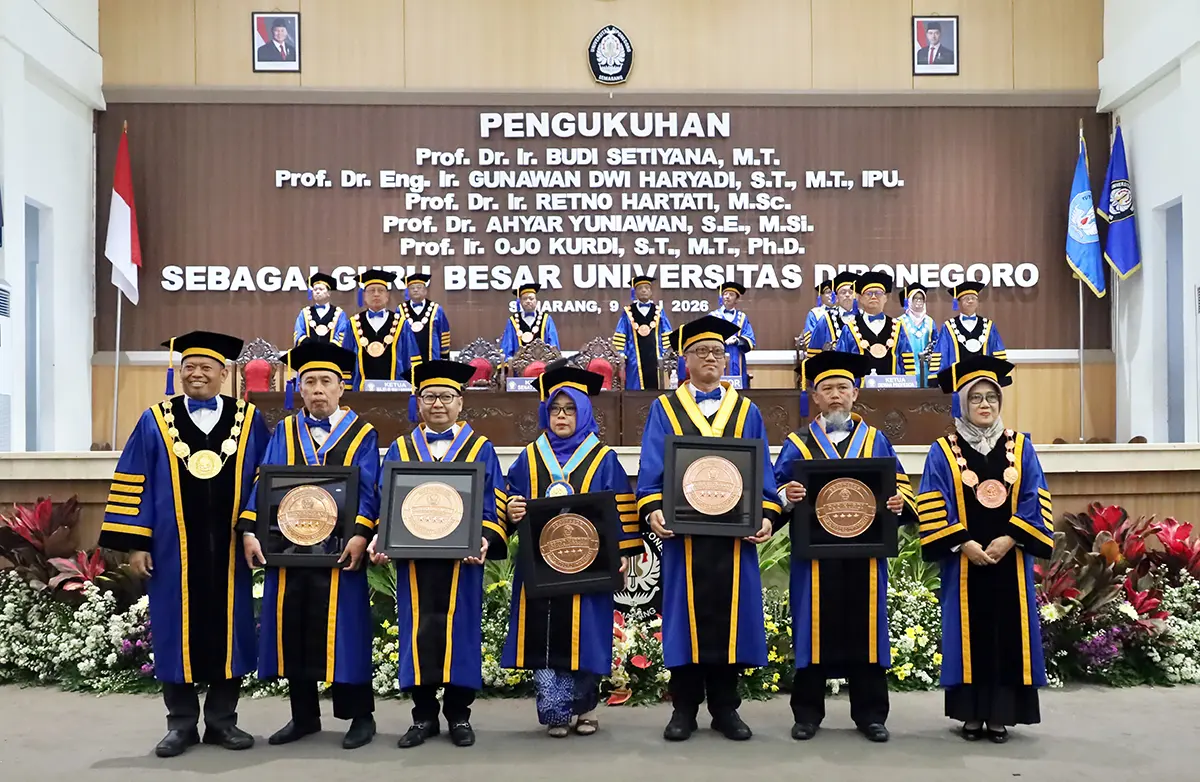
UNDIP, Semarang (9/7) – Universitas Diponegoro (UNDIP) continues to enrich its academic expertise by inaugurating five new professors from the Faculty of Engineering (FT), Faculty of Economics and Business (FEB), and Faculty of Fisheries and Marine Sciences (FPIK). The Professor Inauguration Ceremony of Universitas Diponegoro was held on Thursday, July 9, 2026, at 9:00 a.m. Western Indonesia Time (WIB) at the Prof. Sudarto, S.H. Building, UNDIP Tembalang Campus. The five newly inaugurated professors are Prof. Dr. Ir. Budi Setiyana, M.T. (Faculty of Engineering); Prof. Dr. Eng. Ir. Gunawan Dwi Haryadi, S.T., M.T., IPU. (Faculty of Engineering); Prof. Dr. Ir. Retno Hartati, M.Sc. (Faculty of Fisheries and Marine Sciences); Prof. Dr. Ahyar Yuniawan, S.E., M.Si. (Faculty of Economics and Business); and Prof. Ir. Ojo Kurdi, S.T., M.T., Ph.D. (Faculty of Engineering).
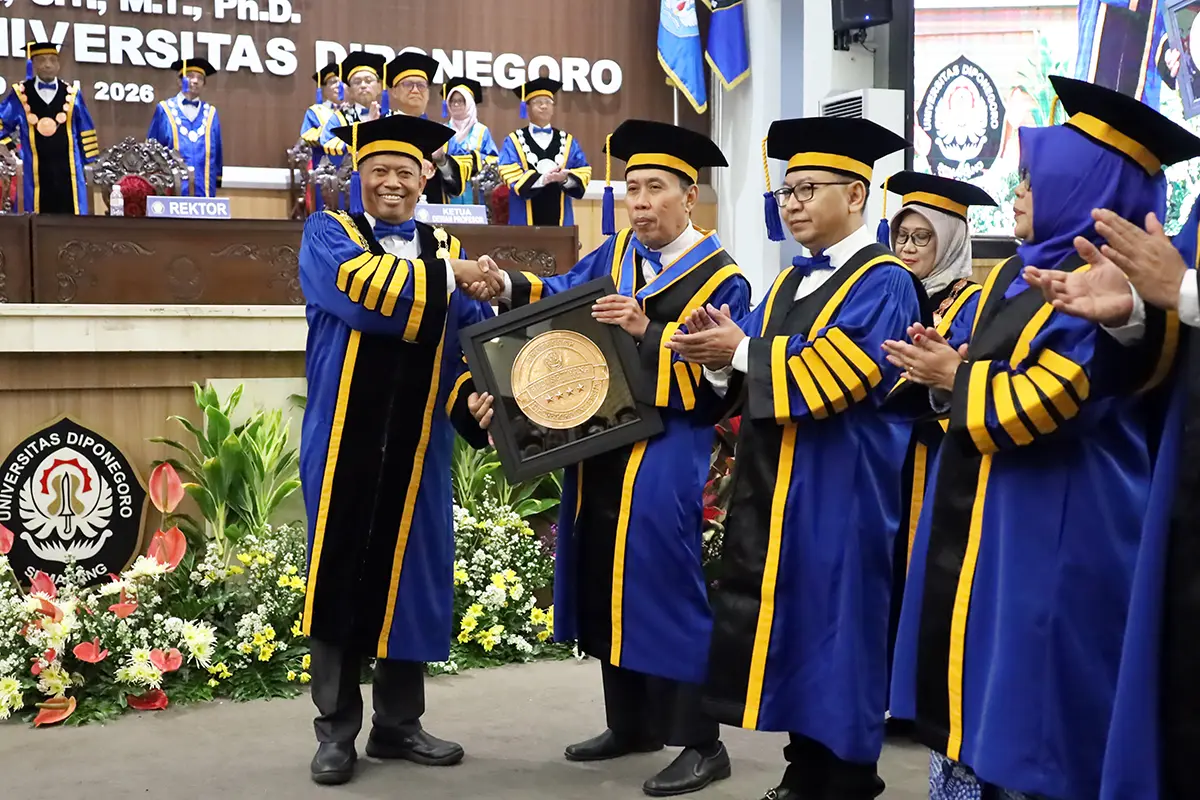
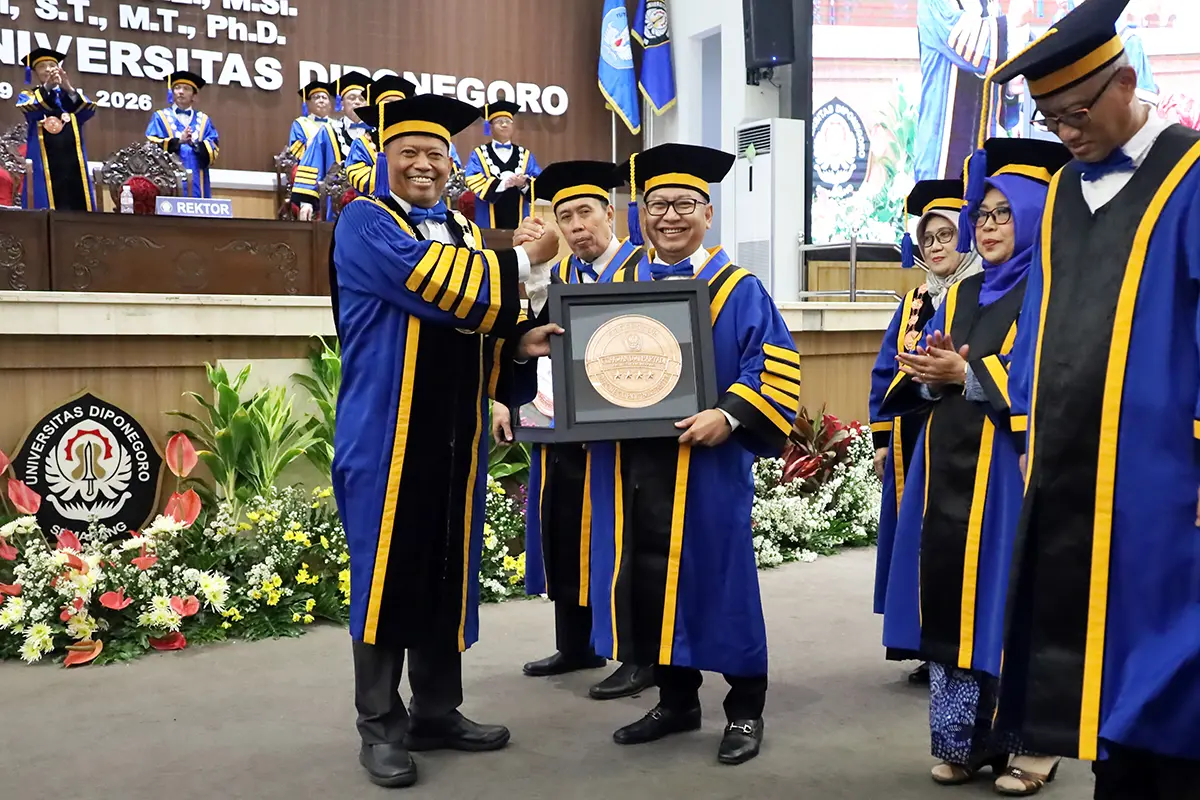
UNDIP Rector, Prof. Dr. Suharnomo, S.E., M.Si., formally inaugurated the five professors and expressed his appreciation to all professors for their dedication to fulfilling the Three Pillars of Higher Education (Tridharma Perguruan Tinggi). Prof. Suharnomo emphasized that professors are scholars who should serve as role models in society by embodying wisdom, sound judgment, and virtue in their lives.
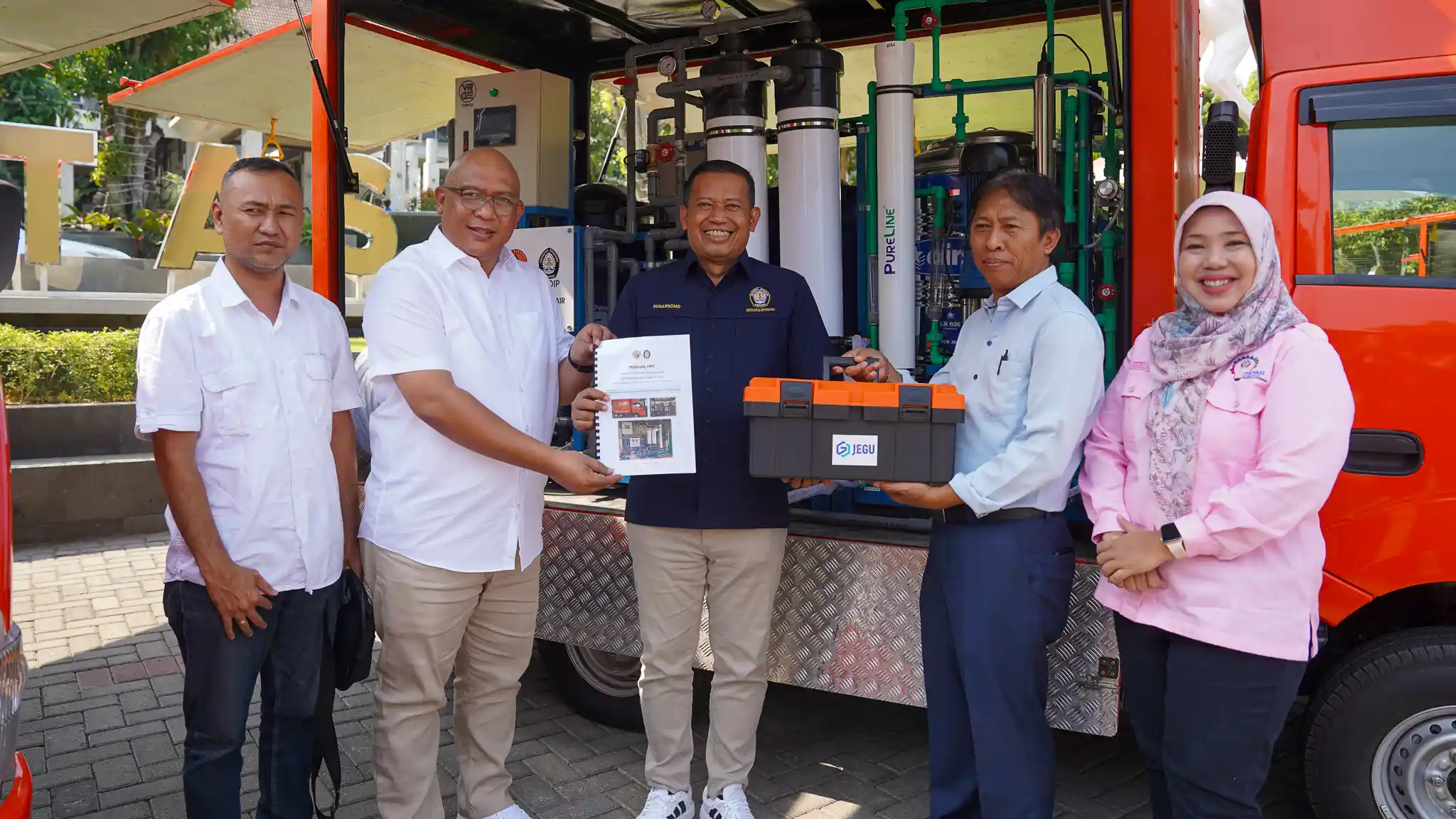
“At UNDIP, we have UNDIP Rumah Kita, Diponegoro Edu Park, Car Free Day (CFD) at the Sikatak Bridge at UNDIP, and the latest running track at the UNDIP Stadium to support a sustainable lifestyle. UNDIP also continues to uphold its commitment to benefiting society through the development of UNDIP Zero Waste, the conversion of plastic waste into energy using pyrolysis technology, water treatment machines, and solar panels installed at 13 locations across Java, as well as desalination machines to supply clean water that have also been sent to Sumatra, particularly flood-affected areas, and Nusakambangan Island. In the future, we will also establish the UNDIP Manufacturing Center to produce machines based on our innovations. The campus must remain optimistic. Let us contribute to the development of our nation,” said the UNDIP Rector.
During the scientific presentation session, Prof. Dr. Ir. Budi Setiyana, M.T. presented his research entitled “Improving the Performance and Reliability of Machine Bearings through Contact Surface Engineering.” Bearings have a limited service life because they are susceptible to damage in the form of wear on the rotor shaft surface and bearing (bushing) surface. High wear rates shorten bearing service life and consequently reduce bearing reliability. Through surface engineering, physical surface textures and chemical surface coatings can be developed.
The application of hydrophobic coatings can significantly improve the tribological performance of bearings by creating a more realistic elasto-hydrodynamic (EHD) system than a hydrodynamic (HD) structural model. Bearing modeling as an EHD system is performed by iteratively applying a Fluid-Structure Interaction (FSI) formulation to determine the elastic deformation of the bearing structure. “Surface engineering with hydrophobic coatings has been proven to reduce noise by approximately 5.5%, increase load-carrying capacity by around 40%, and reduce friction force by approximately 8.6%,” explained Prof. Budi.
Next, in his presentation entitled “Sustainable Friction Stir Welding Technology for Green Manufacturing and Future Transportation,” Prof. Dr. Eng. Ir. Gunawan Dwi Haryadi, S.T., M.T., IPU. explained the potential of Friction Stir Welding (FSW) technology as a solution for green manufacturing, energy efficiency, and the development of safe and sustainable transportation.
Conventionally, electric vehicles use carbon steel materials. However, these are now considered less than ideal because they are susceptible to corrosion, relatively heavy, and their welding methods have certain limitations. Based on his research, Prof. Gunawan demonstrated that combining aluminum materials with Friction Stir Welding (FSW) technology can provide a solution. FSW operates in the solid state without melting the metal, resulting in joints that are more compact, stronger, and less prone to defects. Research on aluminum alloy joints showed optimal results, with the best joint quality achieved at a tool rotation speed of 1,400 rpm.
“These findings were subsequently applied to the development of aluminum electric bus structures, particularly frame joints that play an important role in protecting passenger safety in the event of an accident. In the future, this innovation will be complemented by the integration of welding technology with Artificial Intelligence (AI), the Internet of Things (IoT), smart sensors, robotic systems, and the concept of Welding 4.0—an automated welding ecosystem capable of monitoring processes in real time while independently detecting defects,” explained Prof. Gunawan.
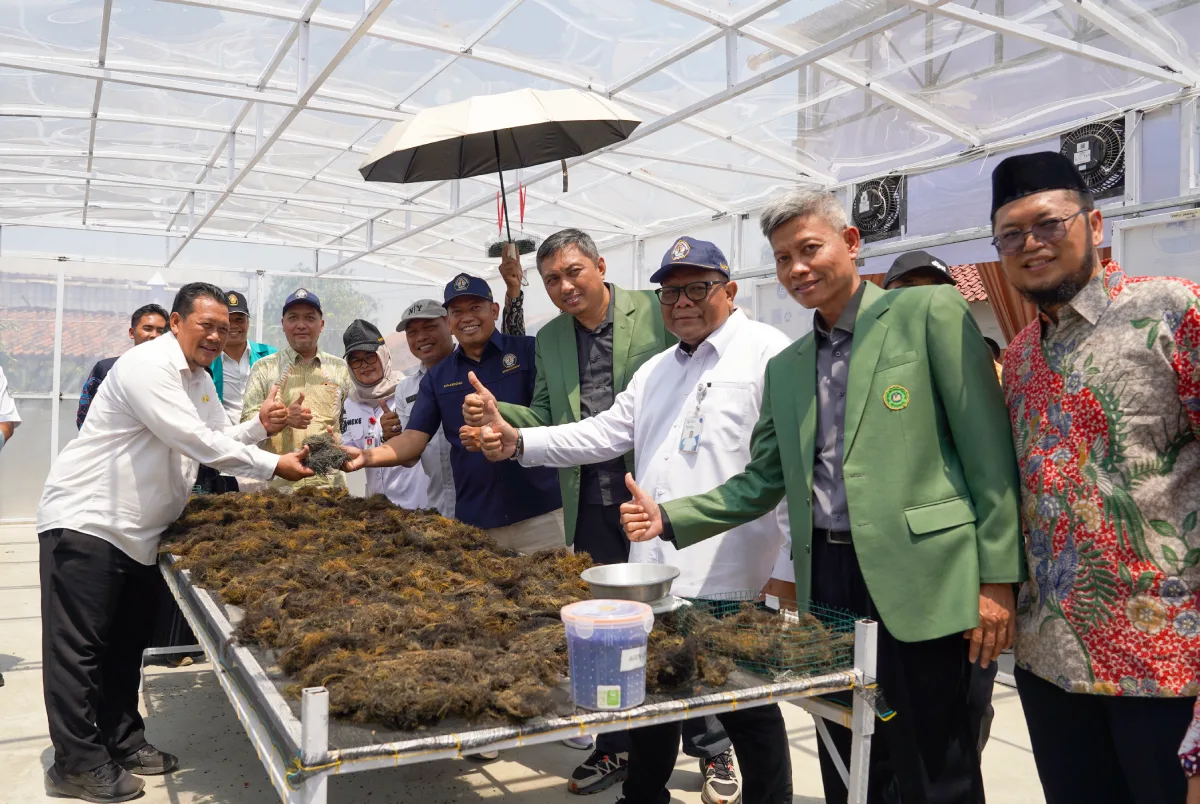
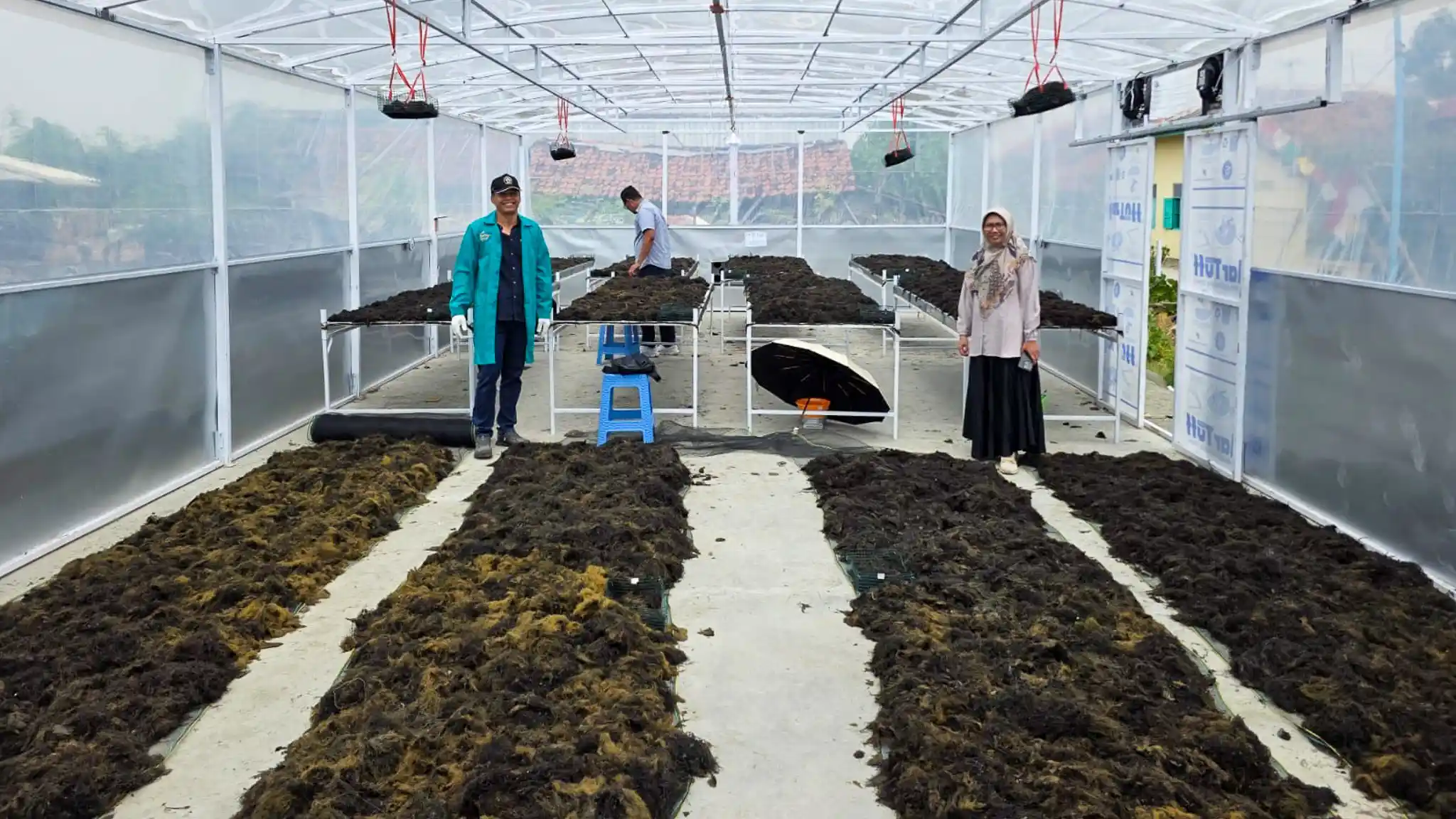
The next scientific presentation was delivered by Prof. Dr. Ir. Retno Hartati, M.Sc., entitled “Sea Ranching of Sea Cucumbers: A Conservation Strategy for Sustainable Management in Indonesian Waters.” Sea cucumbers are marine organisms with high ecological and economic value in Indonesia. However, overexploitation driven by strong international market demand and habitat degradation has caused sea cucumber populations to decline in many parts of Indonesia. In response, Prof. Retno developed “Sea Ranching of Sea Cucumbers,” a simple conservation strategy based on the put-grow-take approach (stocking, growing, and harvesting).
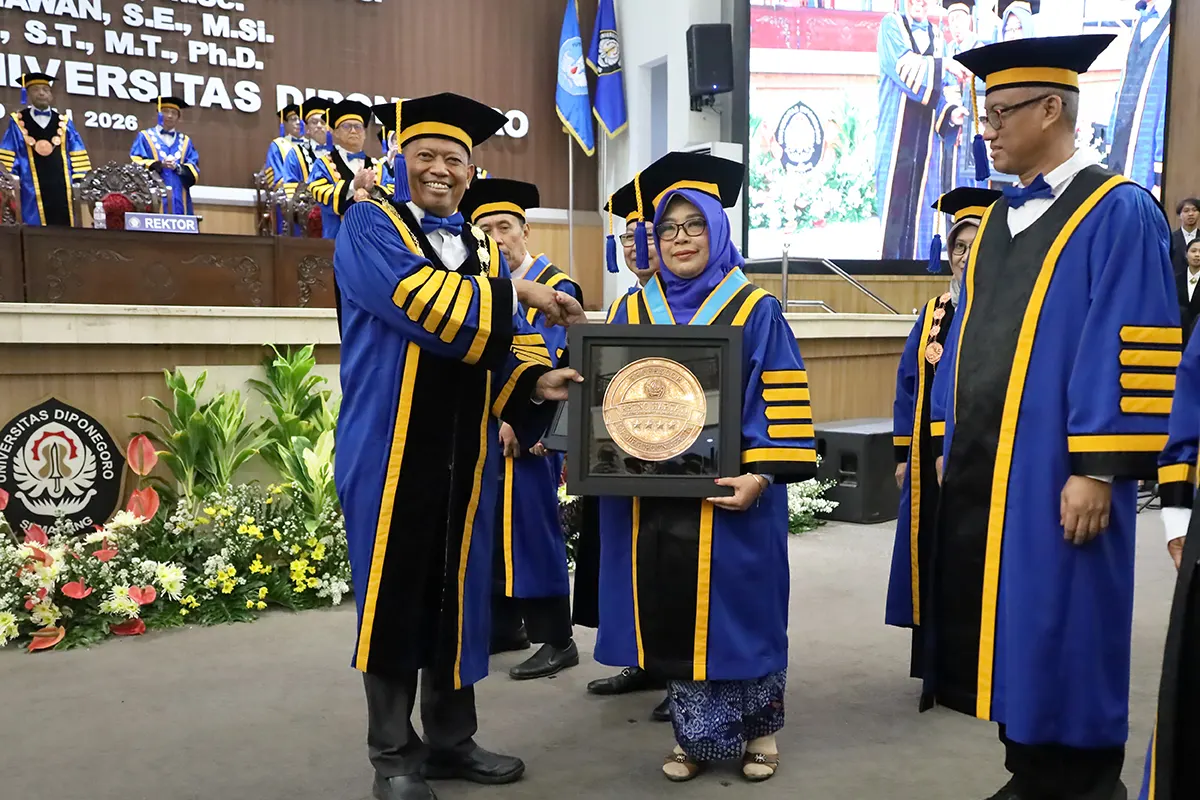
Research has shown that sea ranching can increase sea cucumber abundance, improve sediment quality, and support benthic biodiversity. Its development also generates positive socio-economic impacts for coastal communities, with sea ranching areas serving as natural laboratories or teaching factories that protect the original habitat of sea cucumbers. Prof. Retno stated, “Sea ranching is based on the principles of the blue economy and supports the achievement of the Sustainable Development Goals (SDGs), particularly marine resource conservation and the protection of sea cucumber habitats.”
Meanwhile, Prof. Dr. Ahyar Yuniawan, S.E., M.Si. presented his research entitled “Optimizing Technology-Based Human Resource Development: Toward Human Resource Performance and Service Excellence.” Prof. Ahyar examined a strategic approach known as technology-driven human resource development to bridge technology investment with improved human resource performance and service excellence. This approach consists of three interconnected main stages: (1) technology adoption through the utilization of HRIS, e-learning, and AI in various human resource management functions; (2) improving human resource quality by strengthening digital competencies, AI literacy, adaptability, and employee engagement; and (3) transformation toward services that are faster, more accurate, responsive, and provide greater value to customers.
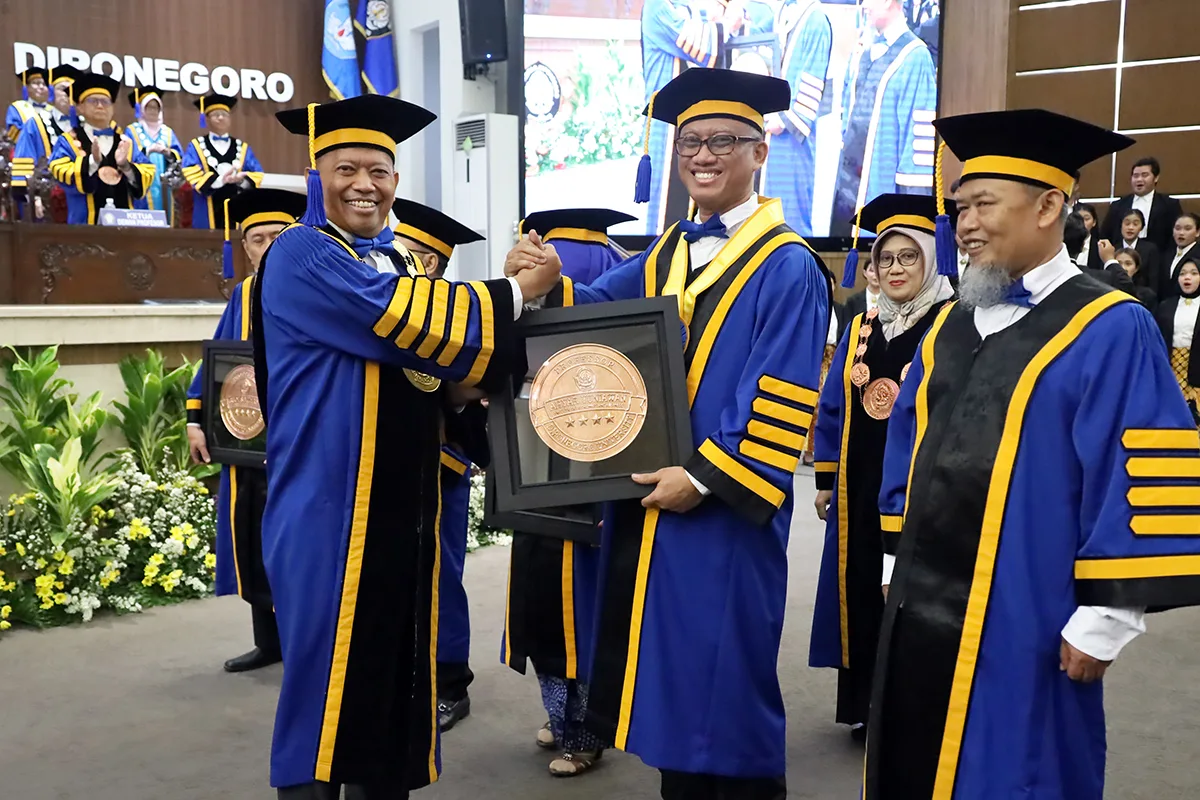
This model integrates the perspectives of Transaction Cost Economics (TCE) and the Service Encounter Triad (SET). “Organizational effectiveness serves as the central link connecting service quality, customer satisfaction, customer retention, institutional image, and institutional reputation. Inclusive and sustainable digital transformation can be achieved through the implementation of digital HR and HR strategy,” Prof. Ahyar concluded.
The final presentation was delivered by Prof. Ir. Ojo Kurdi, S.T., M.T., Ph.D., who discussed “The Contribution of Structural Failure Analysis to Improving the Reliability and Efficiency of Machine Components toward National Automotive and Industrial Independence.” With advances in modern automotive and industrial machinery technologies, critical components such as bearings, shafts, gears, and vehicle chassis are subjected to complex static and dynamic loads. These components are susceptible to deformation, wear, cracking, fatigue, and structural failure. Based on these challenges, Prof. Ojo Kurdi examined ways to improve the reliability and energy efficiency of machine components by integrating Finite Element Method (FEM)- based numerical analysis, experimental testing, and surface engineering.
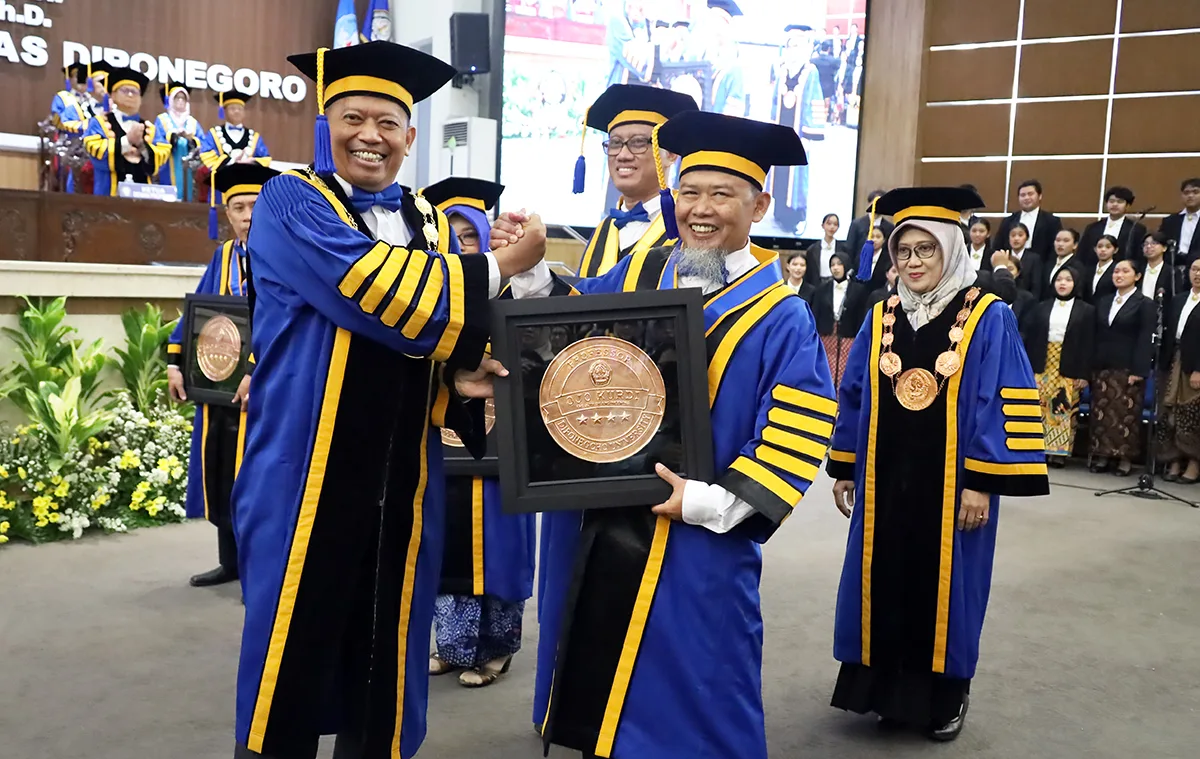
Prof. Ojo Kurdi developed surface engineering approaches, including surface texturing and coating-assisted laser micromachining, for Ultra-High Molecular Weight Polyethylene (UHMWPE) materials. “The research results show that micro-texturing on component surfaces can create lubricant reservoirs that maintain the continuity of the lubricant film, improve load distribution, and significantly reduce friction forces,” he said.
Through the inauguration of these five professors, Universitas Diponegoro reaffirmed its commitment to strengthening its role as an excellent, competitive, and socially impactful higher education institution. This academic achievement is expected to inspire the entire academic community to continue producing high-quality works and innovations while supporting the development of sustainable innovations. (Public Communication/UNDIP/Titis)