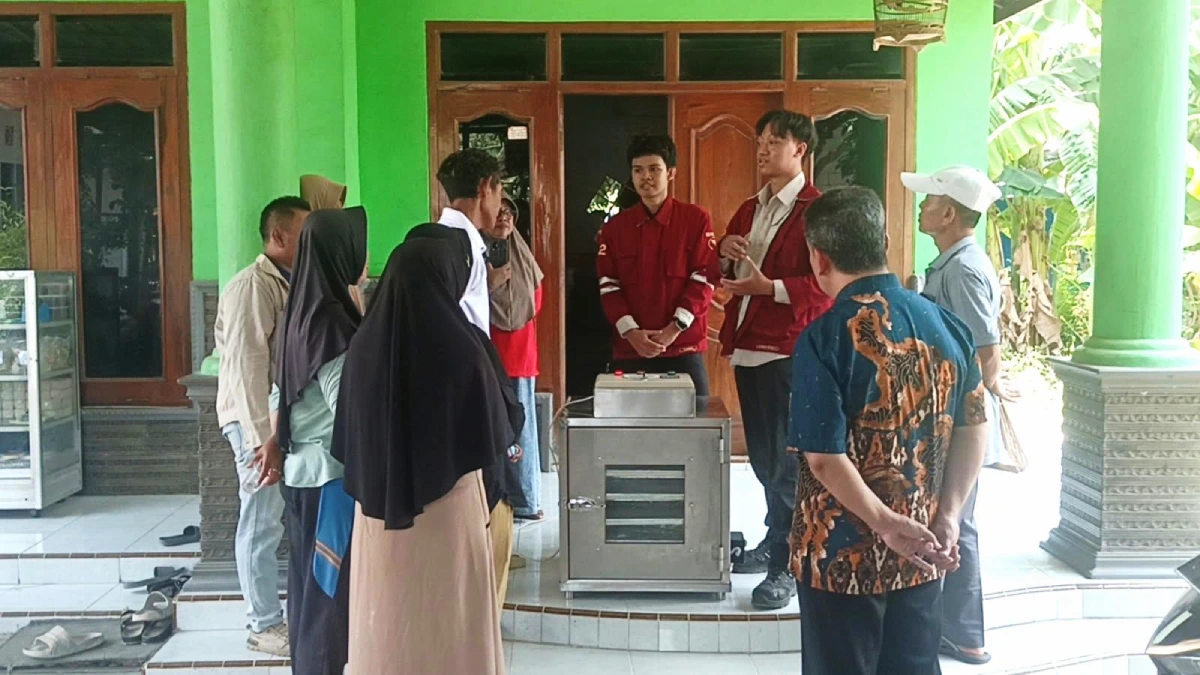

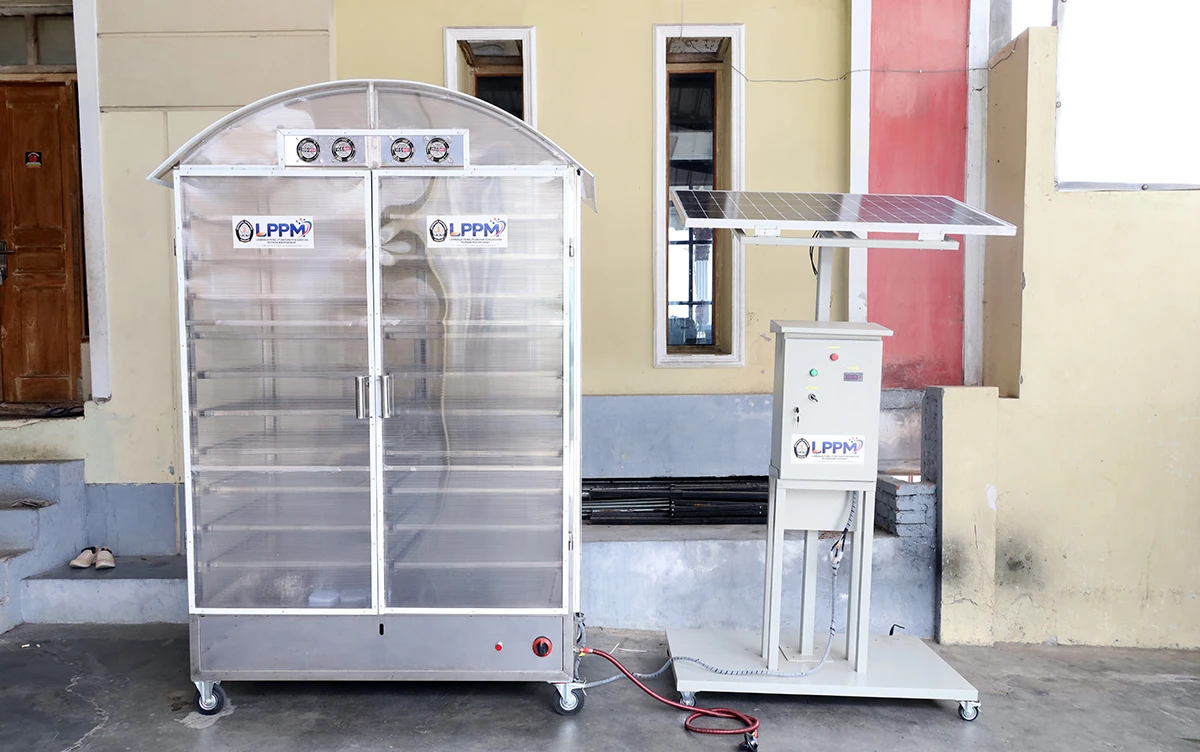
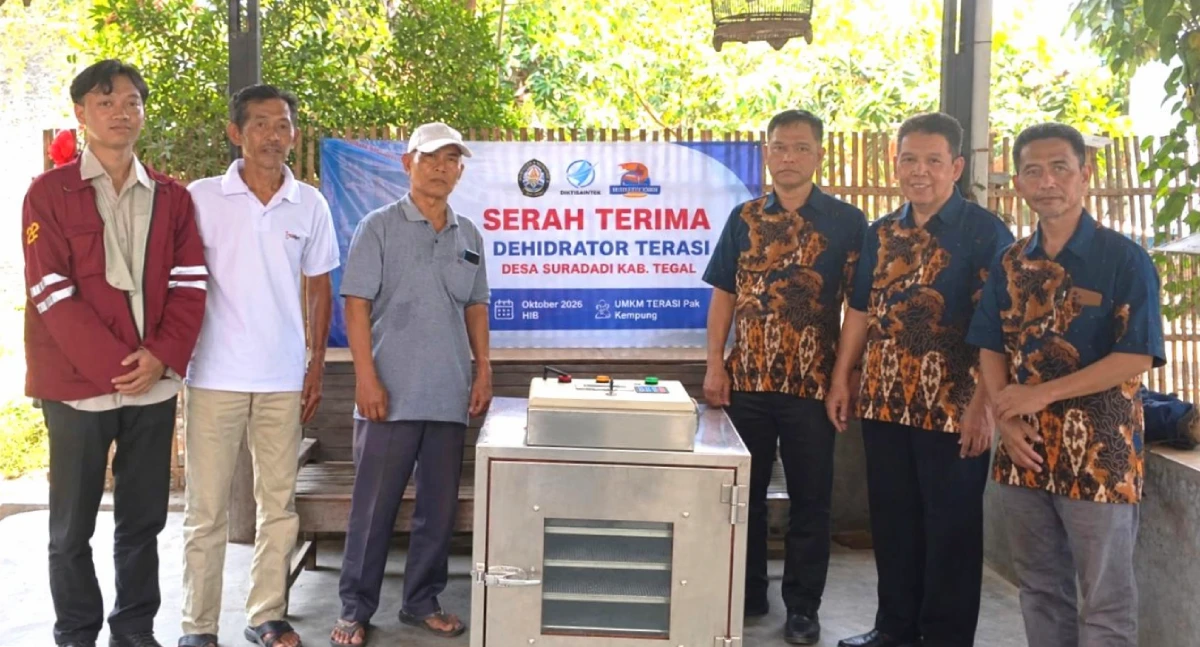
UNDIP, Tegal (1/11) – The drying process for shrimp paste, which has traditionally depended on sunlight, remains one of the main challenges for business operators, particularly during unpredictable weather conditions. In response to this issue, students from the Department of Electrical Engineering at Universitas Diponegoro (UNDIP) developed a shrimp paste dehydrator equipped with an automatic temperature-control system. The innovation was introduced to the “Bapak Kempung” Shrimp Paste MSME in Suradadi Village, Tegal Regency, on Thursday, October 22, 2026, as a more practical and hygienic drying alternative that does not depend on weather conditions.
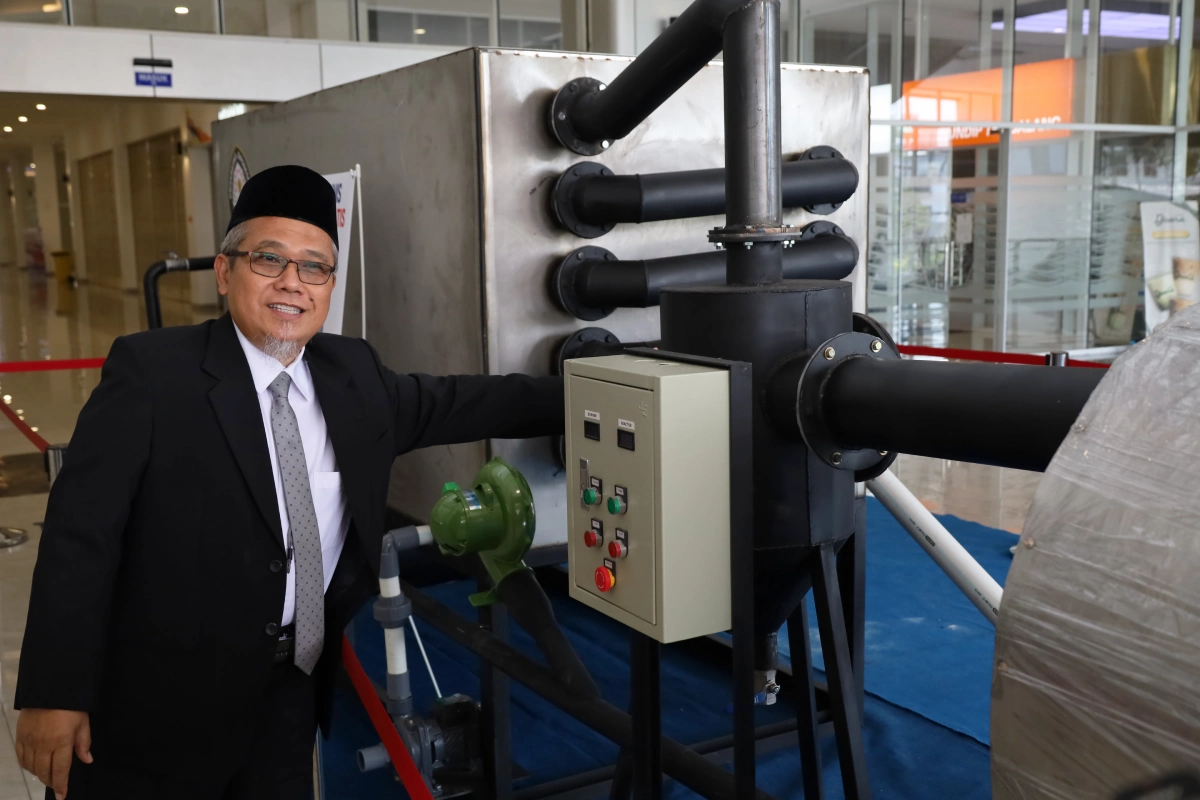
The dehydrator can accommodate up to 12 kilograms of shrimp paste in a single drying process. Equipped with an electric heater rated at 450 watts and a hot-air circulation system, the drying chamber’s temperature can be distributed more evenly. The technology is designed to help MSME operators maintain consistent product quality while reducing production disruptions caused by changing weather conditions.
The innovation was developed by a student team consisting of Friandi Reza Ferdiansyah, Sadindra Arya Rezaki, and Achmad Riqqy Rahmatullaah. One of the dehydrator’s key advantages is its automatic temperature control system based on Sugeno fuzzy logic.
Ir. Budi Setiyono, S.T., M.T., a member of the research lecturer team specializing in control and instrumentation, explained that the technology automatically adjusts the heating power to operational needs, ensuring the drying temperature remains stable. The device is also equipped with a weight sensor to estimate drying time based on the amount of material, three operating modes—automatic, semi-automatic, and manual—and Internet of Things (IoT) technology for real-time monitoring of temperature and energy consumption.
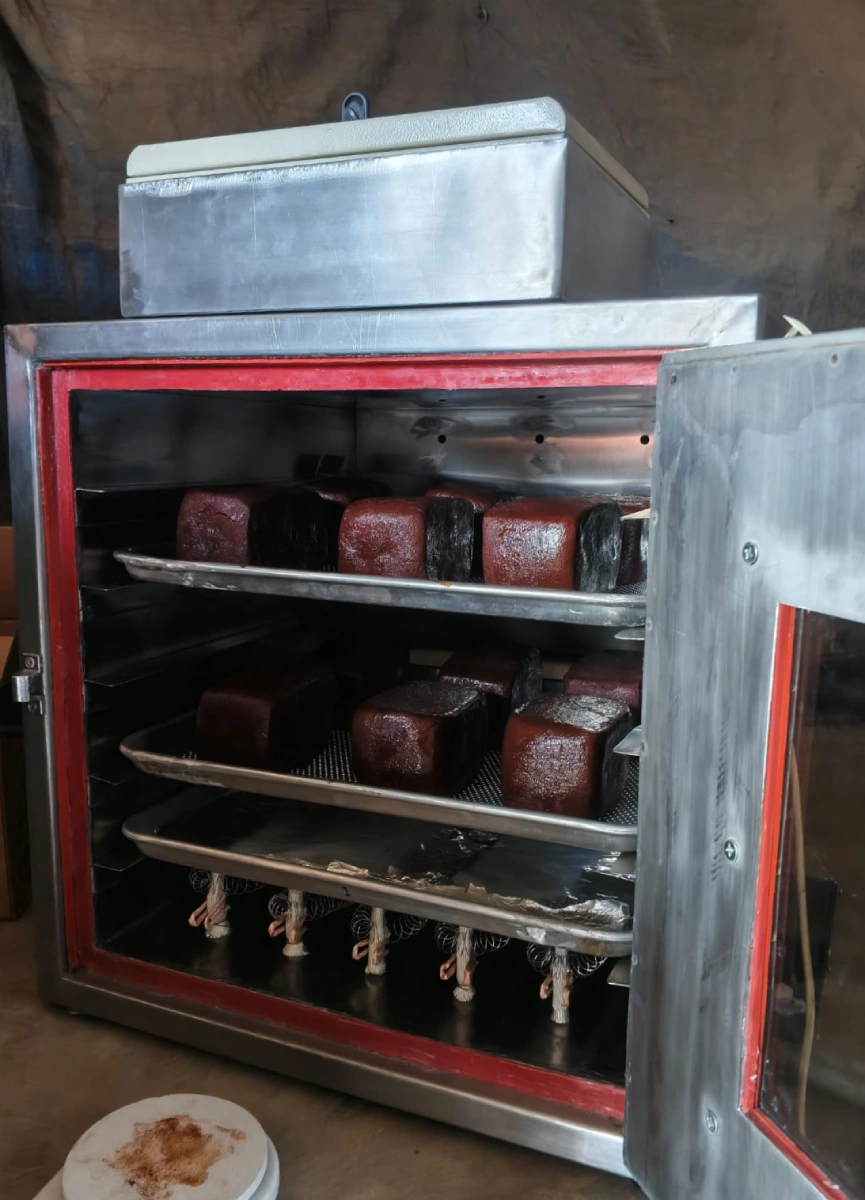
During development, the team also adjusted the parameters of the fuzzy system used to determine drying time. While the previous calculations were based on 250 grams of shrimp paste, subsequent testing was adjusted to 1 kilogram of shrimp paste. This change was made because 250-gram packaged shrimp paste was temporarily not being produced due to limited supplies of rebon shrimp.
The adjustment allowed the system’s development and testing to continue while accounting for the MSME’s actual production conditions. As a result, the drying parameters could be aligned with material availability and user needs.
Representing the Head of the UNDIP Department of Electrical Engineering, Dr. Darjat, S.T., M.T., Secretary of the Undergraduate Electrical Engineering Study Program, expressed his appreciation for the development of the shrimp paste dehydrator as an effort to provide technology suited to community needs. According to him, student innovation should not only serve as a learning outcome on campus, but is also expected to help improve the quality and production capacity of MSMEs. “This program is a tangible manifestation of Universitas Diponegoro as a university that is noble, valuable, and impactful,” he said.
The introduction of the technology was positively welcomed by Sahuri, owner of the “Bapak Kempung” Shrimp Paste MSME in Suradadi Village. He expressed hope that the device would simplify the drying process, which has long been an important part of production activities. Sahuri also hoped that the development of similar technologies would continue, so that more of the needs of small business operators could be addressed through university innovations.
Meanwhile, Dr. Ir. Abdul Syakur, S.T., M.T., IPU., the principal supervisor of the student team, added that the development of the device is an implementation of Capstone Design. This project-based learning approach integrates students’ knowledge and skills to produce solutions to real-world problems in society. Through this approach, students not only develop technical capabilities, but also learn to understand user needs and translate them into practical innovations.
The introduction of the shrimp paste dehydrator in Suradadi Village demonstrates collaboration between higher education and business operators in strengthening the coastal community economy through appropriate technology. UNDIP continues to promote learning outcomes and academic innovations that add value to productive sectors, particularly MSMEs, in line with the commitment to “Noble and Valuable UNDIP” and the spirit of Diktisaintek Berdampak. (Public Communication/UNDIP–Department of Electrical Engineering, Faculty of Engineering/edited by DHW)