
UNDIP, Nusakambangan (23/6) – The introduction of seawater desalination technology developed by Universitas Diponegoro (UNDIP) in Nusakambangan has not only provided a solution for a clean drinking water supply but has also created opportunities for learning and empowerment for correctional residents preparing to reintegrate into society.
Behind the operation of the system that transforms seawater into potable water lies a continuous knowledge-transfer process carried out by the UNDIP team for residents of the Nusakambangan Open Correctional Facility.
The Nusakambangan Open Correctional Facility is designated for low-risk inmates who have completed most of their sentences, demonstrated good conduct, and are being prepared for reintegration into society through various assimilation and social reintegration programs.
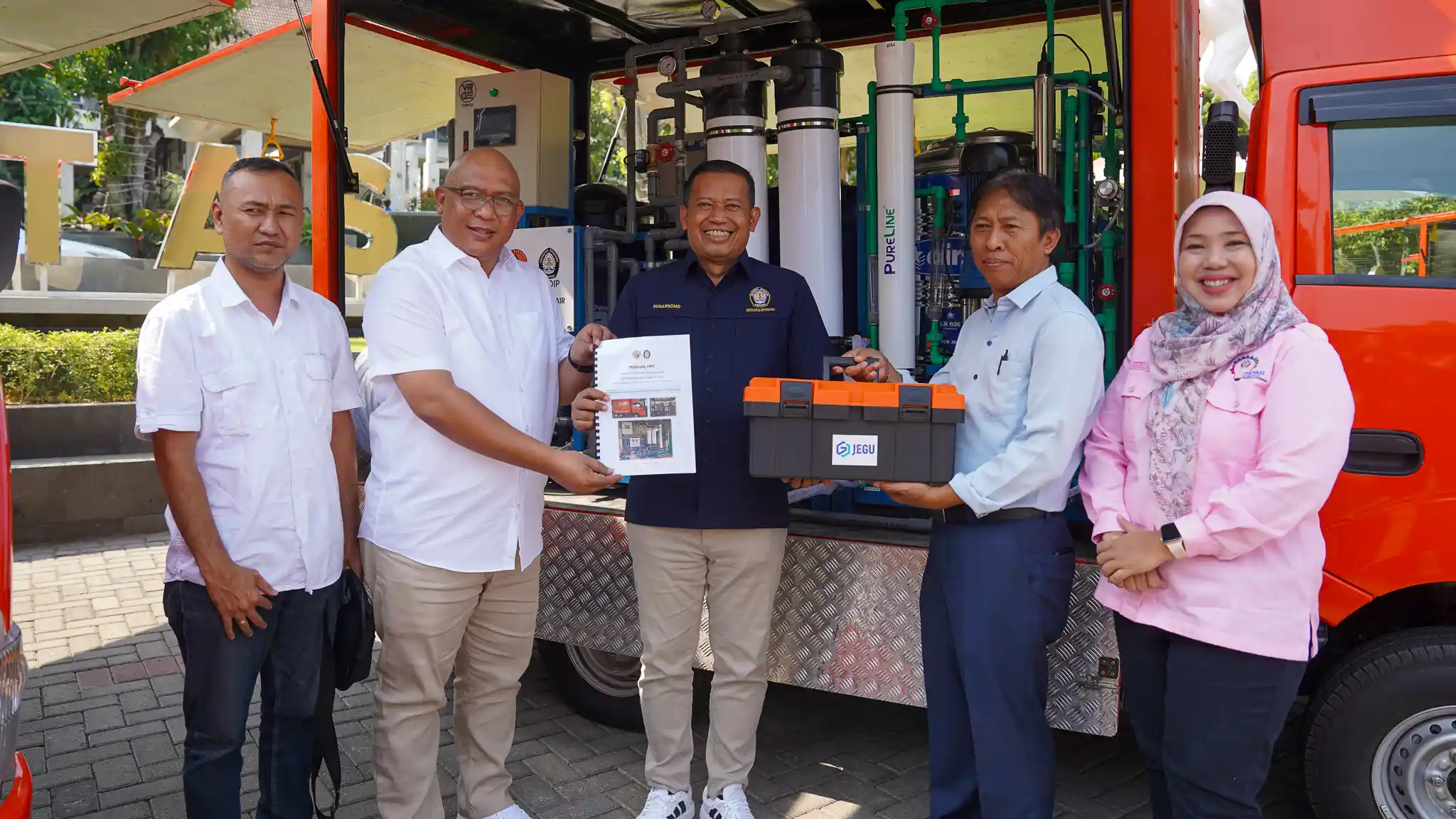
To ensure the long-term sustainability of the desalination facility, UNDIP has trained three to four correctional residents to operate desalination machines. They are equipped with practical skills ranging from seawater intake procedures and filtration system operation to gallon filling, machine monitoring and routine installation maintenance.
As the assigned operators gradually complete their sentences and are released, the training process continues. Each departing operator will be replaced by another resident, who will receive the same training as before.
Prof. Dr. I Nyoman Widiasa, S.T., M.T., the developer of the technology, explained that UNDIP’s role extends beyond the design and construction stages.
“UNDIP is responsible for designing, installing, providing training, and supervising the system even after construction has been completed, with the hope that it can operate sustainably over the long term,” he said.
According to Prof. Nyoman, sustainability is a crucial component of the technology’s implementation in Nusakambangan. Therefore, knowledge transfer to correctional residents is conducted to ensure that the skills required to operate and maintain the system are preserved despite personnel changes.
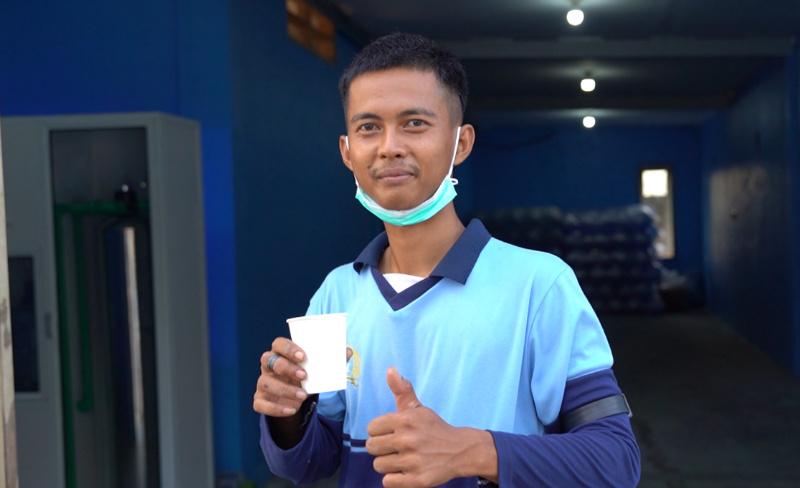
One of the residents participating in the training is Bagus Setiawan. He admitted that he had never imagined learning how to convert seawater into drinking water.
“It was my first time seeing a machine like this. Now I understand the sequence of operating the water purification system. It starts from the seawater storage tank, then goes through the sand filter, continues to the RO machine to separate freshwater from seawater, undergoes further purification, and finally enters the finishing process,” he explained confidently while describing the filtration stages.
The skills he has gained have even inspired new aspirations for his future after completing his sentence.
“Hopefully, when I’m released, I can start a business like this,” he said.
In addition to its social benefits, the desalination technology also delivers positive environmental impacts.
Prof. Nyoman explained that the system was designed with marine ecosystem preservation in mind. The seawater intake mechanism uses a slow-flow approach, preventing the formation of vortices that could potentially disturb marine life, a problem often associated with large-scale desalination facilities.
Furthermore, the concentrated brine produced as a by-product of the desalination process has potential for future salt production. This result would enable the more efficient and sustainable use of marine resources.
“By utilizing surface seawater, we can avoid excessive groundwater extraction, which is still commonly practiced in many places to meet community water needs,” Prof. Nyoman explained.
For the people of Nusakambangan, the benefits of the technology are tangible. Access to clean water has long been a challenge due to the region’s geology, dominated by limestone hills.
Bagus noted that the quality of desalinated water is significantly different from that of the previously available water sources.
“It used to be difficult because limestone mountains dominate Nusakambangan Island. Most of the water here contains limestone. But the desalinated water no longer contains any limestone. Water mixed with limestone tastes flat, whereas the purified seawater has a slightly sweet taste and feels much fresher,” he said.
Through this program, desalination technology has become more than just a solution for providing drinking water in Nusakambangan Island. It also serves as a platform for empowerment, skills development, and future preparation for correctional residents who are rebuilding their lives and preparing to return to society. The desalination initiative reflects UNDIP’s commitment to realizing “Noble and Valuable UNDIP” through innovations that not only address clean water challenges but also empower communities through knowledge transfer and human resource development. The initiative contributes to the achievement of the United Nations Sustainable Development Goals (SDGs), particularly SDG 6 (Clean Water and Sanitation), SDG 9 (Industry, Innovation and Infrastructure), SDG 10 (Reduced Inequalities), and SDG 17 (Partnerships for the Goals), demonstrating UNDIP’s commitment to delivering sustainable solutions that create meaningful social impact. (Public Communication / UNDIP / Ninok)