UNDIP, Keerom, Papua (20/8) – Universitas Diponegoro (UNDIP) continues to reaffirm its commitment to supporting improvements in public health in Indonesia’s frontier, outermost, and disadvantaged (Terdepan, Terluar, dan Tertinggal / 3T) regions. Through the Patriot Expedition Team (Tim Ekspedisi Patriot / TEP), UNDIP collaborated with the Senggi Community Health Center (UPTD Puskesmas Senggi) to organize an anemia prevention and health screening program for adolescents in Senggi District, Keerom Regency, Papua.
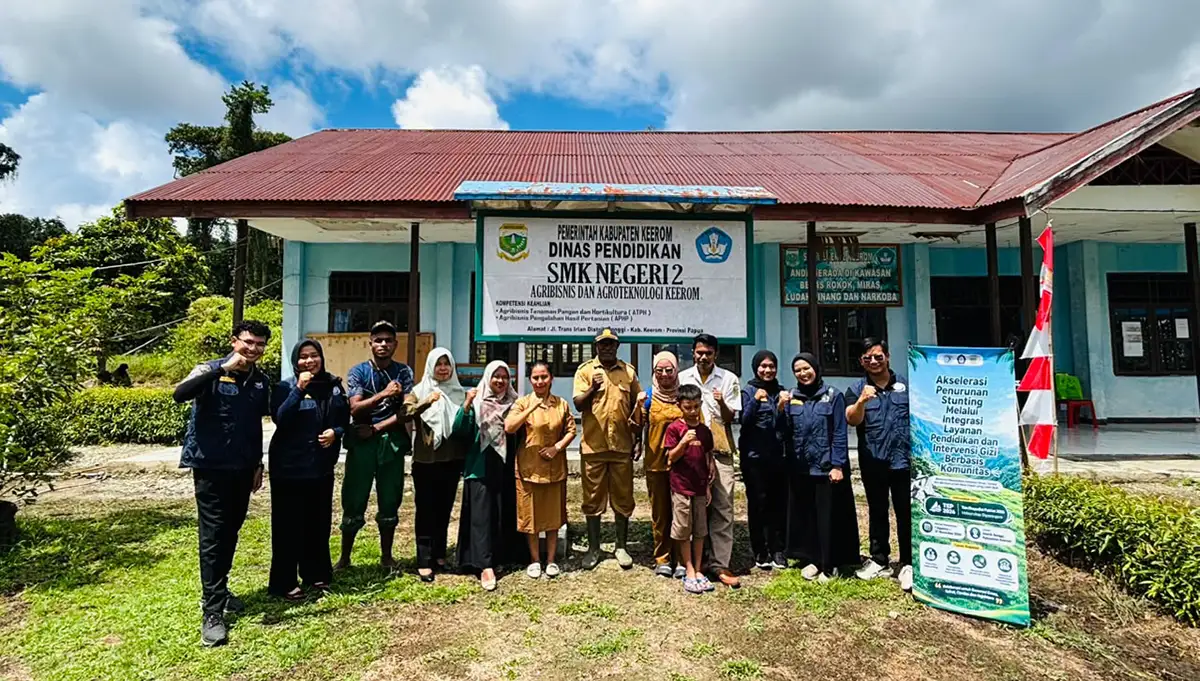
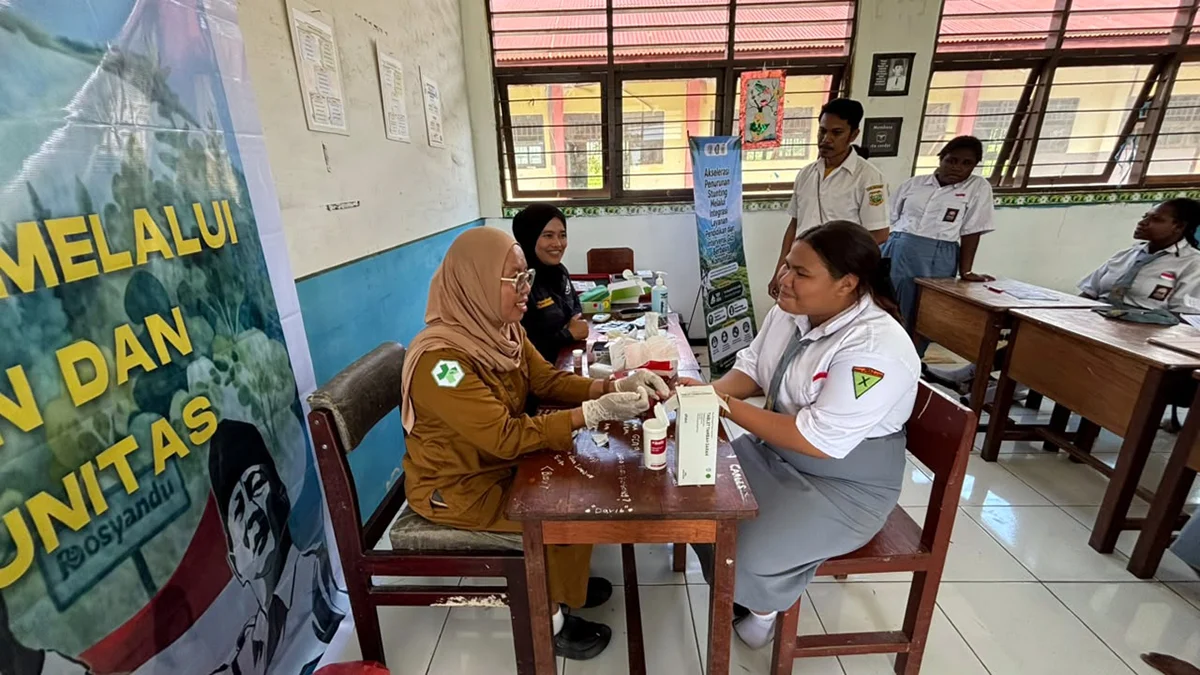
The activity, held on Tuesday (August 18) at SMK Negeri 2 Agrobusiness and Agrotechnology Keerom, focused on health education, the distribution of Iron and Folic Acid Tablets, and regular health examinations for female adolescents. The program was a concrete step toward increasing adolescents’ awareness of the importance of anemia prevention while supporting the early detection of nutritional and health problems.
This strategic initiative is particularly important given data from the 2023 Indonesian Health Survey (SKI) issued by the Ministry of Health, which recorded the prevalence of anemia among Indonesian adolescents at 15.5%. Anemia during adolescence requires particular attention because adolescence is a critical period of growth and development and a stage of preparation for adulthood.
The program began at 9:00 a.m. Eastern Indonesia Time (WIT) with an educational session on the dangers of anemia and strategies for preventing it. The UNDIP Patriot Expedition Team delivered the session under the coordination of Prof. Dr. Diana Nur Afifah, S.TP., M.Si. To ensure that the health education was delivered effectively and reached its intended audience, TEP UNDIP deployed a team of field-experienced experts comprising Dwi Intan Yuniar Sari, S.Gz., M.Gz.; Fenny Anggreany Nasution, S.Gz., M.Gz.; Tika Andriani, S.Gz., M.Gz.; Guntur Samudra, S.K.M.; and Handika Mukti, S.Pd.
The educational session was conducted in synergy with the Senggi Community Health Center team, represented by Tirta, a nutrition officer, and Siti, a midwife. Approximately 35 tenth- and eleventh-grade students from the Agrobusiness and Agrotechnology programs enthusiastically participated in the entire program. Meanwhile, twelfth-grade students were unable to participate because they were engaged in field practice activities related to land preparation.
Following the educational session, the program continued with intensive health examinations for 18 female students and the distribution of Iron and Folic Acid Tablets. The nutritional screening included measurements of height, weight, mid-upper arm circumference, and hemoglobin (Hb) levels as part of early detection efforts for anemia and nutritional problems.
Under health assessment standards, an Hb level below 12 g/dL is considered a primary indicator of anemia in adolescent girls. At the same time, a MUAC measurement of less than 23.5 cm indicates a risk of Chronic Energy Deficiency (CED). During the activity, the UNDIP Patriot Expedition Team played an active role in organizing the screening and conducting height and weight measurements. At the same time, Hb testing was conducted alongside healthcare personnel from the Senggi Community Health Center.
Tirta emphasized that health monitoring for adolescent girls is a routine program conducted by the Senggi Community Health Center at schools throughout Senggi District. “We conduct this program once a month, particularly for adolescent students at SMK N 2 Keerom, SMAK Ebenhaezer, and SMP N 1 Senggi. In addition to health examinations, we also provide Iron and Folic Acid Tablets. Students who have already had breakfast can take the tablets during the activity. Those who have not had breakfast can take the tablets home. We provide two tablets: one to be taken today and another to be taken the following week,” Tirta explained.
Chair of Team 4 of the UNDIP Patriot Expedition, Prof. Dr. Diana Nur Afifah, S.TP., M.Si., emphasized that the screening was not only intended to obtain an overview of adolescents’ health conditions but also served as an initial step toward designing more targeted health and nutrition interventions based on the needs of communities in the Senggi Transmigration Area.
“Adolescent girls are a group that requires particular attention in efforts to prevent anemia because health and nutritional status during adolescence will become an important foundation for health in subsequent stages of life. Through this education and screening program, we want to encourage adolescents to understand their health conditions better, recognize the risks of anemia at an early stage, and develop healthy eating and lifestyle habits, including adherence to taking Iron and Folic Acid Tablets,” Prof. Diana said.
Furthermore, Prof. Diana explained that collaboration among universities, healthcare facilities, schools, and communities is an important component of the Patriot Expedition. “For us, this activity does not stop at health examinations. The data collected in the field provides important information for understanding the actual health and nutritional challenges faced by communities. Based on this data, we can work with the Community Health Center (Puskesmas) and local stakeholders to formulate follow-up measures and programs that are better aligned with community needs. This is the spirit of the Patriot Expedition: bringing the knowledge and expertise of higher education institutions to provide direct benefits to communities, particularly those in transmigration areas,” Prof. Diana added.
The collaboration among the Senggi Community Health Center, SMK Negeri 2 Keerom, and the UNDIP Patriot Expedition Team demonstrates the importance of cross-sectoral synergy in identifying health challenges and generating field data to inform the development of follow-up programs. Through continuous monitoring of adolescents’ nutritional and health status, this initiative is expected to support early anemia prevention efforts and increase adolescents’ awareness of the importance of maintaining their health and nutritional status.
This concrete action further reinforces UNDIP’s commitment to realizing ‘Noble and Valuable UNDIP’ and aligns with the Sustainable Development Goals (SDGs), particularly SDG 3: Good Health and Well-Being. Through the downstreaming of academic knowledge, innovation, and community service by its human resources, UNDIP continues to actively contribute to creating tangible impacts that communities, including residents of the Senggi District Transmigration Area in Keerom Regency, Papua, can directly feel. (Public Communication/UNDIP)