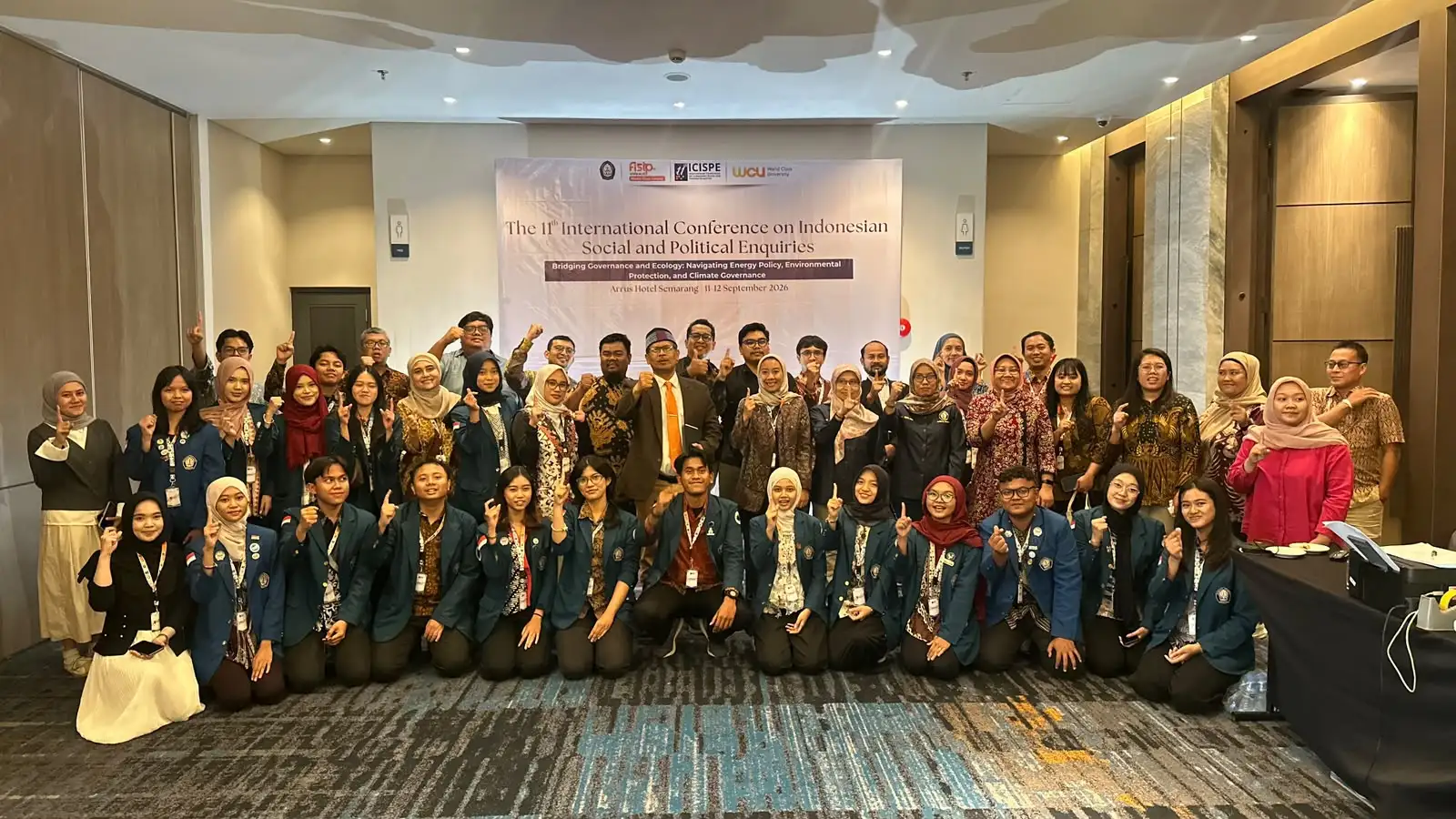

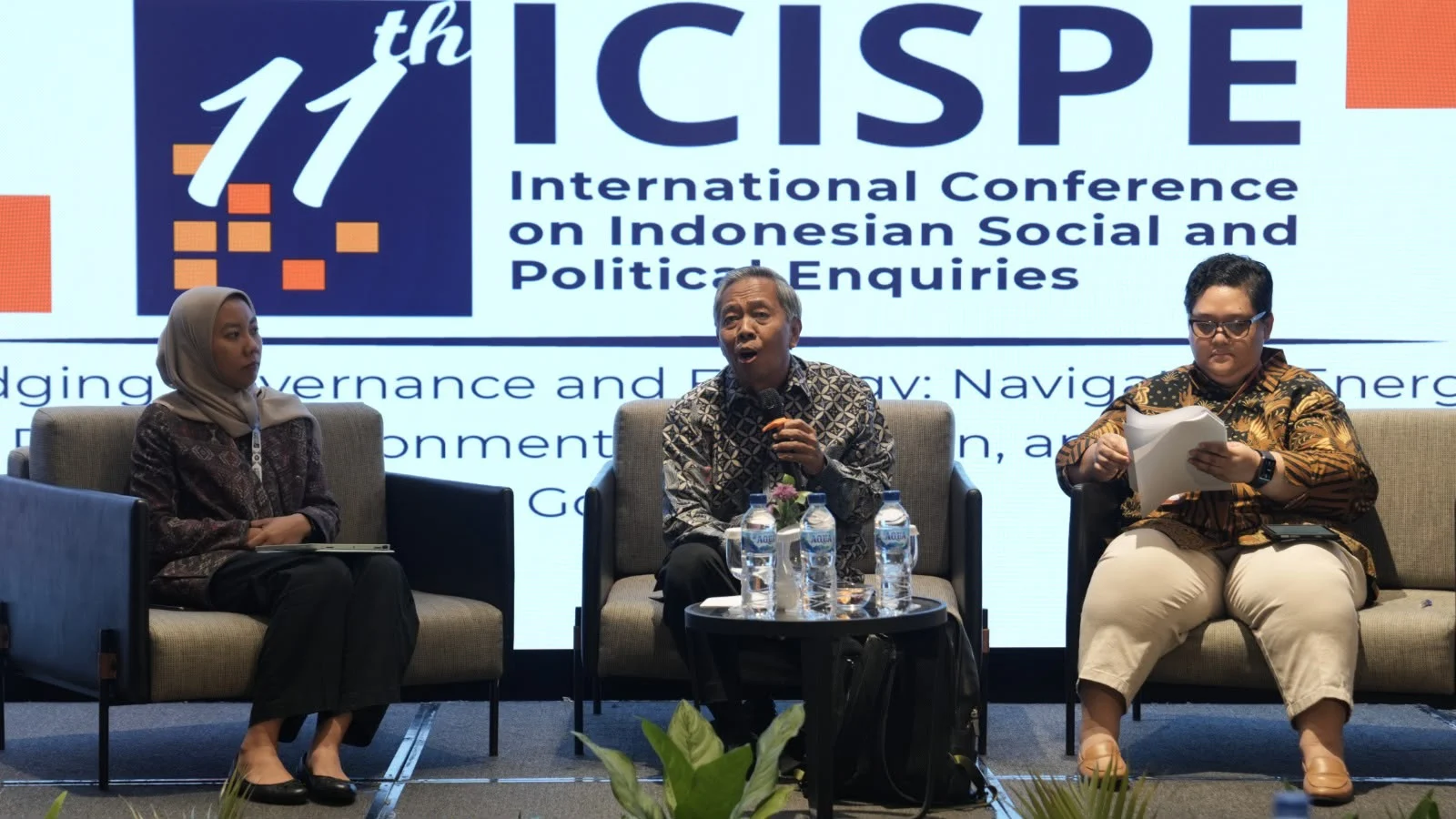
UNDIP, Semarang (12/9) – Universitas Diponegoro (UNDIP), through the Faculty of Social and Political Sciences (FISIP), held the 11th International Conference on Indonesian Social and Political Enquiries (ICISPE) on September 11–12, 2026. The international conference brought together academics and researchers from Indonesia and various countries to discuss contemporary social and political issues, particularly environmental governance, climate change, and sustainable development.
The ICISPE is part of UNDIP’s efforts to strengthen research productivity, scientific publications, innovation, and international academic collaboration networks. For FISIP UNDIP, the conference also serves as an instrument to strengthen its academic reputation and pursue a more competitive position globally.
Dean of FISIP UNDIP, Prof. Dr. Drs. Teguh Yuwono, M.Pol.Admin., said that selecting environmental issues as the focus of ICISPE reflects their importance in contemporary governance. “This is an international seminar, and our network is already very broad. In addition to speakers from Indonesia, we also have speakers from several other countries,” Teguh said on Friday, September 11, 2026.
According to Teguh, governance has a broad scope, including how governments formulate policies to address environmental and climate change issues. One of the issues highlighted at the conference was environmental digital governance. He explained that governance and environmental management can no longer be carried out conventionally, but need to leverage advances in digital technology.
“It is not only about FISIP at the national level, but also at the international level. We are raising the theme of environmental governance and how government policy is actually part of this process,” he said.
Teguh added that ICISPE is also part of FISIP UNDIP’s efforts to strengthen its global academic reputation. FISIP UNDIP is currently among the world’s top 500 and aims to enter the global top 300 in the coming years. Increasing scientific publication productivity, particularly of Scopus-indexed articles, is one of the strategies being pursued.
“All of today’s seminar outputs are Scopus-indexed articles. We expect to produce around 100, which will contribute to UNDIP’s target of approximately 3,000 Scopus-indexed articles,” he explained.
UNDIP Promotes Responses to Environmental Challenges
UNDIP Vice Rector for Research, Innovation, and Cooperation, Wijayanto, Ph.D., said environmental issues are global challenges that can no longer be ignored. “Environmental issues are extremely important. If we do not talk about the environment, we will be left behind in the global conversation. The global conversation today is about environmental issues,” he said.
According to Wijayanto, climate change is not only a challenge for the current generation but also a responsibility toward future generations. He cited the impact of climate change he experienced during a visit to France in late July 2026, when the country was hit by a heat wave that, he said, caused more than 1,000 deaths. “The impact of climate change is very real and has a global impact,” he said.
Environmental challenges are also being experienced at the local level. Wijayanto cited the Demak area along the northern coast of Java, which faces tidal flooding. The condition not only inundates residential areas but also affects access to clean water due to seawater intrusion. “The water there is salty, so it cannot be consumed for daily needs,” he said.
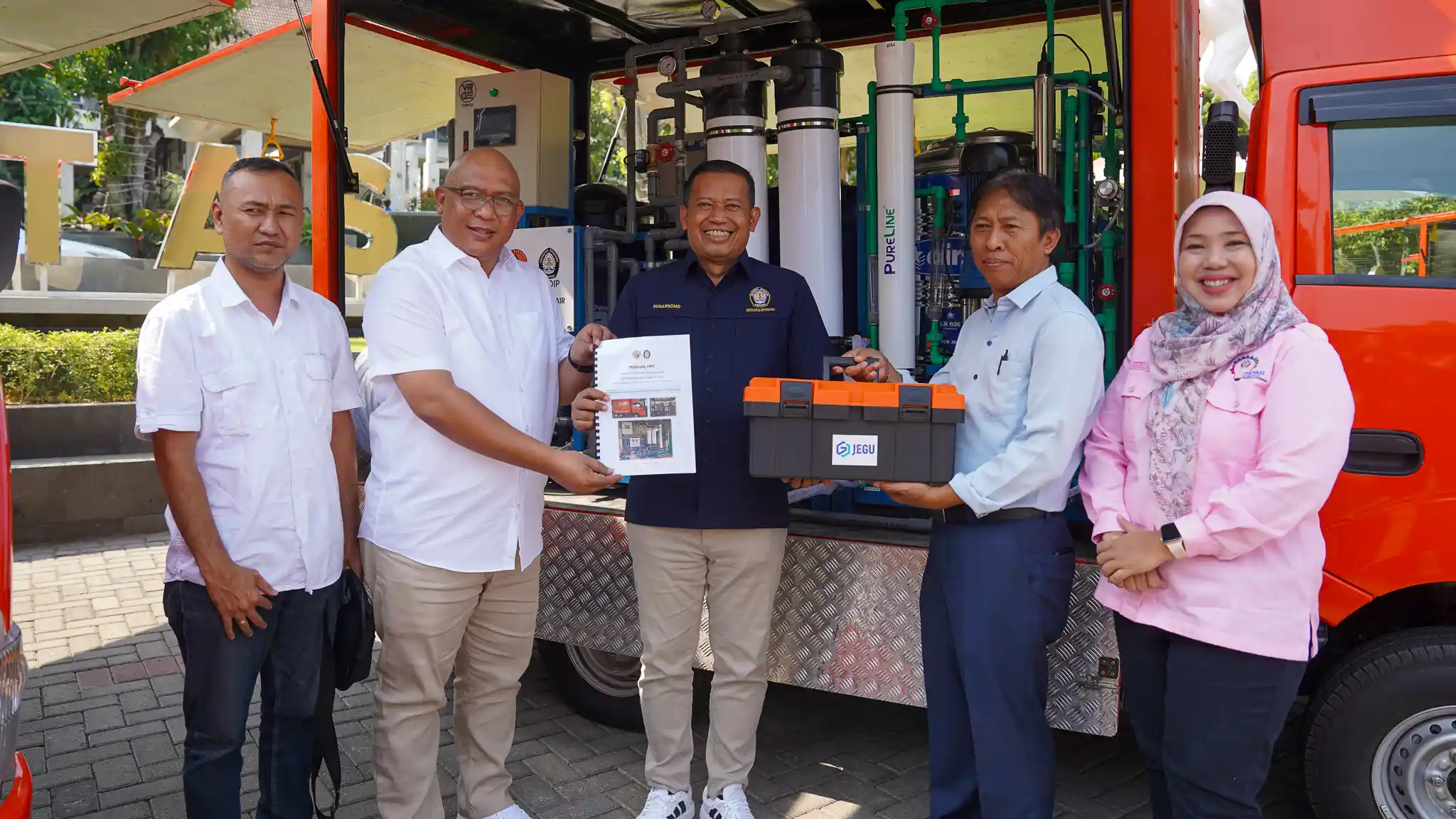
As part of its commitment to providing solutions for communities, UNDIP has also developed desalination technology to convert saline or brackish water into drinking water. Wijayanto said the issues discussed at the 11th ICISPE are relevant to these conditions because environmental challenges can be understood at both global and local scales. “Global problems and global issues are reflected not only at the global level but also at the local level,” he said. “In Semarang, the Simpang Lima area, which used never to experience flooding, is now flooded,” he added.
Chair of the 11th ICISPE Organizing Committee, Dr. Mohamad Rosyidin, S.Sos., M.A., said the conference serves as an international forum for academics to present ideas and perspectives on various issues under discussion. “ICISPE is an international discussion forum that provides academics with a platform to share their thoughts on relevant themes. Through this forum, we hope to facilitate an exchange of ideas and perspectives that can enrich academic discourse and open opportunities for academic and research collaboration,” Dr. Mohamad Rosyidin said.
The forum brought together academics from diverse backgrounds and countries to discuss environmental issues, governance, sustainable development, climate change, and energy transition from social and political perspectives. To strengthen its international perspective, the 11th ICISPE featured five keynote speakers from Indonesia and abroad.
Prof. Dr. Sudharto P. Hadi of Universitas Diponegoro discussed Green Industry and Sustainable Development, as well as ESG and Multi-Stakeholder Collaboration for Responsible Governance. Meanwhile, Prof. Dr. Ika Riswanti Putranti, also from Universitas Diponegoro, addressed International Environmental Cooperation and Energy Transition Governance.
Dr. Mirza Sadaqat Huda of ODI Global discussed the Geopolitics of the Energy Transition and a Just Energy Transition. Dr. Wai Man Natalie Wong of National Chengchi University addressed Comparative Climate Governance and Environmental Policy Innovation based on East Asian experiences.
Meanwhile, Prof. Mamoon Allan of the University of Jordan discussed Sustainable Geotourism and Green Growth, including the importance of local community involvement in sustainable tourism development. The participation of these speakers highlighted the close links between environmental and sustainable development issues and governance, public policy, energy, economics, technology, and society.
Strengthening Research and International Collaboration
Through ICISPE, UNDIP continues to strengthen its research ecosystem and international collaboration. The conference serves not only as a platform for presenting research findings but also as an avenue for knowledge exchange, joint research development, scientific publications, and the expansion of academic networks.
For FISIP UNDIP, strengthening international academic forums is part of its agenda toward becoming a World-Class Faculty, while supporting UNDIP’s efforts to improve the quality and quantity of scientific publications and expand its academic contributions globally.
The 11th ICISPE is part of UNDIP’s ongoing efforts to bring together knowledge, research, and collaboration to respond to social and political challenges at both the global and local levels. (Public Communication/UNDIP/Muhammad Rif’at Al-Razi)