
UNDIP, Senggi, Keerom Regency (27/9) – The agricultural sector in Senggi District, Keerom Regency, Papua, has long been highly dependent on weather conditions. Productive farmland in this transmigration area frequently experiences drought during the dry season, reducing crop productivity and increasing the risk of crop failure. In response to this challenge, Team 17 of the Universitas Diponegoro Patriot Expedition Team (TEP UNDIP) initiated the construction of a strategic irrigation reservoir in SP 2, Woslay Village, to ensure a sustainable supply of agricultural water.
Senggi District is home to both transmigrant communities and Indigenous Papuans (Orang Asli Papua / OAP), with extensive agricultural land potential. However, most farmland still relies on rain-fed agriculture, causing the cropping index to fluctuate significantly when rainfall declines sharply. Amid the geographical challenges of this border region, precise technical interventions are essential to achieving local food self-sufficiency.
Considering these geographical conditions and potentials, Team 17, led by Septrial Arafat, S.P., M.P., together with members Risa Nurhaliza, S.I.Kom.; Nok Ayu Nurasih, S.Pi., M.Pi.; Amelia Shafa Salsabila, S.P.; Riko Iqbal Allatif, S.Pd.; and Alfian Nur Setiawan, S.P.W.K., decided to redesign the irrigation program approach. Septrial Arafat explained that the initial plan to install a pipeline from a surface water source was revised into the construction of a water storage reservoir (long storage). This decision was based on a spatial and physical assessment showing that surface water discharge becomes unstable during the dry season.
The need for this design adjustment was also voiced by Sibur, Head of the Satu Hati Farmers Group. “We need a water storage facility, whether in the form of long storage or a reservoir, that can store rainwater and surface runoff as reserves to help us face seasonal drought,” said Sibur.
The physical construction of the reservoir was also made possible through a sociological approach and the full support of local customary leaders. Patras, Head of the Keret of Woslay SP 2 Village, officially granted the right to use customary land along Route 3, SP 2, for the excavation of the reservoir and the development of water channels. This customary approval became a crucial foundation for the smooth operation of heavy equipment at the site.
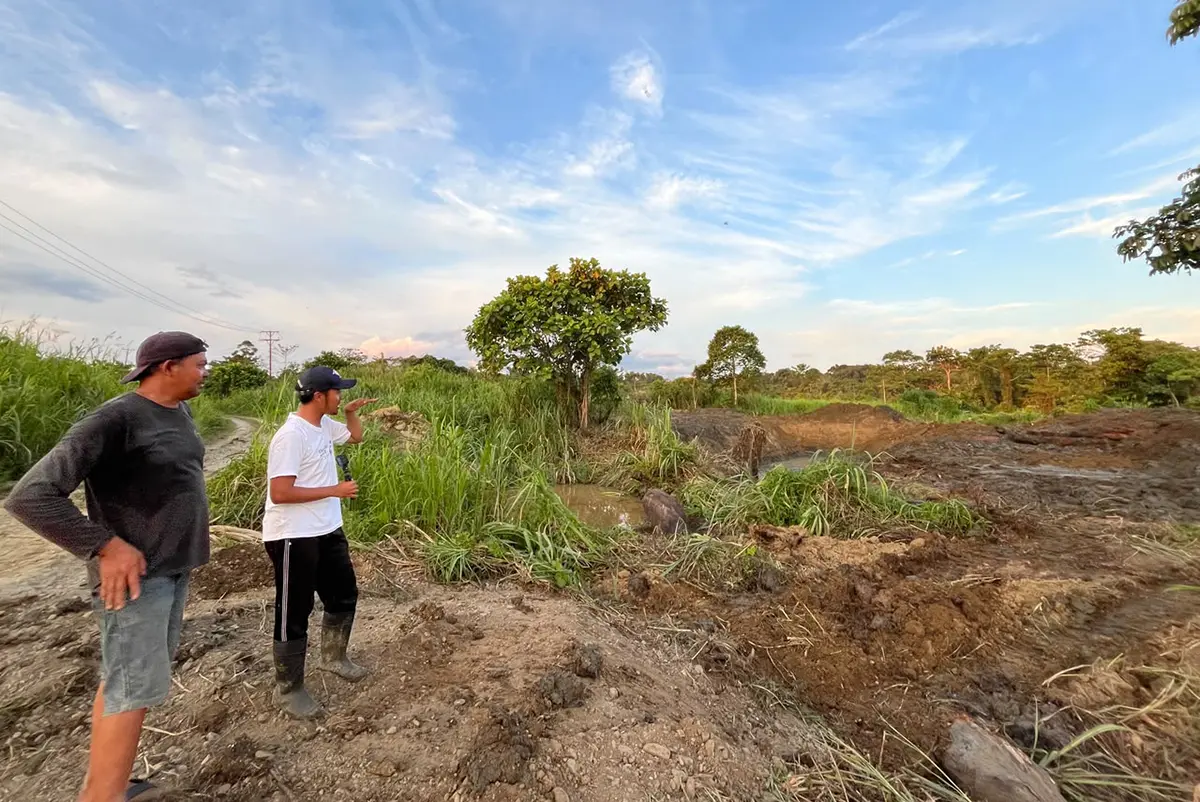
The irrigation reservoir is designed to measure 35 meters long, 15 meters wide, and 3 meters deep. It will serve as a large-capacity storage facility for rainwater runoff and surface flows, which will later be distributed to agricultural land through an integrated pumping system and conveyance channels developed in collaboration with local farmers’ groups.
Sibur emphasized that the reservoir would provide greater certainty regarding water availability for local farmers. “Until now, we have always been anxious whenever the dry season approaches because our crops are at risk of being damaged. The presence of this large water storage reservoir is the answer to the hopes of Woslay farmers, who have long wanted a more reliable water supply,” he said.
Similar support was also expressed by the Keerom Regency Transmigration Agency. The agency considers the irrigation reservoir to be an important facility that will strengthen the development of SP 2 Woslay Village, which is currently in the process of becoming a new definitive village named Soom Village. Reliable water infrastructure is expected to catalyze new economic growth while strengthening social integration between transmigrant communities and Indigenous Papuans.
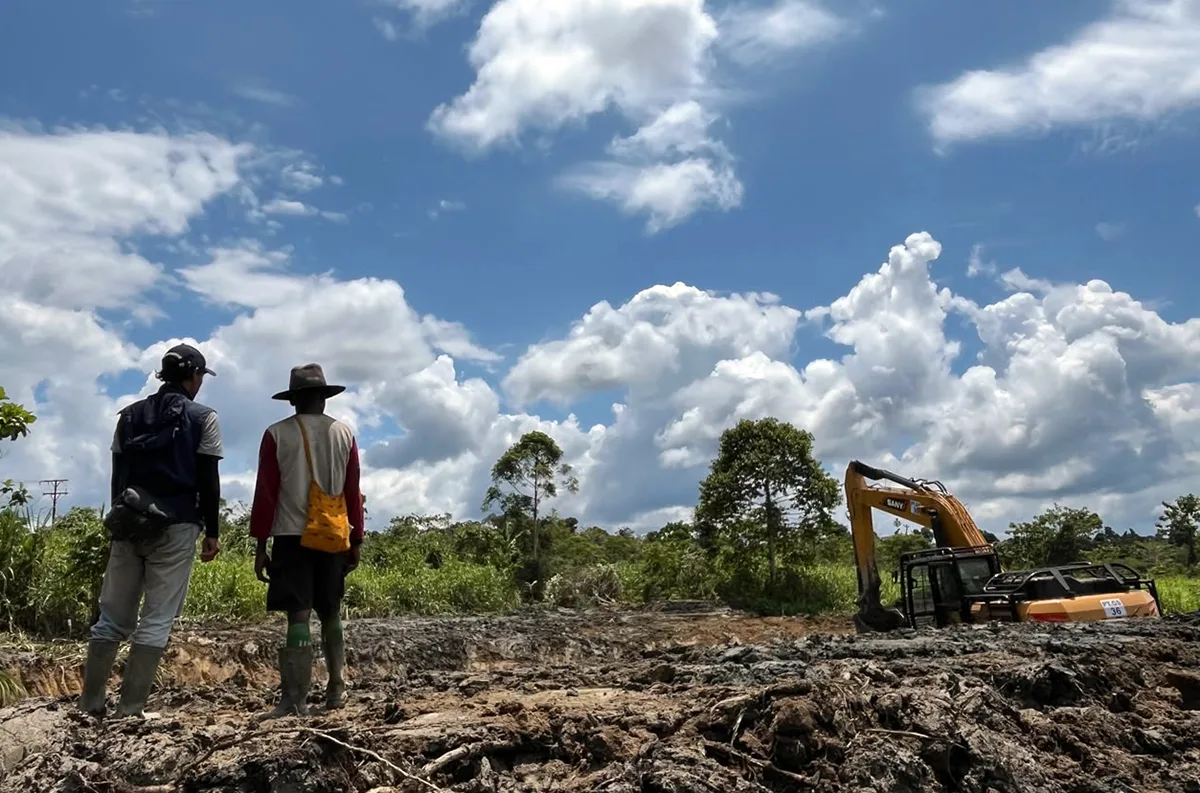
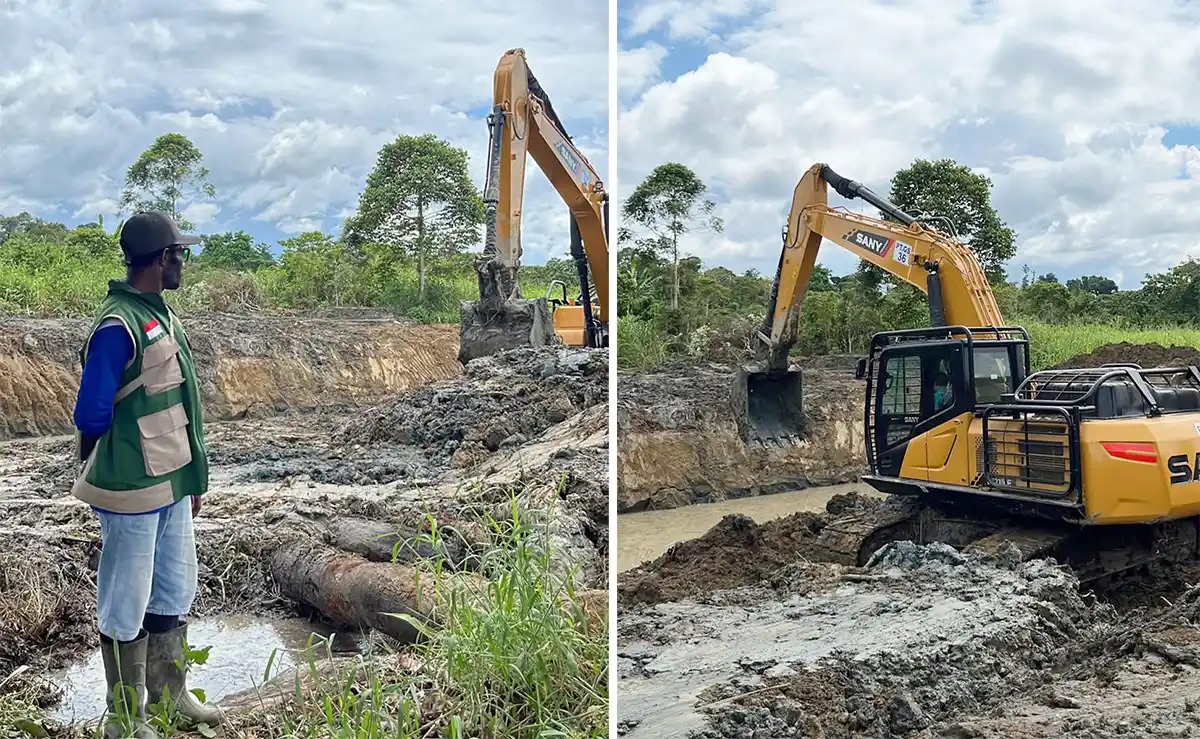
The physical construction of the reservoir was carried out intensively using a PC200 excavator, taking into account the infiltration rate of peat-clay soil and evaporation rates in the Senggi area. During the mobilization of heavy equipment toward the main excavation point along Route 3, the excavator also normalized residents’ drainage channels by removing mud deposits, sediment, and vegetation blocking water flow, thereby restoring the drainage system’s function.
The reservoir construction was carried out gradually and systematically. The process began with the placement of spatial markers based on hydrological calculations to ensure the accuracy of excavation boundaries, elevation, and reservoir dimensions. After the area was cleared of shrubs and initial mud deposits, the excavation proceeded in stages. The excavation was conducted by forming carefully calculated slopes to reduce the risk of landslides. Finally, excavated soil was sorted and reused for land leveling around the site, as well as for constructing water-retaining embankments and the reservoir’s inlet and outlet channels.
The new water storage facility was warmly welcomed by community leaders and local agricultural extension officers. Albert, Head of the Neighborhood Association (RT) along Route 3, stated that a more reliable water supply could encourage farmers to shift toward irrigated or wetland rice cultivation, replacing the previous low-productivity upland rice farming system. “The reservoir in the agricultural area of SP 2 Route 3 provides an answer to the water shortages farmers face every year, while also motivating residents to cultivate agricultural land that had previously been abandoned,” Albert emphasized.
Officials from the Senggi District Agricultural Extension Center (BPP) also assessed that the facility would be highly effective in irrigating farmland cultivated by at least four farmers around the demonstration area, while providing a concrete irrigation solution for flatland areas located far from surface water sources. The construction of the reservoir by TEP UNDIP Team 17 represents a form of synergy among higher education institutions, local government, customary leaders, and communities in the border region.
TEP UNDIP Team 17’s concrete initiative to build an irrigation reservoir in this border area also supports the achievement of the Sustainable Development Goals (SDGs), particularly SDG 2 (Zero Hunger) through strengthened food security; SDG 6 (Clean Water and Sanitation) through sustainable water resource management; SDG 13 (Climate Action) by strengthening agricultural resilience to drought; SDG 15 (Life on Land) through sustainable land utilization; and SDG 17 (Partnerships for the Goals) through cross-sector collaboration among universities, government, customary institutions, and local communities. (Public Communication/UNDIP)