


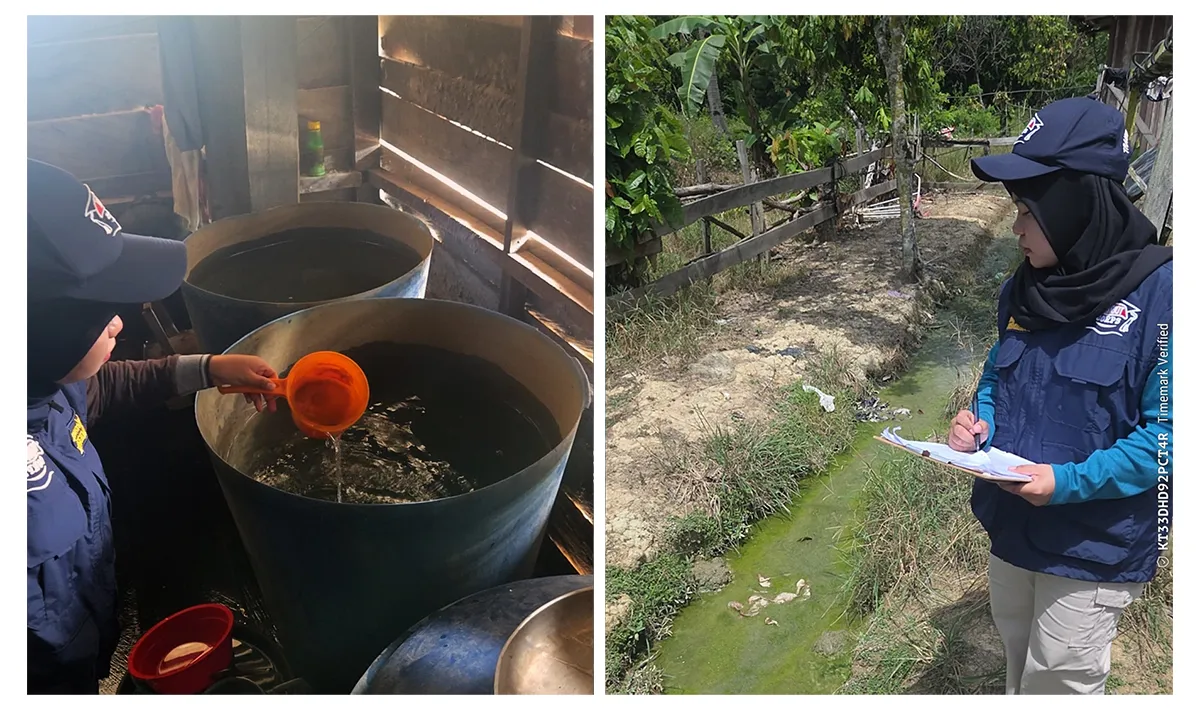
UNDIP, Senggi, Keerom Regency (26/9) – Improving sanitation facilities and ensuring access to clean water have become key priorities in efforts to enhance the quality of life of communities in transmigration areas. To directly understand local conditions and community needs, Team 18 of the Universitas Diponegoro Patriot Expedition Team (TEP UNDIP) conducted a door-to-door sanitation survey in Woslay SP 1 and SP 2, Senggi District, Keerom Regency, Papua.
This direct approach is considered important because healthy sanitation indicators are measured not only by the physical availability of facilities but also by how those facilities function and are used in everyday life. Based on field observations, the team found that sanitation conditions in Woslay are closely related to the availability of clean water, the use of proper sanitary toilets, household wastewater management, and residential drainage systems.
Healthy sanitation essentially begins at the household level, where adequate clean water is available, toilets function properly, and wastewater is not allowed to stagnate around residential areas. However, based on interactions and field visits, most residents expressed concerns about the need for an adequate supply of clean water. In several locations, water availability remains very limited, is not guaranteed year-round, and appears visibly murky.
This condition was confirmed by a resident, Martina, who described the challenges her family faces in meeting its daily water needs. She explained that the water used for daily activities often appears murky. The water problem in Woslay is therefore not only related to quantity, but also to the quality of the water consumed by the community. “I hope we can gain access to a cleaner and more adequate water supply that is easier to use for our daily needs,” Martina said.
In terms of toilet use, positive progress has been demonstrated through the local community’s awareness. Nurelyanti, a healthcare worker from the Senggi Community Health Center (Puskesmas), stated that community participation has shown significant improvement. Based on monitoring and survey results, 100 percent of recorded respondents have used water-sealed squat toilets.
This positive achievement provides valuable social capital for building a strong foundation for healthy household sanitation. However, proper toilet use must also be supported by adequate water availability and by safe, standardized septic tanks and wastewater disposal systems that do not contaminate the surrounding environment.
On the other hand, the adequacy of wastewater drainage channels remains a challenge that has yet to be fully resolved. Lamuji, a resident of Woslay, explained that most household wastewater channels in the area are still constructed independently by residents, who dig simple drainage pathways into the ground.
These earthen drainage channels do not yet meet proper sanitation standards because they are prone to sediment buildup, rapid weed growth, blockages, and wastewater stagnation around residential areas.
“Residents here urgently need better-organized drainage infrastructure so that wastewater can flow smoothly and the environment around their homes can remain clean,” Lamuji said.
The series of field findings confirms that sanitation issues in Woslay must be addressed as an integrated system. The provision of clean water, proper toilet facilities, safe septic tanks, and improvements to wastewater drainage infrastructure need to be implemented simultaneously. Through comprehensive improvements, residential areas in Senggi are expected to become cleaner, healthier, and more comfortable for the community.
The activities carried out by TEP UNDIP Team 18 reflect its commitment to supporting the achievement of the Sustainable Development Goals (SDGs), particularly SDG 3 (Good Health and Well-Being) through the development of a hygienic living environment, SDG 6 (Clean Water and Sanitation) through improved access to clean water and integrated sanitation, and SDG 11 (Sustainable Cities and Communities) by supporting the development of clean, healthy, and comfortable transmigration areas. (Public Communication/UNDIP)