
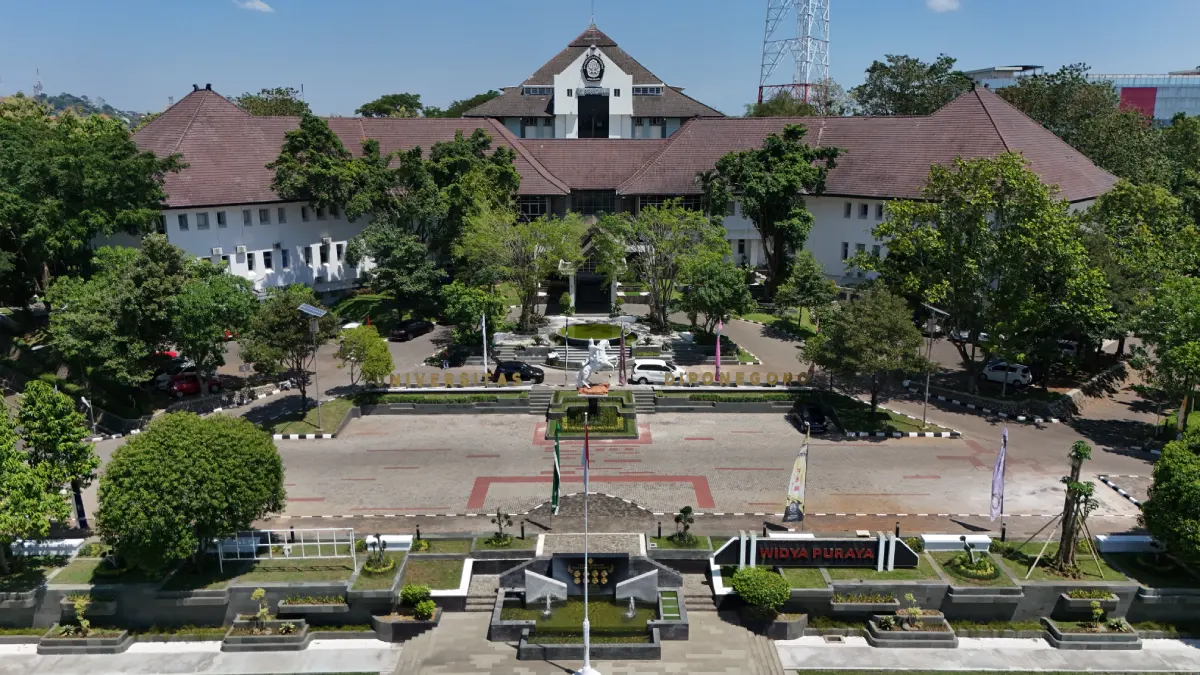

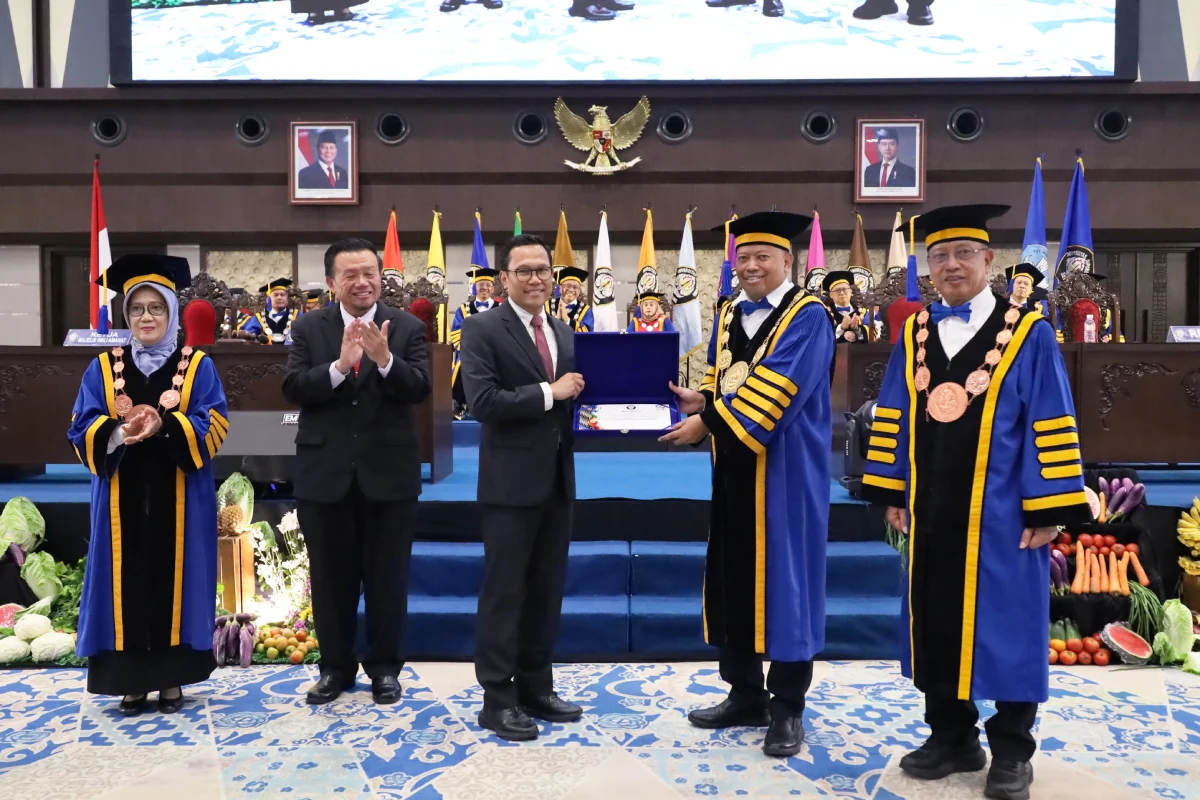
UNDIP, Semarang (15/10) – Universitas Diponegoro (UNDIP) marked its 69th anniversary by reaffirming its commitment to delivering education, research, and innovation that provide tangible benefits to society. This spirit was highlighted during the Open Session of the Academic Senate for UNDIP’s 69th Anniversary Ceremony on Thursday, October 15, 2026, at the Muladi Dome Multipurpose Building on the UNDIP Tembalang Campus. Carrying the theme “UNDIP Synergizes, Innovates, and Creates Impact for the Nation,” the commemoration served as a momentum to strengthen collaboration and expand the university’s contribution to national development.
Chair of the UNDIP Academic Senate, Prof. Ir. Tri Winarni Agustini, M.Sc., Ph.D., emphasized in her opening remarks UNDIP’s role as one of the centers of modern civilization through education, research, and community service, as well as through various innovations implemented in society. More than 300,000 UNDIP alumni have contributed in various regions, while the university currently educates more than 67,000 students. “UNDIP has produced various research outputs, patents, intellectual property, publications, and downstream products that have been implemented in society,” she said. These achievements have also been strengthened by international recognition in sustainability, including UNDIP’s position among the world’s top 20 universities in the UI GreenMetric ranking.
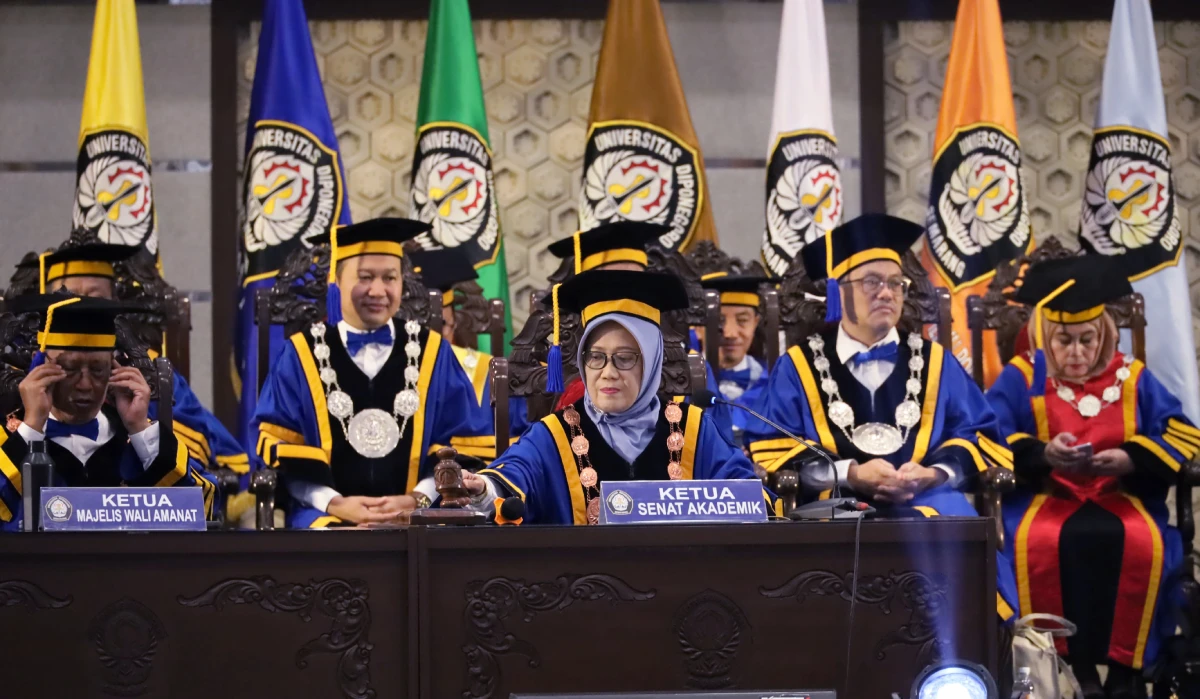
UNDIP Rector Prof. Dr. Suharnomo, S.E., M.Si., in his remarks, invited the entire civitas academica to make the university’s 69th anniversary a momentum to strengthen the relevance of higher education to society. According to him, university excellence cannot be measured solely through academic reputation, scientific publications, or international rankings. The true value of a university lies in its ability to transform knowledge into solutions that address public needs. Amid the challenges of climate change, food security, technological disruption, and global uncertainty, UNDIP remains committed to producing applicable research and expanding the benefits of innovation for national development.
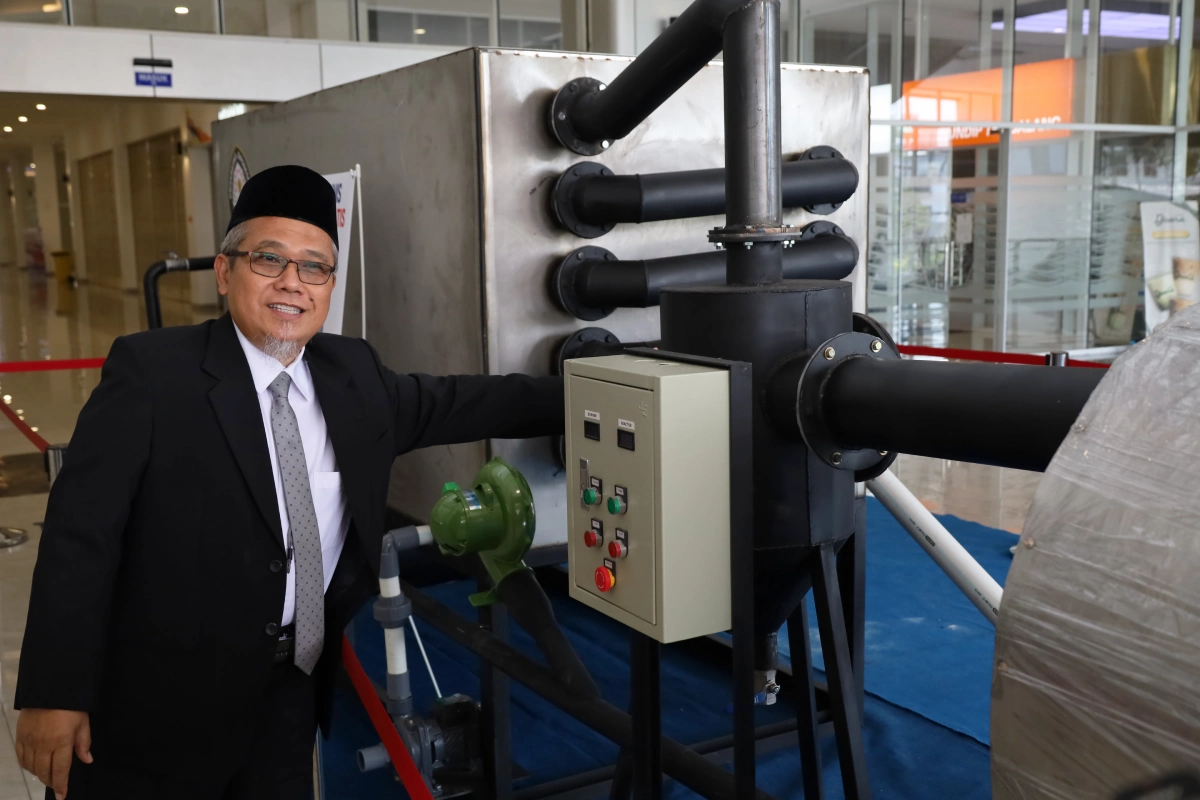
This commitment has been realized through various innovations that directly address community needs. In the field of clean water provision, UNDIP has developed desalination technology that converts seawater into drinking water. The technology has been implemented at 11 locations, including areas along the northern coast of Java, Maluku, and Nusakambangan, and has also been used to assist disaster victims.
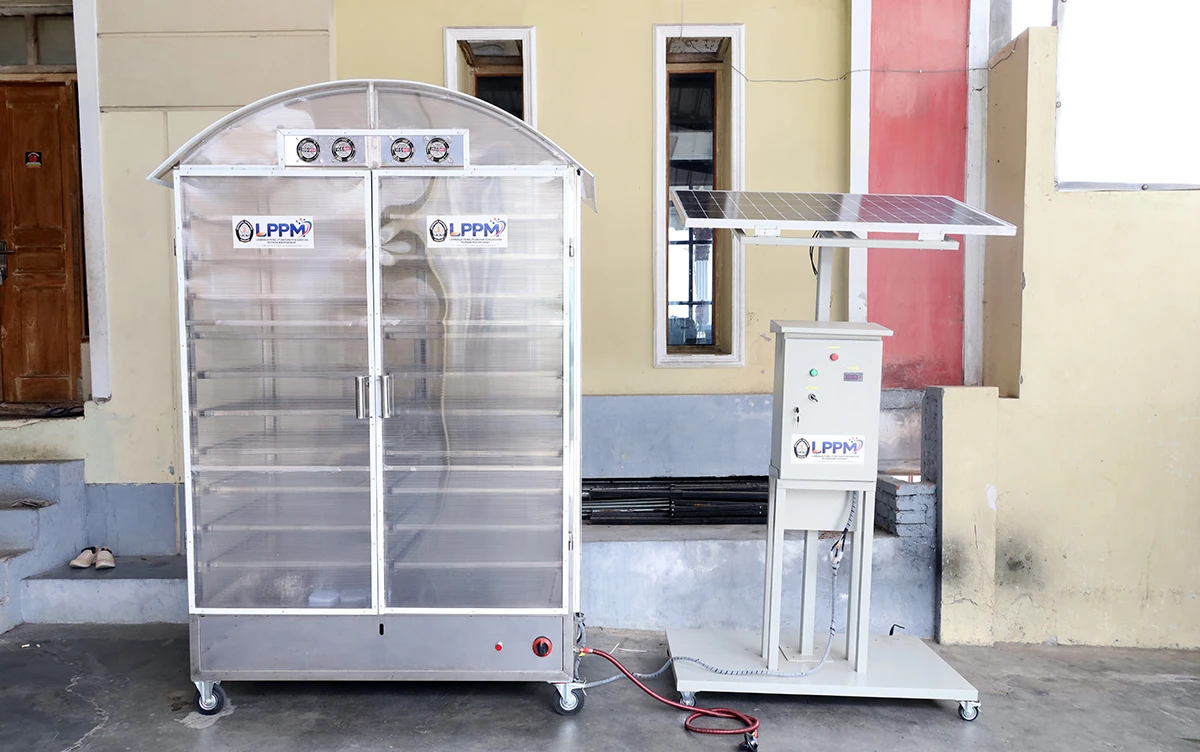
In the coastal economy sector, mentoring for anchovy businesses has opened export access to Japan, Singapore, and Sri Lanka, involving approximately 1,200 fishermen and creating employment opportunities for 200 women. UNDIP has also developed solar-biomass seaweed-drying technology, food innovations to prevent stunting, and waste-processing technologies for compost production, maggot cultivation, and pyrolysis.
These efforts demonstrate how university research can be part of the solution to improving quality of life, strengthening community economies, and promoting more sustainable environmental management.
Perspectives on the role of higher education in national development were also highlighted in a scientific oration by Pungkas Bahjuri Ali, STP., MS., Ph.D., Deputy for Human and Cultural Development at the Ministry of National Development Planning/Bappenas of the Republic of Indonesia. He emphasized the importance of higher education’s contribution to realizing the vision of Golden Indonesia 2045, characterized by progress, competitiveness, and sustainability.
According to him, universities have a much broader role than merely producing high-quality graduates. Campuses must also become drivers of productivity, sources of innovation, connectors for global collaboration, and part of the solution to social, economic, and environmental challenges.
In his oration, Pungkas stressed the need to transform universities from centers of knowledge into centers of solutions, so that the knowledge generated can concretely address development needs.
Pungkas also highlighted UNDIP’s opportunity to develop a living laboratory as a model for community service and innovation based on regional needs. UNDIP’s research strengths in earth sciences, environmental studies, animal sciences, marine sciences, and economics are considered to have significant potential to address coastal erosion and tidal flooding along the northern coast of Java, strengthen food security, and support coastal community enterprises.
One highlighted practice was the development of Bedono Village in Demak Regency through mangrove rehabilitation, international research collaboration, and community economic empowerment. He appreciated UNDIP’s achievements in sustainability rankings and encouraged the university to continue expanding the impact of its research. Such approaches, he said, need to be strengthened through collaboration among academics, government, the business sector, and communities, accompanied by impact measurement to ensure that benefits remain sustainable and can be replicated in other regions.
Meanwhile, Prof. Datuk ChM. Ts. Dr. Taufiq Yap Yun Hin of Universiti Putra Malaysia delivered a scientific oration entitled “From Research Excellence to Global Impact: Building a World-Class University.” He invited universities to reconsider conventional measures of academic success, which often rely heavily on the number of publications, research funding, and academic reputation.
According to him, while these achievements remain important, they are not sufficient to fully represent a university’s true contribution.
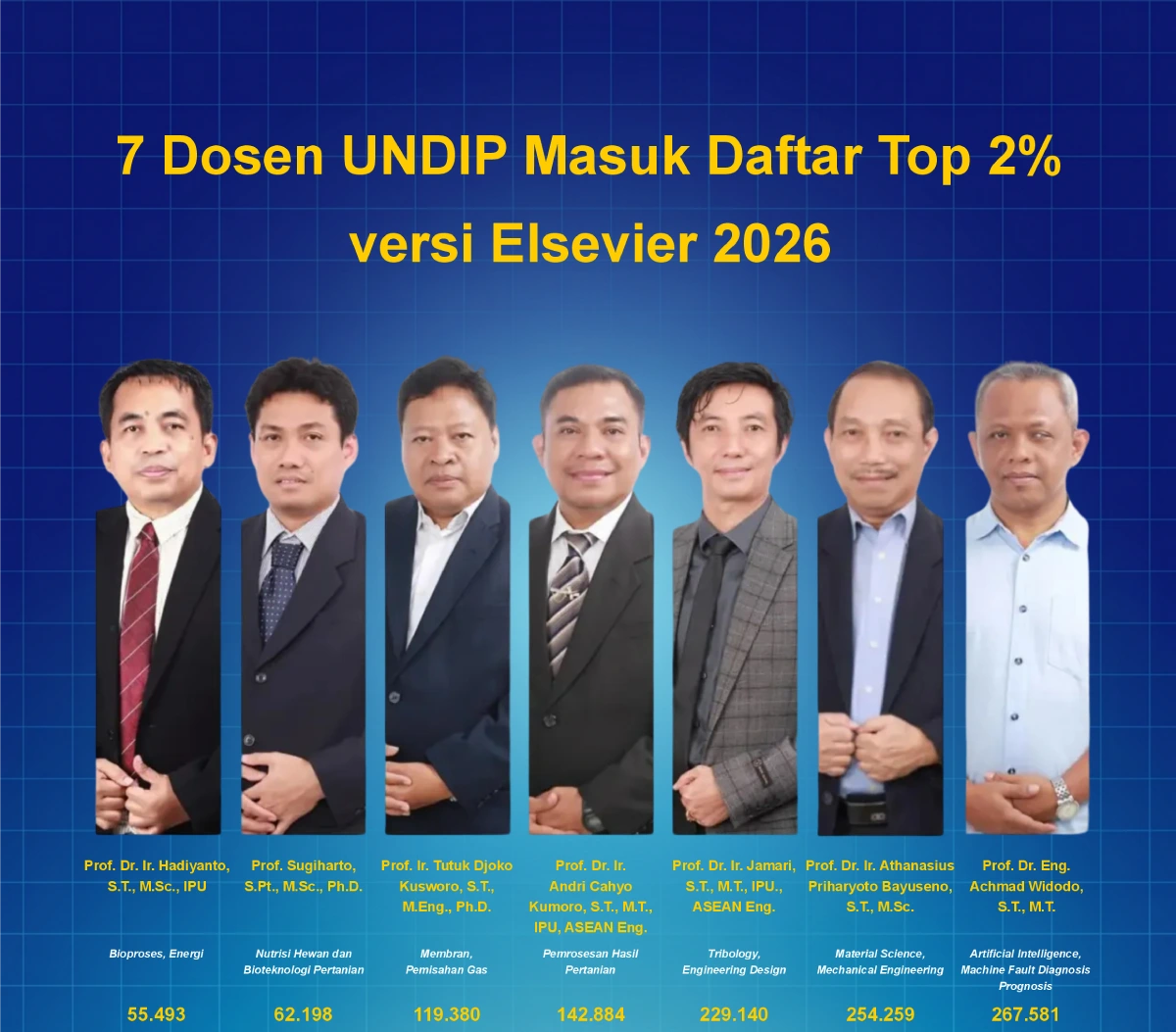
The more fundamental question, he said, is the extent to which knowledge and research findings can bring meaningful change to human life. This perspective places social impact as an essential component of the quality and reputation of a world-class university. He also commended the achievements of UNDIP academics, including seven lecturers who were listed among the world’s top 2% scientists, as an illustration of academic contributions that should continue to be strengthened.
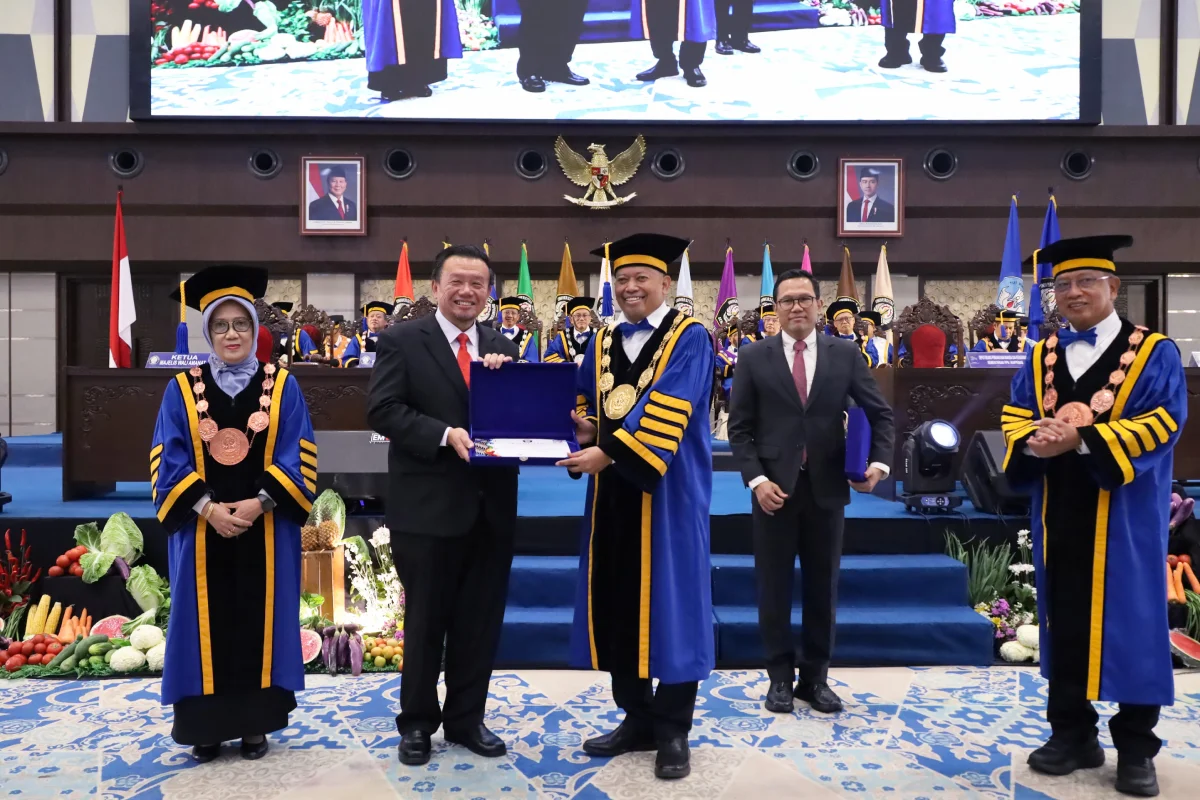
Prof. Taufiq further emphasized the importance of human resource development, learning quality, international research networks, and mutually supportive innovation ecosystems. University excellence is built through leadership with a clear strategic direction, lecturers who actively advance knowledge, and students who are given opportunities to learn, conduct research, and create.
Cross-border collaboration should also be directed toward technology development and joint problem-solving, rather than merely increasing academic recognition. Through such an approach, universities can strengthen global competitiveness while ensuring that the knowledge they produce contributes to societal progress.
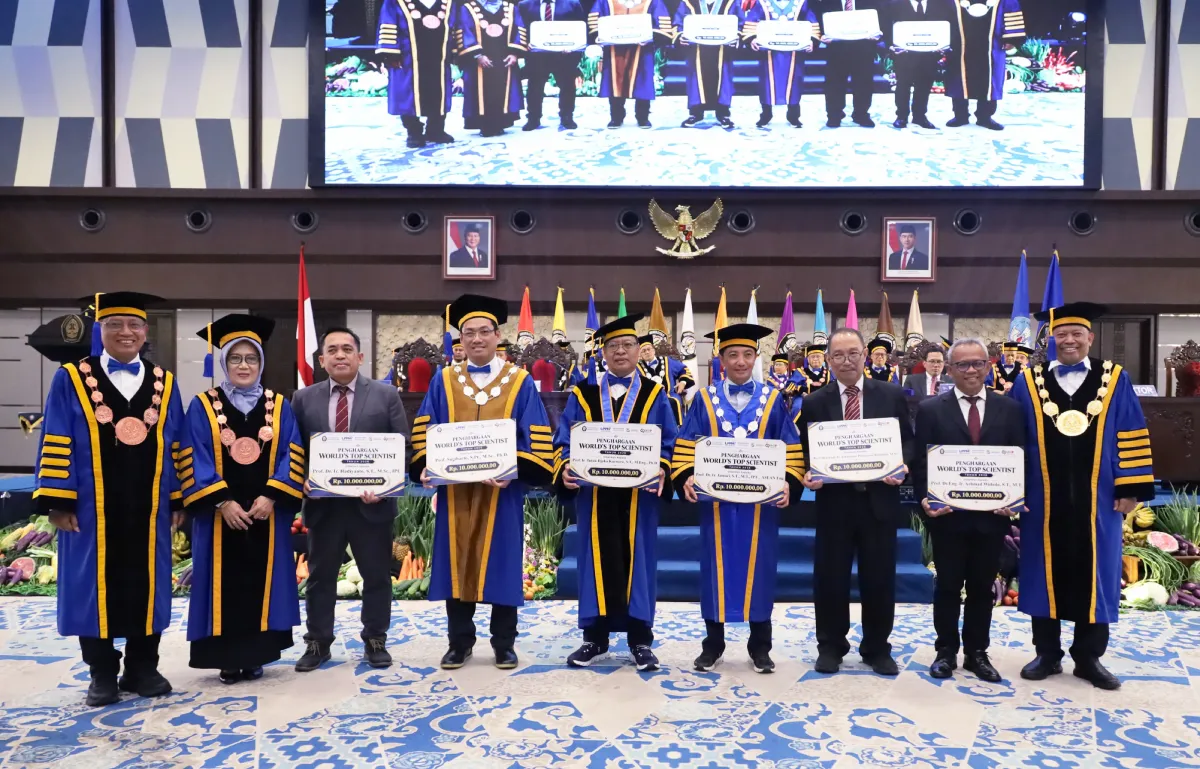
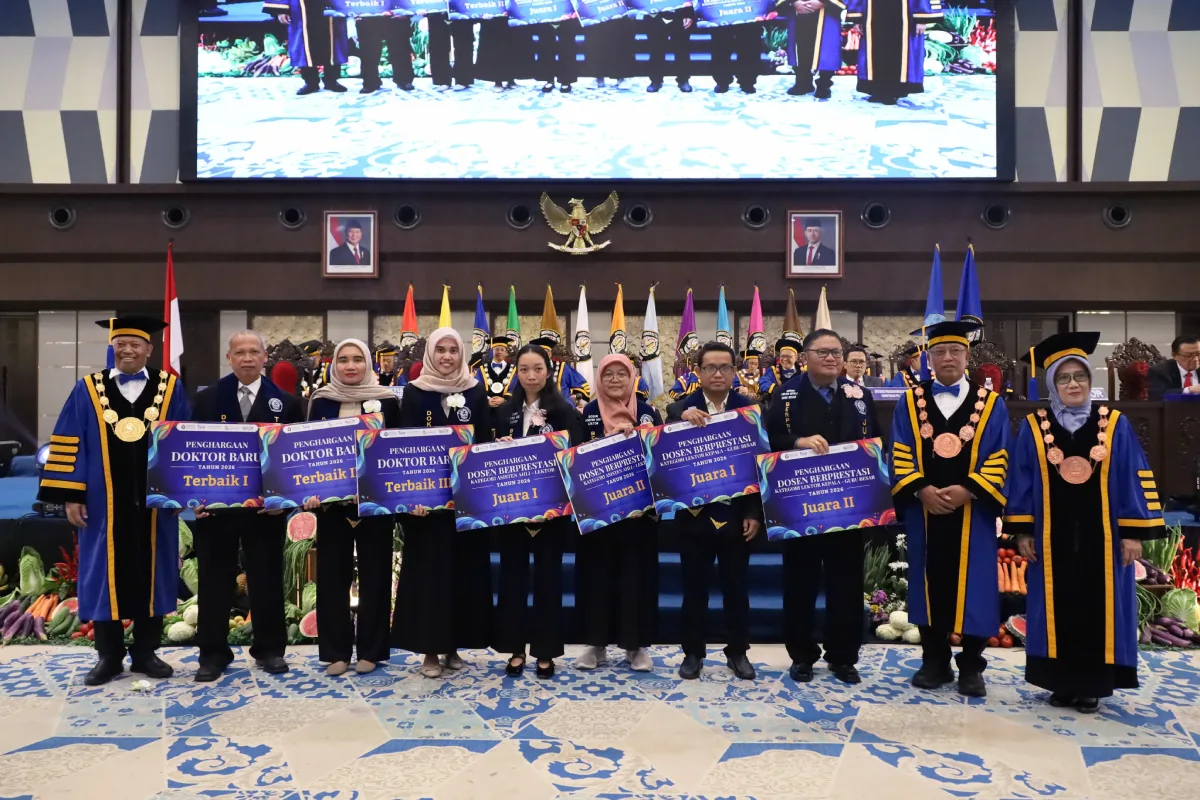
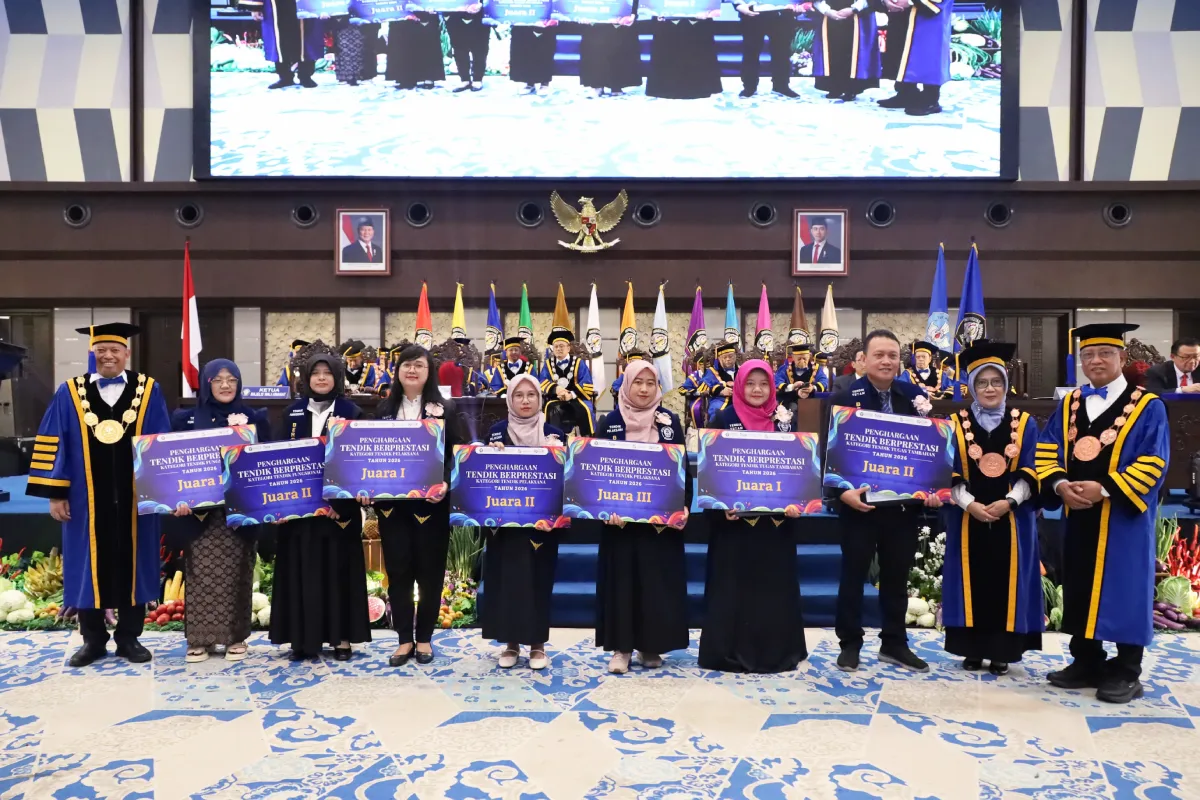
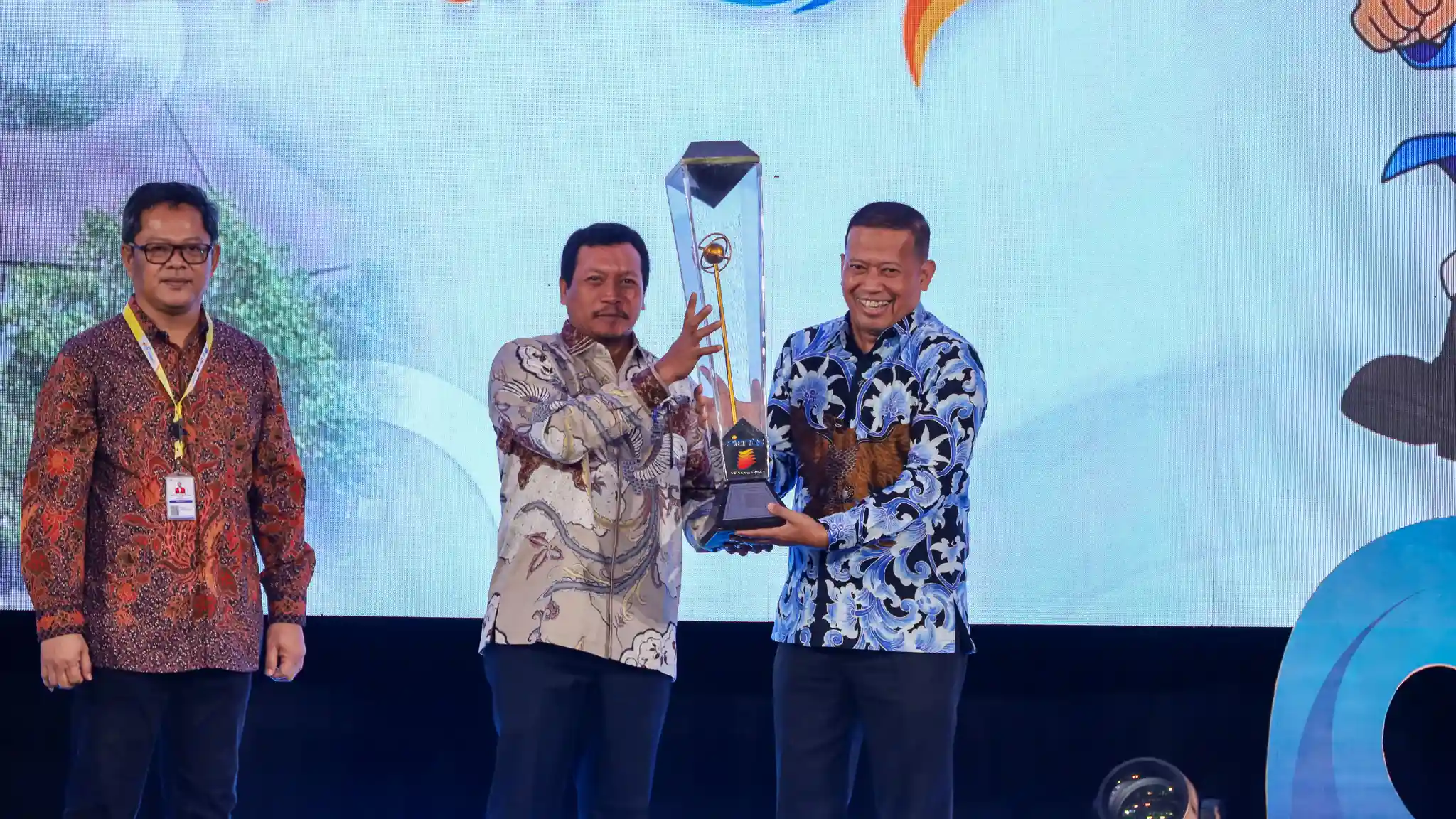
The commemoration of UNDIP’s 69th Anniversary also featured a video presentation launching the DELTA Learning Management System (LMS), as well as awards presented to outstanding lecturers, new doctoral graduates, and distinguished education staff. Recognition was also given to seven UNDIP academics included in Elsevier’s 2026 list of the world’s top 2% scientists.
As UNDIP enters its 69th year, the university continues to strengthen synergy, foster innovation, and expand global collaboration to ensure that knowledge does not remain confined within academic spaces, but truly delivers benefits to society and the nation. (Public Communication/UNDIP/DHW)