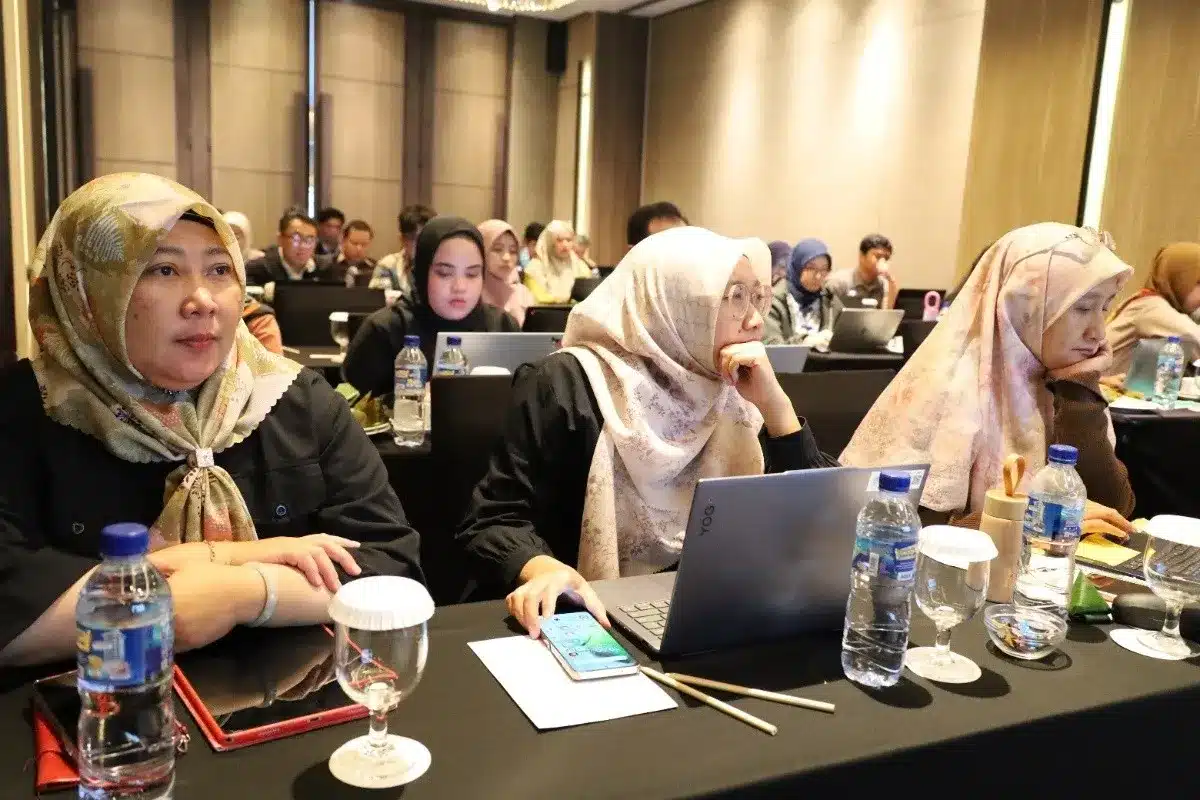

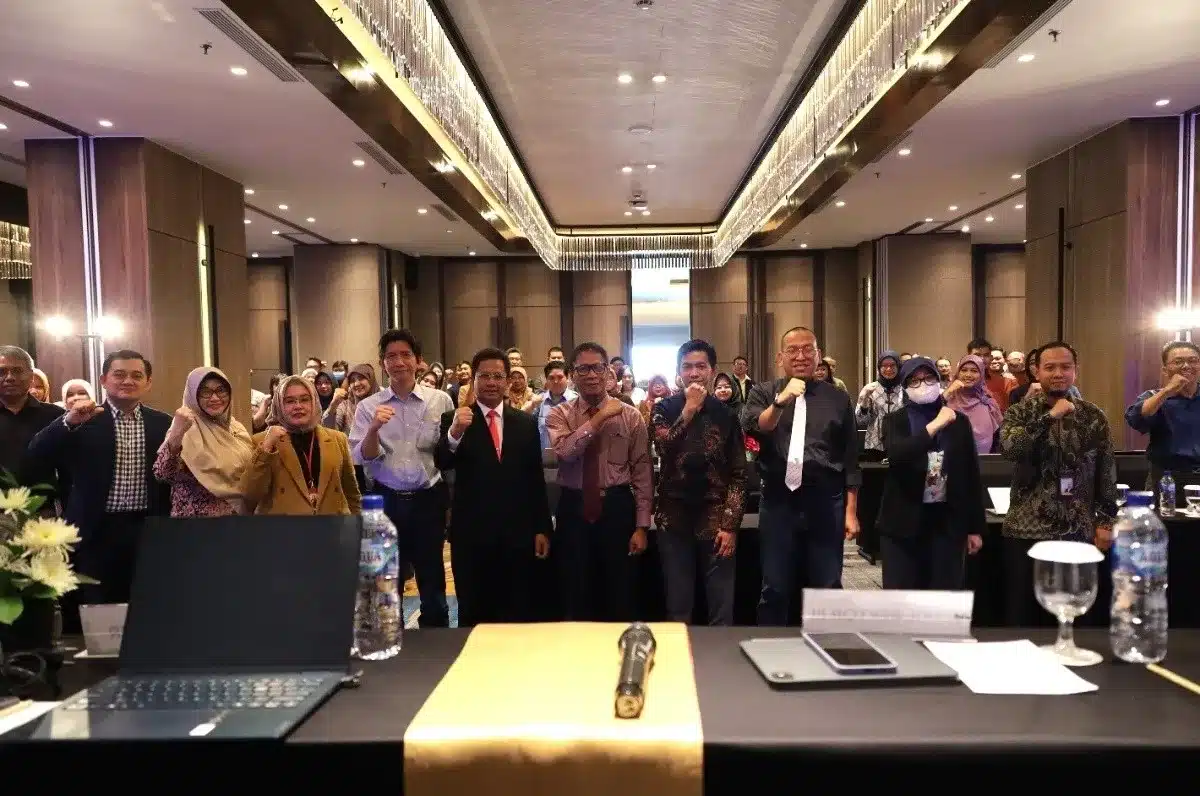
UNDIP, Semarang (November 19, 2025) – Universitas Diponegoro, through the Directorate of Law and Organization, held a Workshop on Assistance for Completing the Evaluation Worksheet for the Development of an Integrity Zone Towards a Corruption-Free Area and a Clean and Serving Bureaucratic Area (ZI WBK/WBBM). The event took place at Aruss Hotel Semarang on Tuesday, 18 November 2025, reaffirming UNDIP’s commitment to strengthening a culture of clean, transparent, and accountable governance.
In his remarks, Vice Rector III for Human Resources, Information Technology, Law and Organization, Prof. Dr. Adian Fatchur Rochim, S.T., M.T., emphasized that developing the Integrity Zone has become a strategic mandate for all faculties and schools. He noted that monitoring and communication with the Corruption Eradication Commission (KPK), the Attorney General’s Office, and the Directorate General of Higher Education highlight the urgency of preventive measures to ensure UNDIP remains free from corrupt practices—particularly in strategic areas such as student admissions, research, community service, and partnerships.
Prof. Adian also reminded attendees that integrity is not only an institutional concern but also relates to the personal safety and well-being of each employee and their families. He stressed that ethical and legal violations carry severe, lifelong consequences. Referring to the ‘shield’ philosophy in the new logo of the UNDIP’s Directorate of Law and Organization, he urged all academic personnel to become a protective force ensuring UNDIP remains clean and noble, while marking the workshop as an essential starting point for accelerating Integrity Zone development in 2026.
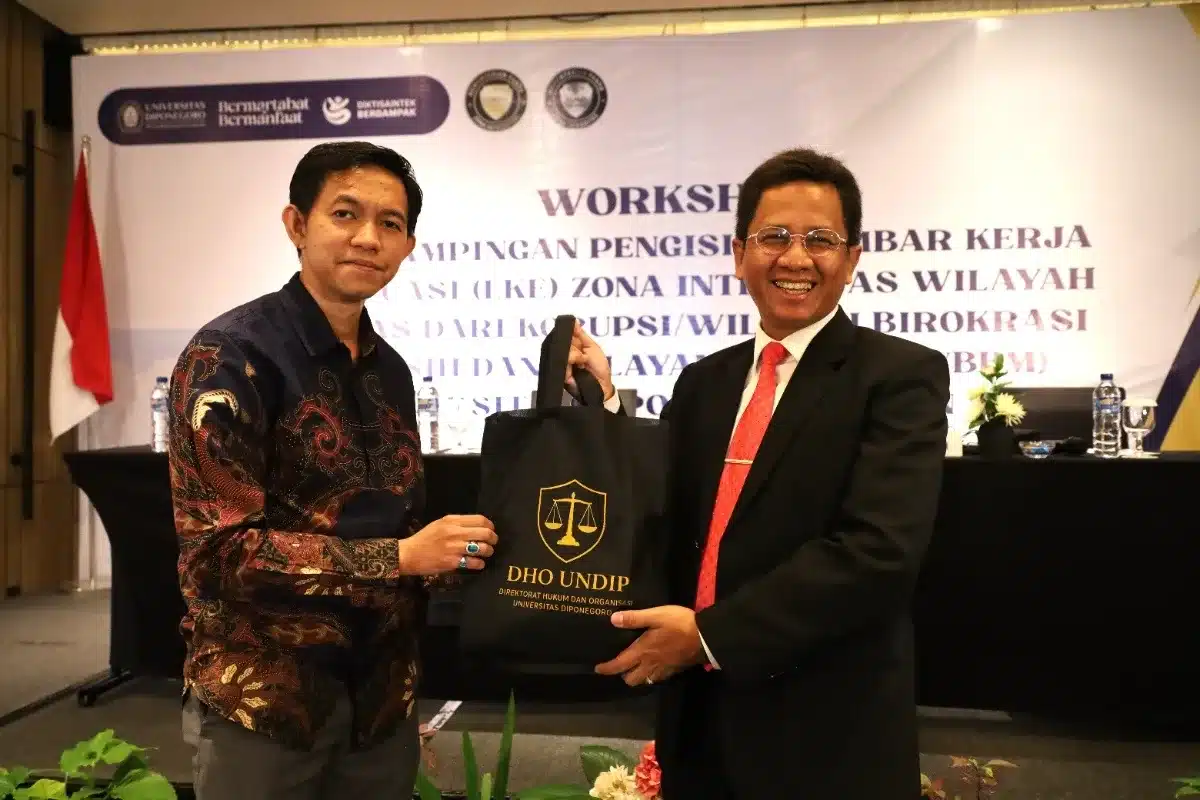
“This workshop serves as an important kick-off in achieving next year’s Integrity Zone targets through collective work built on sincerity, responsibility, and integrity as a form of devotion,” he stated before officially opening the event.
Meanwhile, the Director of Law and Organization and Chair of the Committee, Dr. Yunanto, S.H., M.Hum., reported that all faculties and schools at UNDIP have implemented ZI WBK/WBBM development and completed the Evaluation Worksheet on the Inspirasi Dikti platform throughout 2025. Of all units, four faculties passed the evaluation to the TPSK level under the Directorate General of Higher Education: the Faculty of Engineering for ZI WBBM, and the Faculty of Medicine, Faculty of Economics and Business, and Faculty of Social and Political Sciences for ZI WBK.
The workshop was attended by 125 participants, including the TPPTN Team, faculty/school ZI WBK/WBBM Teams, and members of the Directorate of Law and Organization committee. For effective mentoring, participants were divided into three rooms, each focusing on two areas of change. Dr. Yunanto expressed hope that, with direct assistance from the Directorate General of Higher Education, more UNDIP units will earn the WBK or WBBM designation next year.
In the main session, Zulfahmi delivered a presentation titled “Strategies for Accelerating Bureaucratic Reform Through the Development of an Impactful Campus Integrity Zone.” He stated that accelerating bureaucratic reform in universities must begin with establishing the Integrity Zone as the foundation of clean, transparent, and accountable governance. He explained the importance of the WBK and WBBM titles as motivation for the academic community to collaborate in providing public services that are easy, fast, and free from inefficiency or irregularities. “Service innovations must arise from the real needs of students, lecturers, and society—not merely from internal programs. Therefore, transparency, efficiency, and ease of access are the main indicators of Integrity Zone success in realizing a modern and impactful campus bureaucracy,” he emphasized.
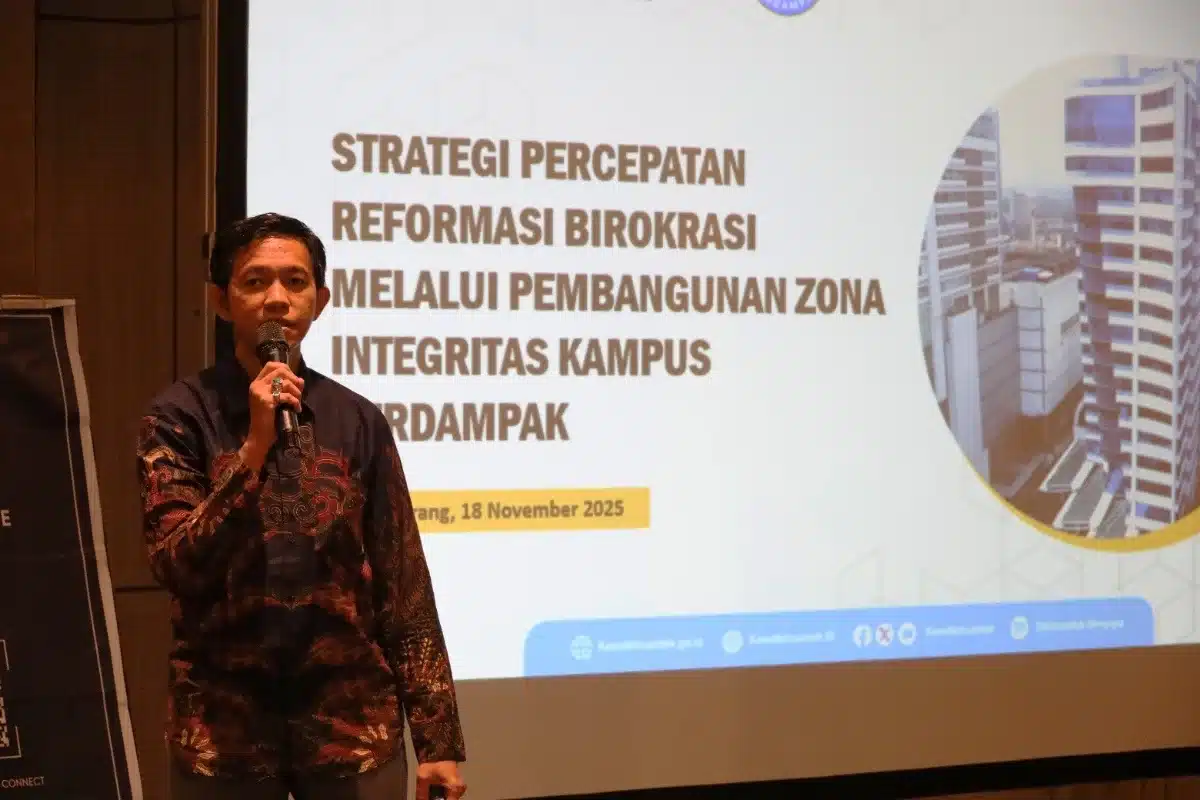
Zulfahmi added that Integrity Zone fits within the broader framework of Bureaucratic Reform, supported by regulations such as the Ministry of PANRB Regulation No. 90/2021, Regulation No. 5/2024, and new policies for Integrity Zone development in higher education. According to him, Integrity Zone and the Impactful Campus program are like two sides of the same coin: Integrity Zone strengthens governance integrity, while Impactful Campus reflects how universities deliver solutions addressing strategic issues such as education quality, digital transformation, and graduate relevance.
He also underlined that the success of the Integrity Zone depends heavily on integrity, excellent public service, unit capability, and staff competence. “Integrity Zone development proves the university’s commitment to being an adaptive, relevant institution that provides real benefits to society,” he said. Leadership commitment must be translated into exemplary conduct, stronger internal oversight, and improved human resource capacity. Challenges such as resistance to change, weak internal supervision, and potential gratuities must be addressed through routine monitoring, active public communication forums, and service innovations that directly respond to needs.
Technical mentoring by the Setditjen Diktisaintek Team was conducted interactively through breakout rooms aligned with specific change areas. Zulfahmi discussed change management and performance-based HR systems; M. Armansyah covered administrative restructuring and improvements in public service quality; while Mohammad Haziq explained strengthening performance accountability and internal supervision. Each session helped participants deepen their understanding of how to complete the Evaluation Worksheet objectively and accurately, tailored to their respective unit needs.
Through this activity, UNDIP reaffirmed its determination to strengthen a culture of integrity, professionalism, and accountability in all aspects of higher education management. The Integrity Zone development effort is not merely to meet administrative standards, but to ensure every academic, research, and public service process runs honestly, transparently, and responsibly. With the spirit of ‘Noble and Valuable UNDIP’, the university is committed to becoming a model of clean governance with real impact for society. (Public Communication/UNDIP/DHW)