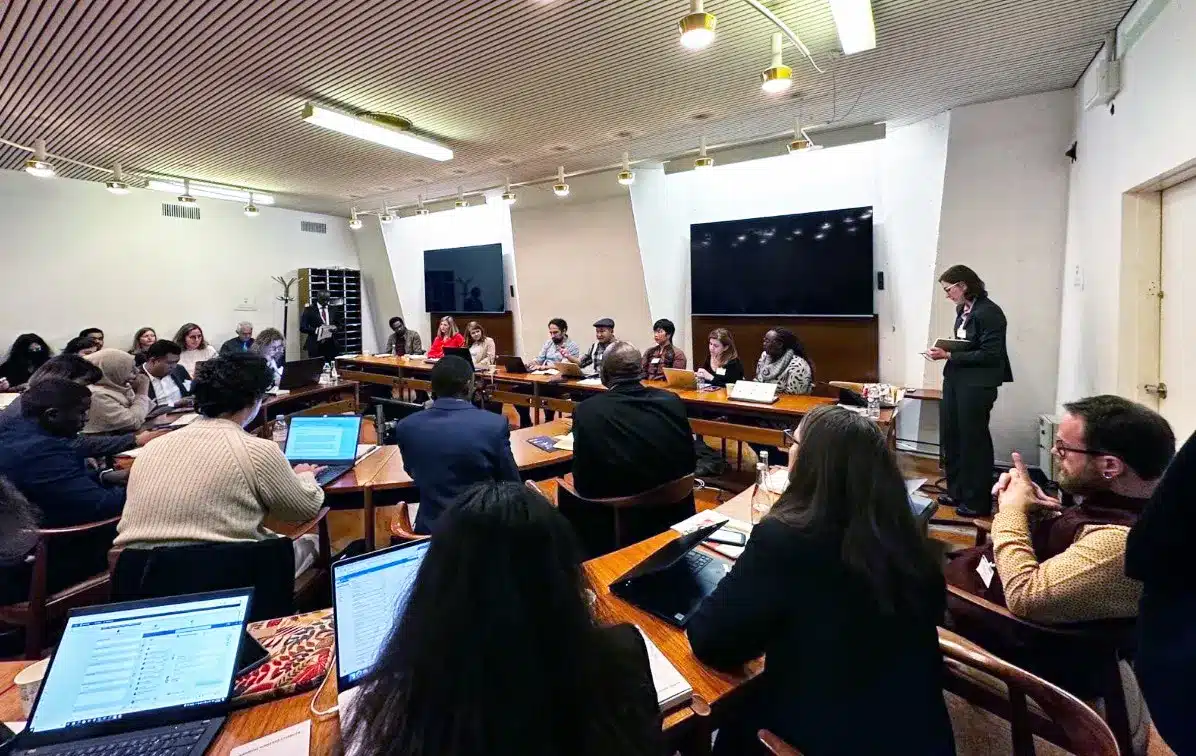






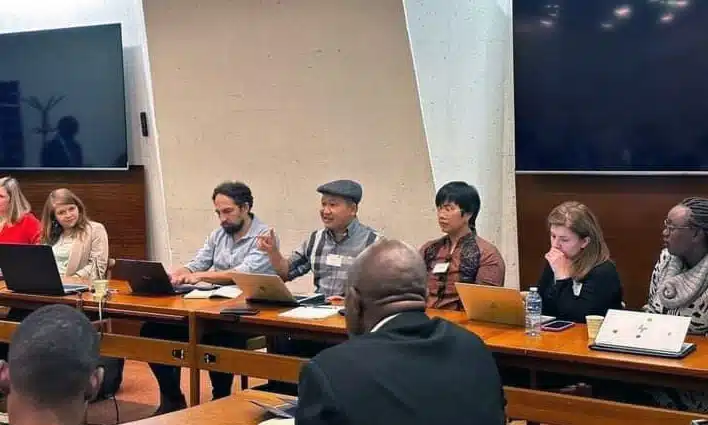
Since last year, Universitas Diponegoro (UNDIP) has played a leading role as one of UNESCO’s key partner institutions in advancing digital space governance in Southeast Asia through a series of Capacity Building Workshops. Entrusted to spearhead the regional initiative, UNDIP coordinates a three-country collaboration involving Indonesia, the Philippines, and Singapore. The program is led institutionally by UNDIP through the Vice Rector for Research, Innovation, Cooperation, and Public Communication, positioning the university at the forefront of digital governance discourse in the region.
As the lead partner, UNDIP works alongside prominent regional institutions: the Asian Media Communication and Information Center (AMIC) in the Philippines and Civic Tech Lab at the National University of Singapore. In this consortium, UNDIP serves not only as a coordinating hub but also as the principal driver of research design, knowledge production, and policy dialogue across participating countries.
At the initial stage of the program, UNDIP led the preparation of a comprehensive regional report examining the existing conditions of digital governance in Indonesia, the Philippines, and Singapore. The report identifies critical gaps between national regulatory frameworks and international human rights standards as articulated in UNESCO’s Guidelines for the Governance of Digital Platforms. It highlights concerns regarding varied interpretations of digital citizenship, the governance of online interaction, and the uneven positioning of stakeholders within digital political communication ecosystems—factors that collectively shape the quality of democratic digital space in the region.
Under UNDIP’s coordination, the country analyses reveal important regulatory dynamics. In Singapore, digital governance is characterized by a strong state-centered approach, particularly through regulations such as the Protection from Online Falsehoods and Manipulation Act (2019) and the Foreign Interference (Countermeasures) Act (2021). In Indonesia, the regulatory landscape includes Law No. 11 of 2008 on Electronic Information and Transactions (ITE Law) and Law No. 27 of 2022 on Personal Data Protection, both of which significantly influence the contours of online expression and data governance. Meanwhile, in the Philippines, UNDIP’s collaborative study identifies a fragmented regulatory environment, including the Internet Transactions Act No. 11967 of 2023, alongside overlapping jurisdictional authorities that generate regulatory ambiguity within its decentralized governance system.
Moving forward, UNDIP will continue to steer the next phase of the initiative by co-developing technical guidelines together with AMIC and Civic Tech Lab. These guidelines are intended to serve as practical implementation tools for governments, regulators, digital platforms, academics, and civil society organizations. Through this effort, UNDIP reinforces its role as a regional knowledge hub translating UNESCO principles into transparent, accountable, and inclusive governance frameworks.
More broadly, UNDIP’s leadership in this initiative positions the university within the Internet for Trust Global Knowledge Network—an international consortium of experts and institutions supporting the implementation of UNESCO’s Guidelines for the Governance of Digital Platforms. Through evidence-based research, policy engagement, and regional capacity building, UNDIP contributes to shaping digital platform governance that is aligned with public interest and the protection of human rights.
The Capacity Building Workshops on digital platform governance, initiated in October last year, are scheduled to conclude in May 2026, marking a sustained and strategic engagement by Universitas Diponegoro in advancing democratic digital governance in Southeast Asia.