

UNDIP, Sigi (November 28, 2025) – The Ministry of Transmigration of the Republic of Indonesia has partnered with seven major universities across the country by forming 400 field teams consisting of lecturers, bachelor’s and master’s graduates, and active students. The main agenda of this collaboration is conducting research and initiating strategic actions aligned with the vision to fulfill the President’s Asta Cita program, implemented through the active role of the Minister of Transmigration. All teams were mandated to conduct research, map economic potential, and carry out social evaluations to identify financial opportunities in transmigration areas.
The Patriot Expedition Team of Universitas Diponegoro (UNDIP) assigned to Sigi Regency, Central Sulawesi, exemplifies how research elaboration can directly serve community needs. Through observation, participatory mapping, and intensive communication with the local community, the UNDIP Patriot team acts not only as researchers but also as a bridge connecting the voices of transmigrant residents to the government.
During field investigations, the UNDIP Patriot Expedition Team discovered a longstanding issue concerning the unclear territorial status of transmigrants in UPT Bulu Pountu Jaya. This problem has remained unresolved for years, causing growing concern among residents. This administrative uncertainty has hindered public services and infrastructure development. The Secretary of Oloboju Village, Adi Sucipto, explained that territorial status has been a longstanding topic of discussion.
“So far, SP 1 has been included in Sidera Village, SP 2 belongs to Oloboju Village, while SP 3 still has no clear status because it is inhabited by people affected by the 2018 earthquake and liquefaction. There has been a plan to include all SPs under Oloboju Village, but it has never been realized due to the absence of an official decree,” he explained.
Field Advocacy Leads to Important Decision
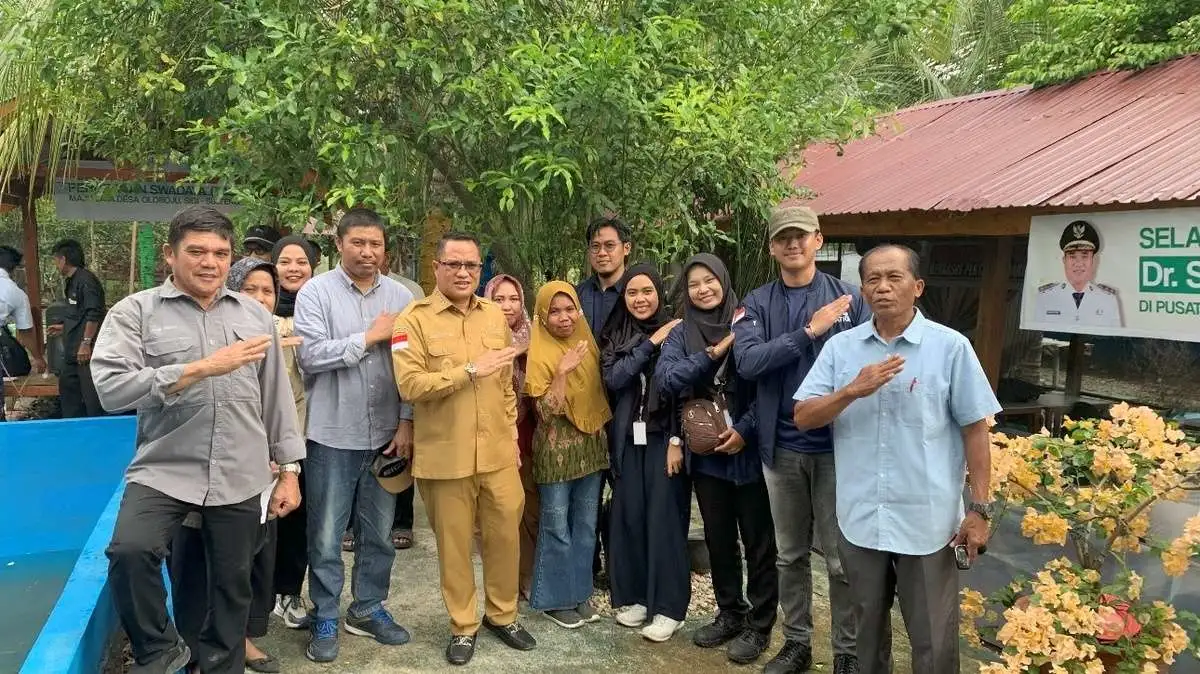
Based on these findings, the UNDIP Patriot Expedition Team held discussions with the Subdistrict Head of Sigi Kota and the Head of UPT Bulu Pountu Jaya during a visit to the Independent Agricultural and Rural Training Center (P4S) in SP 2, UPT Bulu Pountu Jaya, on 8 September 2025. In response to the issues raised, the local government took decisive action at an official meeting attended by the Subdistrict Head of Sigi Kota, the Village Head of Oloboju, and the Deputy Regent of Sigi. The meeting resulted in the decision to place the entire UPT Bulu Pountu Jaya area under the administrative territory of Oloboju Village.
This decision was formalized in the Decree of the Regent of Sigi Number 400.10.2.2/086.42/BAG.PEM/SETDA/2025 on Government Administrative Services. The ruling is a significant milestone for transmigrant residents as it provides legal certainty and expands access to public services. Although the UNDIP Patriot Expedition Team did not formally participate in the meeting, their role as facilitators—presenting data, information, and community aspirations—contributed significantly to resolving the territorial issue.
Clean Water Crisis: An Urgent Basic Need
In addition to territorial concerns, the UNDIP Patriot Expedition Team also highlighted a decade-long clean water crisis, especially in SP 1 and SP 3. Residents in these transmigration areas receive clean water only once or twice a week, despite the presence of water distribution pipes built since 2000. Unfortunately, the system was damaged by the earthquake and liquefaction, and further worsened by individuals puncturing the pipes for private agricultural use. As a result, water no longer reaches residential areas.
To further investigate the issue, the team surveyed the technical installation and pipeline routes located beneath the water source. The survey revealed significant damage along the distribution network, and the central intake also requires technical repairs to restore proper, sustainable water flow.

Economic and Social Impacts of Water Scarcity
Due to limited water supply, residents must coordinate water distribution on a rotational basis. However, because the overall supply is insufficient, many households remain without water for daily needs. As a consequence, they are forced to buy tank water costing around IDR 50,000–150,000 per week—an economic burden that weighs heavily on transmigrant families.
Ramni, a transmigrant resident of SP 3, expressed her concerns, “We have to pay IDR 150,000 a week to buy clean water during the dry season, and even then, we only use it for bathing, washing, and cooking. For watering our yards, we rely solely on rainwater. So during the dry season, both the yard and the agricultural land provided by the Ministry cannot be used.”
Beyond daily needs, the clean water crisis prevents residents from effectively cultivating their agricultural land. The high agrarian potential of Bulu Pountu Jaya—particularly for food crops, horticulture, and small-scale plantations—is hampered by insufficient irrigation. Many plots have dried up and become abandoned. To cope with the situation, many transmigrant families have turned to goat farming in SP 1 and chicken farming in SP 3.
Looking Ahead: The Strategic Role of the UNDIP Patriot Expedition Team
All findings related to territorial issues and the clean water crisis are being compiled into an evaluation report to be submitted to the local government and the Ministry of Transmigration. The team hopes that their work will serve as a basis for policy consideration and follow-up action, ensuring that transmigrant communities in UPT Bulu Pountu Jaya no longer face barriers in fulfilling their basic needs.
Through this effort, the UNDIP Patriot Expedition Team in Sigi has not only provided academic contributions but also made a tangible impact in advocating for community-centered policies. They exemplify how field research, when conducted with empathy, can drive real, meaningful change at the grassroots level. (Public Communication/UNDIP/Team 1 Patriot Expedition Sigi, ed. As3)