



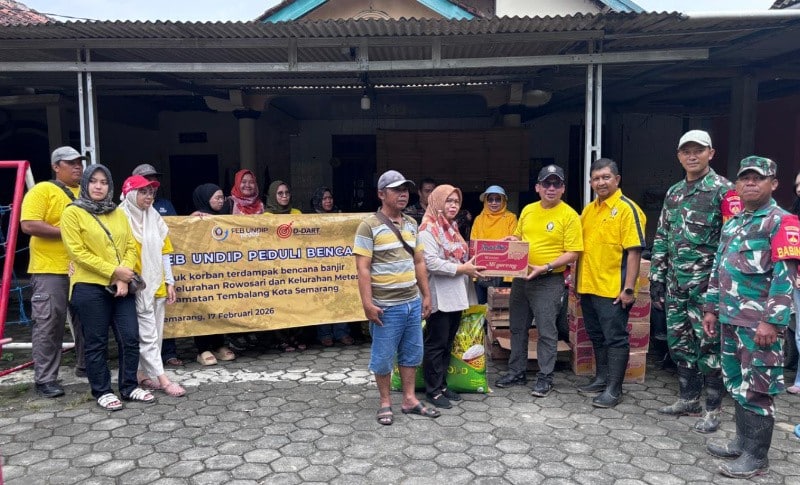
UNDIP, Semarang (18/2) – The Faculty of Economics and Business of Universitas Diponegoro (FEB UNDIP), through the Diponegoro Disaster Assistance Response Team (D-DART), distributed humanitarian aid to communities affected by flooding caused by the overflow of the Babon River in the Rowosari and Meteseh areas of Semarang City on Tuesday, February 17, 2026. This emergency response action was carried out following the disaster that occurred on February 16, 2026, which affected hundreds of residents, causing material losses and disrupting economic activities.
The activity was led by the Vice Dean I of FEB UNDIP, Prof. Dr. Harjum Muharam, S.E., M.E., as Head of the D-DART team from the Faculty of Economics and Business UNDIP, and involved team members and representatives of the academic community. The assistance provided included food supplies such as rice, eggs, instant noodles, sardines or corned beef, baby and toddler necessities such as diapers and baby porridge, and hygiene items including eucalyptus oil, telon oil, powder, and soap. The distribution was carried out in coordination with local authorities to ensure that the aid reached the intended recipients, particularly directly affected families and vulnerable groups.
This social service activity embodies the values of “Noble and Valuable UNDIP,” emphasizing that higher education institutions should deliver direct, positive impacts on society.
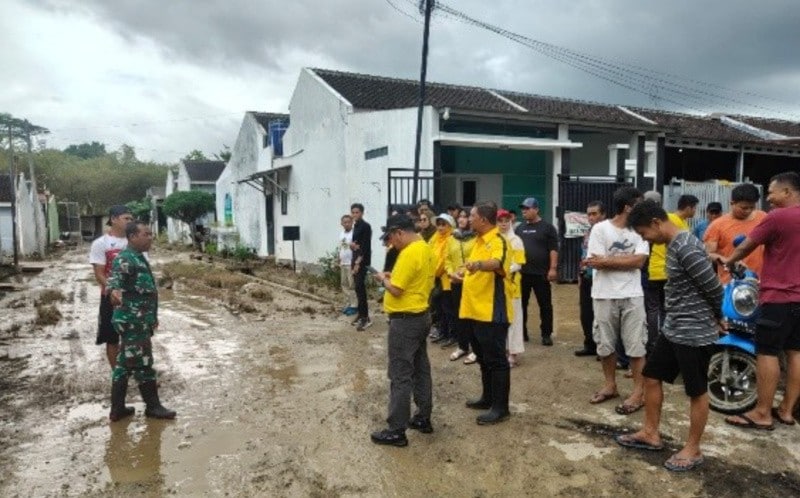
The social action began with internal fundraising within the faculty, supported by lecturers and educational staff. D-DART then procured essential supplies in line with field priorities and distributed them directly to affected communities. The entire process was conducted in a structured manner and documented to promote transparency and accountability to the academic community.
Through this initiative, the Faculty of Economics and Business UNDIP reaffirmed its commitment to implementing the Tri Dharma of Higher Education, particularly community service. The presence of D-DART at the disaster site reflects the faculty’s role as a responsive and caring institution that contributes directly to strengthening the social and food resilience of affected communities. (Public Communication/FEB/Ed. Nurul)
Source: Official Website of the Faculty of Economics and Business