
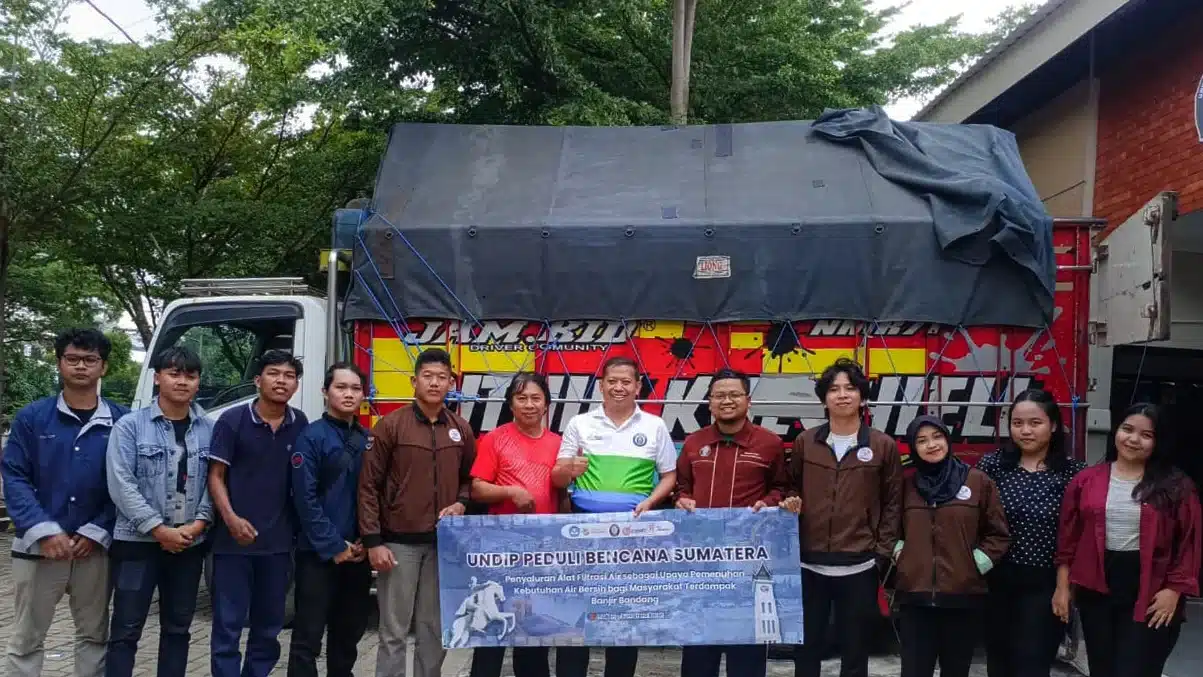
UNDIP, West Sumatra (December 26, 2025) – Universitas Diponegoro (UNDIP) has once again demonstrated its commitment to humanitarian action through the UNDIP Cares for Sumatra program. This time, UNDIP deployed portable drinking water treatment technology to support flood-affected communities in Padang City, West Sumatra, who have been facing limited access to clean water in the aftermath of the disaster.
This activity is part of UNDIP’s Emergency Disaster Response Community Service program, focusing on restoring essential services—particularly the availability of safe drinking water for residents. Based on data from BNPB and the West Sumatra Provincial BPBD, the floods submerged many household wells. They disrupted piped water networks, making access to drinking water an urgent need during both emergency and early recovery phases.
UNDIP’s Rapid Response to Clean Water Needs
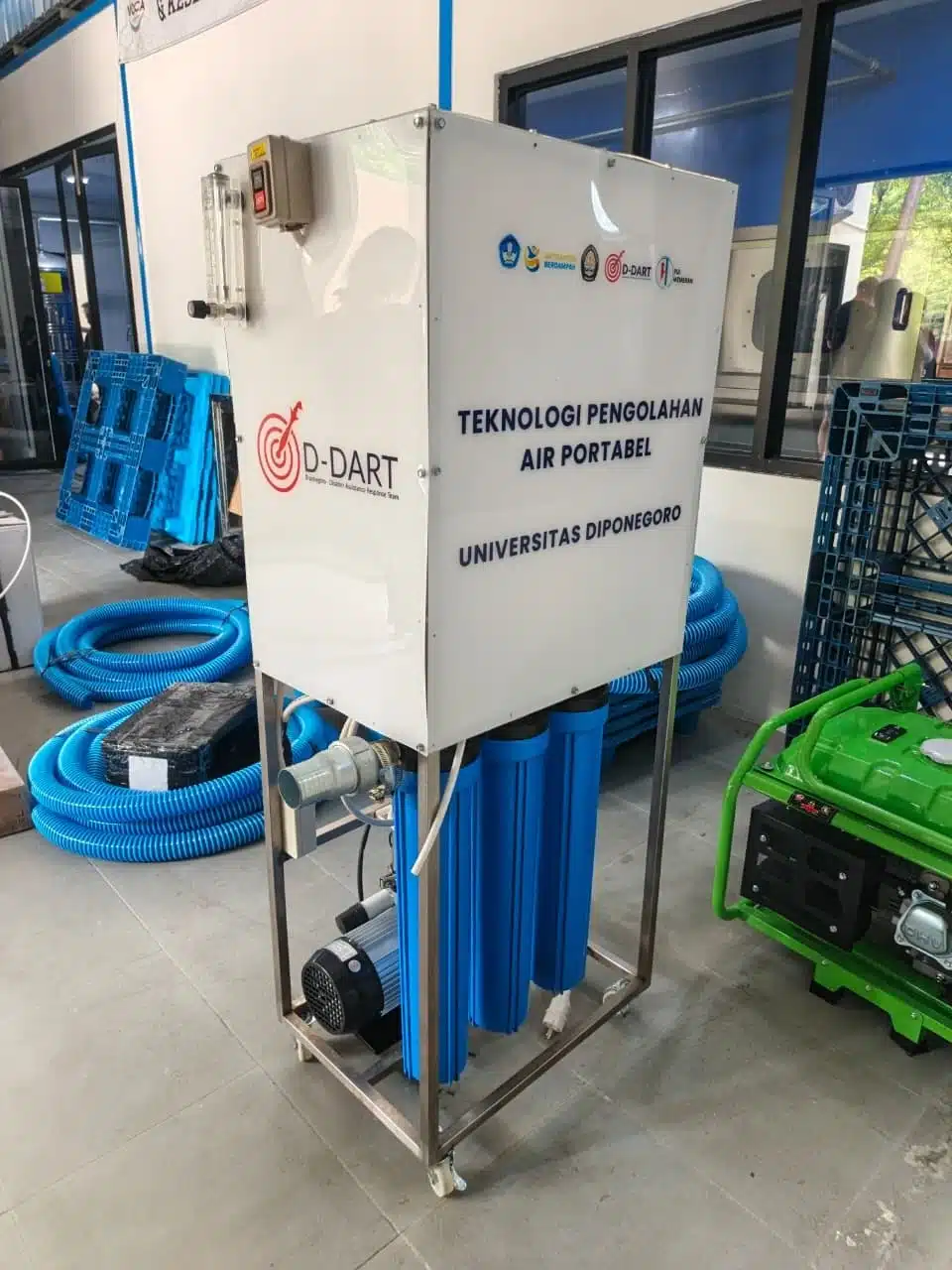
Responding to the situation, a UNDIP team led by Anggun Puspitarini Siswanto, S.T., Ph.D., prepared and delivered three units of portable drinking water treatment systems to the affected areas. The equipment was dispatched on December 25, 2025, as part of a rapid response to urgent field needs. The initiative was supported by several faculty members—Prof. Dr. I Nyoman Widiasa, S.T., M.T.; Prof. Dr. Ing. Ir. Suherman, S.T., M.T.; Abdullah Malik Islam Filardli, S.T., M.T.; Dista Yoel Tadeus, S.T., M.T.; and Fakhruddin Mangkusasmito, S.T., M.T.—who contributed to technical planning and program supervision.
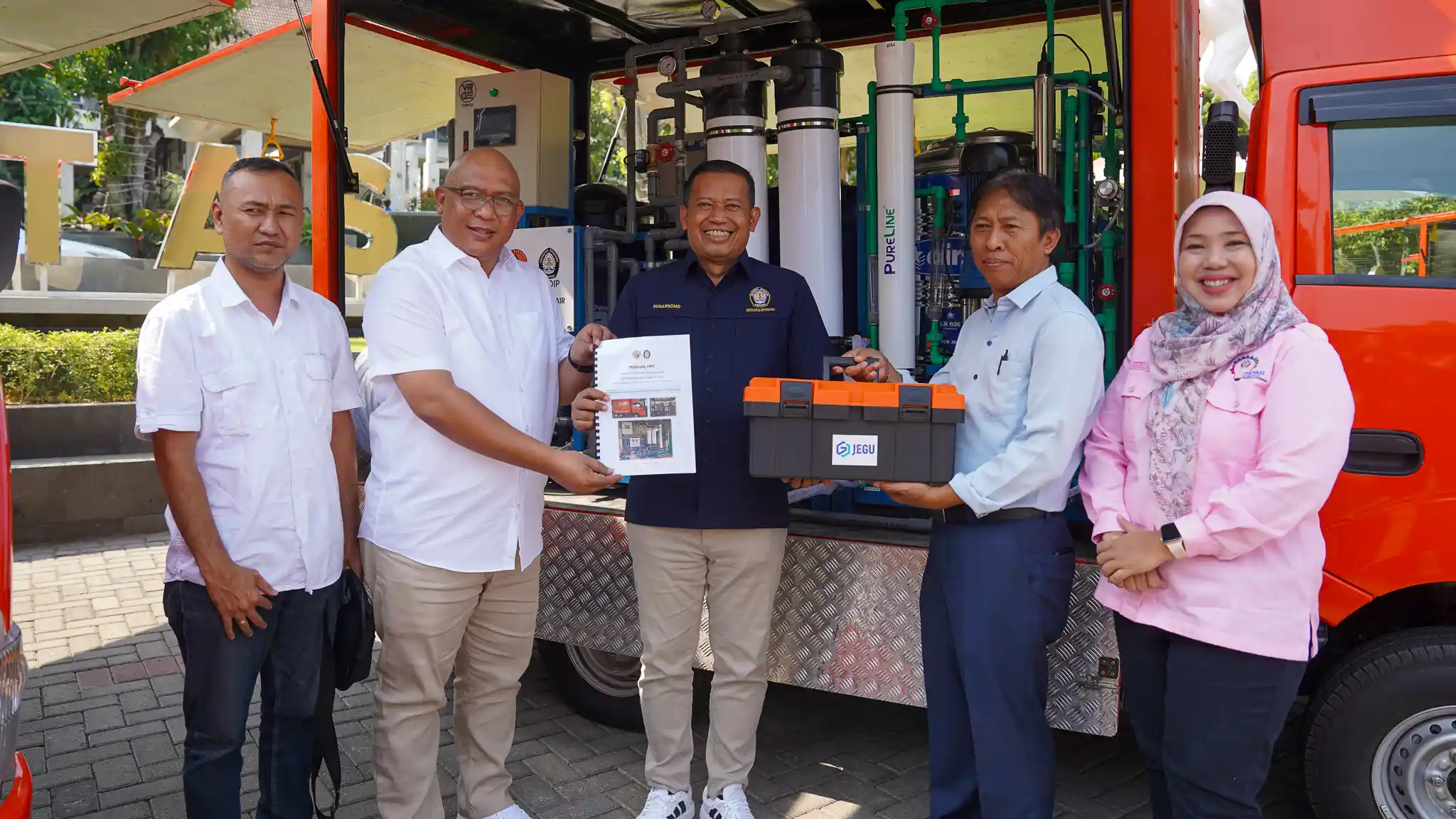
Prior to deployment, the treatment units were inspected directly by UNDIP Rector, Prof. Dr. Suharnomo, S.E., M.Si., to ensure readiness and reaffirm the university leadership’s full support for the UNDIP Cares for Disaster program.
Portable Technology for Emergency Conditions
The deployed water treatment units were specifically designed for emergency and post-disaster conditions. The system uses multi-stage filtration, reverse osmosis membranes, and ultraviolet (UV) disinfection to produce safe drinking water.
Each unit can produce up to approximately 2,000 liters of drinking water per day and is planned to be placed at priority locations based on community needs in the disaster area. With this technology, residents are expected to gain immediate access to clean drinking water without waiting for the restoration of permanent infrastructure.
Active Involvement of UNDIP Students in the Field
The program also involved UNDIP students in experiential learning outside the classroom. Participating students included: Firstyawan Esa Naufalabib, Muhammad Yudho, Gilar Wirayudha, Florianus Gilar Nayotama Pratisena, Abraham Wisnu Wardana, Fitesa Nur Firdasti, Mukhammad Himam Isomudin, Maulana Alfasyahrial, Adinda Khansa Syaikhah, Clarissa Mayla Adhilisty, and Muhammad Amyra Faiz.
The students actively contributed to equipment preparation, field installation, documentation of activities, and technical assistance to local operators. Their involvement not only accelerated the implementation process but also provided valuable learning experiences on applying scientific knowledge for humanitarian purposes.
UNDIP’s Commitment to Post-Disaster Recovery
By deploying these portable drinking water treatment technologies, UNDIP aims to deliver research- and technology-based solutions that truly address community needs. The UNDIP Cares for Disaster program serves as a concrete manifestation of the university’s commitment to supporting the restoration of basic services and strengthening the role of higher education institutions as strategic partners in disaster response and recovery.
With collaborative efforts involving faculty, students, and the community, UNDIP hopes this assistance can ease the burden on affected residents and help them resume daily activities safely and healthily. (Public Communication/UNDIP/Anggun & Team)