


UNDIP, Padang–Agam (December 24–25, 2025) – Universitas Diponegoro once again demonstrated its humanitarian commitment by deploying the Fourth Volunteer Team of the Diponegoro Disaster Assistance Response Team (D-DART) to disaster-affected areas in West Sumatra Province. The team arrived at Minangkabau International Airport, Padang, on Wednesday, December 24, 2025, at 3:13 p.m., and immediately began emergency response coordination activities in Agam Regency.
Upon arrival in West Sumatra, the UNDIP D-DART team conducted initial coordination at the Agam Regency Emergency Response Command Post. During this coordination meeting, assignments for the following day were outlined for the Koto Alam area, specifically at the Koto Alam Community Health Center (Puskesmas) and SDN 05 Kayu Pasak. Field information gathered from the Head of the Agam Regency Communication and Informatics Office, Roza Syah Devianti, revealed that the need for vitamins among both volunteers and affected communities remained very high. Further field coordination was also conducted with Rahmat at Palembayan and Koto Alam Community Health Centers, which expressed urgent needs for additional medical and non-medical volunteer support.
On the second day of deployment, Thursday, December 25, 2025, the Fourth D-DART Volunteer Team carried out a series of integrated activities encompassing cross-institutional coordination, healthcare services, and psychosocial assistance for survivors.
In terms of coordination, the team collaborated with the Agam Regency Disaster Management Agency (BPBD), Koto Alam Community Health Center, and SDN 05 Kayu Pasak. This coordination focused on mapping healthcare service needs, psychosocial support, the distribution of processed fish aid from Jepara, and monitoring the condition of survivors in the severely affected Koto Alam and Kayu Pasak areas.
Psychosocial assistance became one of the main focuses of the activities. The UNDIP D-DART psychosocial team conducted play therapy and counseling sessions at SDN 05 Kayu Pasak targeting children, adults, and vulnerable groups. In total, 87 survivors received psychosocial services, consisting of 71 children and 16 adults. Activities included emotional stabilization, psychological needs assessments, recovery activities through art therapy, singing sessions, and psychospiritual approaches emphasizing positive reinforcement. The team also distributed toothbrushes and toothpaste, milk, and post-disaster psychosocial modules for adult survivors.
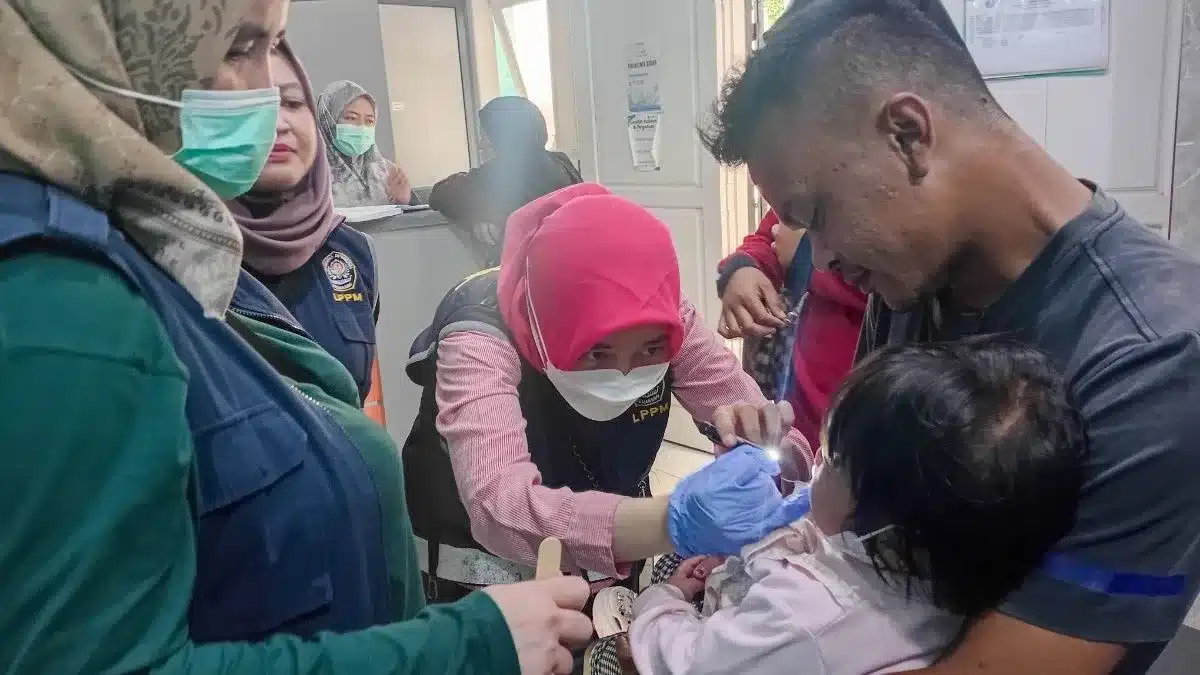
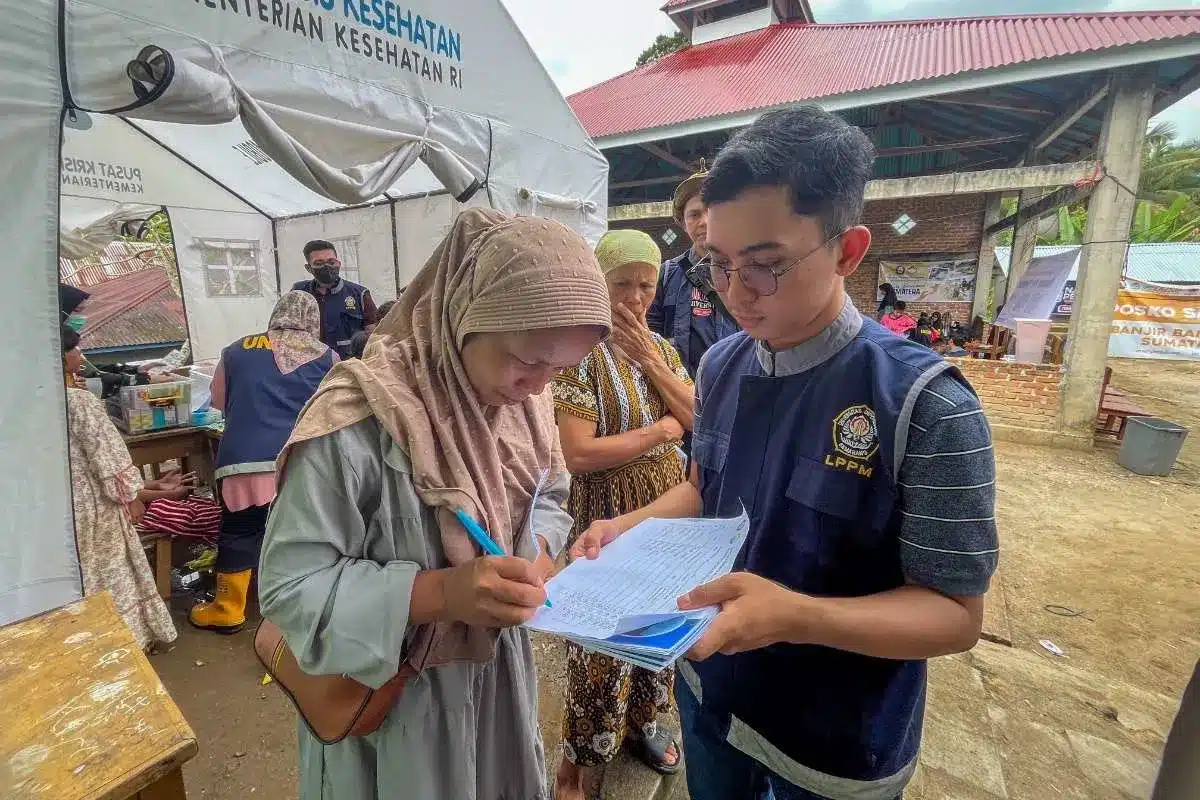
In the field of healthcare, the UNDIP D-DART volunteer team provided medical services at two central locations: the Koto Alam Community Health Center and the Health Post at SDN 05 Kayu Pasak. Services included general health examinations, free medical treatment, outpatient care, home visits, and referral coordination with local healthcare facilities.
At Koto Alam Community Health Center, the medical team—comprising general practitioners, ENT specialists, obstetricians, and nurses—served 27 outpatients. Cases handled included internal medicine conditions such as geriatric syndrome, community-acquired pneumonia, hypertension, type 2 diabetes mellitus, digestive disorders, and suspected dengue fever. The team also treated ENT cases, minor surgical cases, skin diseases, and provided antenatal care for pregnant women. Various essential medicines and intravenous fluids were utilized to support these healthcare services.
Meanwhile, at the SDN 05 Kayu Pasak Health Post, the medical and volunteer team served 20 patients presenting a range of neurological, internal medicine, ENT, eye health, and generalized anxiety disorder cases. Activities at this post were complemented by home visits to two patients requiring special monitoring. Medications distributed were tailored to the clinical needs of survivors, including anti-infectives, analgesics, antihypertensives, respiratory drugs, and supplements.
All activities of the Fourth D-DART UNDIP Volunteer Team on the second day of deployment ran smoothly and received positive responses from the community and local stakeholders. The team’s presence not only provided healthcare and psychosocial services but also offered moral support and solidarity to disaster survivors.
Through this humanitarian action, UNDIP reaffirmed its role as a higher education institution responsive to disaster and humanitarian issues and committed to remaining present and contributing tangibly to communities in need. (Public Communication/UNDIP/DHW)