
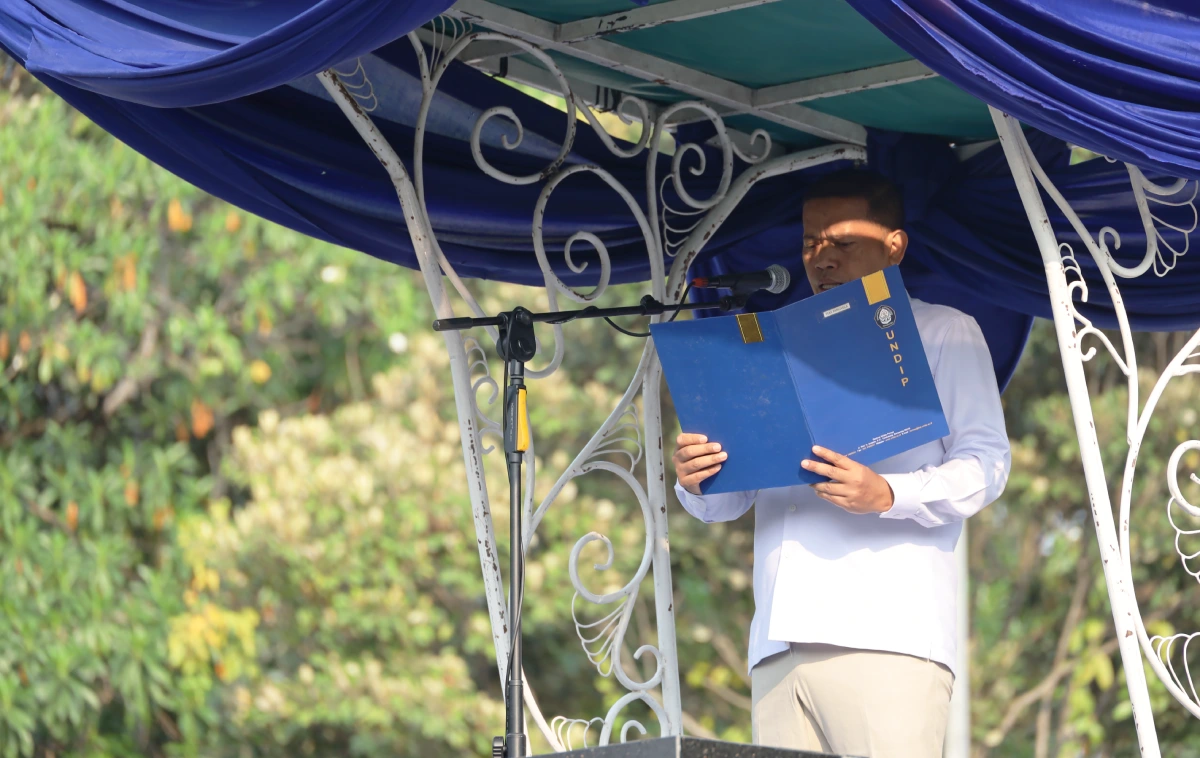
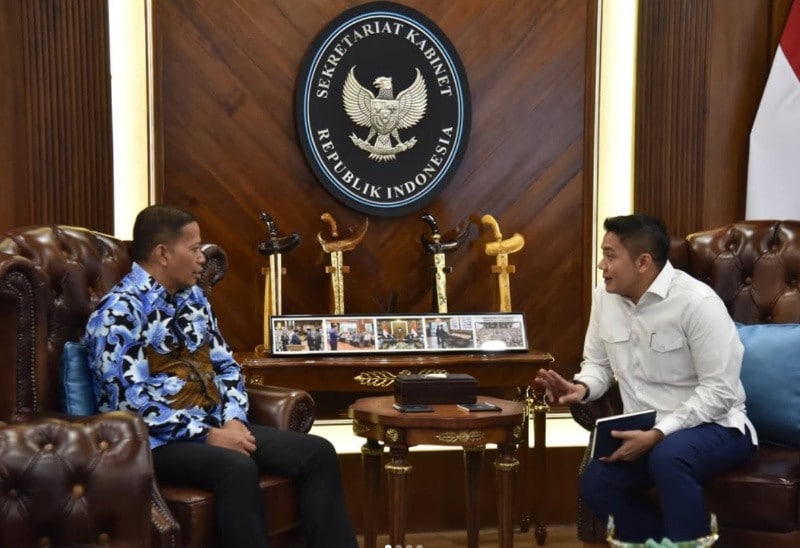
UNDIP, Semarang (13/2) – The Rector of Universitas Diponegoro, Prof. Dr. Suharnomo, S.E., M.Si., held a meeting with the Cabinet Secretary of the Republic of Indonesia, Teddy Indra Wijaya, on Tuesday afternoon, February 10, 2026, at the Cabinet Secretariat Office. The meeting discussed strengthening the UNDIP Zero Waste program as part of the transformation of sustainable campus governance.
During the meeting, discussions focused on UNDIP’s program, reaffirming its commitment to environmental sustainability by strengthening the zero-waste initiative across all campus areas. As one of the largest universities in Indonesia, UNDIP implements an innovative waste management system that converts waste into fuel, producing useful energy from both organic and non-organic waste.
On this occasion, Prof. Dr. Suharnomo, S.E., M.Si., stated that the UNDIP Zero Waste movement was launched during the university’s 68th Anniversary on October 17 at the Integrated Waste Management Facility (TPST) of the UNDIP Tembalang Campus, as a long-term commitment to sustainable environmental governance. “Zero Waste at UNDIP aims to reduce waste, ensure optimal processing, and build collective awareness among the academic community regarding waste issues. In this program, we also involve UNDIP experts in developing waste processing innovations,” he said.
Through this zero-waste program, UNDIP has ensured that no waste is disposed of in external landfills, while also providing a concrete example of modern, sustainable environmental management.
Implementation of the UNDIP Zero Waste Program
The UNDIP Zero Waste program is implemented in accordance with Rector Regulation No. 5 of 2023 on Waste Management, which applies the 5R principles (Refuse, Reduce, Reuse/Repair, Recycle, and Rot). Since 2022, the Integrated Waste Management Facility (TPST) has been developed as a center for innovation and learning in science-based waste management.
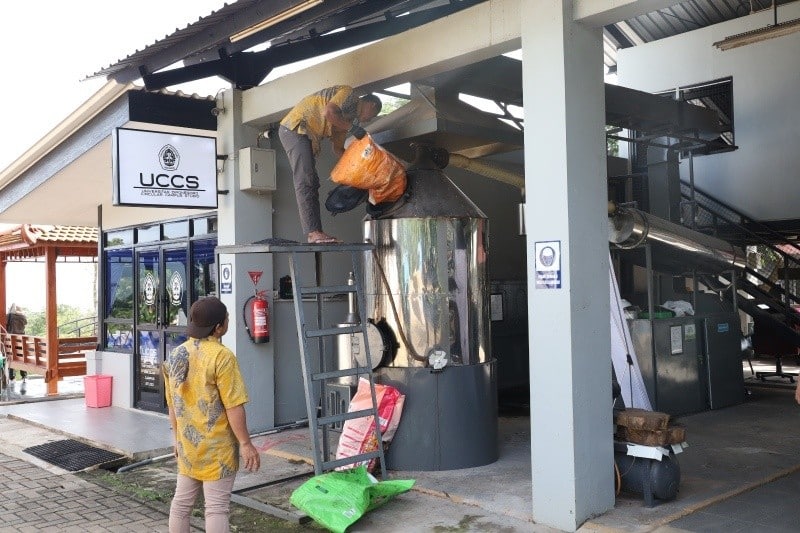
Organic waste is processed into compost, branch waste is converted into liquid smoke through pyrolysis technology, and food waste is managed using maggots to support a circular economy system within the campus environment. Inorganic waste is processed using plastic pyrolysis equipment developed by UNDIP lecturers, which produces gasoline. In addition, UNDIP has introduced a digital point-based plastic vending machine to encourage campus members to participate actively in waste reduction. UNDIP researchers and innovators develop these waste processing technologies in the field.
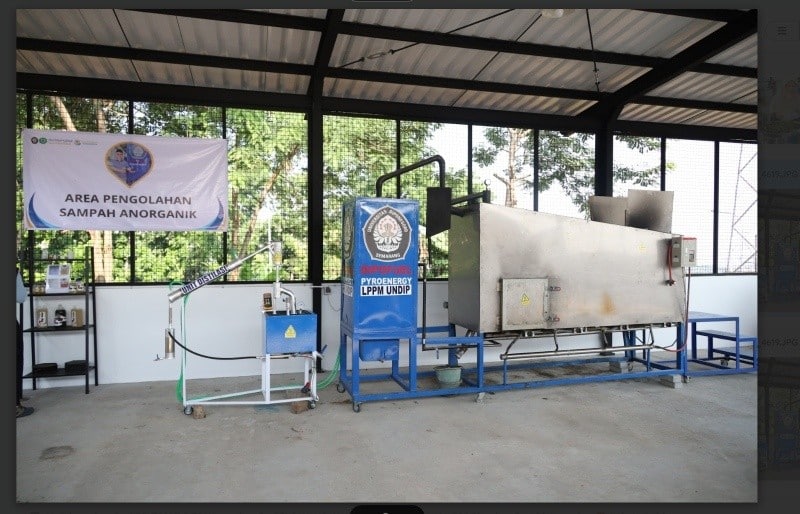
Hazardous and toxic waste (B3) is also managed through storage and transportation systems that meet established standards, ensuring safe and responsible handling. This model not only strengthens the university’s independence in waste management but also serves as a reference for educational institutions and local governments in developing sustainable waste management systems.
Through these strategic initiatives, UNDIP reaffirms its commitment as a university that excels academically while also delivering tangible benefits for the environment and society. (Public Communication/UNDIP/Nurul)