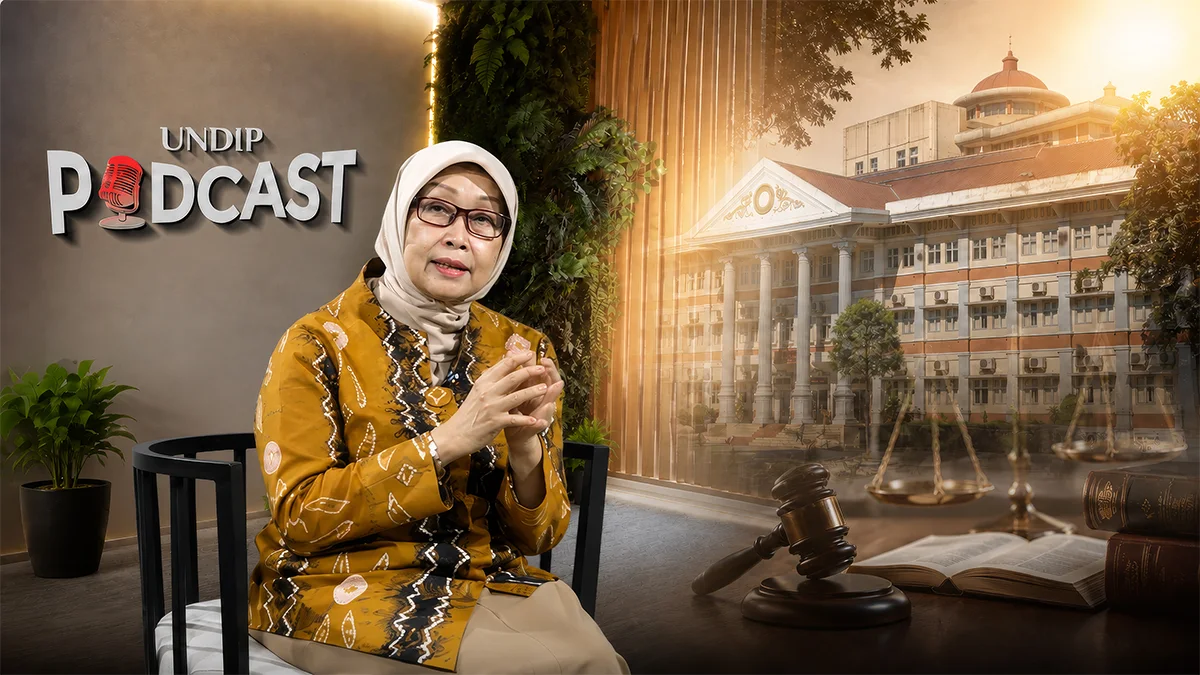



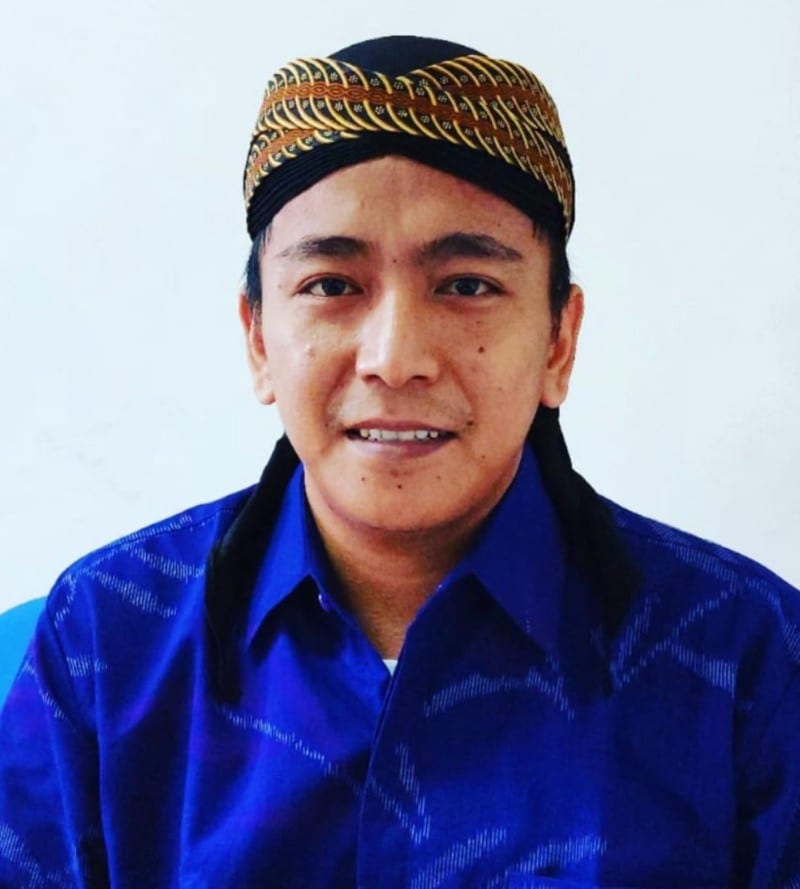
UNDIP, Semarang (13/2) – In Indonesia, the month of Ramadan is not merely a religious moment but also a synergy of cultural and spiritual spaces through local wisdom. One tradition that serves as an icon and signal of the imminent arrival of Ramadan for the people of Semarang is the“Dugderan” tradition. This time, we hear the perspective of Fajrul Falah, S.Hum., M.Hum., a lecturer at the Faculty of Humanities (FIB) UNDIP and an expert in Political and Cultural Language.
From a linguistic perspective, the term Dugderan originates from onomatopoeia (sound imitation): “dug” (the sound of the mosque drum or bedug) and “der” (the sound of cannon blasts). Initially, the sounds and words dugder functioned as a traditional public communication medium in the 19th century when the people of Semarang were not yet familiar with printed calendars or live government announcements. At that time, not only were social media and the internet nonexistent, but electricity was unavailable as well. The suffix “-an” in Dugderan forms a noun referring to an event.
Thus, Dugderan is understood as a communal tradition or event of the people of Semarang marking the arrival of the holy month of Ramadan. More than that, Dugderan represents a collective expression that integrates cultural space and spiritual values. It contains historical meaning, symbolic significance, and religious practices rooted in local culture.
Historically, the Dugderan tradition has been held since 1881 AD. The Regent of Semarang declared it, Raden Mas Tumenggeng Aryo Purboningrat. As in today’s reality, differences of opinion about the start of Ramadan existed at that time due to varying methods and beliefs.
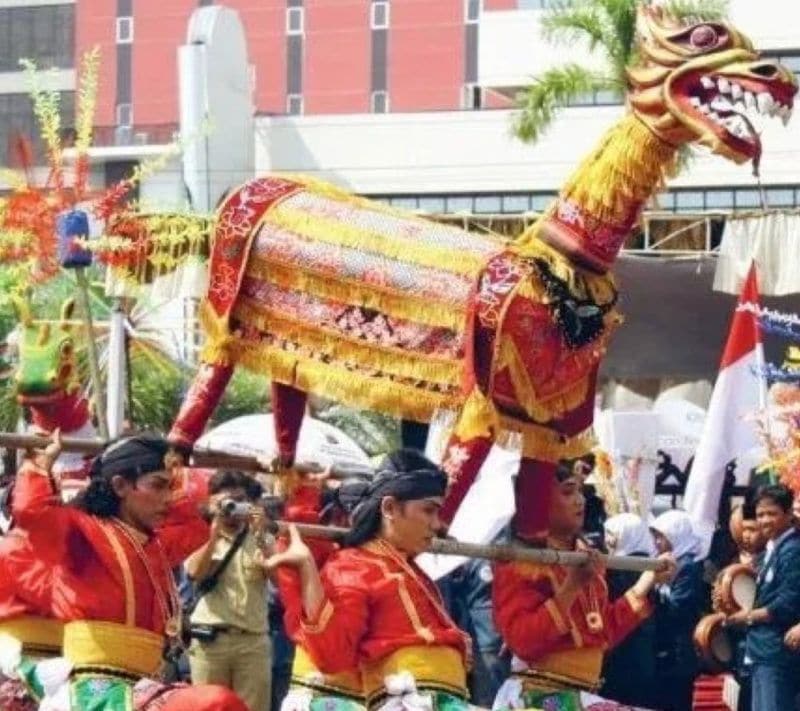
At that time, Dugderan aimed to unify public perception and determine the beginning of Ramadan, which was marked by the beating of the bedug at the Great Mosque of Semarang and cannon fire from the regency courtyard. He is recognized as the figure who initiated the Dugderan tradition, and the Mayor of Semarang reenacts his roleduring the Dugderan cultural procession. The Dugderan tradition has continued to evolve to this day.
Tradition, Modernization, and the Challenges of Dugderan
Modernism is often perceived as a threat to local values, associated with rapid change, rationality, and technology. Meanwhile, tradition is sometimes positioned as a remnant of the past and seen as static.
However, in the context of Indonesian culture, their relationship is not always oppositional. Through the three main Dugderan events—night markets or public fairs, cultural parades (Warag Ngendok), and the ritual announcement of the start of fasting—traditional values demonstrate their ability to negotiate, adapt, and creatively contribute to modernity.
This aligns with Raymond Williams’ perspective (cultural materialism) that culture is not a single static entity but a space of contestation, negotiation, and even hegemony. Cultural meaning is never final but continually reshaped through the interplay of interests, values, and ideologies in everyday life.
The key question and challenge is how to keep this tradition alive and meaningful, especially for younger generations.
According to Fajrul, today’s society consists of multiple generations—boomers, millennials, Gen Z, and Gen Alpha, each with distinct characteristics. He suggests several solutions that need periodic evaluation:
- Through education – Are local cultural contents included in school and university teaching materials? Do the government or cultural agencies support research on local traditions? To what extent are academics and cultural practitioners involved in policy-making and activities?
- Actively involve younger generations – Organize local cultural festivals and writing and creative video competitions (essays, literature, short films) that emphasize local wisdom. Young people enjoy having spaces for expression along with proper recognition.
- Utilize information technology – Many young people feel socially alienated in physical spaces due to their engagement with personal technology.
Cultural features, including Dugderan, should occupy digital spaces to facilitate easier access, such as through digital platforms, local-content games, media coverage, and branding to attract younger audiences.
4. Encourage intergenerational dialogue – Dialogue is needed to evaluate policies and formulate strategic steps, including youth involvement.
If these efforts are implemented, Dugderan today can be seen as a reflection of cross-generational discussions. Such engagement contributes positively to perspectives on Dugderan, helping preserve local wisdom amid technological disruption.
The Cultural–Spiritual Meaning of Dugderan
One of the icons of Dugderan is the mythical creature Warak Ngendok. This figure combines a goat, a dragon, and a bird, typically made from wood and colorful paper. The imaginary animal paraded during the Dugderan procession represents an acculturation of Javanese, Arab, and Chinese cultures, rich in symbolism and meaning.
According to Fajrul Falah, S.Hum., humans in the cultural context are described as animal symbolicum, distinguishing them from other creatures. The word warak derives from the Arabic wara’i, meaning cautiousness or self-restraint, while ngendog (laying eggs) symbolizes the results obtained after exercising self-control, such as fasting.
“In simple terms, it means that those who restrain themselves (through fasting) will eventually receive rewards. Some interpret the ‘endhog’ (egg) in the warak as a symbol of hope and blessing—what today might be called food security—because at the time of Dugderan’s origin, society experienced food scarcity and eggs were considered a luxury,” he explained.
More broadly, Warak Ngendok and Dugderan represent a meaningful synergy of cultural and spiritual space. Spiritual values such as honesty and emotional restraint combine with cultural values that foster empathy, solidarity, and mutual respect. Self-restraint in a contemporary context also reflects critical thinking and skepticism when reading and commenting on media and social media.
Dugderan also contributes to the creative economy and supports economic activity. Bazaars and small and medium enterprises (SMEs) flourish, introducing not only snacks and food but also Semarang’s traditional culinary specialties such as roti ganjel rel, bakpia, ketan, tempura, wingko babat, bandeng presto, lumpia, and tahu gimbal.
Ultimately, Dugderan is not merely a marker of Ramadan’s arrival but also a reflection of society’s efforts to preserve identity and local wisdom amid changing times. A great nation possesses a strong identity. Dugderan serves as the identity of the people of Semarang, strengthening social solidarity and preserving collective memory, thereby creating a society that is not only spiritually devout on an individual level but also culturally and communally devout. (Public Communication/FIB/Fajrul, ed. Nurul)