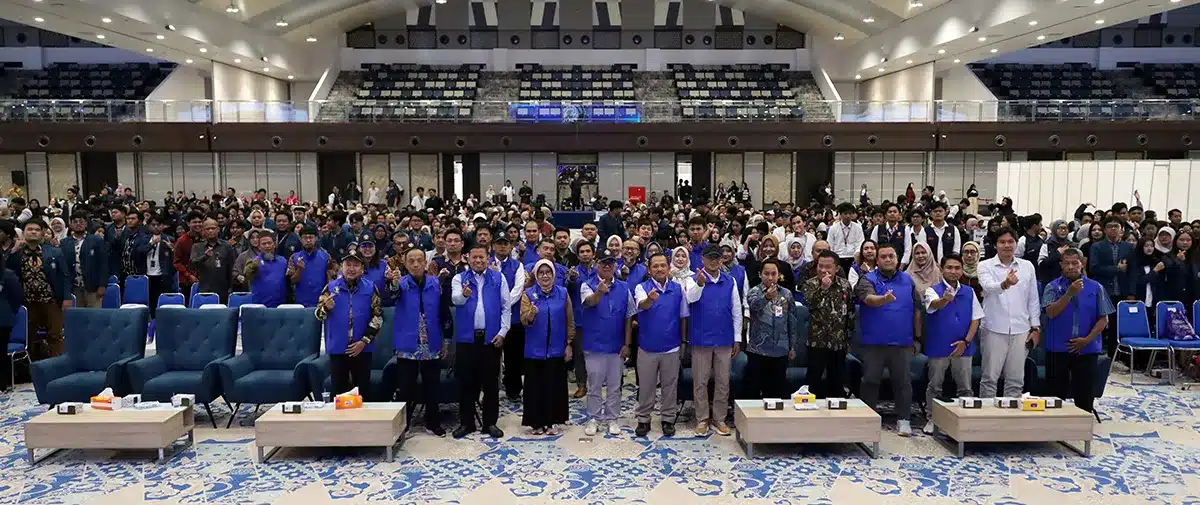

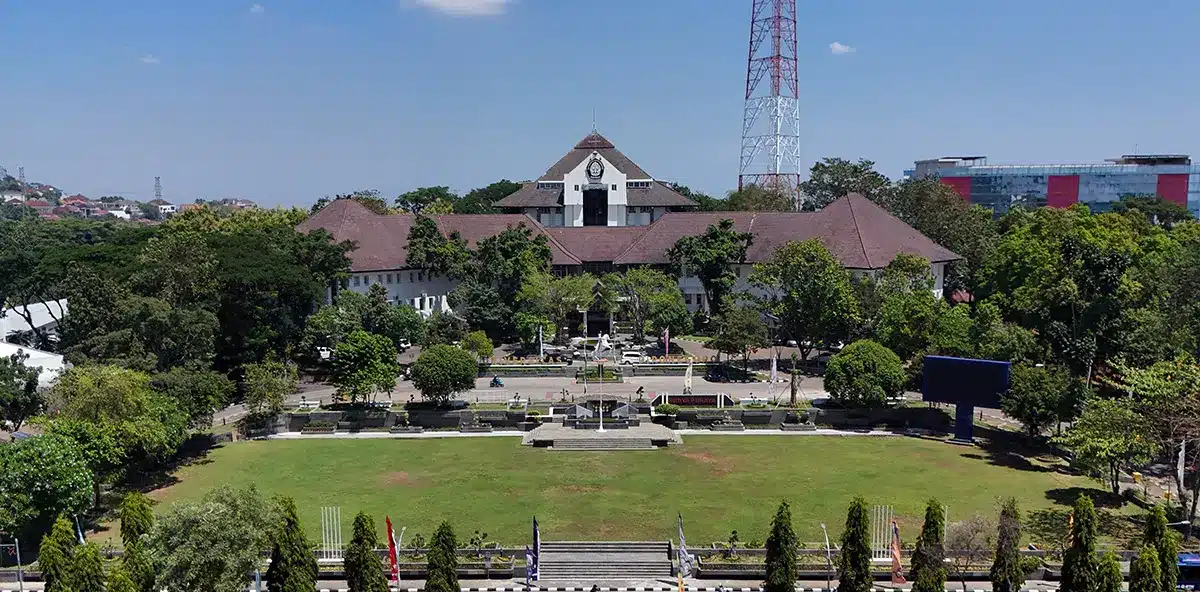
UNDIP, Semarang (12/2) – Universitas Diponegoro held the Community Service Program (KKN) Project Showcase and Student Re-entry Ceremony for KKN Team I Academic Year 2025/2026 on Thursday, February 12, 2026, at the Muladi Dome Multipurpose Building, UNDIP Tembalang Campus. The event served as a platform to disseminate the results of student community service and reflect on the achievements of community empowerment programs implemented across various regions in Central Java.
A total of 1,200 students participated in the Thematic Community Service scheme, divided into 45 teams and deployed across 14 regencies/cities in Central Java, covering 30 sub-districts and 43 villages/urban communities. Meanwhile, 902 students joined the Regular KKN program conducted in five regencies, covering eight sub-districts and 84 villages, organized into 100 teams.
In his remarks, UNDIP Rector Prof. Dr. Suharnomo, S.E., M.Si., expressed appreciation to all students, supervising lecturers, committee members, and regional governments for their support in implementing the community service program. He expressed pride in the various innovations produced by students, particularly in water treatment and waste management—areas that have become UNDIP’s flagship contributions and align with national and regional priority programs. According to him, student innovations should not end after the community service program concludes; they should continue and generate tangible impacts for society.
Prof. Suharnomo reaffirmed UNDIP’s commitment to continuously developing innovations to address several strategic issues in Central Java. “Following the success of water treatment technology development, UNDIP has been entrusted to address several strategic issues in Central Java, including the increasing spread of water hyacinth, the development and value enhancement of underutilized seaweed potential, and strengthening the national salt sector, which still relies on imports. To support these efforts, UNDIP has prepared expert teams from various disciplines to provide research- and innovation-based solutions,” he explained.
Additionally, the Rector advised students to remain focused on completing their studies on time, maintain academic integrity, and avoid distractions that may hinder their learning and personal development. “Become graduates who are not only academically competent but also possess integrity and dignity,” he emphasized.
On the same occasion, the Head of the Institute for Research and Community Service (LPPM) UNDIP, Prof. Dr.-Ing. Suherman, S.T., M.T., reported that KKN Team I Academic Year 2025/2026 was conducted from January 6 to February 10, 2026, involving 2,102 students. The program was implemented through both Thematic and Regular community service schemes, focusing on empowering local resources to support poverty alleviation, sustainable food security, and disaster mitigation and management.
Prof. Dr.-Ing. Suherman, S.T., M.T., also reported that all students had returned to campus safely and in good condition. The program resulted in 6,297 student work programs, 435 community service publications in print and online media, and 145 community service videos documenting best practices in the field. “We hope that all implemented programs truly provide benefits and can be continued by village and urban communities so that their impact remains sustainable,” he said.
The implementation of community service aligns with Universitas Diponegoro’s programs, particularly local resource empowerment to support poverty alleviation, strengthen sustainable food security, and enhance disaster mitigation and response through student engagement, in line with ‘Noble and Valuable UNDIP’. The program was supported by 44 lecturers serving as community service grant leaders and 33 supervising lecturers for the Regular KKN who had undergone training and preparation through the community service supervisors.
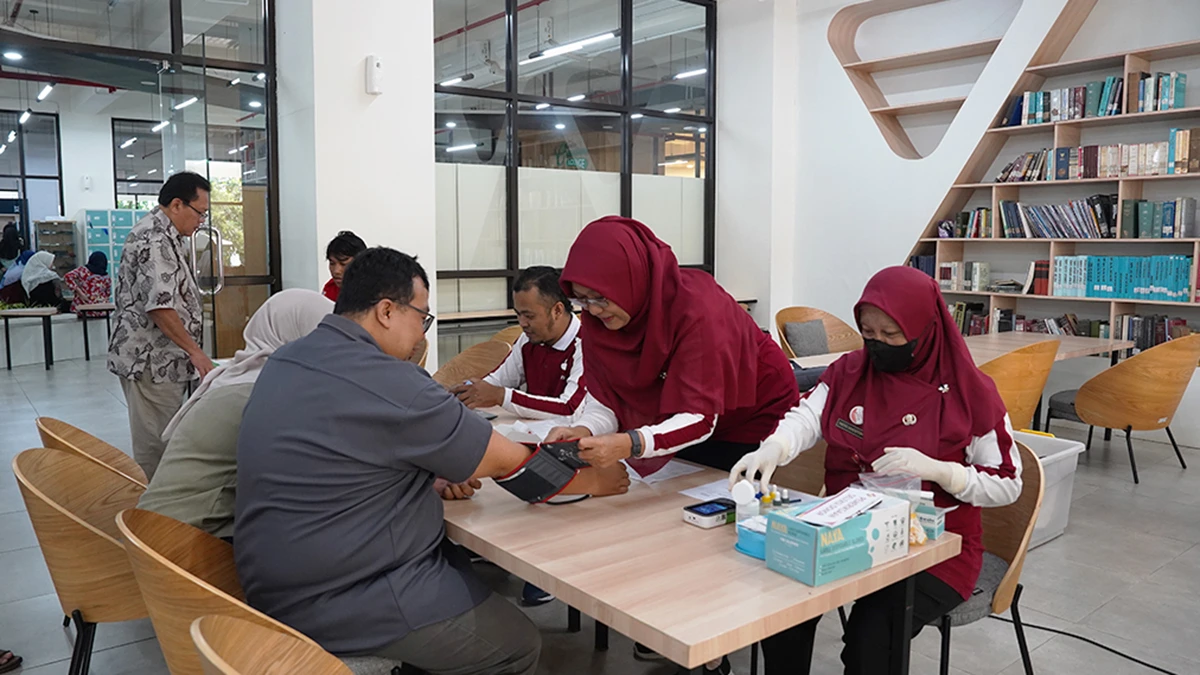
The activities carried out during this period included strengthening food security, disaster management, waste processing, development of livestock and agricultural sectors, improvement of public health, assistance for micro, small, and medium enterprises (MSMEs), literacy enhancement, coastal area management, preservation of local arts and culture, support for village-owned enterprises (BUMDes) and cooperatives, empowerment of persons with disabilities, and various other social programs.
The programs and outputs generated are expected to continue beyond the KKN period and be sustained by village and urban communities as community service partners. Program sustainability is a key aspect to ensure long-term benefits, in line with the spirit of ‘Noble and Valuable UNDIP’.
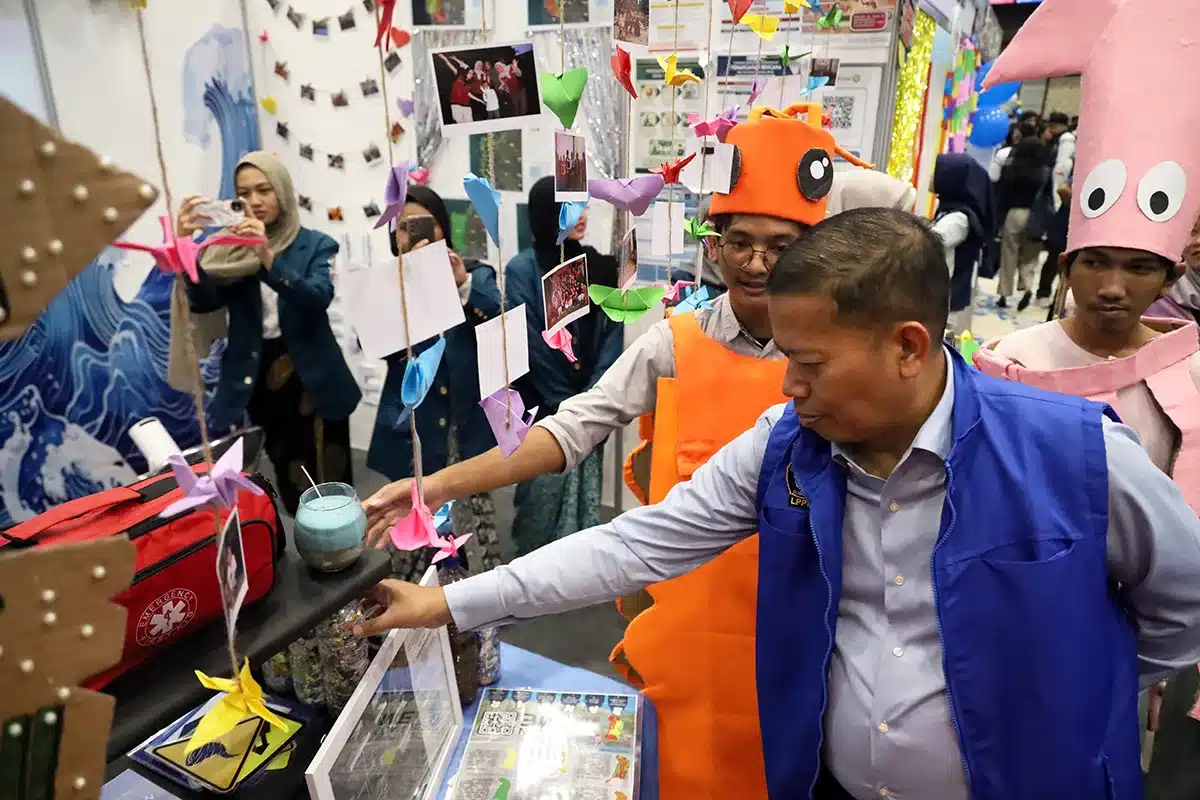
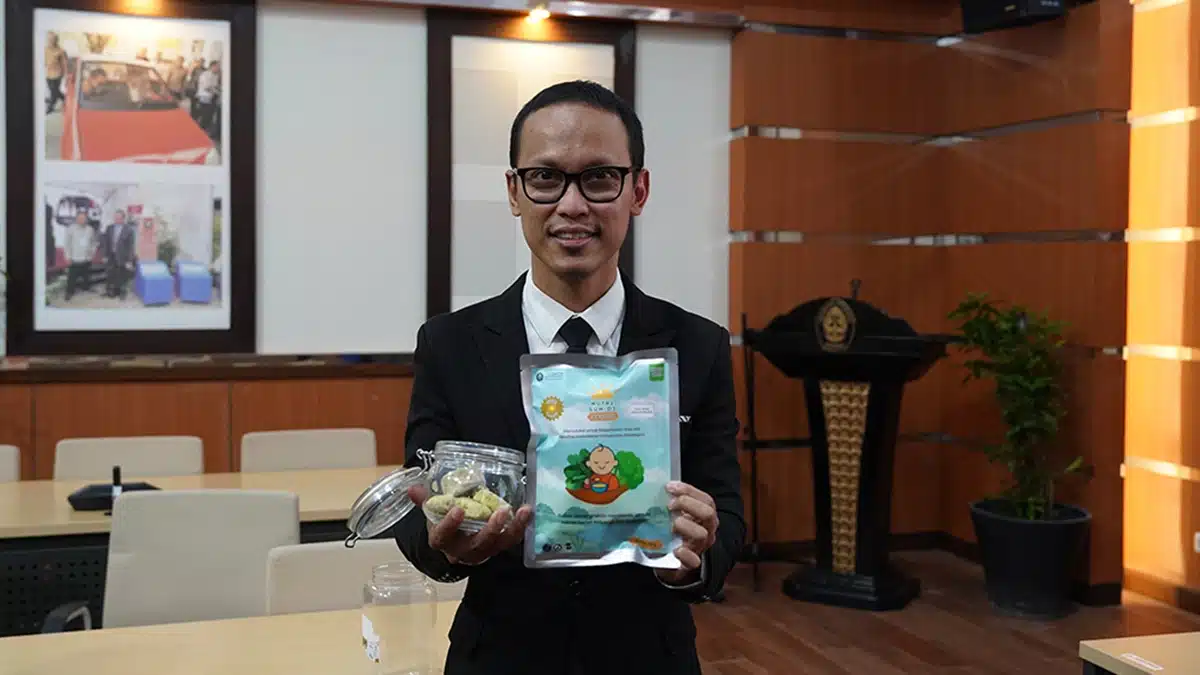
As the highlight of the event, UNDIP organized a student project exhibition showcasing community service outputs from various assisted regions. A total of 56 stands located in the left ballroom area of the Muladi Dome presented a wide range of student innovations, including local potential-based food product development, community economic empowerment models, appropriate technology for MSMEs, environmental and waste management systems, public health education programs, and community-based disaster mitigation initiatives. Each stand displayed documentation of processes, innovative products, and implementation models developed in collaboration with local communities.
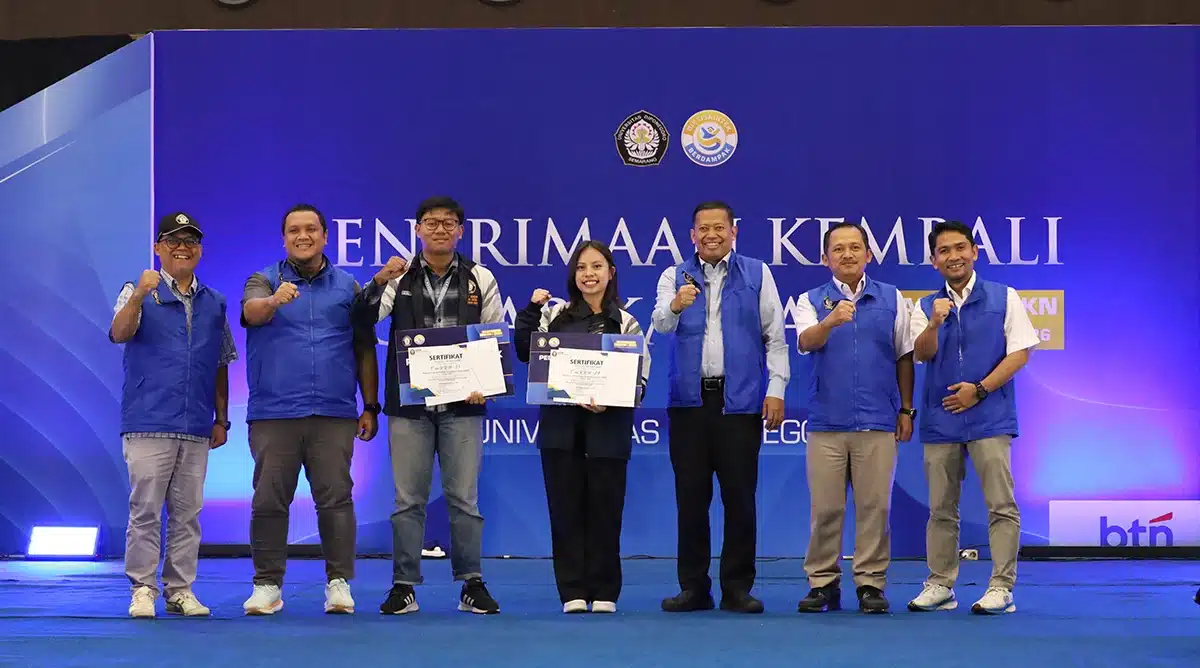
The event continued with a review of the exhibition stands by the Rector and university leadership, accompanied by interactive dialogue with participating students. Awards were also presented to student groups with the best programs. The series of activities concluded with a talk show featuring representatives from universities, partners, and regional governments, serving as a forum for reflection and strengthening collaboration in community service.
Overall, this KKN period produced 6,297 student work programs, 435 community service publications in print and online media, and 145 UNDIP community service videos documenting best practices in the field. The resulting programs and outputs are expected to be utilized and continued by village and urban communities as partners, ensuring sustainable impact and long-term benefits.
Through the KKN Team I Academic Year 2025/2026 Showcase, Universitas Diponegoro reaffirmed its commitment to impactful community service, strengthened partnerships with society, and fostered an adaptive, integrity-driven intellectual generation oriented toward meaningful contributions. (Public Communication/UNDIP/DHW-Ut-Hani)