
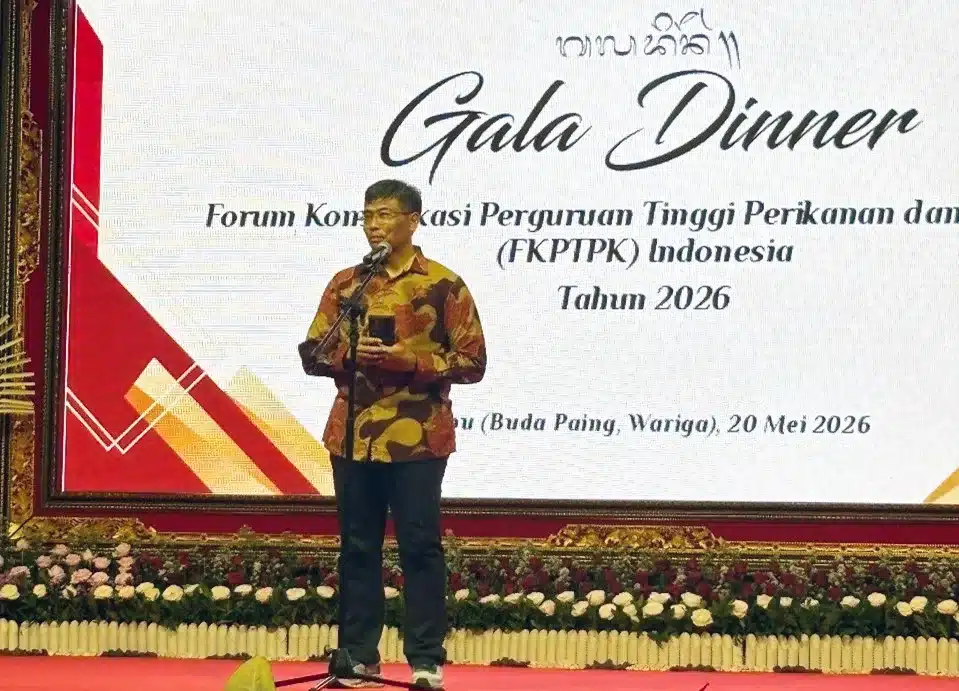

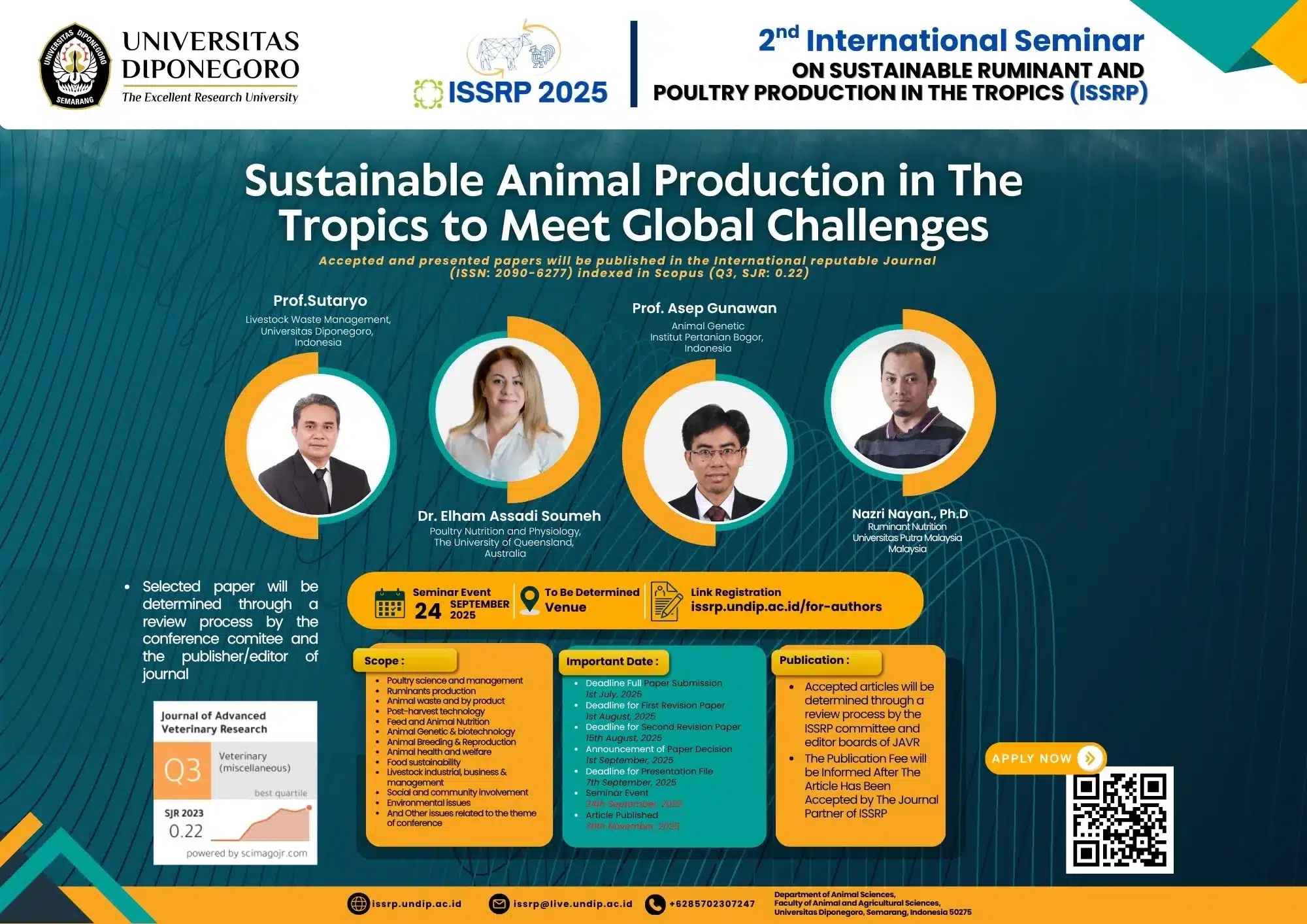
UNDIP, Semarang (October 16, 2025) – The Department of Animal Science, Faculty of Animal and Agricultural Sciences, Universitas Diponegoro (UNDIP), successfully organized the 2nd International Seminar on Sustainable Ruminant and Poultry Production in the Tropics (ISSRP 2025) on Wednesday, September 24, 2025, at the Ballroom of Aruss Hotel, Semarang, Central Java. The seminar was officially opened by the Director of Reputation, Partnerships, and Global Connectivity of Universitas Diponegoro, Prof. Hadiyanto, S.T., M.Sc., Ph.D. The event was attended by academics, researchers, students, and industry representatives from both domestic and international institutions.
Asep Setiaji, S.Pt., M.Si., Ph.D., Chair of ISSRP, stated that ISSRP 2025 served as an essential forum in animal science, bringing together international participants to exchange knowledge, share experiences, and build networks. He emphasized that the seminar aimed to strengthen collaboration and address global challenges in sustainable livestock production.
Four keynote speakers from leading universities and research institutions shared strategic insights on global challenges in sustainable livestock production, moderated by Prof. Sugiharto, S.Pt., M.Sc., Ph.D., Dean of the Faculty of Animal and Agricultural Sciences, UNDIP. The 2nd ISSRP, themed “Sustainable Livestock Production in the Tropics to Address Global Challenges,” attracted 147 participants, including international delegates from Malaysia, the United Kingdom, Australia, the United States, Pakistan, Nigeria, Libya, Timor-Leste, the Philippines, and Thailand. Domestic participants represented regions across Indonesia, from Aceh to Maluku.
Prof. Dr.agr. Asep Gunawan, S.Pt., M.Sc. (IPB University, Indonesia) highlighted the role of genomics in accelerating genetic improvement of livestock in tropical environments. He emphasized that advances in molecular breeding, genomic selection, and reproductive biotechnology are essential to produce ruminants and poultry with improved adaptability, higher productivity, and greater resilience to climate change. Dr. Elham Assadi Soumeh (The University of Queensland, Australia) discussed strategies to enhance poultry health and welfare under tropical heat stress conditions. He explained that precision feeding, nutritional interventions, and innovative housing systems are key approaches to mitigating heat stress, which remains a major challenge in tropical poultry production.
Dr. Nazri Nayan (Universiti Putra Malaysia) explored nutritional and management innovations to improve ruminant feed efficiency. He demonstrated that optimizing feed formulations and adopting feed additives—such as probiotics, enzymes, and plant extracts—can significantly reduce methane emissions while maintaining livestock performance. Prof. Sutaryo, S.Pt., M.Si., Ph.D. (UNDIP, Indonesia) presented innovations in waste-to-energy conversion systems for livestock production. He emphasized that integrating biogas technology and circular farming practices can reduce greenhouse gas emissions, improve waste management, and generate renewable energy, thereby aligning livestock production with sustainability goals. The plenary sessions underscored the urgent need for knowledge exchange, experience sharing, and collaboration to address pressing sustainability, climate resilience, and global food security issues.
The seminar was supported by leading industry partners, including PT Berkah Putra Chicken, PT Tumbuh Optimal Prima, PT Cimory, and Stem Cell and Cancer Research Indonesia, highlighting strong synergy between academia and industry in promoting sustainable livestock production. Through ISSRP 2025, Universitas Diponegoro reaffirmed its commitment to strengthening international collaboration in animal science, building research-based networks, and developing innovative solutions for the future of sustainable livestock production in tropical regions.
This activity aligns with the Sustainable Development Goals (SDGs), including Zero Hunger (SDG 2), Affordable and Clean Energy (SDG 7), Decent Work and Economic Growth (SDG 8), and Partnerships for the Goals (SDG 17). It reflects the spirit of ‘Noble and Valuable UNDIP’ in delivering tangible societal impact. (Public Communication/UNDIP/FPP Team, ed. As3)