

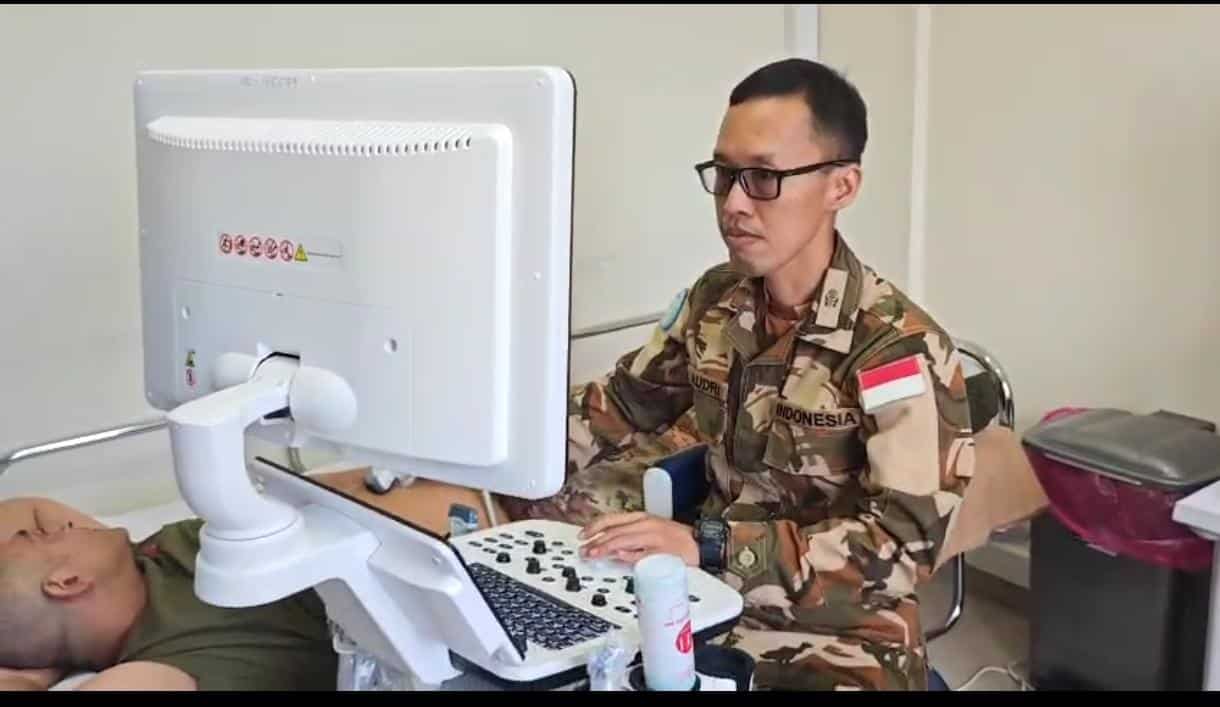
UNDIP, Semarang (6/4) – The high-quality education provided by the Faculty of Medicine at Universitas Diponegoro (FK UNDIP) has proven to be a strong foundation for its alumni to pursue careers on the global stage. One clear example is dr. Audrianto, Sp.Rad., an alumnus of the Radiology Specialist Program at FK UNDIP, who is currently entrusted with a major role as the Task Force Commander (Dansatgas) of Hospital XXIX-P in the United Nations peacekeeping mission (UNIFIL) in Lebanon.
dr. Audrianto acknowledged that his education at FK UNDIP played a key role in shaping his resilience and clinical competence. During his specialist training in Semarang, he was equipped with a curriculum that balanced theory and practice, along with strong exposure to international medical literature. As a military doctor operating in areas with limited facilities, he has demonstrated that his specialist education prepared him with an adaptive mindset and global academic standards.
“Education at FK UNDIP was highly supportive in building our confidence on the international stage. Beyond technical medical skills, the global communication abilities and scientific publication experience we developed during our studies became essential when coordinating with multinational medical teams in UN missions,” he stated in an interview on Tuesday (March 31, 2026).
During his assignment in Lebanon (2025–2026), dr. Audrianto emphasized the strategic role of radiology in supporting diagnosis. However, he stressed that even the most advanced equipment must rely on a doctor’s fundamental clinical skills.
“Radiology is a vital supporting tool, but as specialists, we must prioritize anamnesis and physical examination. Nearly 70% of diagnoses can be established from these initial processes. From there, we can determine the most appropriate and efficient radiological examination for the patient,” he explained.
This approach has been applied in real conditions at UNIFIL, where medical facilities are often limited to X-ray and ultrasound (USG), by sharpening clinical analysis, dr. Audrianto can maximize available tools to save lives before deciding on further referrals, such as CT scans or MRIs, based on field conditions.
The dynamic situation in Lebanon, including the risk of attacks around the camp area, requires dr. Audrianto to perform dual roles: as a commander responsible for personnel safety and as a specialist doctor who must maintain diagnostic precision—even while working inside bunkers. dr. Audrianto hopes his experience can inspire medical students to uphold integrity and professionalism. “In the field, there is no comfort zone. A strong educational foundation from FK UNDIP is essential, but sincere dedication is what enables us to endure and contribute to humanity,” he concluded. (Public Communication/UNDIP/Faculty of Medicine)