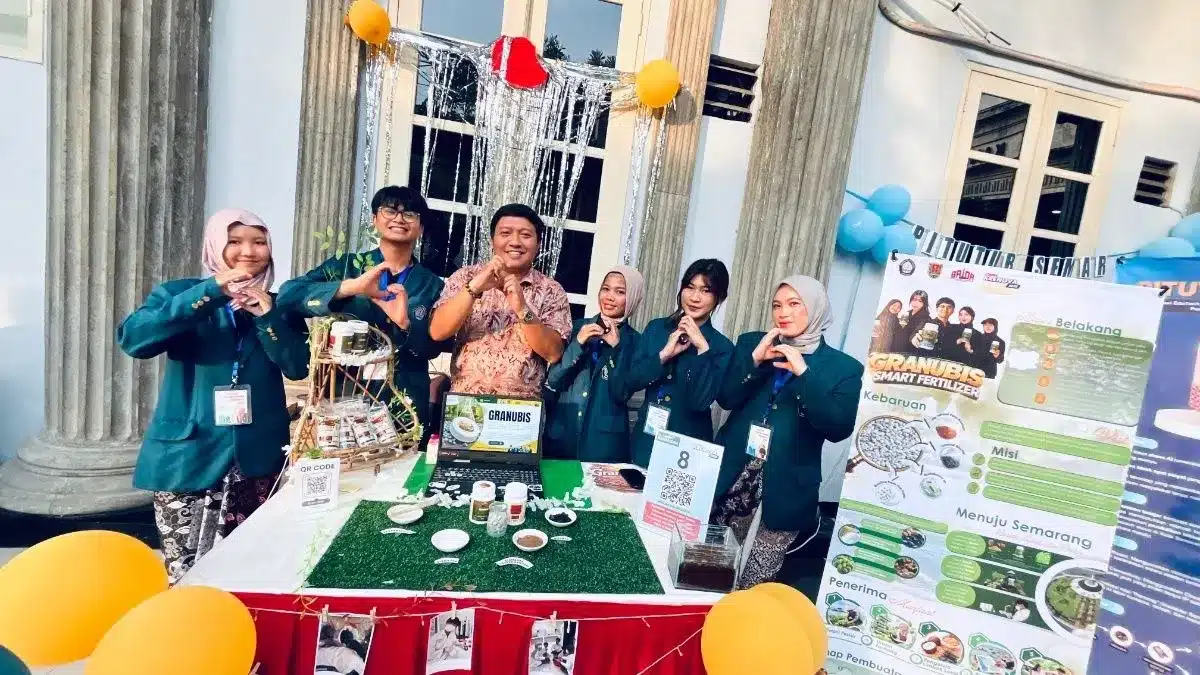
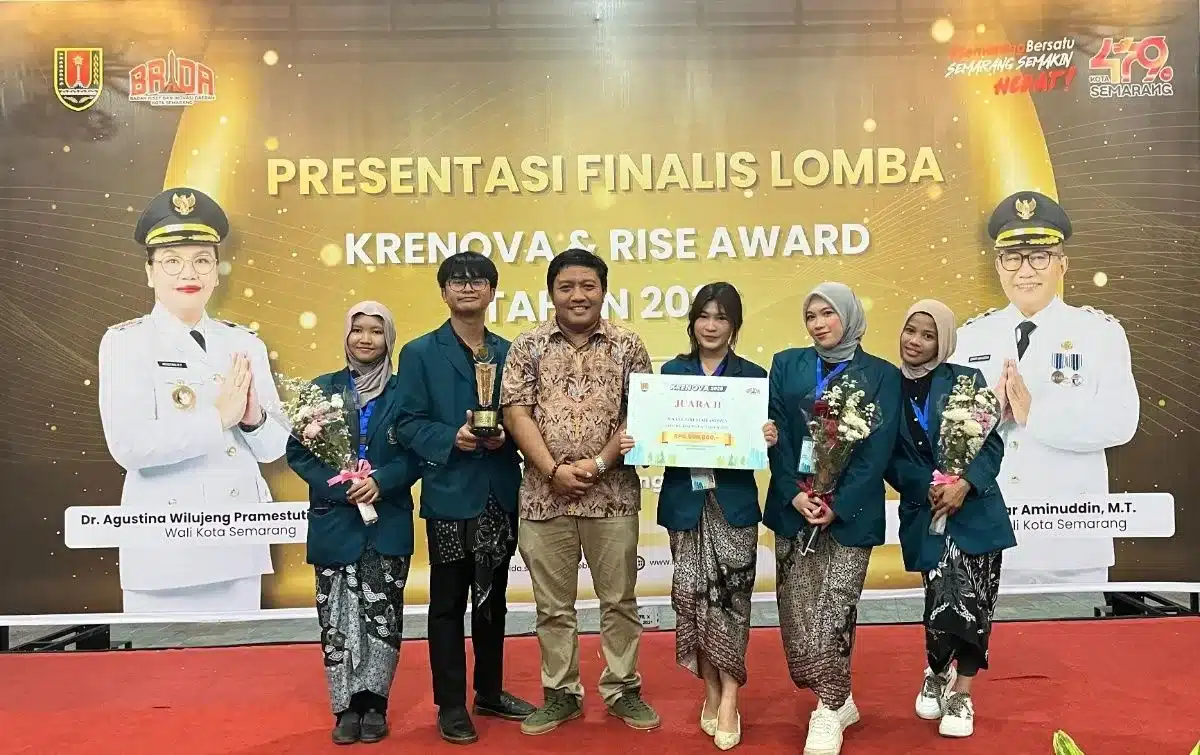
UNDIP, Semarang (29/04) – The creativity of Universitas Diponegoro (UNDIP) students has once again demonstrated its competitiveness at the regional level. Through an innovation called Granubis, a student team from the Industrial Chemical Engineering Technology Study Program at the Vocational School of UNDIP successfully received recognition at the Krenova Kota Semarang 2026 competition.
The innovation was developed by Luis Ibanez Sitinjak together with team members Mayada Jannati, Kholis Na’imah, Al Fariza, and Marisha Yosepa Br. Siburian, under the supervision of Dr. Ir. Fahmi Arifan, S.T., M.Eng., M.M., IPM, ASEAN Eng. Through hard work and intensive research, the project won Second Place and the Rise Award in the competition organized by the Semarang City Government on Tuesday, April 28, 2026.
Granubis is an organic fertilizer made from local biomass waste, designed to restore soil fertility, particularly in flood-affected areas. The innovation emerged from students’ concern about environmental problems in Semarang City, where flooding not only inundates areas but also significantly degrades soil quality.
The name Granubis is an acronym for granular and biosilica, reflecting the product’s characteristics, which combine material technology with an environmentally friendly approach. Its raw materials are sourced from easily accessible organic waste, such as coconut shells, rice straw, and palm biomass. These materials are processed into biochar, biosilica, and organic nutrients, which are then formulated into an innovative fertilizer.
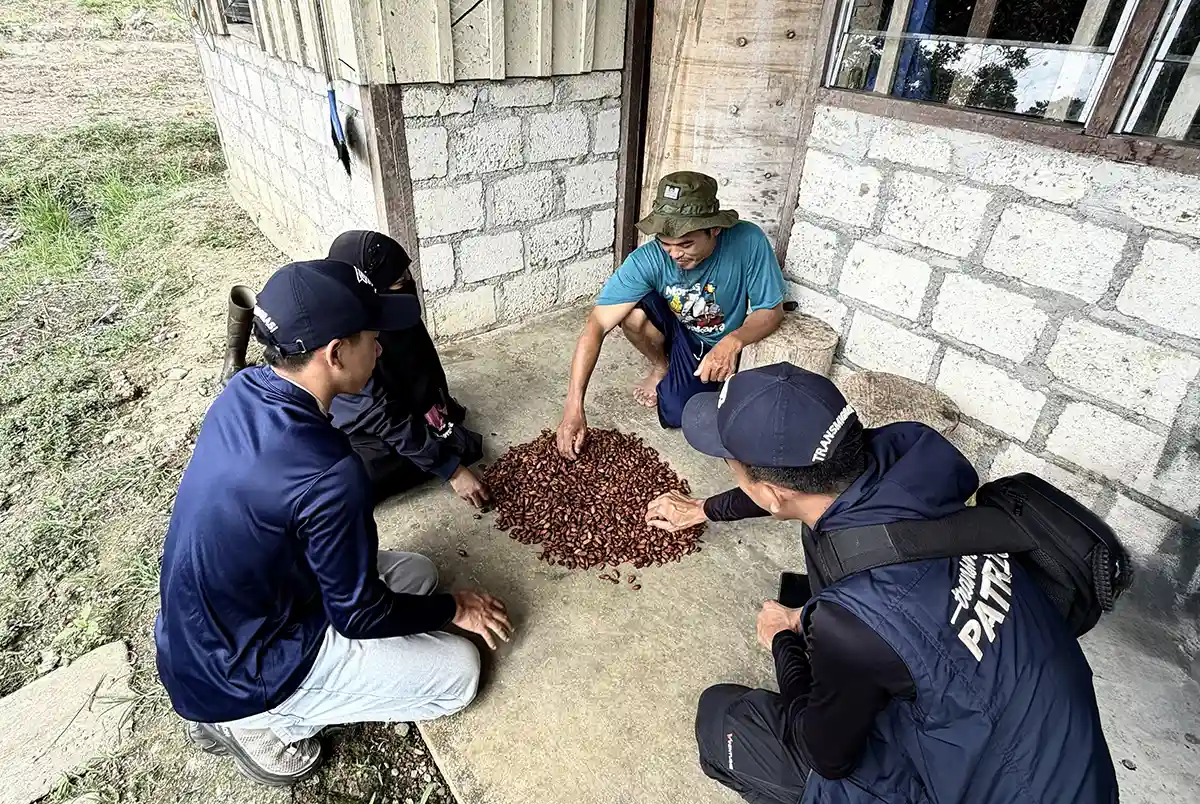
Another unique aspect of Granubis lies in its use of local raw materials from Semarang City. The team even identified palm waste sources from the Candi Golf area, which had previously been underutilized. This approach not only reduces production costs but also strengthens sustainability and resource independence.
Team leader Luis Ibanez Sitinjak explained that the innovation originated from direct field observations. “Floods not only leave standing water but also cause soil quality degradation, making it difficult for plants to grow optimally. Through Granubis, our team aims to provide a solution that can gradually restore soil fertility,” he said.
The Granubis development process demonstrated the students’ strong dedication. Within a relatively short preparation period of about one month, they conducted various stages, including literature studies, field surveys, material collection, and intensive laboratory experiments to determine the best formulation. Despite numerous challenges, their efforts resulted in an innovation that not only gained competitive recognition but also holds strong implementation potential in the agricultural sector.
Supervising lecturer Dr. Fahmi Arifan stated that Granubis is highly relevant to current issues of food security and sustainable agriculture, with significant potential for broader development and application within society.
Furthermore, this achievement opens opportunities for further development through an incubation program facilitated by the Semarang City Government for Krenova winners. The program is expected to help Granubis evolve from a prototype into a product ready for community implementation.
In response to this achievement, Head of the Industrial Chemical Engineering Technology Study Program at UNDIP Vocational School, Dr. Mohamad Endy Julianto, S.T., M.T., expressed pride in the students’ accomplishment.
“This achievement is a source of pride for us. TRKI students have demonstrated innovation, perseverance, and the ability to provide solutions relevant to real societal issues. This progress is not merely a competition victory, but also proof that the problem-solving and collaborative learning process we have built is working effectively,” he stated.
According to Dr. Endy, this success reflects the academic ecosystem at TRKI UNDIP, which encourages students to think critically, creatively, and adaptively in responding to contemporary challenges. The Krenova competition serves as a strategic platform for fostering research-based and applicable innovations. UNDIP’s success in this competition further strengthens the role of higher education institutions as drivers of solutions to societal problems. (Public Communication/UNDIP-Vocational School/ Endy & DHW)