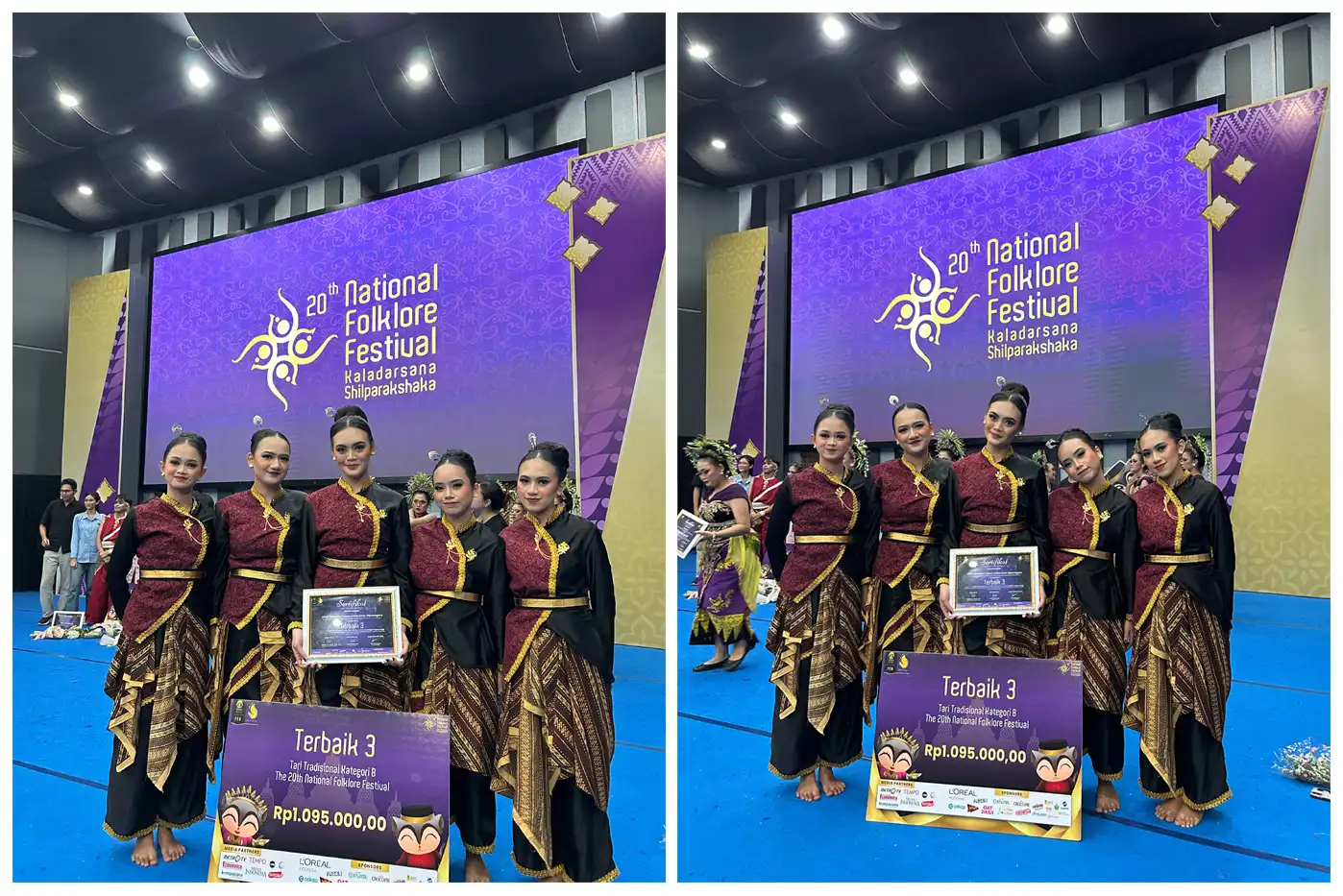




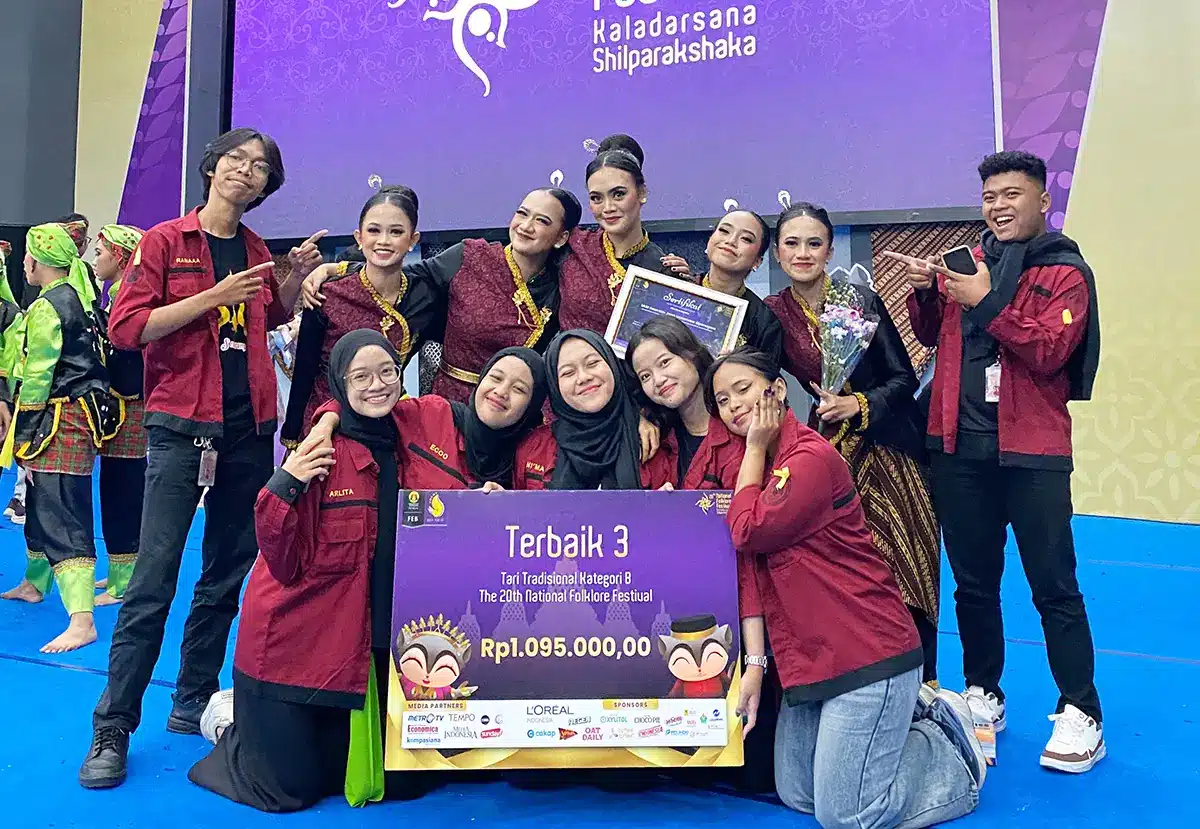
UNDIP, Semarang (6/5) – The Javanese Arts Student Activity Unit (UKM Kesenian Jawa) of Universitas Diponegoro recently achieved an outstanding accomplishment by winning Third Place in the Traditional Dance Category at the National Folklore Festival (NFF) 2026, held on April 29, 2026, at the Student Activity Center (Pusgiwa), Universitas Indonesia. The competition is organized by Universitas Indonesia twice a year.
The team presented an original traditional dance performance entitled “Ratna Dipanegara Dance,” which tells the story of Raden Ayu Rara Retnaningsih, the devoted wife of Prince Diponegoro. The dance portrays her as a gentle yet resilient woman who faithfully accompanied her husband throughout his struggle and exile. Beyond serving as a companion during the Java War, she also shared the hardships of resisting Dutch colonial rule alongside Prince Diponegoro.
The performance was presented by students from UNDIP’s Javanese Arts Student Activity Unit. The performers included:
- Elvaretha Anggun Syafa Aila – Business Administration (2024)
- Trihanum Alghaniyyu – Applied Foreign Languages (2024)
- Fridarycha Anggia Putranti – Civil Infrastructure Engineering and Architectural Design (2025)
- Rashida Lara Sukarno – Psychology (2025)
- Wahyu Indah Sari – Animal Sciences (2025)
One of the dancers, Trihanum Alghaniyyu, shared that participating in the NFF was a highly memorable experience, offering not only excitement but also valuable lessons in teamwork, discipline, responsibility, and self-confidence.
“This competition was both exciting and meaningful for us. From the rehearsal process to performing on stage, we learned about teamwork, discipline, responsibility, and became more confident,” said Trihanum.
She also expressed her hope that traditional dance will become more widely appreciated among younger generations. According to her, events such as the NFF provide an important platform for showcasing culture, talent, and team solidarity.
“We hope traditional dance will gain greater recognition and inspire more young people to help preserve it. We also hope our team remains united, continues to grow, and performs even better in future opportunities,” she added.
Achieving this accomplishment was far from easy. It required months of rigorous practice, dedication, and hard work from both the performers and the supporting team. Delivering a successful performance also depended on the commitment of non-performing members who prepared the musical arrangements, choreography, and various supporting elements essential to the production. (Public Communication/UNDIP/AKS & As3)