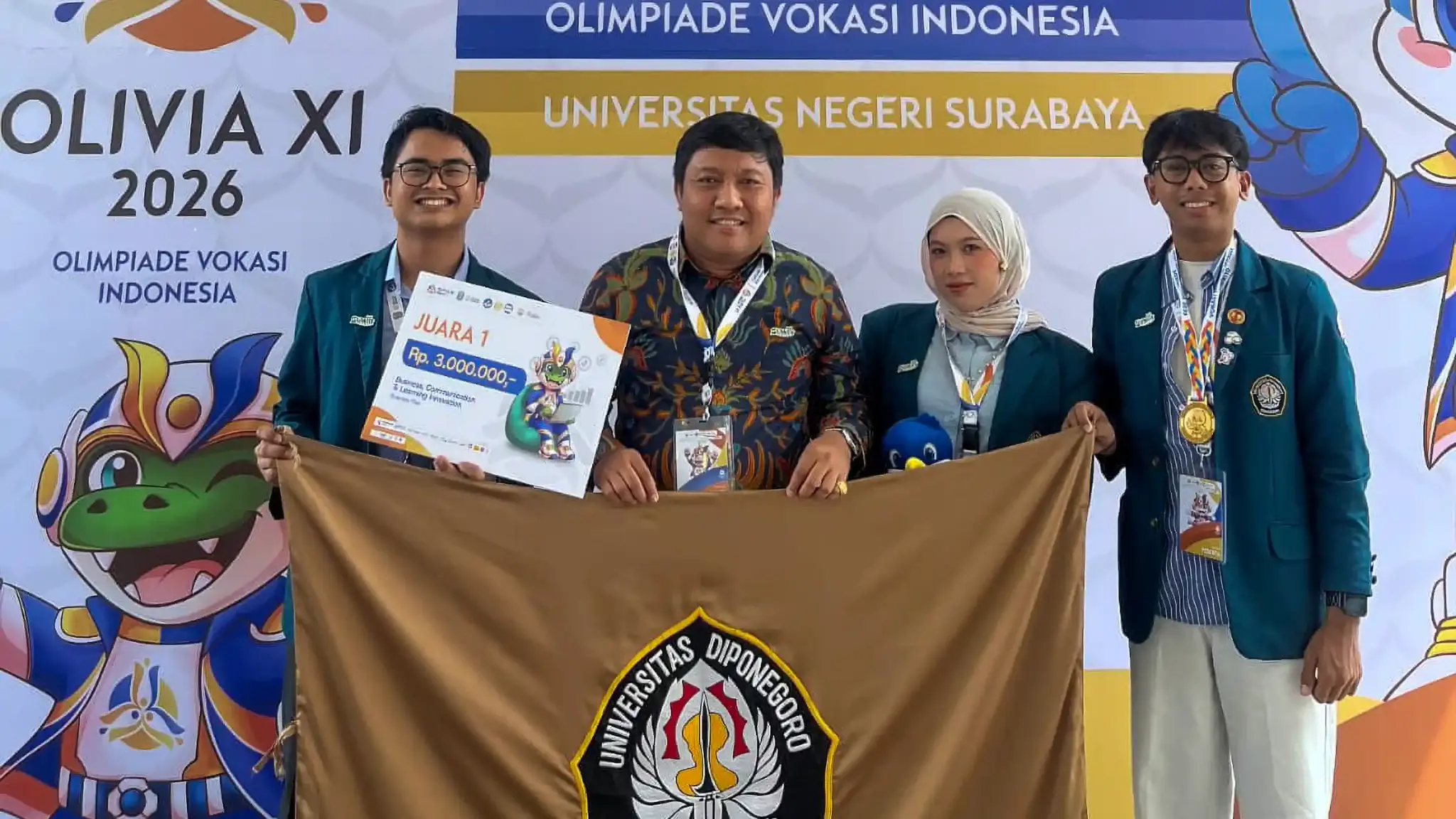
UNDIP, Semarang (9/8) – The courage to view environmental challenges as business opportunities has led a team of students from the Vocational School of Universitas Diponegoro (UNDIP) to achieve an outstanding accomplishment at the national level. Their idea, SUWIIT (Smart Livestock Integrated Technology), earned them a Palm Oil Scholarship and a Gold Medal in the Business Plan category at the 11th Indonesian Vocational Olympiad (OLIVIA XI) 2026, held at Universitas Negeri Surabaya from August 2–4, 2026.
The team was led by Luis Ibanez Sitinjak, together with Kholis Na’imah and Irgy Khoiroel Al Fahrezi, all from the Applied Bachelor’s Program in Industrial Chemical Engineering Technology (TRKI). Before a panel of judges representing various sectors, including academics, industry practitioners, businesspeople, and government institutions, the three students demonstrated that vocational research can precisely address real-world challenges.
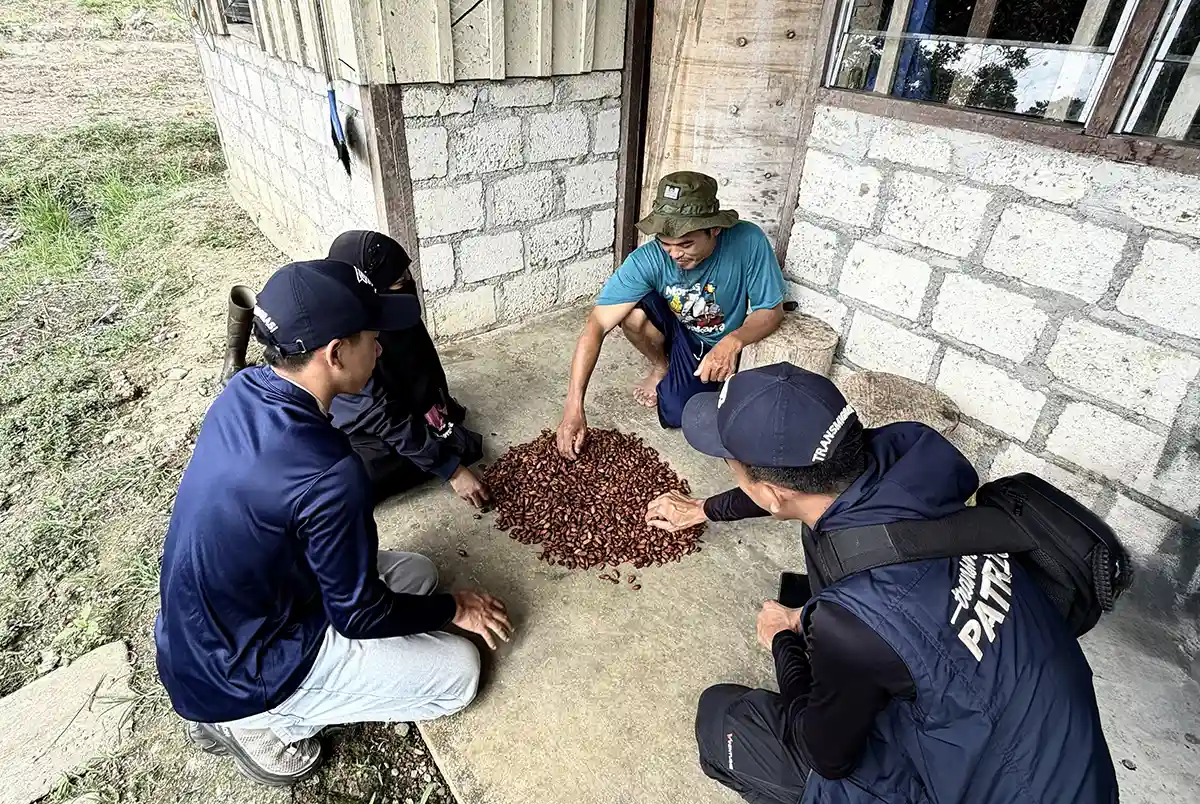
The inspiration for SUWIIT began with an in-depth observation of conditions in their hometowns in Sumatra. The region, which is rich in oil palm plantations, faces two major challenges simultaneously: the suboptimal management of biomass waste from the palm oil industry and the high cost of animal feed borne by local farmers.
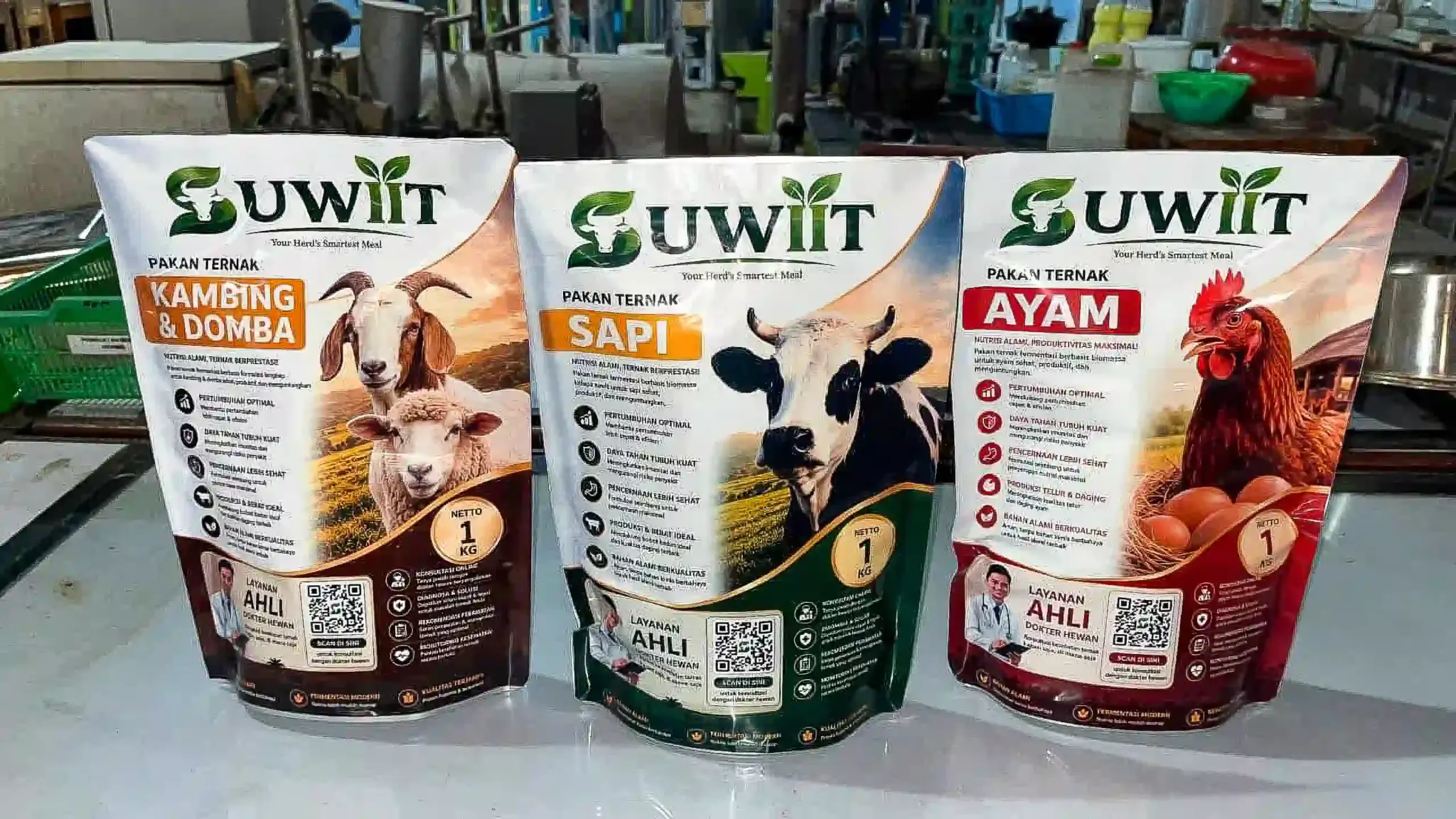
Recognizing this opportunity, the UNDIP TRKI team formulated a nutraceutical animal feed using oil palm empty fruit bunches (Tandan Kosong Kelapa Sawit / EFB) as the primary ingredient. Through a fermentation process enriched with probiotics, minerals, and natural immunostimulants, industrial waste that was previously overlooked is transformed into a high-nutrient feed source to replace conventional feed.
The feed innovation is specifically designed to maintain digestive health, strengthen immunity, and accelerate livestock growth. Transforming residual biomass into a value-added product underscores UNDIP students’ commitment to creating new value chains based on a circular economy.
To enhance the reliability of its physical product, SUWIIT is directly integrated with the Smart Livestock Assistance digital platform. This digital ecosystem serves as an intelligent assistant connecting farmers with technology and various livestock management services through a practical, integrated application.
Through the application, farmers can monitor animal health, consult directly with veterinarians, and receive AI-based automated care recommendations. Supporting features such as interactive educational content and a marketplace for livestock supplies are also incorporated to facilitate day-to-day operational transactions.
The integration of nutritious feed technology with digital services, animal healthcare, and education is a key strength of the SUWIIT business model. Based on the team’s preliminary calculations, implementing the concept is projected to reduce feed costs by approximately 20–40 percent, increase livestock productivity by approximately 20–40 percent, and reduce livestock mortality rates by approximately 10–20 percent. These projections demonstrate that the innovation is not focused solely on technological sophistication but also on tangible benefits for users.
The development of SUWIIT was also supported by Dr. Ir. Fahmi Arifan, S.T., M.Eng., M.M., IPM., ASEAN Eng. Intensive mentoring was provided to refine the technological aspects while strengthening the business model presented in the competition. The collaboration between students and lecturers reflects the character of vocational education, which encourages knowledge to evolve into applied skills, products, and solutions aligned with the needs of industry and society.
The Head of the TRKI Study Program at UNDIP Vocational School, Dr. Mohamad Endy Julianto, said the students’ achievements demonstrate the importance of an educational ecosystem that provides young talent with opportunities to experiment and produce meaningful work. Support through the Palm Oil Scholarship also allows students to broaden their understanding of the strategic sector, including identifying opportunities for technological development and downstream industries. SUWIIT provides an interesting example of how education, opportunities, vocational experience, and concern for regional challenges can come together to create innovations with the potential for broad impact.
For Luis Ibanez, the achievement at OLIVIA XI 2026 was an important experience in understanding innovation not only from a technological perspective but also in how effectively an idea can address societal challenges. The competition also provided students with a platform to test the feasibility of their ideas, develop business strategies, receive feedback from experts across various fields, and assess the potential to take the innovation to a more concrete stage.
The circular economy perspective was also a key consideration for Kholis Na’imah in developing SUWIIT. Waste is viewed not as the end of a production process, but as a resource that can still be processed to create new value. Meanwhile, Irgy Khoiroel Al Fahrezi strengthened the digitalization aspect, emphasizing that farmers’ challenges involve not only feed, but also access to information, animal healthcare, assistance, education, and markets. This integrated concept received a positive response from the judges and created opportunities for further business development and investment.
The next step is to take SUWIIT beyond the campus and toward commercialization and real-world implementation in society. This is a tangible example of the contribution of UNDIP’s young generation to driving Indonesia’s livestock sector toward a greener, more self-reliant, and sustainable future. (Public Communication/UNDIP-VS/Endi; Ed. DHW)