UNDIP, Keerom, Papua (23/8) – Hidden behind the dense tropical forests along Indonesia’s eastern border, Senggi District, Keerom Regency, Papua Province, holds significant potential to strengthen food security in the border region. As a transmigration area established in the late 1990s and directly bordering Papua New Guinea (PNG), the area continues to develop toward food self-sufficiency. These efforts have been strengthened through the 2026 Patriot Transmigration Program of the Ministry of Transmigration of the Republic of Indonesia, which mobilizes academics, alumni, and expert lecturers to collaborate directly in the field.
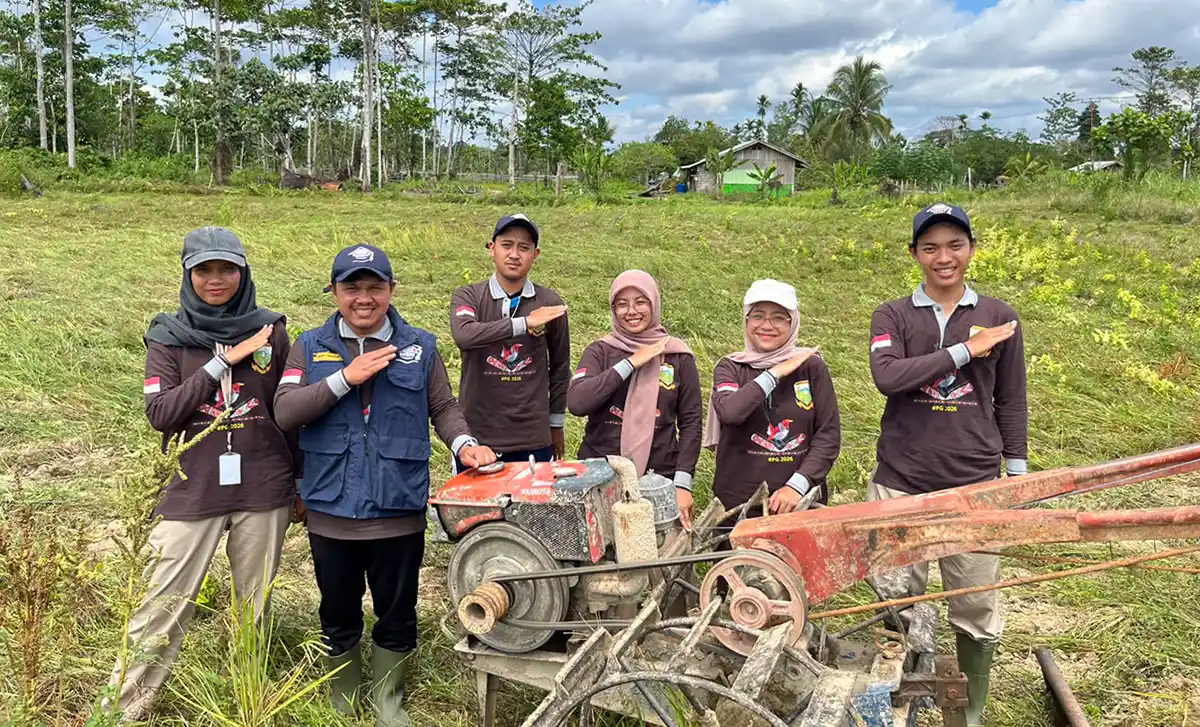
The presence of the 2026 Patriot Expedition Team (Tim Ekspedisi Patriot / TEP) continues the program initiated in 2025. While last year’s activities focused on collecting baseline data, identifying problems, and developing area plans, this year marks the technical implementation stage aimed at addressing the actual needs of farmers in Senggi District. Amid these development efforts, Team 17 of the Universitas Diponegoro (UNDIP) Patriot Expedition, led by Septrial Arafat, S.P., M.P., together with team members Nok Ayu Nurasih, S.Pi., M.Pi., Risa Nurhaliza, S.I.Kom., Amelia Shafa Salsabila, S.P., Riko Iqbal Allatif, S.Pd., and Alfian Nur Setiawan, S.P.W.K., joined 20 expedition teams deployed across the region. The team is implementing a program titled “Provision and Optimization of Community-Based Irrigation Water to Support Sustainable Agriculture in the Senggi Transmigration Area,” with local communities as the key drivers of the initiative.
Geographically, Senggi District faces its own topographical challenges alongside its considerable agricultural potential. The transmigration area comprises seven villages, including Woslay Village, formerly Settlement Units (Satuan Pemukiman / SP) 1 and SP 2, which is currently being processed to become a new definitive village called Soom Village. The area is home to a harmonious mix of transmigrants and Indigenous Papuans (Orang Asli Papua / OAP), who work together to cultivate the land.
Despite its potential agricultural land, Sibur, Chairman of the Satu Hati Farmers’ Group, highlighted that agriculture in Senggi District continues to face a major obstacle: limited water availability. Heavy dependence on rainfall makes cultivation highly vulnerable to weather fluctuations, frequently leading to crop failures during the dry season.
“Senggi has a relatively large area of productive agricultural land, but agricultural productivity in Senggi District continues to face the classic challenge of limited water availability. Most of the community’s agricultural land is still rainfed, meaning that cultivation activities depend heavily on fluctuations in seasonal rainfall,” Sibur explained.
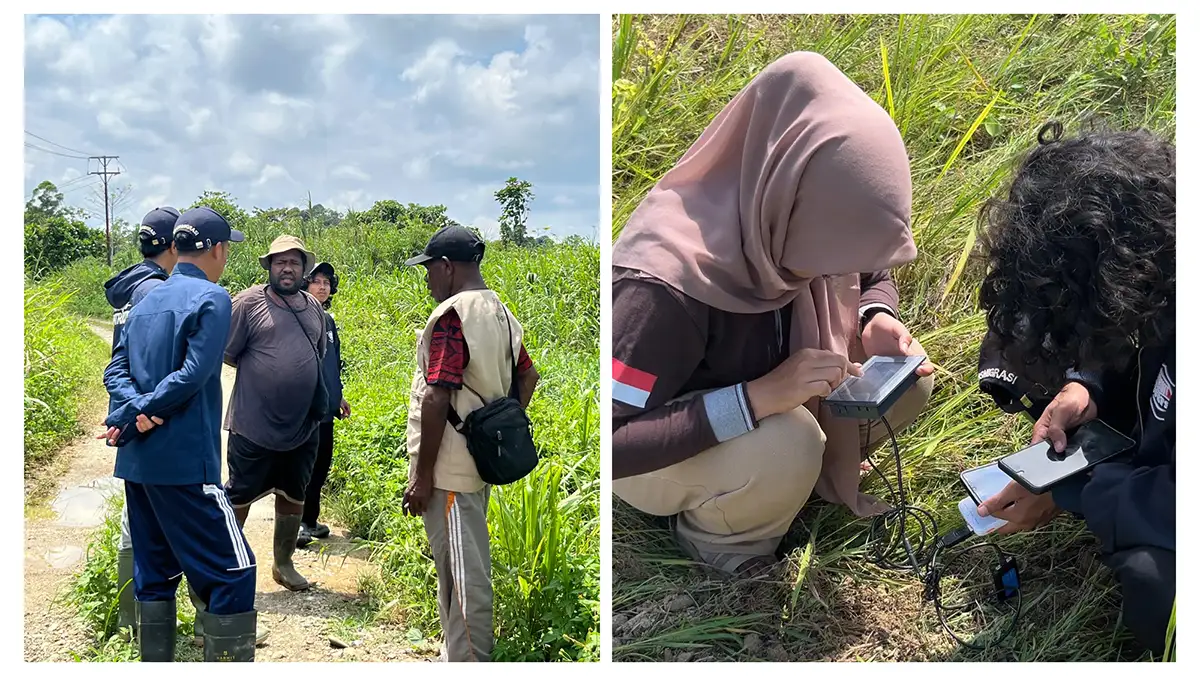
The challenge is further complicated by the soil’s relatively high acidity, with an average pH of around 5, which requires special treatment to optimize nutrient absorption by crops. To address these issues and test the effectiveness of the irrigation system, Team 17 of the UNDIP Patriot Expedition, in collaboration with Team 5 of the Patriot Expedition, established a 50-by-45-meter demonstration plot in the SP2 area. The demonstration plot was developed on land owned by Sibur and managed under a profit-sharing arrangement with a local Ondoafi, a traditional leader or customary authority.
“Through this demonstration plot, we are working alongside farmers at the easternmost edge of Indonesia to implement Good Agricultural Practices (GAP) using a simple and adaptive approach. Soil pH and macronutrient levels are measured using tools that the community can easily apply, while cultivation technologies are adapted to the microclimate and availability of local materials. The demonstration plot is also designed to strengthen resilience to climate change through more efficient water use and more sustainable cultivation practices,” said Septrial Arafat. This synergy also strengthens social harmony between transmigrant communities and Indigenous Papuans, as the land had previously been used solely for monoculture rice cultivation, which had reduced soil fertility.
Within the demonstration plot, Team 17 of the UNDIP Patriot Expedition and Team 5 applied various treatments to neutralize the acidic soil. Mentik Wangi rice was planted using a mixture of rice-husk ash and dolomite lime to raise the soil pH toward neutral levels and improve soil structure. Meanwhile, sweet corn and red curly chili were treated with organic compost fertilizer combined with water-saving irrigation techniques. Eggplant, long beans, and water spinach received a combination of compost and NPK fertilizer.
Sweet corn was selected for testing due to its resilience under dryland conditions, while other horticultural crops were tested to assess their adaptability to limited rainfall. Through a practical ‘learning-by-doing’ approach, beneficiary farmers receive intensive guidance to develop the technical independence needed to sustainably manage the irrigation system after the expedition team’s assignment ends.
Through a series of innovative programs and community empowerment initiatives in this border area, the initiative makes a tangible contribution to SDG 2 (Zero Hunger) by promoting food security, SDG 6 (Clean Water and Sanitation) through sustainable irrigation management, and SDG 15 (Life on Land) through the restoration of soil fertility and environmentally friendly agricultural practices. (Public Communication/UNDIP/Patriot Expedition Team)