

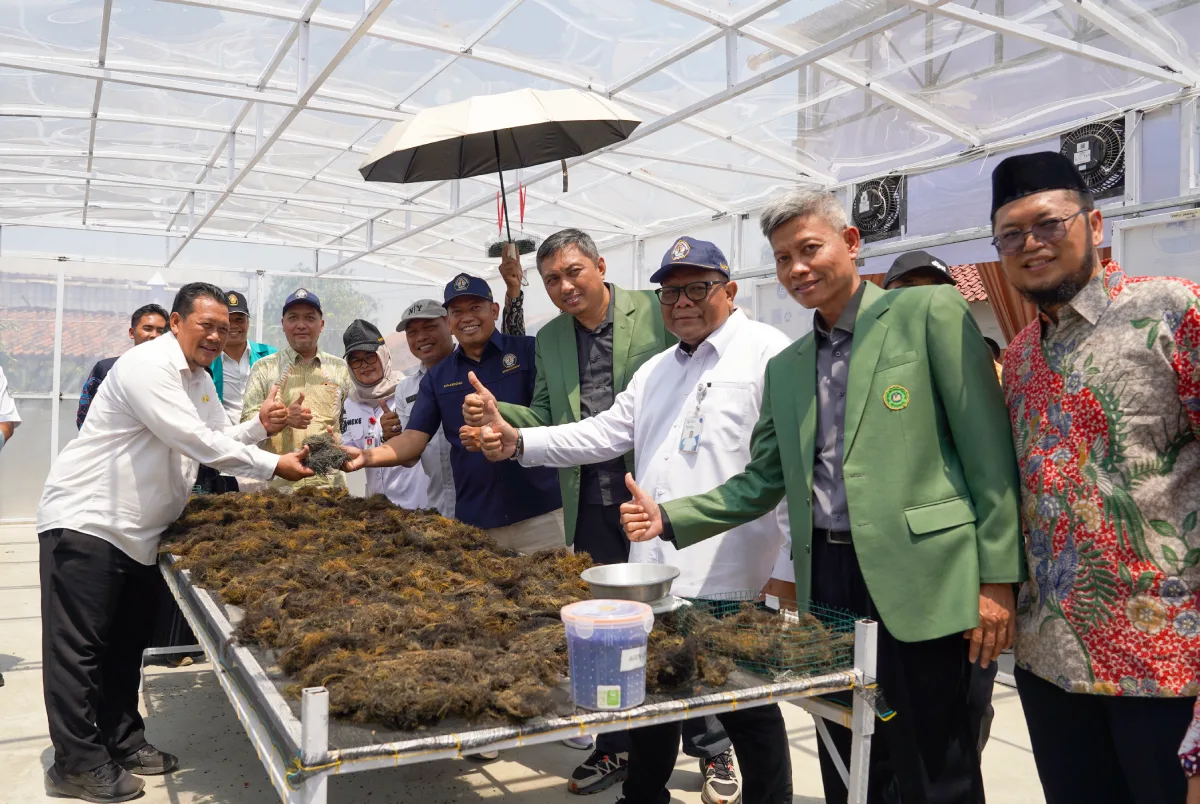
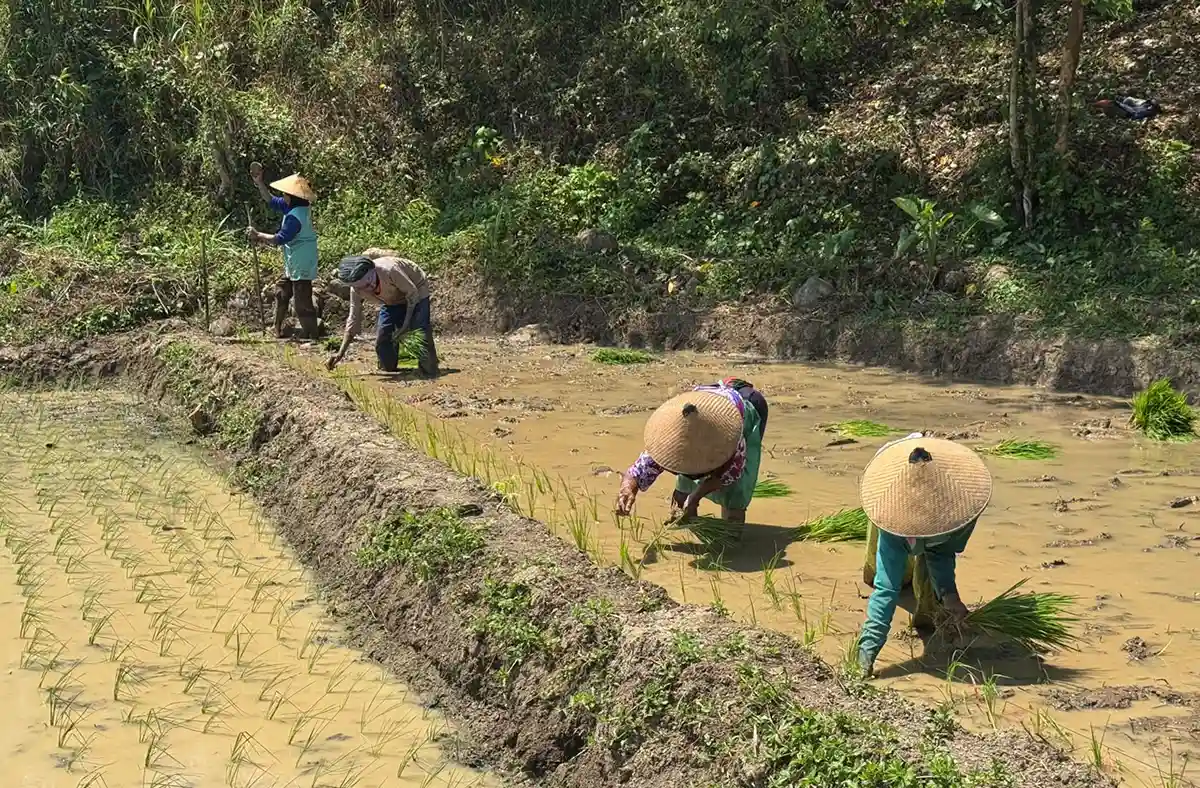
UNDIP, Semarang (25/8) – Universitas Diponegoro (UNDIP) is developing a modern rice field model based on appropriate technology and environmentally friendly practices at the UNDIP Special Purpose Forest Area (KHDTK) in Penggaron, Semarang Regency. The innovation is being developed on rice fields that had previously been left uncultivated for approximately five to six years.
The development currently covers around two hectares of land that has been cultivated and is now being planted with rice. The program is expected to serve as a field laboratory for testing sustainable agricultural technologies while increasing the area’s productivity.
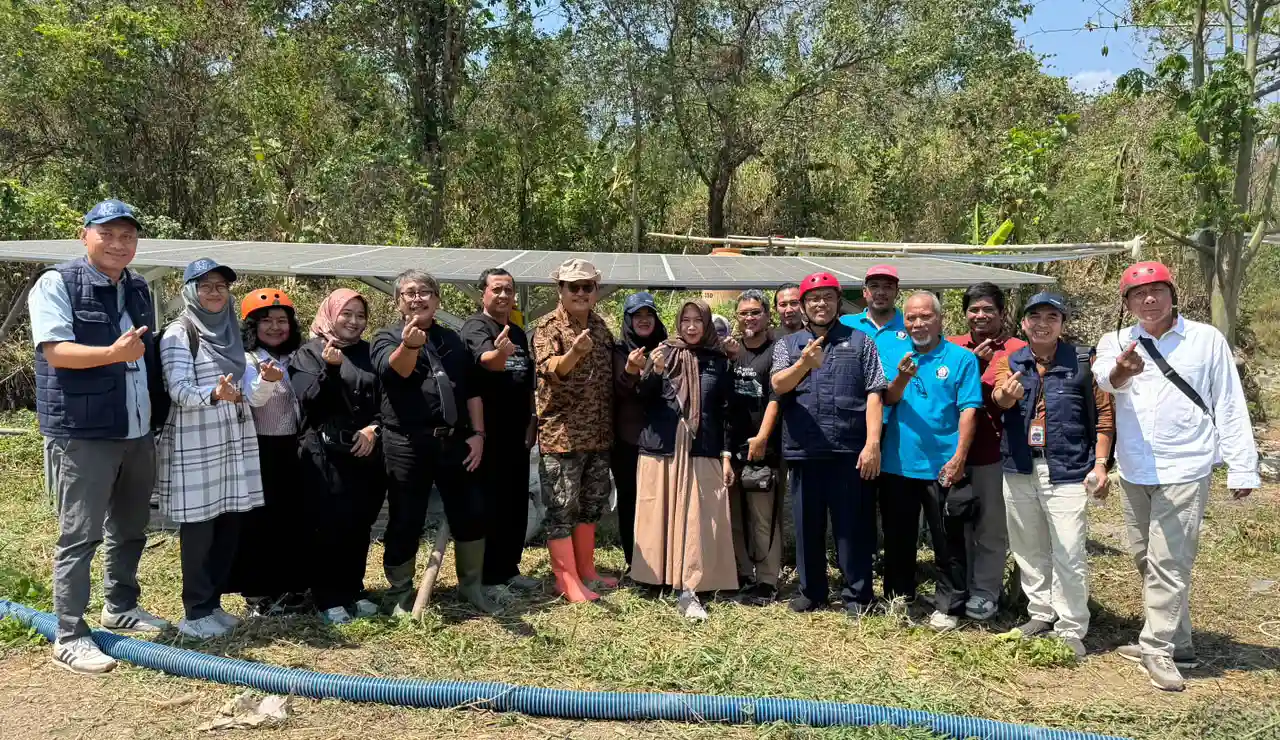
Head of the Special Purpose Forest Area (Kawasan Hutan Dengan Tujuan Khusus / KHDTK) Office, Prof. Dr. Ir. Sri Puryono KS, M.P., explained that the modern rice field concept prioritizes appropriate technology, environmentally friendly practices, and reduced dependence on fossil fuels. The irrigation system utilizes six solar panels with a capacity of approximately 60 cubic meters per hour, operating from 9:00 a.m. to 4:00 p.m. Western Indonesia Time (WIB).
“To support water availability, we have also installed a hydraulic pump that can operate 24 hours a day,” he explained.
The water source for the rice fields comes from a river that, based on test results, is not contaminated with heavy metals. Meanwhile, soil acidity has been measured at a pH range of 7 to 8, which is considered suitable for rice cultivation.
At the initial stage, the rice varieties planted are Inpari (Inbred Irrigated Rice) and Inpago, a superior upland rice variety suitable for cultivation on dry land. In the next stage, UNDIP will develop a superior variety resulting from a cross between Rojolele and a Japanese rice variety. Development will also continue with trials of nutritious, high-fiber red rice suitable for people with diabetes.
“We hope that these trials will be successful and achieve optimal yields, ultimately becoming a model for productive, efficient, and environmentally friendly agricultural development,” said Prof. Puryono.
Developed as an Agricultural Laboratory
On the same occasion, UNDIP Vice Rector II for Planning, Finance, Assets, Business, and General Affairs, Dr. Warsito Kawedar, S.E., M.Si., Akt., emphasized that the development of the modern rice fields at KHDTK Penggaron is not solely aimed at producing agricultural products. The area is expected to develop into a center for learning and research, particularly as an agricultural laboratory.
According to him, the productive agricultural land within the KHDTK area can also be integrated with its natural tourism potential. The concept of forest-based edu-ecotourism is one of the directions for the area’s development.
“We hope that the UNDIP KHDTK area in Penggaron can develop into a forest-based edu-ecotourism destination,” he said.
As part of this effort, UNDIP will collaborate with local jeep communities around the area to support forest-based edu-ecotourism. The integration of agriculture, education, research, and tourism is expected to make KHDTK Penggaron an area with both economic and educational value.
More importantly, UNDIP considers the local community an essential part of the area’s development. “UNDIP’s presence is alongside the community. The community is family,” he added.
Therefore, the development of a productive area at KHDTK Penggaron is not solely focused on academic and environmental aspects but is also intended to provide tangible benefits to surrounding communities.
Through the development of modern rice fields, the use of solar energy, irrigation technology, and the strengthening of educational and ecotourism functions, UNDIP hopes that KHDTK Penggaron can become a model for integrated area management that brings together sustainable agriculture, research, education, environmental conservation, and improved community welfare. (Public Communication/UNDIP/Ut)