UNDIP, Semarang (20/8) – The grief experienced by communities in Flores, East Nusa Tenggara (NTT), following the magnitude 7.7 tectonic earthquake that struck on Saturday morning, August 15, 2026, has prompted a strong sense of empathy among the academic community of Universitas Diponegoro (UNDIP). In response to the emergency in areas potentially affected by a tsunami, UNDIP has deployed the Diponegoro Disaster Assistance Response Team (D-DART), under the UNDIP Institute for Research and Community Service (LPPM) Disaster Management Center, to focus on field-based post-disaster response efforts.
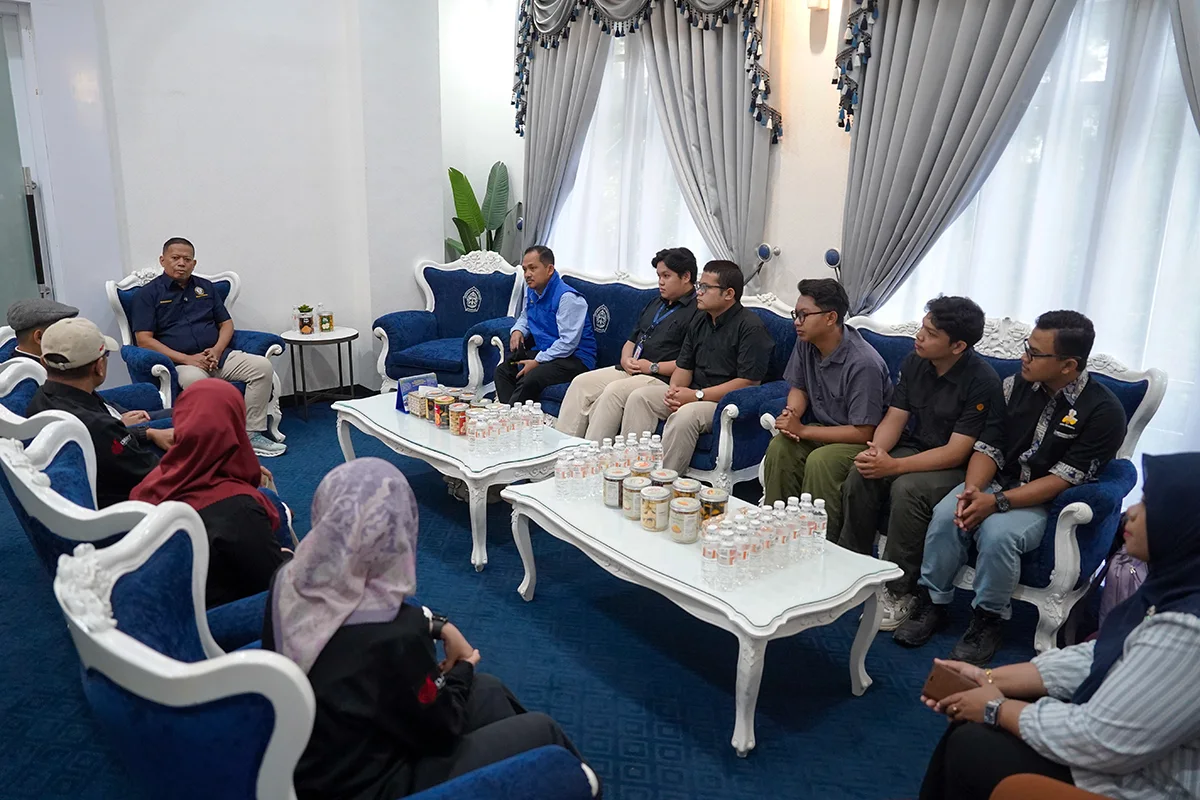
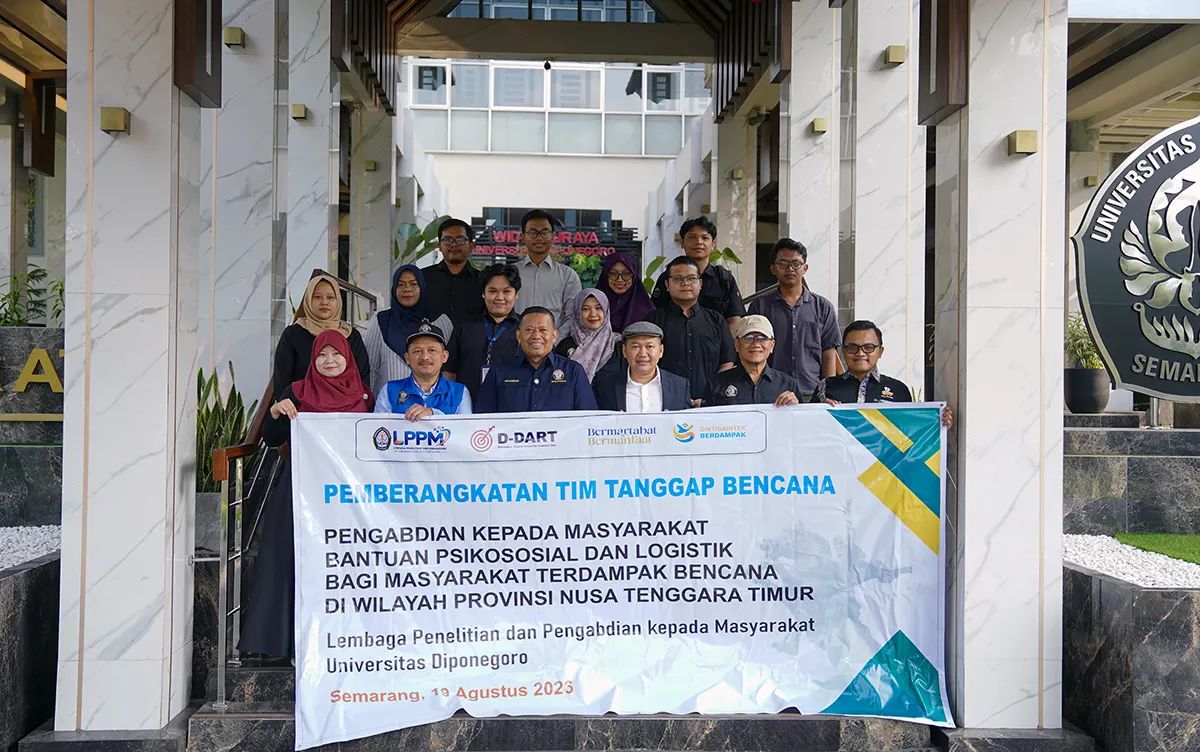
The team was officially deployed from the Hall of the Widya Puraya Building at the UNDIP Tembalang Campus on Wednesday, August 19, 2026, by UNDIP Rector Prof. Dr. Suharnomo, S.E., M.Si. Also present were UNDIP Vice Rector IV for Research, Innovation, Cooperation, and Public Communication Wijayanto, S.IP., M.Si., Ph.D.; Head of UNDIP LPPM Prof. Dr. Ing. Ir. Suherman, S.T., M.T.; Vice Head of Community Service at UNDIP LPPM Prof. dr. Achmad Zulfa Juniarto, M.Si.Med., Sp.And.(K)., M.M.R., Ph.D.; D-DART Chair Ns. Nur Hafizhah Widyaningtyas, S.Kep., M.Kep.; several volunteers; and the Chair of the UNDIP Student Executive Board (BEM). Before departure, the volunteers attended a briefing to strengthen coordination, task assignments, field readiness, and communication protocols with disaster response networks in the destination areas.
UNDIP Rector Prof. Suharnomo said the deployment of D-DART reflects the academic community’s concern for the people of NTT who are facing difficult circumstances. According to him, assistance extends beyond the provision of medical personnel and includes other expertise based on the needs of affected communities. “Today, we are deploying the UNDIP Disaster Emergency Team to assist our brothers and sisters in East Nusa Tenggara. Doctors, healthcare workers, psychologists, and other personnel will work together. Additional volunteers will also follow according to the needs on the ground,” he said.
He expressed hope that the volunteers’ presence would provide tangible support while strengthening communities as they navigate the recovery process. “Hopefully, this sympathy and expression of love from Universitas Diponegoro can be felt by our brothers and sisters in East Nusa Tenggara. We are here with the capabilities we have, but with our full commitment and care,” Prof. Suharnomo said as he dispatched the team.
For this deployment, five to eight personnel from several faculties have been prepared, including the Faculty of Medicine, the Faculty of Psychology, the Faculty of Economics and Business, and the Faculty of Fisheries and Marine Sciences. Their key missions include conducting rapid assessments of community needs; strengthening networks with the NTT Regional Disaster Management Agency (BPBD), the Indonesian Association of Emergency and Disaster Nurses (HIPGABI) NTT, and UNDIP alumni; and providing psychosocial assistance, basic logistical support, and medicines.
The team’s itinerary has been designed according to the needs of several affected locations. Kupang will serve as the initial location for coordination with the main emergency post and local authorities. The team will then travel to Nagekeo to support medicine-related needs, followed by Maumere and Manggarai, which will be the main destinations for psychosocial services and basic logistics distribution. Direct assessment of needs is an important component of the operation to ensure that the assistance provided is not merely available but genuinely aligned with the conditions of communities in each area.
UNDIP Vice Rector IV Wijayanto explained that the humanitarian response began as a collective movement involving various elements of the university, including students who helped mobilize support. The geographical characteristics of the Flores Islands were given particular consideration in developing the volunteer deployment strategy.
“We moved quickly to respond to this disaster by collecting donations and deploying experts, ranging from doctors and nurses to psychosocial support teams. Given the island’s challenging geography, we made thorough preparations to ensure that D-DART’s presence in NTT would deliver tangible benefits. This is a concrete expression of UNDIP’s concern and our expression of solidarity with our brothers and sisters in East Nusa Tenggara, and indeed with Indonesia as a whole,” Wijayanto said.
Meanwhile, Prof. Achmad Zulfa Juniarto explained that volunteers would be deployed in stages, taking into account field needs and the availability of transportation to affected areas. UNDIP has prepared approximately 15–20 volunteers who can be deployed gradually. During the initial phase, personnel with surveillance and emergency response capabilities, particularly medical personnel, will play an important role in assessing conditions and determining the appropriate subsequent interventions. The team has also prepared supporting supplies such as tents, food, medicines, and basic equipment to support both volunteers and affected communities.
According to Prof. Zulfa, post-earthquake response requires preparedness over an extended period. The possibility of aftershocks, the wide geographic area affected, and limitations in flight and ferry schedules must be considered before deploying additional personnel. Therefore, D-DART does not operate alone. Every movement is coordinated with local governments, regional disaster management agencies, professional organizations, alumni, and established higher education networks. This collaborative approach is necessary to prevent overlapping assistance and ensure that volunteers are deployed to areas with the greatest needs.
This responsive initiative demonstrates UNDIP’s commitment to putting social responsibility and community service into practice. The presence of the D-DART team in Flores is expected to ease the burden on disaster survivors while helping accelerate the post-disaster recovery process in the region. (Public Communication/UNDIP/DHW)