







Coconuts are commonly associated with coconut milk, cooking oil, coconut sugar, and a wide range of food products. However, researchers at Universitas Diponegoro (UNDIP) are working to take this widely available Indonesian commodity to the next level. Researchers from the Department of Chemistry, Faculty of Science and Mathematics, UNDIP, are developing ‘phospholipids’ from coconut, a high-value material with potential applications in the cosmetics and pharmaceutical industries, while also offering an alternative to raw materials that are still imported.
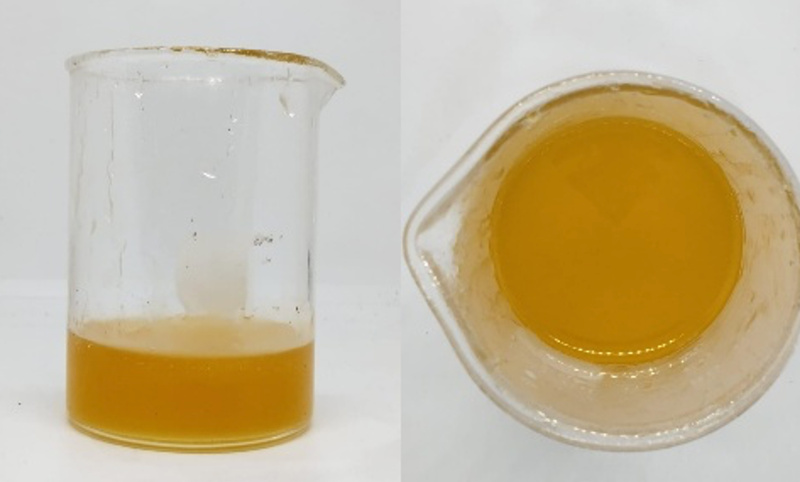
The research, led by Prof. Dr. Dwi Hudiyanti, M.Sc., goes beyond asking whether phospholipids can be obtained from coconuts. The team has taken the research further, covering extraction and purification, characterization of chemical and physical properties, formulation development, and production scale-up. The objective is clear: to move laboratory findings toward products that can be utilized by industry.
Phospholipids may sound unfamiliar to the general public, but these compounds have highly interesting characteristics. Phospholipids consist of two parts with different properties: one part is “attracted” to water, or hydrophilic, while the other tends to “avoid” water, or hydrophobic. This dual nature allows phospholipid molecules to self-organize into specific structures when placed in a liquid environment.
One of the structures they can form is a ‘liposome’, an extremely small vesicle capable of carrying or encapsulating active ingredients. Liposomes can be likened to microscopic capsules that protect a compound and help deliver it to where it is needed.
This characteristic makes phospholipids important in many modern formulations. In cosmetics, for example, phospholipids can function as emulsifiers, stabilizers, and moisturizers, as well as components in the development of active-ingredient delivery systems.
“In cosmetics, coconut-derived phospholipids can be used as a component in liposome formulations to improve the stability, solubility, and delivery of active ingredients in skin and hair care products,” Prof. Dwi explained.
This means that the value of phospholipids lies not merely in their role as additives. They can form part of formulation technology that determines how stable a product is and how effectively its active ingredients can work.
Downstream Development for Industry
A major challenge in natural-product research often emerges after researchers successfully develop a product at the laboratory scale. A discovery that performs well in a few grams may not be easy to produce in kilogram quantities or at larger scales while maintaining consistent quality.
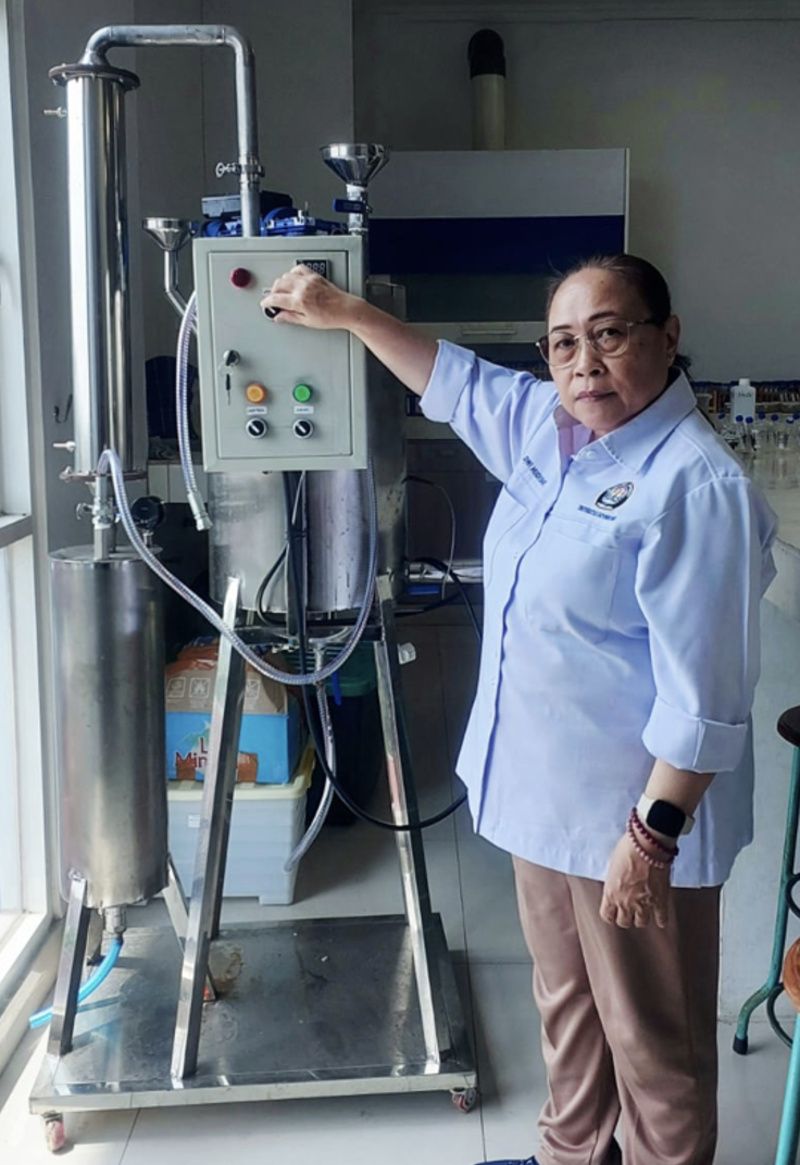
For this reason, one of the key focuses of the UNDIP research team is scale-up, or increasing the production scale of coconut-derived phospholipids.
According to Prof. Dwi, the research results indicate that coconut phospholipids can be produced on a much larger scale while maintaining product quality. This step is important because industry requires raw materials that not only perform well but are also available in sufficient quantities, have consistent quality, and can be produced sustainably.
The downstream development effort has been strengthened through collaboration with industry. The UNDIP research team is working with cosmetics company PT St. Morita Farma to develop formulations and cosmetic products based on coconut-derived phospholipids.
Such collaboration serves as an important bridge between two worlds that have often operated separately: university laboratories and industrial production needs. Researchers can develop the scientific and technological foundations, while industry partners can help test the material’s feasibility in real-world product formulations.
Opportunities to Reduce Import Dependence
The development of coconut-derived phospholipids also carries broader strategic significance. If production technology can be developed economically and consistently, this local resource could become an alternative source of phospholipids that are currently obtained through imports.
In this context, coconut is no longer viewed merely as a primary commodity. Chemistry enables the processing of certain components into specialty materials with significantly higher economic value.
This transformation lies at the heart of downstream development: natural resources are not simply sold as raw materials but are processed using knowledge and technology to produce products with specific functions and high added value.
For Indonesia, this approach is important because industrial self-reliance is determined not only by the ability to manufacture final products. The availability of domestic raw materials also plays a crucial role in strengthening an industry’s supply-chain resilience.
If coconut-based phospholipids can be produced at the quality and scale required by industry, their potential will not be limited to the domestic market. In the long term, the material could also be developed into a competitive product based on Indonesia’s tropical resources.
Beyond Cosmetics
Interestingly, the potential applications of coconut-derived phospholipids extend far beyond skin-care products.
In pharmaceuticals and healthcare, phospholipids can be used to form liposomes as carriers for drugs or bioactive compounds. Such systems have the potential to improve the solubility, stability, bioavailability, and delivery of active ingredients.
In the food and nutraceutical industries, phospholipids can serve as natural emulsifiers and encapsulation materials for vitamins, antioxidants, curcumin, and other functional food components.
Their potential even extends to fisheries. Liposomes based on coconut-derived phospholipids could be developed as systems for protecting and delivering vitamins, nutrients, or other active ingredients in aquaculture feed. In agriculture, similar materials could potentially be used as carriers for active compounds, biofertilizers, or plant-protection agents.
With these characteristics, coconut-derived phospholipids are better viewed not simply as a single ingredient for a single product, but as a natural material platform that can be developed for a wide range of applications.
Research on coconut-derived phospholipids demonstrates how science can give new meaning to resources that have long been part of Indonesian communities. Innovation does not always have to begin with unfamiliar materials or entirely new technologies. Sometimes, innovation emerges when researchers look at a familiar commodity and ask a different question: what other high-value components can still be derived from it?
Through a series of research activities, production scale-up, and industry collaboration, UNDIP is working to move coconut-derived phospholipids beyond the laboratory and toward broader applications.
If this downstream development continues, Indonesian coconuts will become known for more than just coconut milk and cooking oil. They could find their way into cosmetics, pharmaceuticals, food products, and various high-tech industries as valuable, locally sourced raw materials.
At this point, research takes on a greater meaning: science does not merely produce publications but transforms local resources into technology, creates economic opportunities, and strengthens national industrial self-reliance. This is a tangible expression of the spirit of ‘Noble and Valuable UNDIP.’ (Public Communication/UNDIP/Dwi Hudiyanti ed. Nurul)