
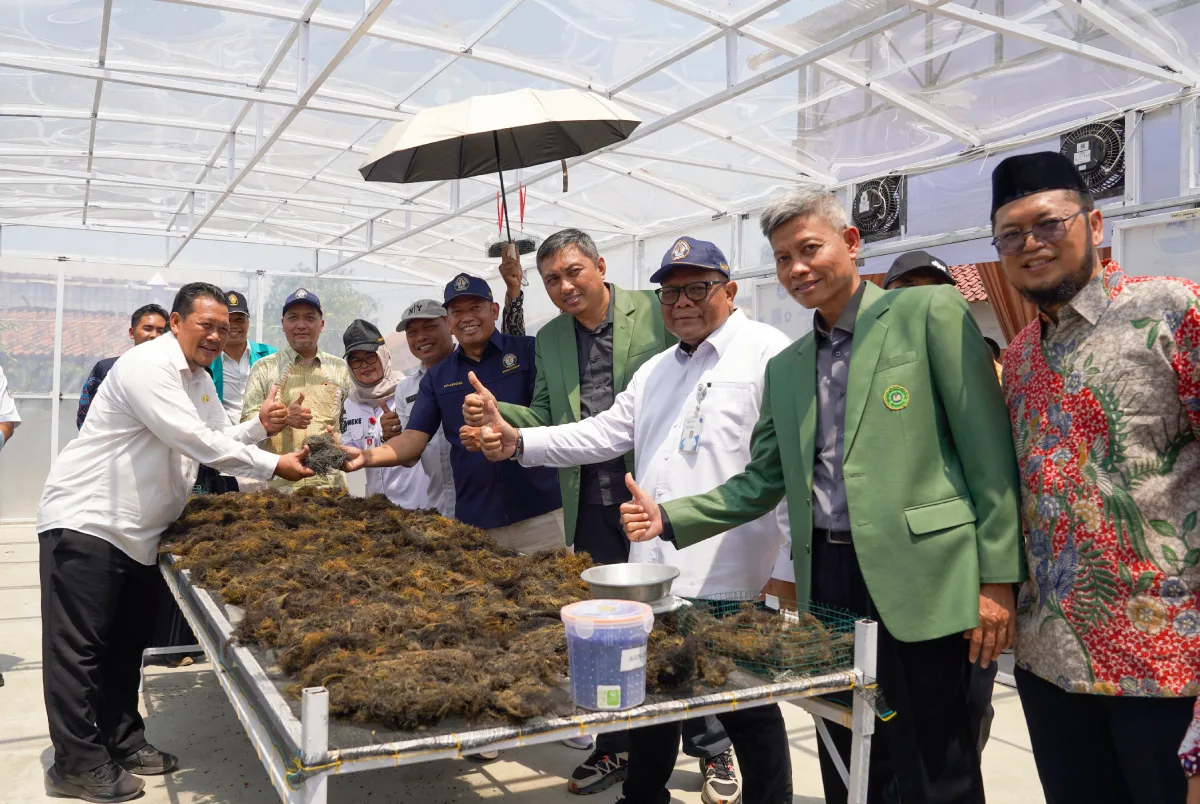
UNDIP, Brebes (28/8) – A team of lecturers and students from Universitas Diponegoro (UNDIP), together with Universitas Wahid Hasyim Semarang (Unwahas), has introduced an indoor seaweed drying system to local business operators in Randusanga Kulon Village, Brebes District, Brebes Regency, Central Java. The technology uses a hybrid solar–biomass heat source to accelerate drying and improve the quality of dried seaweed produced by local micro, small, and medium enterprises (MSMEs).
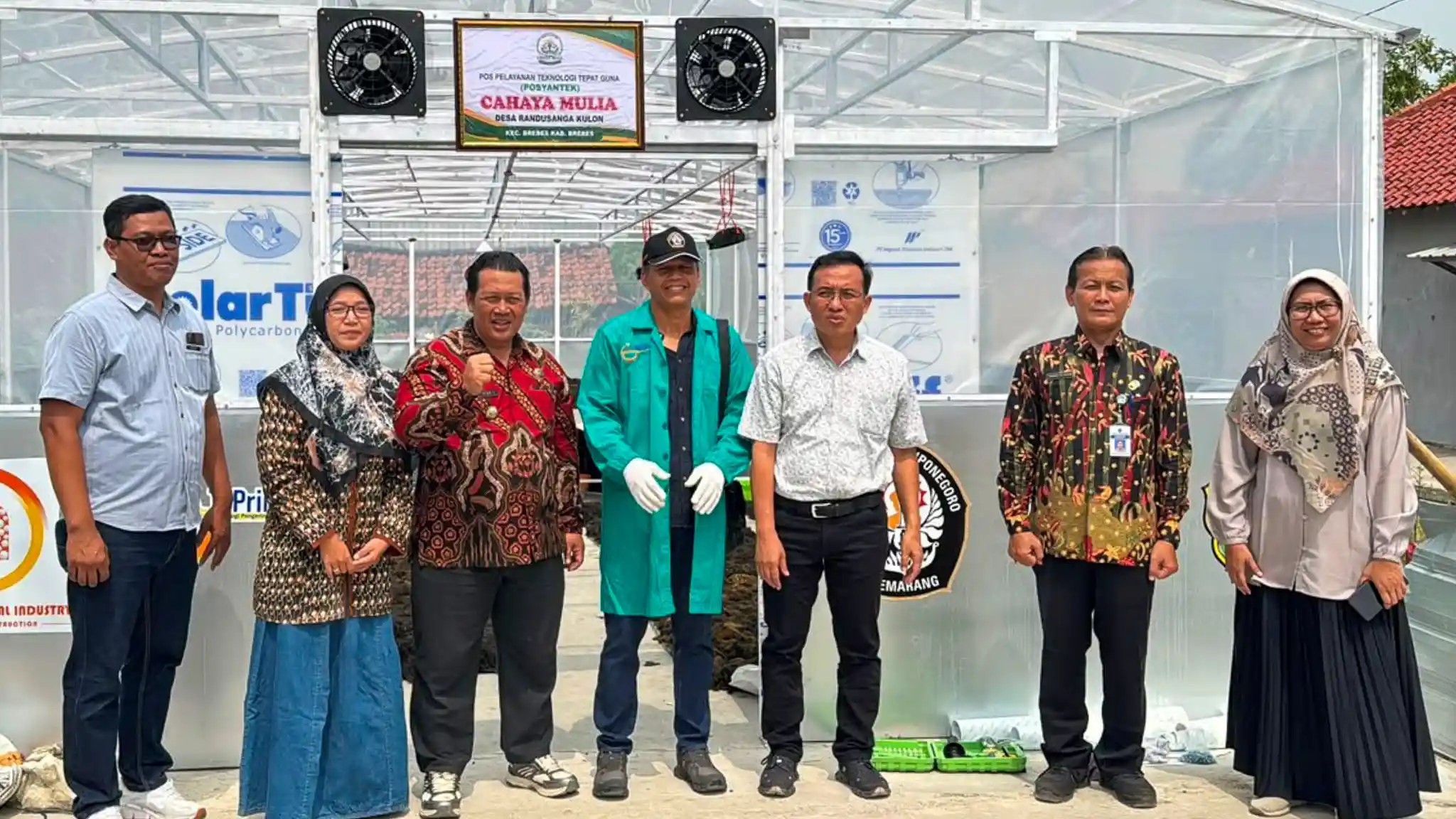
The technology was implemented through the SINERGI Priority and Strategic Research Downstreaming Program, specifically under the Integrated Technology Transfer-Based Research Downstreaming scheme. The program, initiated by the Directorate General of Research and Development of the Ministry of Higher Education, Science, and Technology (Kemendiktisaintek), focuses on strengthening impactful collaboration between higher education institutions and industry partners.
In its implementation, UNDIP and Unwahas collaborated with PT Mutiara Global Industry through a mechanism involving co-funding, co-contribution, and co-creation. The collaboration aims to address challenges faced by local business operators while promoting the downstream development of high-quality dried seaweed products with greater market value.
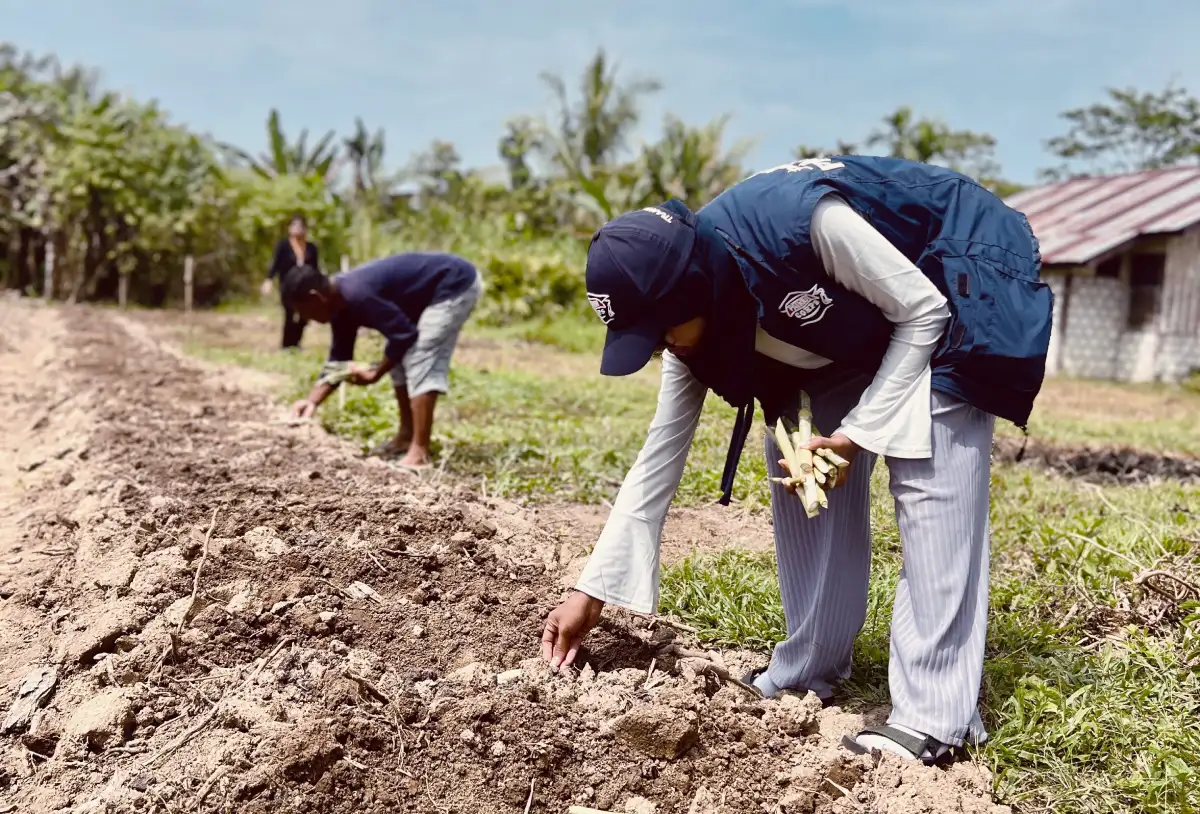
Randusanga Kulon Village was selected for its potential in seaweed cultivation, which can be further developed through integrated technology transfer. Previously, some residents dried harvested seaweed along the edges of pond roads and village roads. This open-air drying method made the production process highly dependent on weather conditions and exposed the seaweed to dust, dirt, and other environmental contaminants.
Cleaner and More Controlled Drying
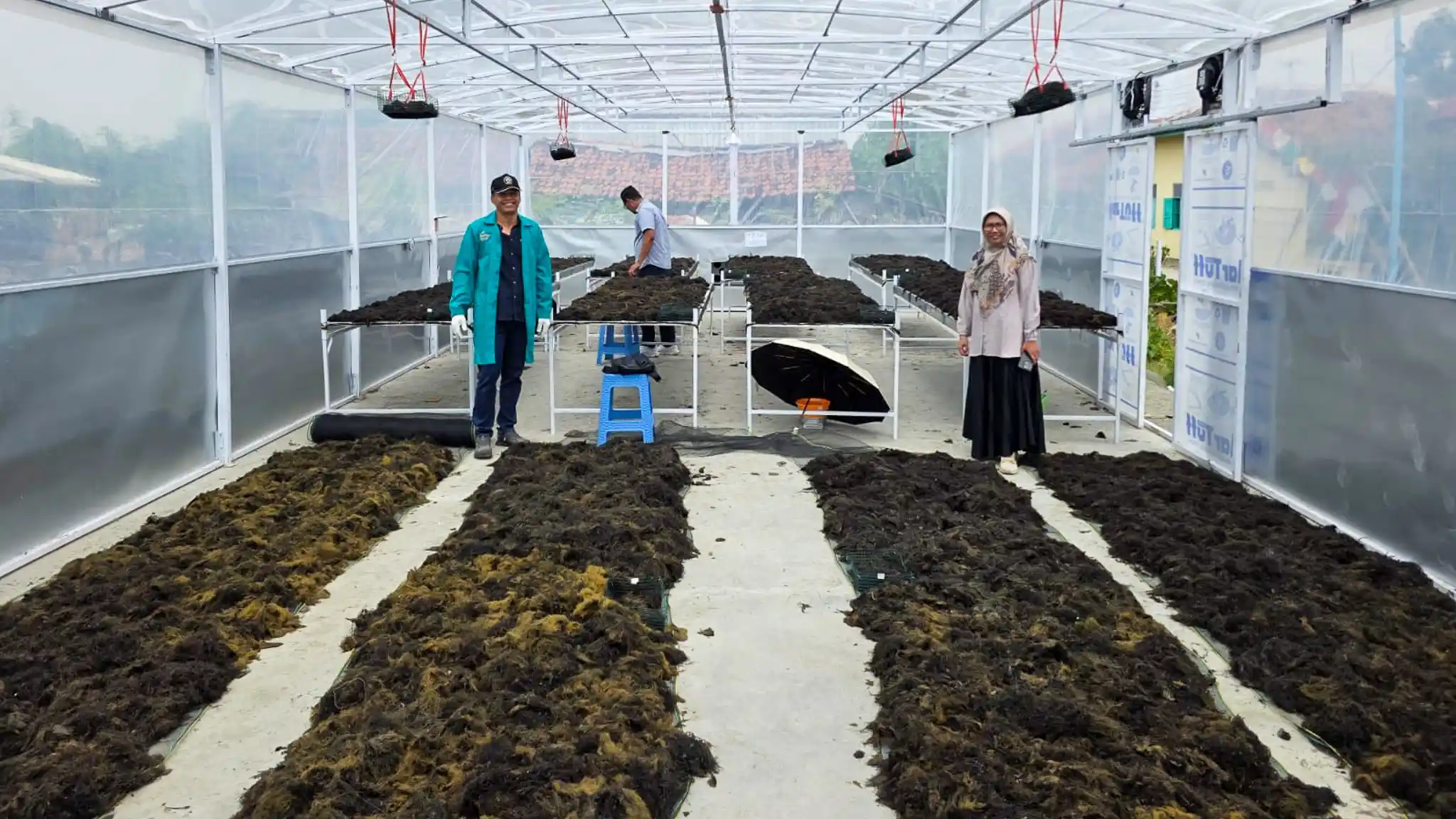
Through the SINERGI Program, the drying process has been moved to an enclosed facility designed to provide cleaner, more controlled drying conditions. The facility uses solar energy as its primary heat source and biomass as a supplementary one. Combining the two energy sources allows the drying process to continue when sunlight intensity decreases or weather conditions are unfavorable.
Blowers and exhaust fans support air circulation in the drying chamber, helping distribute hot air evenly across the materials. The seaweed is placed on drying racks to prevent direct contact with the ground or the facility floor. With this design, the drying process is expected to be more hygienic, efficient, and consistent compared with open-air drying.
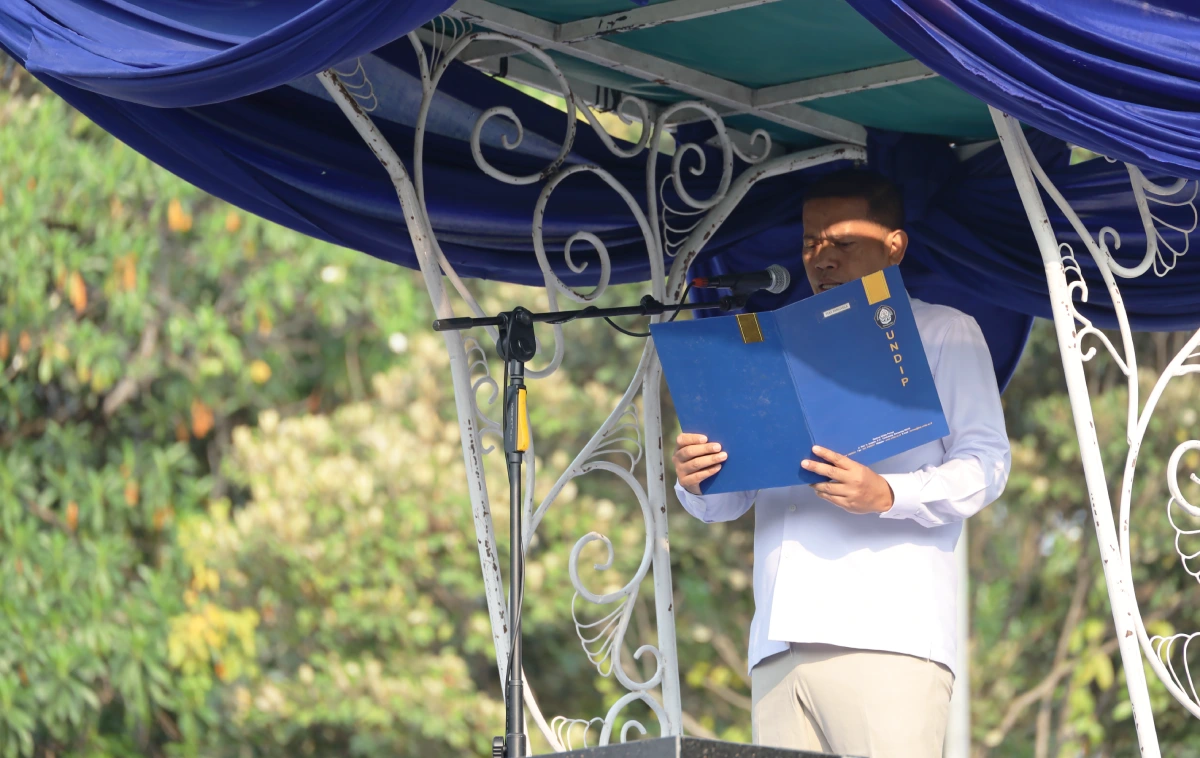
Prof. Dr. Moh. Djaeni, S.T., M.T., Head of the SINERGI Team from UNDIP, explained that the implementation of a closed drying system powered by hybrid energy is part of a technology downstreaming collaboration tailored to community needs. The technology is designed not only to accelerate the drying process, reducing drying time from 18 hours to 8 hours, but also to help business operators maintain cleanliness and improve the consistency of dried seaweed quality.
The use of an enclosed facility protects the seaweed from rain, dust, animals, and other sources of contamination during the drying process. Biomass-based supplemental heating also reduces the production process’s dependence on sunlight. As a result, business operators have greater opportunities to carry out the drying process more sustainably and produce higher-quality products with greater consistency.
Collaboration among Lecturers, Students, Industry, and Communities
The SINERGI team is led by Prof. Dr. Moh. Djaeni, S.T., M.T., with members Prof. Aji Prasetyaningrum, S.T., M.Si.; Prof. Dr. Andri Cahyo Kumoro, S.T., M.T., from Chemical Engineering; and Dr. Agus Suherman, S.Pi., M.Si., from the Faculty of Fisheries and Marine Sciences (FPIK) UNDIP. The Unwahas team consists of Dr. Laeli Kurniasari, S.T., M.T., and Agung Nugroho, S.T., M.T., with expertise in Chemical Engineering and Mechanical Engineering. The program also involves undergraduate, master’s, and doctoral students in Chemical Engineering.
Student involvement is an important part of problem-based learning in real community settings. Students have the opportunity to assist with technology implementation, observe the drying process, and interact directly with business operators. At the same time, residents receive guidance on operating and using the technology to meet their production needs.
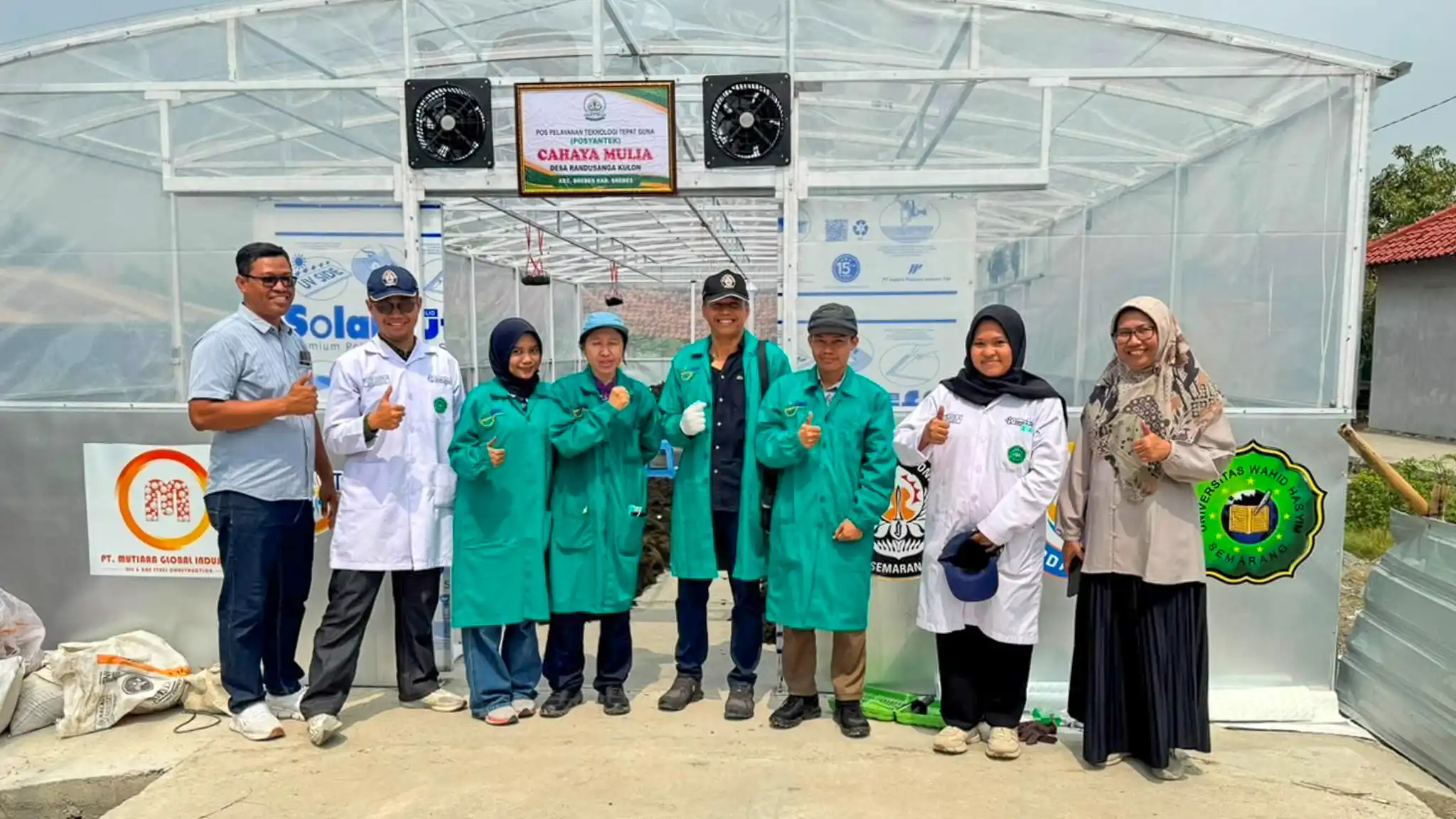
The collaboration among universities, industry partners, and communities through the SINERGI Program demonstrates how research outcomes can be applied to address business-level challenges. The technology developed does not remain merely as a prototype within the university environment but is directed toward becoming a solution that communities can use and further develop sustainably.
The implementation of the solar–biomass hybrid drying system in Randusanga Kulon Village is expected to serve as an initial step toward strengthening post-harvest seaweed processing. Cleaner products, more uniform drying, and more consistent quality will create opportunities to improve the competitiveness and market value of dried seaweed. Now, seaweed cultivated by residents no longer needs to be dried by the roadside. Through synergy among universities, industry, government, students, and communities, technology is brought closer to business operators and delivers tangible benefits for the economic development of coastal communities. (Public Communication/UNDIP)