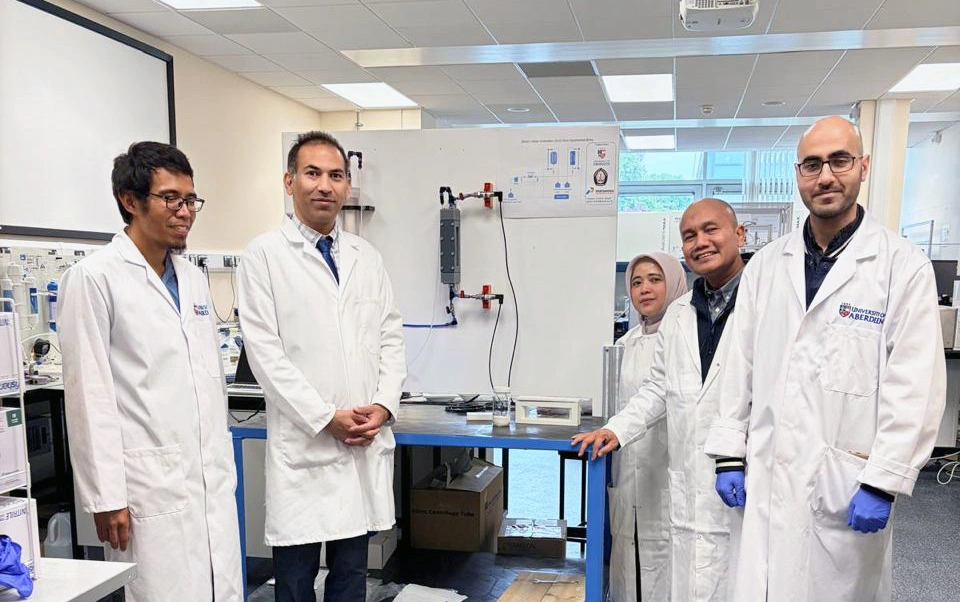
UNDIP, Scotland, UK (27/8) – Researchers from Universitas Diponegoro (UNDIP) and the University of Aberdeen (UoA) are developing membrane technology and adsorbent materials for lithium recovery from subsurface brines. The research is particularly important amid growing global demand for critical minerals for high-tech industries, green energy, and defense technologies.
The research is part of an international collaboration established between UNDIP and the University of Aberdeen in 2024. At UNDIP, the research involves Prof. Dr.rer.nat. Ir. Heru Susanto, S.T., M.M., M.T., and Ir. Titik Istirokhatun, S.T., M.Sc., Ph.D., IPU, while Dr. Amin Sharifi and his colleagues lead the University of Aberdeen team.
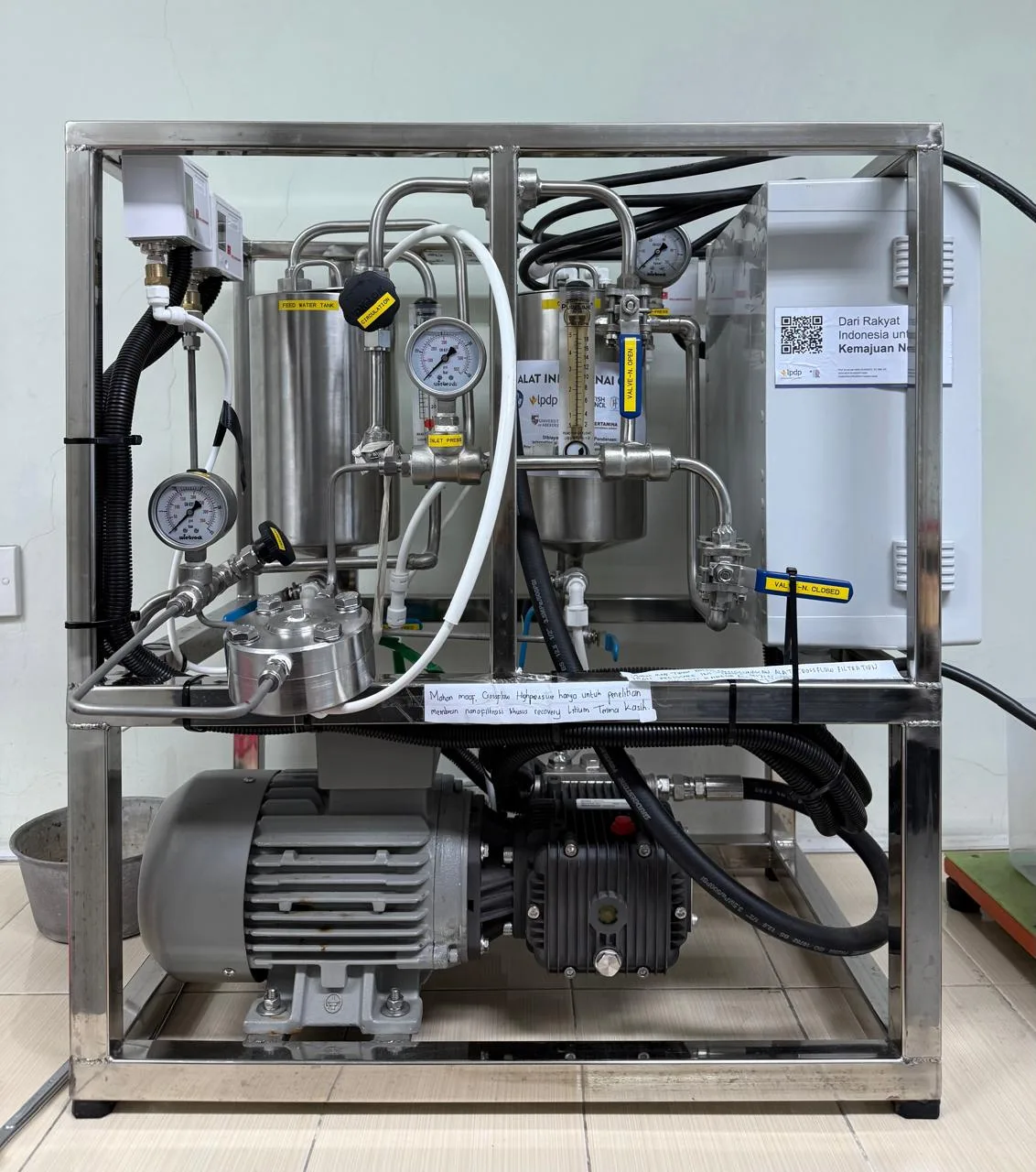
The collaboration is supported by international research funding through the International Science Partnerships Fund (ISPF) under a project titled “Developing Membrane Technology and Adsorbents for Lithium Recovery from Subsurface Brines: Investigating Diffusion and Adsorption Process with Membrane.” Prof. Heru Susanto, who also serves as UNDIP’s principal investigator, said the research focuses on developing membrane technology and adsorbent materials to recover lithium from subsurface brines.
“We are studying how diffusion and adsorption processes occur so that increasingly selective and effective materials can be developed to extract the elements needed,” Prof. Heru explained.
Critical mineral and rare earth metal recovery refers to the process of reclaiming valuable mineral elements through extraction, separation, and purification. These resources can come from both primary sources and secondary sources, such as mining tailings and electronic waste, through an approach known as urban mining.
Critical minerals and rare earth metals are strategic global commodities. Neodymium is classified as a rare earth metal, while lithium and nickel are critical minerals. These materials are essential for a wide range of modern products, from mobile phones and electric vehicle batteries to green energy and defense technologies.
According to Prof. Heru, recovery technology is becoming increasingly important because these resources are non-renewable. “In the future, we cannot focus solely on finding new mineral sources. We must also develop technological self-reliance to recover valuable elements from resources that have not yet been optimally utilized, including secondary sources. This is where recovery, membrane, and adsorbent technologies become highly relevant,” he said.
Why Developing Recovery Technology Matters
There are at least three key reasons why the development of recovery technology is important. First, demand for minerals used in high-tech applications and green energy is increasing. Second, secondary sources such as processing residues from nickel, tin, and bauxite mining, mining tailings, and electronic waste need to be utilized more effectively. Third, there are environmental challenges, as mineral separation processes can generate hazardous waste and, for certain types of sources, may involve radioactive materials if not properly managed.
Titik Istirokhatun, Ph.D., explained that membrane technology offers opportunities to develop more selective separation processes.
“The challenge is to develop materials with the ability to selectively separate lithium from the various other ions present in the source. Therefore, this research examines the characteristics of membranes and adsorbents, as well as the mechanisms of diffusion and adsorption,” she explained.
She added that the research is intended to go beyond the laboratory scale. “The knowledge generated is expected to serve as a foundation for developing more effective and efficient mineral separation and recovery processes that can eventually be applied according to industrial needs,” she said.
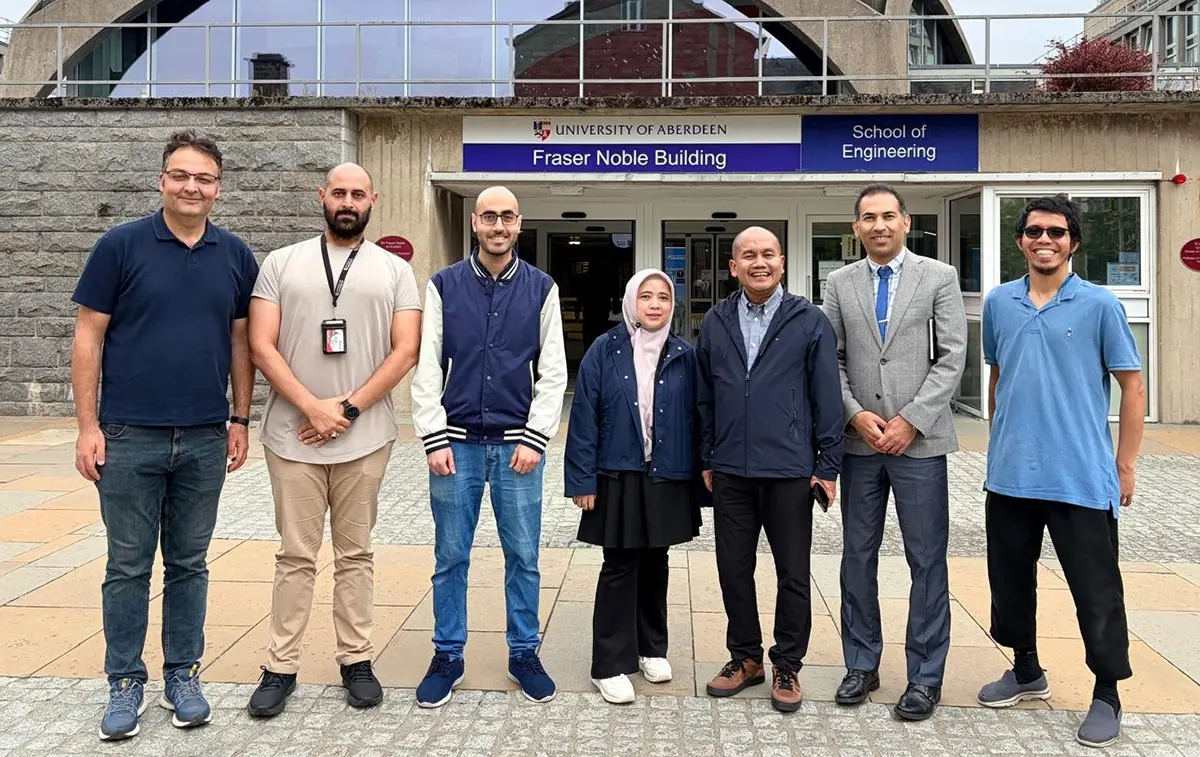
At UNDIP, research is conducted at the Membrane Center of Excellence and the Membrane Research Center (MeRC) Laboratory within the UNDIP Integrated Laboratory Unit. The program has also supported the graduation of a Master’s student in Chemical Engineering, Istiqomah Muryaningsih, S.T., M.T. At the University of Aberdeen, the research is based at the Center of Processes and Materials in the School of Engineering, Fraser Noble Building.
National attention to critical minerals has also intensified. In 2025, the Indonesian Government established the Mineral Industry Agency (Badan Industri Mineral/BIM) to accelerate research and development to increase the value added of strategic minerals and rare earth metals.
“Indonesia has enormous mineral resources, but our future strength cannot rely solely on the ownership of natural resources. We must strengthen research, human resources, and technological capabilities so that these minerals generate the greatest possible added value for the nation and society through technologies that we master rather than technologies that we purchase,” Prof. Heru said.
The ISPF is a global research funding scheme of the UK Government, managed by the Department for Science, Innovation and Technology and delivered through consortia, including the British Council. Under the program, the Directorate of Research, Technology, and Community Service (DPPM) of the Ministry of Higher Education, Science, and Technology and the Indonesia Endowment Fund for Education (LPDP) provide co-funding for Indonesian researchers, in line with the International Collaboration RISPRO scheme.
During a visit from August 10–14, 2026, Prof. Heru Susanto and Titik Istirokhatun, Ph.D., exchanged expertise with Dr. Amin Sharifi and his team while exploring opportunities for collaboration in smart materials for adsorption and membrane technology.
The visit also provided an opportunity to expand academic cooperation. Prof. Heru, who also serves as UNDIP Vice Rector for Academic and Student Affairs, encouraged the development of a double degree program between UNDIP and the University of Aberdeen, offered at both the master’s level through a 1+1 scheme and the undergraduate level through a 2+2 scheme.
“Strong international collaboration should ideally not stop at a single research project, but expand to researcher and student exchanges, joint research, and double degree programs so that its benefits can reach a wider community,” Prof. Heru concluded.
Through the development of membrane and adsorbent technologies for lithium recovery, UNDIP is advancing innovations that not only strengthen scientific capabilities but also have the potential to support technological self-reliance and increase the added value of Indonesia’s strategic minerals. The collaboration with the University of Aberdeen is also part of UNDIP’s commitment to advancing world-class research that delivers tangible benefits for society and national development. (Public Communication/UNDIP/Researcher ed. Nurul)