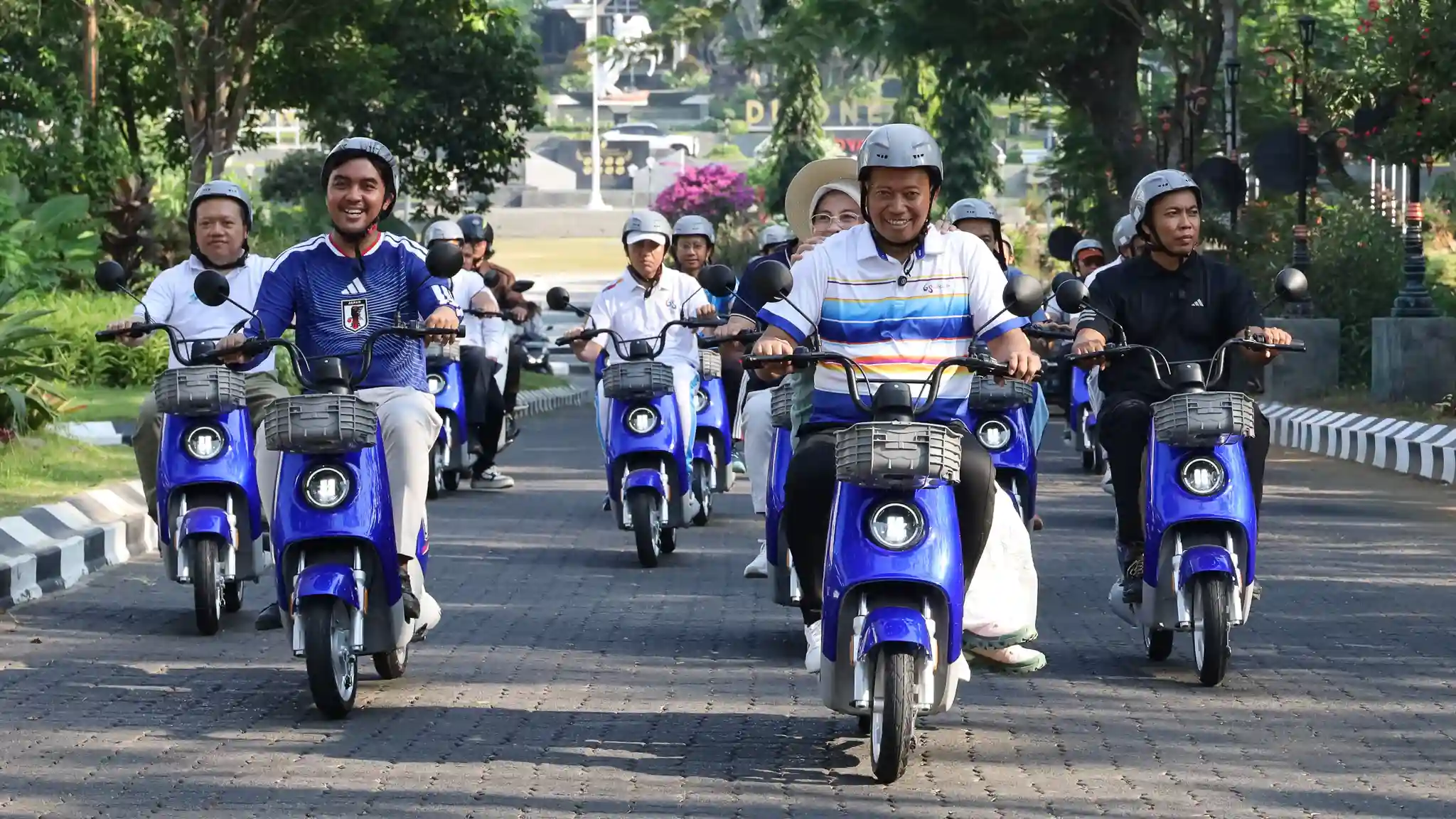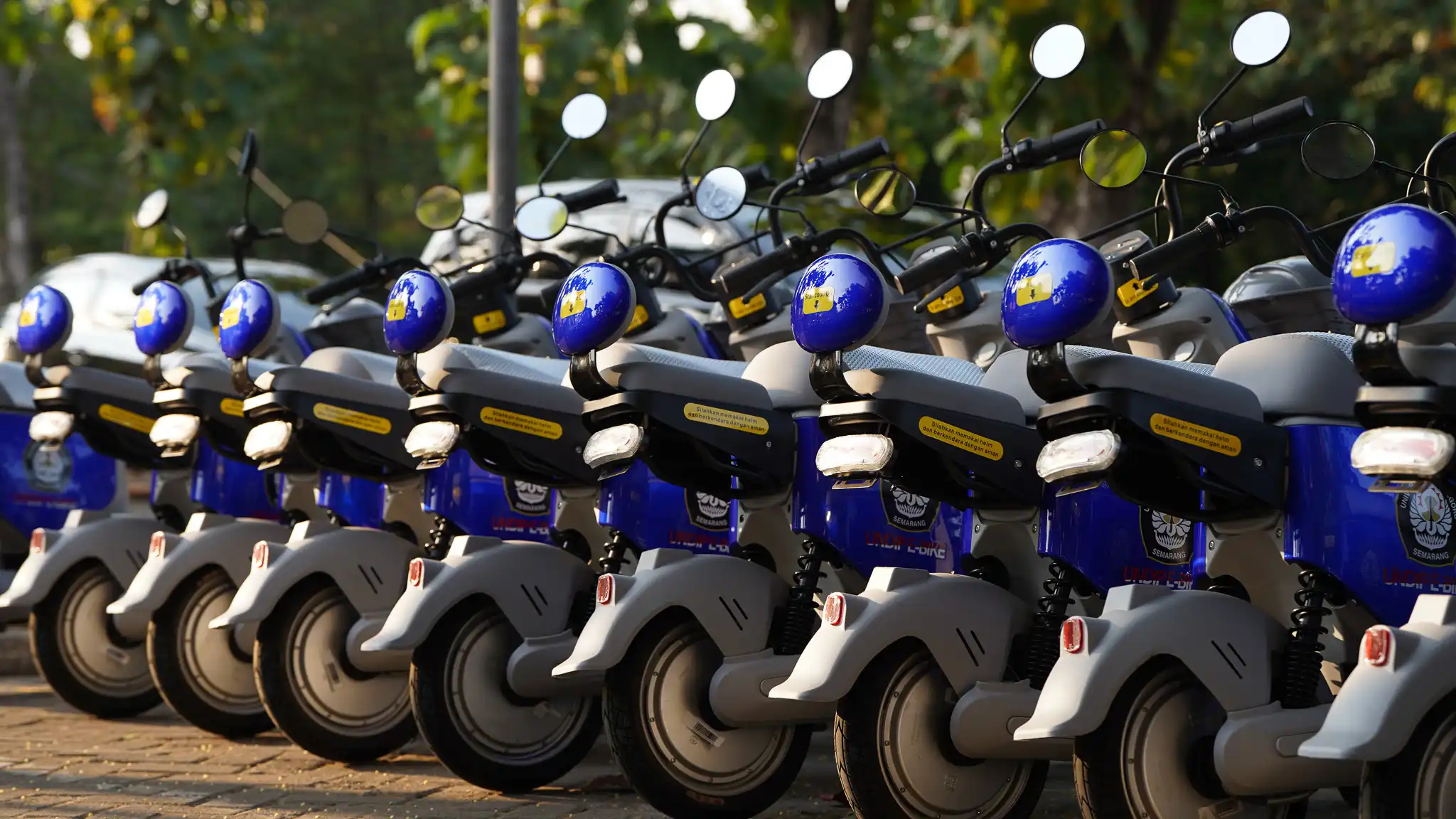

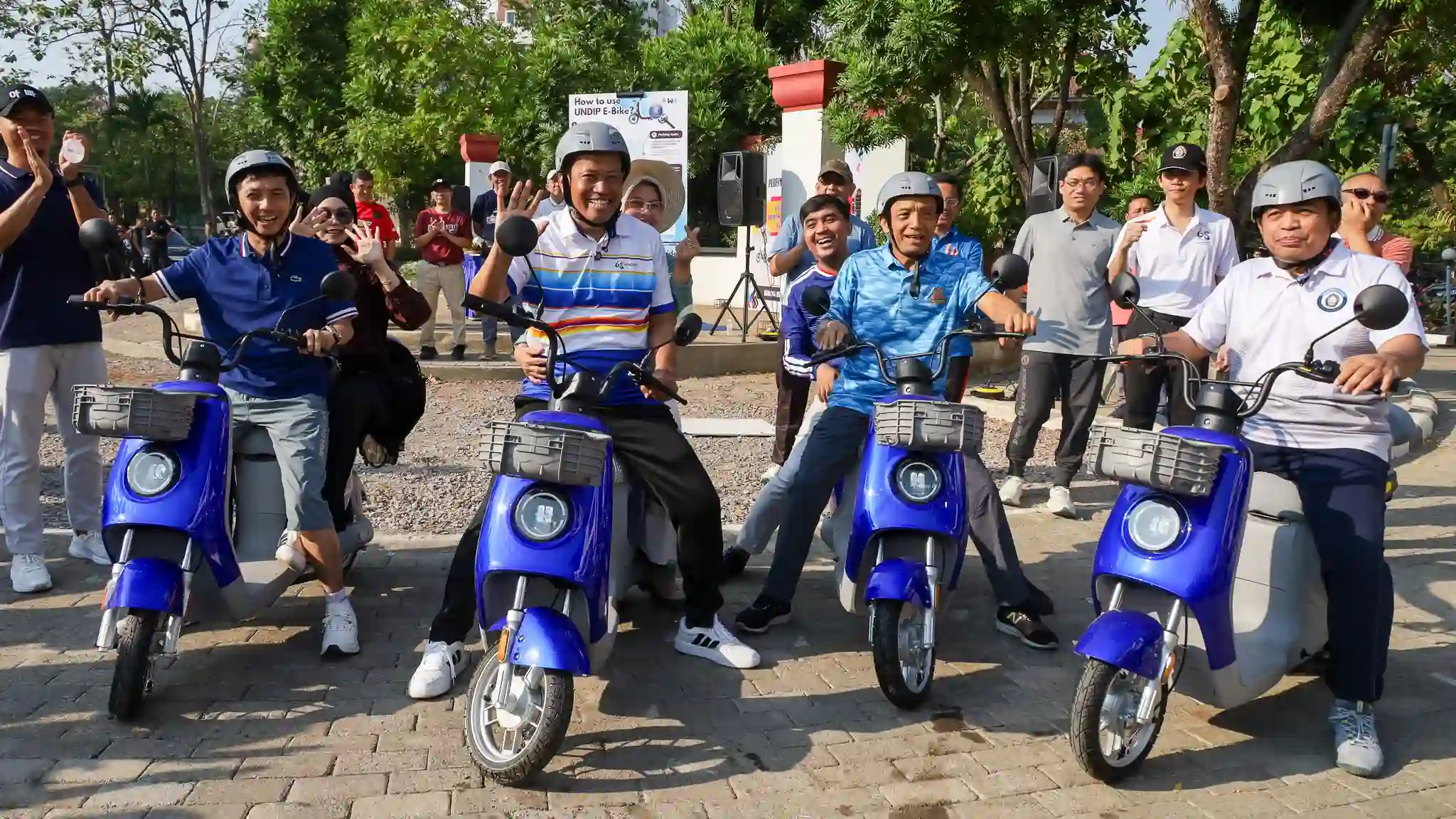
UNDIP, Semarang (4/9) – Universitas Diponegoro (UNDIP) has launched Smart Transportation: UNDIP E-Bike, an eco-friendly mode of transportation designed to support mobility for students and the university community across campus. A total of 220 e-bikes will be stationed at approximately 25 locations throughout the UNDIP campus.
The UNDIP E-Bike was officially launched on Friday, September 4, 2026, at the courtyard of the Department of Urban and Regional Planning (PWK), Faculty of Engineering, UNDIP.
UNDIP Rector, Prof. Dr. Suharnomo, S.E., M.Si., said that the provision of e-bikes is part of UNDIP’s efforts to develop a more environmentally friendly campus transportation system while supporting the university’s commitment to sustainability.
“E-Bikes support UNDIP’s commitment to GreenMetric and are part of our efforts in technology transfer. The assembly process is carried out 100% at the Vocational School,” said Prof. Suharnomo.
Director of Reputation, Partnerships, and Global Connectivity at UNDIP, Prof. Dr. Ir. Hadiyanto, S.T., M.Sc., IPU, explained that the development of UNDIP E-Bikes began with the UNDIP Rector’s visit to China the previous year and subsequent collaboration with WanWay Technology.
According to him, the provision of e-bikes is part of UNDIP’s commitment to providing transportation facilities that support the mobility of the university community while encouraging carbon emission reductions across the campus.
“These e-bikes support UNDIP’s goal of becoming a sustainable campus, particularly in terms of transportation and carbon reduction programs at Universitas Diponegoro,” explained Prof. Hadiyanto.
The UNDIP E-Bike operates as a smart transportation system with payments made through QRIS. After use, the e-bikes must be returned to designated parking points. Their use is restricted to within the UNDIP campus perimeter.
The 220 e-bikes are expected to provide a practical alternative for mobility while strengthening the implementation of smart and low-carbon transportation concepts across the university campus.
Prof. Suharnomo also emphasized that the development of facilities must be accompanied by a commitment to their maintenance and care to ensure their sustainable use. “The ability to build must go hand in hand with the ability to maintain. We must uphold sustainability so that these various developments can continue to provide benefits,” he stressed.
Through the UNDIP E-Bike initiative, the university continues to strengthen its sustainable campus ecosystem by providing transportation options that support the mobility of students and the university community while being more environmentally friendly. (Public Communication/UNDIP/Hng)