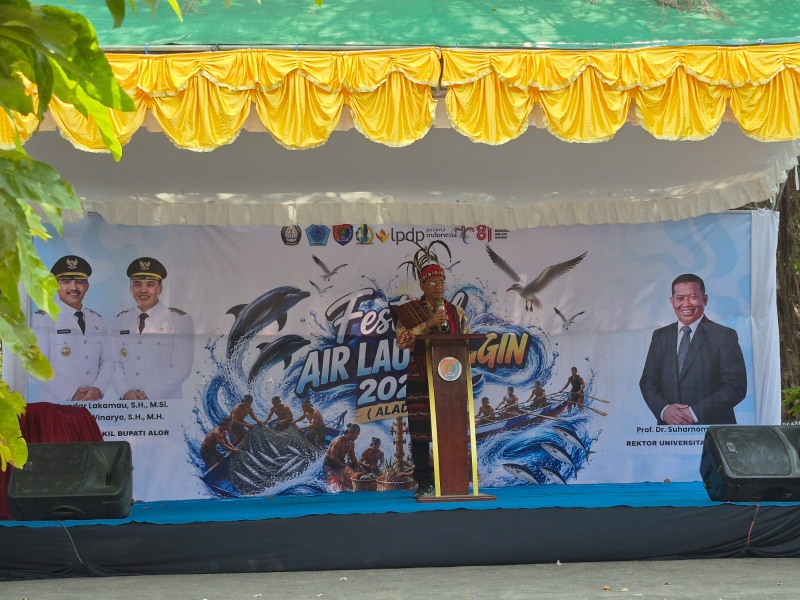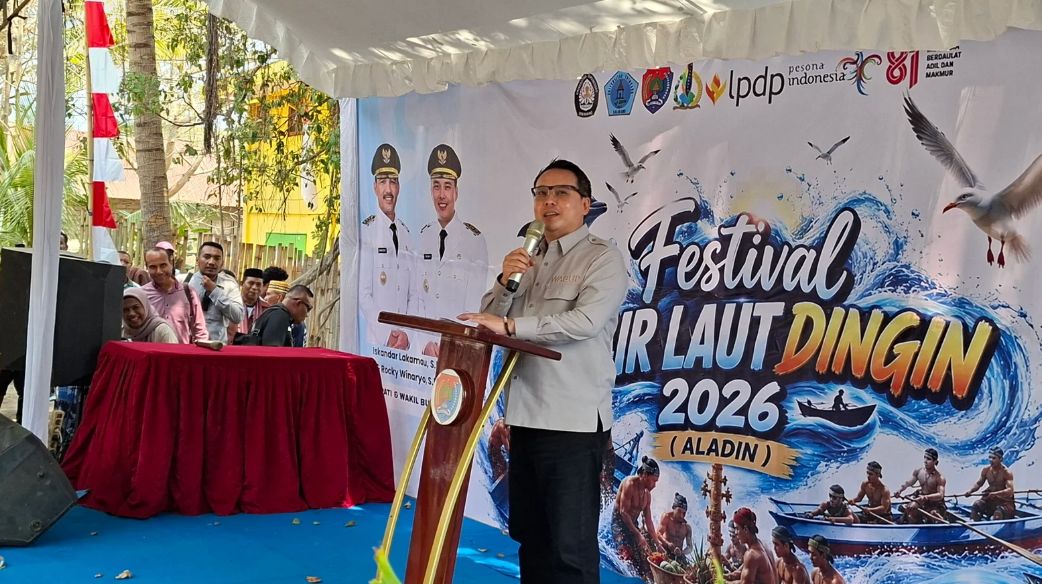
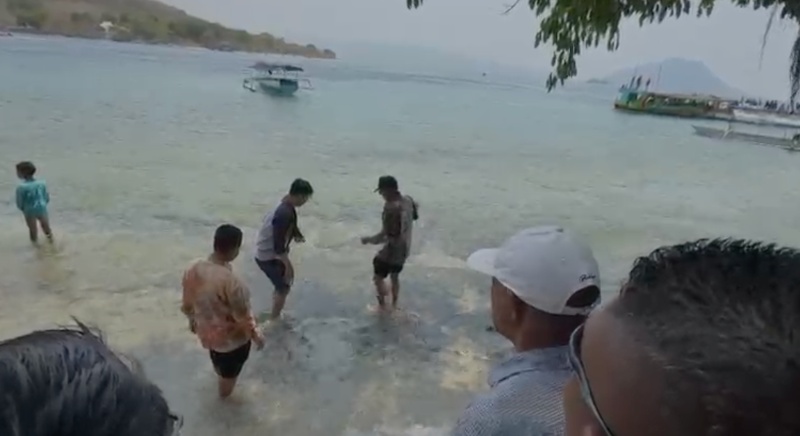
UNDIP, ALOR, NTT (13/9) – Universitas Diponegoro (UNDIP) has strengthened its contribution to science-based tourism development through a collaboration with the Alor Regency Government and Universitas Tribuana (UNTRIB) at the 2026 Cold Seawater Festival (ALaDin), held in Alor Kecil Village, Northwest Alor District, Alor Regency, on Saturday, September 9, 2026.
The festival was officially opened by Alor Deputy Regent Rocky Winaryo, S.H., M.H., and attended by representatives of UNDIP and UNTRIB leadership, local government officials, MSME representatives, and members of the local community. The collaboration among the government, higher education institutions, and the community is part of an effort to develop the potential of the Cold Seawater phenomenon as a leading tourism attraction in Alor.
The Cold Seawater phenomenon in Alor Kecil is a natural phenomenon in which deep seawater masses with extremely low temperatures rise to the surface. Known as an Extreme Upwelling Event (EUE), the phenomenon only lasts for a relatively short period of around one to two hours, making its occurrence difficult to predict.
Through research collaboration between UNDIP and UNTRIB, the phenomenon is now supported by Si ALaDin (Cold Seawater IoT Monitoring and Forecasting System), an Internet of Things (IoT)-based innovation designed to monitor water conditions and help predict the occurrence of the cold seawater phenomenon.
The UNDIP research team, led by Prof. Dr.Sc. Anindya Wirasatriya, S.T., M.Si., M.Sc. of the Department of Oceanography, Faculty of Fisheries and Marine Sciences (FPIK), successfully uncovered the phenomenon and named it “ALaDin”, an acronym for Air Laut Dingin (Cold Seawater). In oceanographic terms, ALaDin is an upwelling phenomenon, referring to the process by which cold deep-sea water masses rise to the surface.
According to Prof. Anindya, when ALaDin occurs, the sudden influx of cold seawater stuns fish, attracting groups of dolphins to prey on them. As a result, this unique event has attracted strong public interest, allowing visitors to experience the cold seawater amid Alor’s hot weather, catch stunned fish using simple equipment, and watch dolphins from the shoreline.
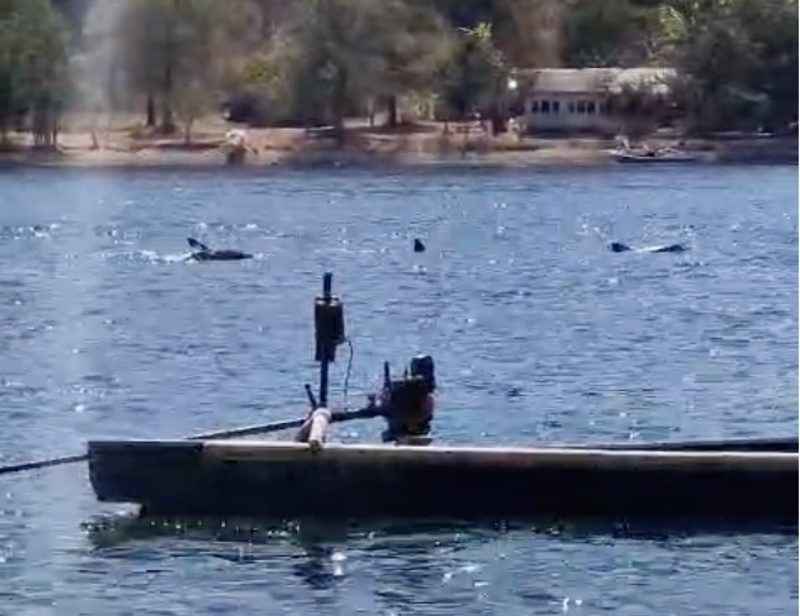
“The biggest challenge in utilizing this unique phenomenon is its brief and sudden occurrence, which makes it difficult to manage. Until now, it could only be enjoyed by residents, meaning that it had not generated economic benefits. As a result, the surrounding community has been the primary beneficiary of ALaDin,” he added.
Alor Deputy Regent Rocky Winaryo expressed his appreciation to the UNDIP and UNTRIB research teams for developing the technology. He said Si ALaDin represents an application of science and technology to support regional tourism development.
“Si ALaDin technology is proof that tourism in Alor can be developed on the foundation of modern science. With technological support, tourists have a better opportunity to experience this rare natural phenomenon,” he said.
UNDIP Vice Rector for Student Affairs, Prof. Dr. Adian Fatchur Rochim, S.T., M.T., expressed his appreciation and gratitude to the Regent and Deputy Regent of Alor, traditional leaders, and the entire community for providing UNDIP with the opportunity to contribute to the development of Alor’s economic and tourism potential.
“The Cold Seawater phenomenon in Alor is an extremely unique natural asset with great potential to be developed as a science-based tourism attraction. We aim to make this an annual tourism event for Alor and contribute to improving the local economy. We also extend our gratitude to the Regent and Deputy Regent of Alor for their support and trust in UNDIP throughout this collaboration,” said the UNDIP Vice Rector.
He also said he was deeply impressed when traditional leaders in Alor personally expressed their gratitude to UNDIP. He said the appreciation demonstrated that the university’s presence was delivering tangible benefits to the community.
“The gratitude expressed by the traditional leaders was deeply meaningful to us. It shows that this collaboration is not merely an institutional partnership but has reached and directly benefited the community. We hope UNDIP can continue to be present and make an increasingly tangible contribution to Alor in the years ahead,” he added.
Connecting Science and Tourism
The presence of Si ALaDin strengthens the concept of scientific tourism, namely tourism development that is not solely based on natural attractions but is also supported by research, technology, and scientific knowledge.
Prof. Anindya added that data generated by the monitoring system could help determine when the cold seawater phenomenon is likely to occur. Such information could provide greater certainty for tourists, tourism operators, local governments, and communities in planning tourism activities.
The use of technology is also expected to support the development of integrated tourism packages that incorporate Alor’s other attractions, ranging from marine tourism and dolphin and seabird watching to cultural attractions and community-based creative economy products.
The Alor Regency Government is encouraging the Tourism Office, district and village governments, and local tourism operators to make optimal use of Si ALaDin data. Communities and fishermen are also expected to receive education to enable them to manage the cold seawater phenomenon as a tourism product that adds value to the local economy.
Collaboration for Sustainable Tourism
The ALADIN Festival not only showcases the natural phenomenon but also features a range of cultural, sports, and creative economy activities. The program includes a fun run, traditional fishing, canoeing, traditional archery, dragon boat tug-of-war, decorated bicycle competitions, gong and drum performances, war dances, fish-catching competitions, photography, gastronomy, and exhibitions of MSME products.
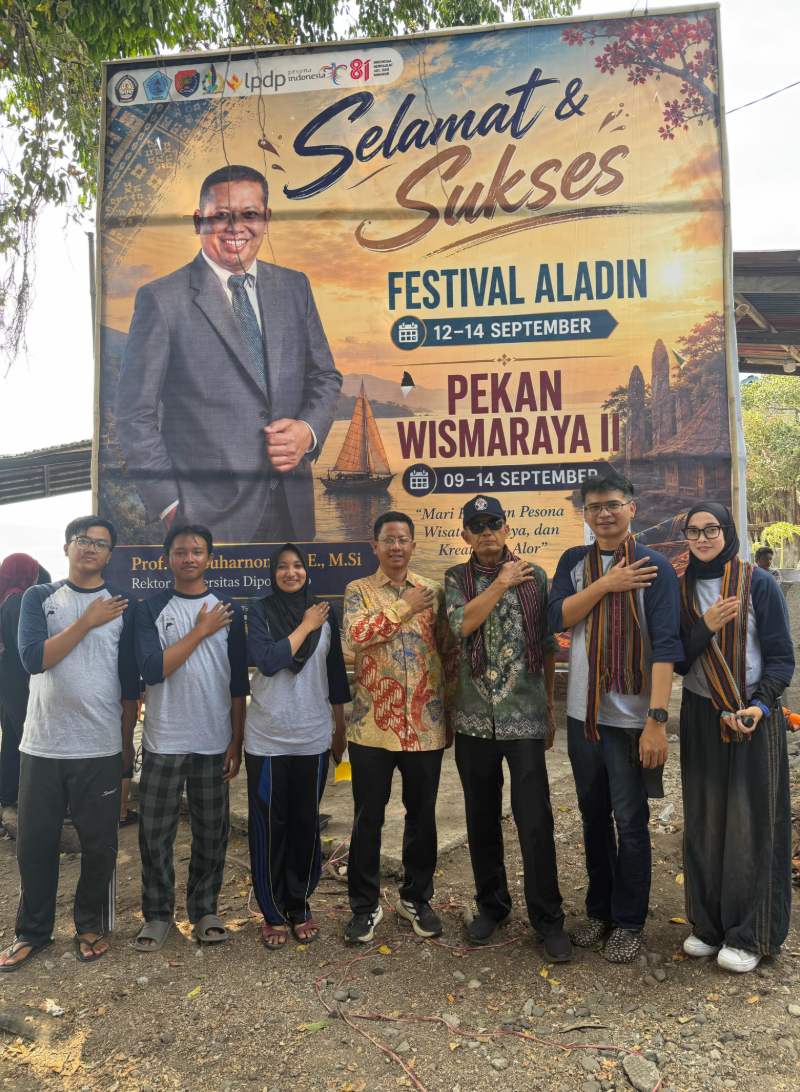
UNDIP also envisions local products such as Alor’s distinctive ikat woven fabrics, pottery, and coastal cuisine becoming part of the festival. The involvement of MSMEs is expected to ensure that tourism development delivers a direct economic impact to the community.
The Alor Deputy Regent emphasized that regional tourism development must continue to prioritize environmental sustainability. Communities and tourists are encouraged to keep beaches clean, reduce plastic waste, and apply environmentally friendly principles in tourism activities.
In regional development, the Alor Regency Government has developed the Tri Palawa concept, which integrates three priority sectors: agriculture, marine resources, and tourism. The ALADIN Festival is one implementation of this approach, combining natural resources, culture, the creative economy, and technology.
The collaboration among UNDIP, UNTRIB, and the Alor Regency Government through the Hiliriset Sinergi Strategis program, supported by LPDP funding, demonstrates the strategic role of higher education institutions in delivering innovations that can be directly applied to address the needs of communities and regions.
The development of Si ALaDin goes beyond technological innovation, opening opportunities for integration between research, tourism, community empowerment, and local economic development. Through this cross-institutional collaboration, science-based innovation is expected to help transform the Cold Seawater phenomenon from a natural attraction into a model of inclusive and sustainable science-based tourism development.
The ALADIN Festival also demonstrates how collaboration among local governments, higher education institutions, communities, and local economic actors can transform regional natural resources into both a source of knowledge and a new economic opportunity for the people of Alor. (Public Communication/UNDIP)