UNDIP, Brebes (16/9) – Universitas Diponegoro (UNDIP) continues to strengthen the contribution of higher education institutions in addressing community needs, including through its role in developing resources in the North Coast of Java (Pantura) region. One such initiative is the Solar-Biomass Seaweed Drying Unit with Air Dehumidification, an innovation developed by a team of UNDIP researchers led by Prof. Dr. Moh Djaeni, S.T., M.Eng., a lecturer at the Faculty of Engineering, UNDIP.
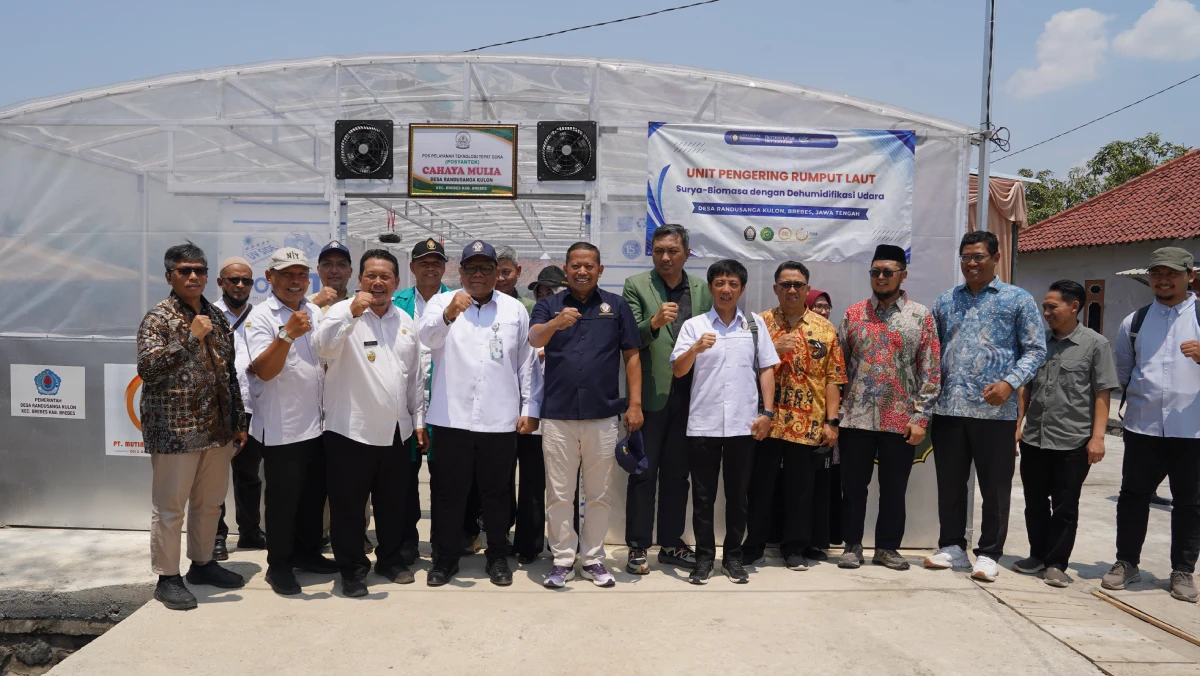
On Wednesday, September 16, 2026, UNDIP collaborated with the Directorate General of Competitiveness Enhancement of Marine and Fisheries Products (PDSPKP) of the Ministry of Marine Affairs and Fisheries of the Republic of Indonesia, as well as the Brebes Regency and district governments, to inaugurate the “Solar-Biomass Seaweed Drying Unit with Air Dehumidification” in Randusanga Kulon Village, Brebes Regency, Central Java. The UNDIP innovation is designed to improve the quality and efficiency of the seaweed drying process while increasing the added value of marine aquaculture products for coastal communities.
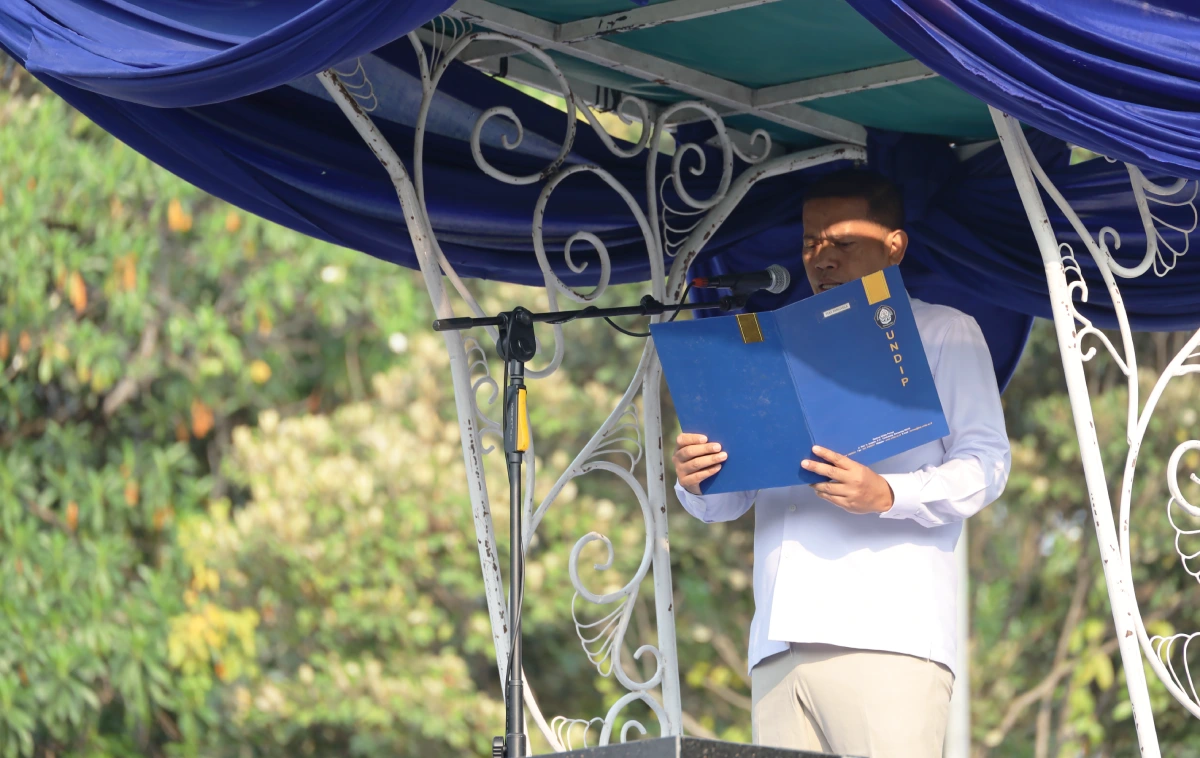
UNDIP Rector Prof. Dr. Suharnomo, S.E., M.Si. said UNDIP is committed to supporting the development of the Pantura region through its active role in helping communities by downstreaming research-based innovations. “Whatever the community needs, we will provide the best innovations free of charge whenever possible through collaboration and community service. Together, we support seaweed cultivation in Brebes. We hope dried Indonesian seaweed can be developed into consumer-accepted products. We also hope that what Prof. Djaeni and the teams from UNDIP and Unwahas have developed can be used to produce products that are currently imported, so that we can produce them domestically and create greater added value,” he said.
Addressing Seaweed Processing Challenges in Coastal Brebes
The coastal area of Central Java, including Brebes, spans at least 750 kilometers and requires significant attention to address environmental, social, economic, and other challenges.
Central Java Assistant for Economic and Development Affairs Urip Sihabudin, S.H., M.H., representing Central Java Deputy Governor Taj Yasin Maimoen, expressed his appreciation for the initiative by UNDIP and Unwahas and hoped that the technological innovation could also be implemented in other areas across Central Java.
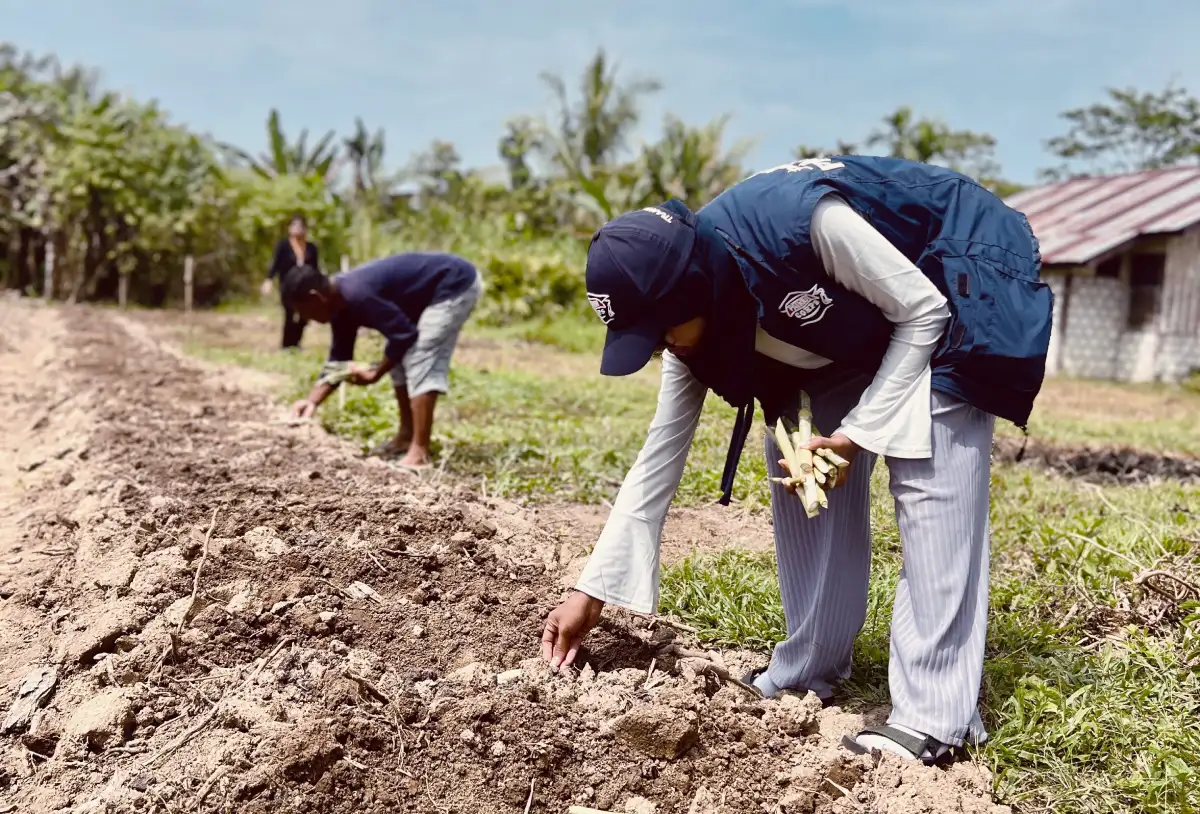
Representing the Brebes Regent, Brebes Assistant Regional Secretary for Economic and Development Affairs Ineke Tri Sulistyowaty, S.K.M., M.Kes., explained that seaweed is one of Brebes Regency’s main commodities. However, local communities still face limited access to technology, resulting in seaweed being sun-dried along roadsides and in village aquaculture areas. This method can reduce product quality due to contamination by dust, water, animal waste, and other pollutants.
“With this seaweed drying unit, we hope to improve the quality of processed seaweed products. In the future, we also request that this program continue through mentoring and training provided by the university for farmers and seaweed-based MSME operators,” Ineke said.
“We extend our highest appreciation to everyone who has created an economic innovation that has an impact on the community,” Ineke said while delivering remarks on behalf of the Brebes Regent.
Seaweed cultivation is managed jointly with local MSME operators under the guidance of Randusanga Kulon Village Head H. Afan Setiono, S.E., M.Si.
UNDIP Innovation to Increase the Value of Seaweed Aquaculture Products
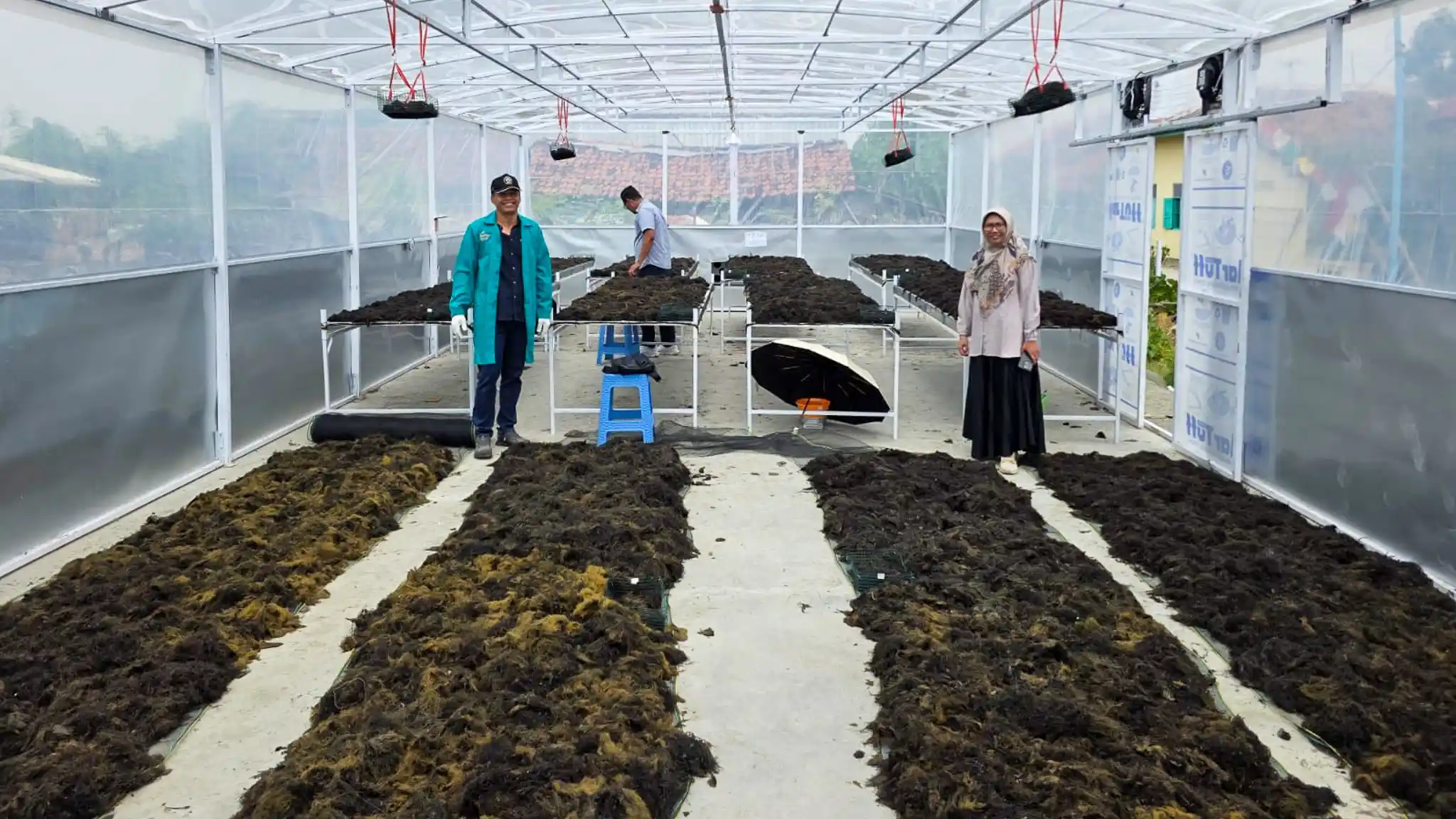
The seaweed drying technology developed by the UNDIP team has a capacity of 2,000 kilograms. With this unit, seaweed farmers can reduce their dependence on weather conditions and sunlight during the drying process, resulting in more hygienic products. The unit uses solar energy as its primary heat source and biomass as a supplementary heat source, with the drying process conducted in an enclosed space to minimize contamination.
The drying unit uses a zeolite adsorber to reduce air humidity before the air is heated and circulated into the drying chamber. A blower and an exhaust fan provide air circulation within the chamber, distributing hot airflow evenly across the material. The unit is equipped with an RH meter to measure humidity and an anemometer to measure airflow velocity. Using the unit, the seaweed drying process can be completed in eight hours, compared with the 18 hours typically required through conventional sun-drying.
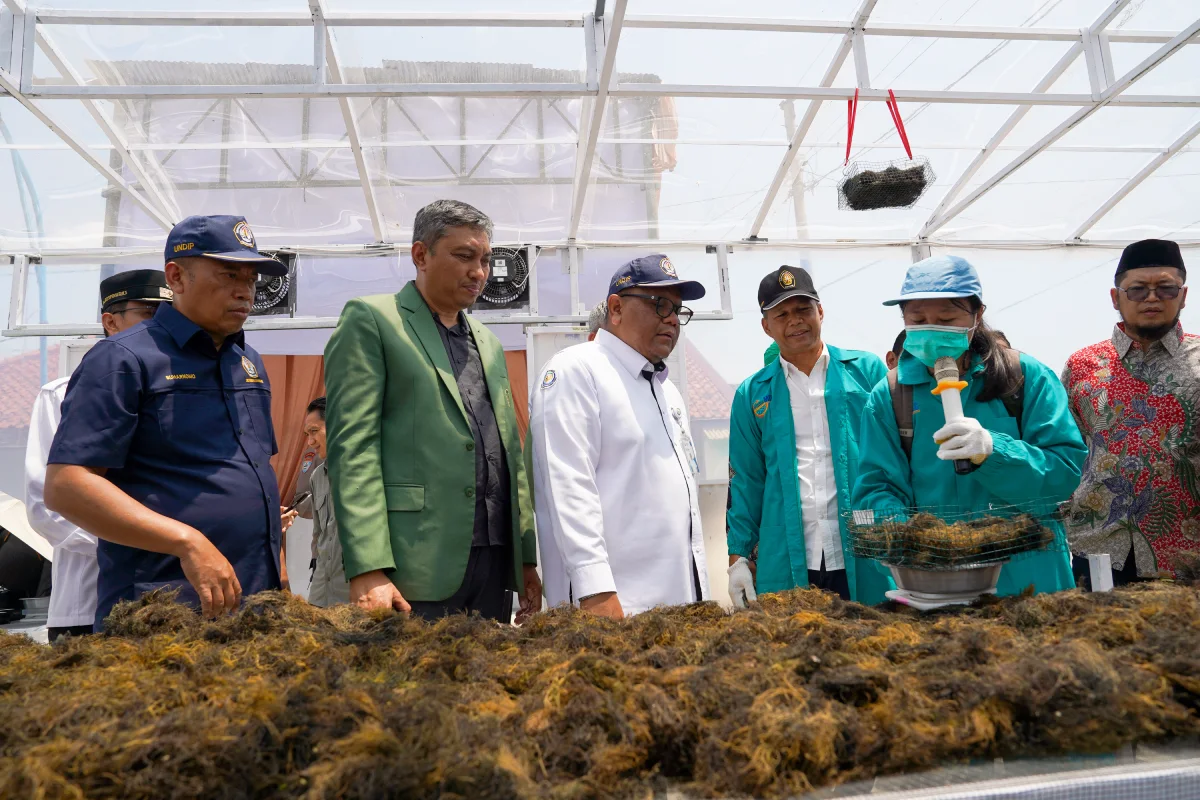
The downstreaming of this innovation was subsequently introduced to residents of Randusanga Kulon Village, Brebes Regency, by a team of researchers from Diponegoro University (UNDIP) in collaboration with researchers from Universitas Wahid Hasyim Semarang (Unwahas) and industry partner PT Mutiara Global Industry through the “Research Downstreaming Program for Priority and Strategic Research–SINERGI.”
Rector of Universitas Wahid Hasyim Semarang (Unwahas) Prof. Dr. H. Helmy Purwanto, S.T., M.T., IPM., also expressed his support for the application of research outcomes developed by higher education institutions. “No matter how small an innovation may be, we should make it available so that it can benefit the community,” he said.
Inauguration of the Solar-Biomass Seaweed Drying Unit and GEMARIKAN Program
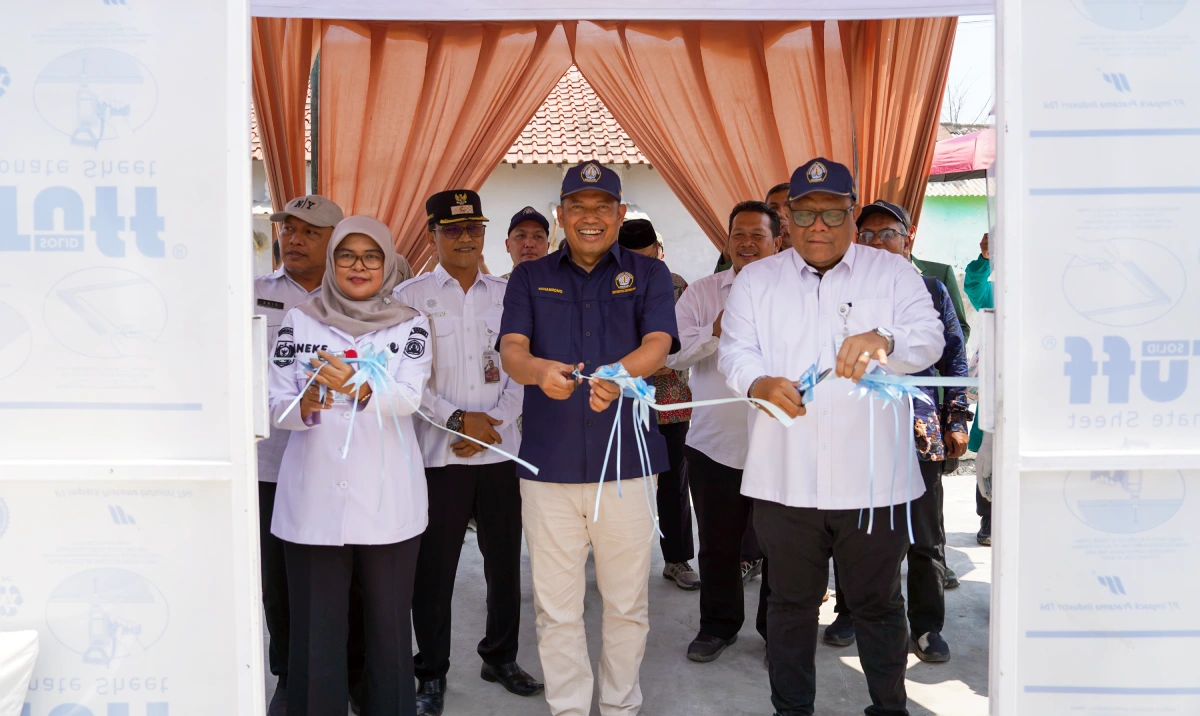
The Solar-Biomass Seaweed Drying Unit with Air Dehumidification in Randusanga Kulon Village, Brebes Regency, was inaugurated by UNDIP Rector Prof. Dr. Suharnomo, S.E., M.Si., together with the Director General of PDSPKP, represented by PDSPKP Director of Processing Budi Yuwono, S.STPi., M.P., and the Brebes Regent, represented by Brebes Assistant Regional Secretary for Economic and Development Affairs Ineke Tri Sulistyowaty, S.K.M., M.Kes.
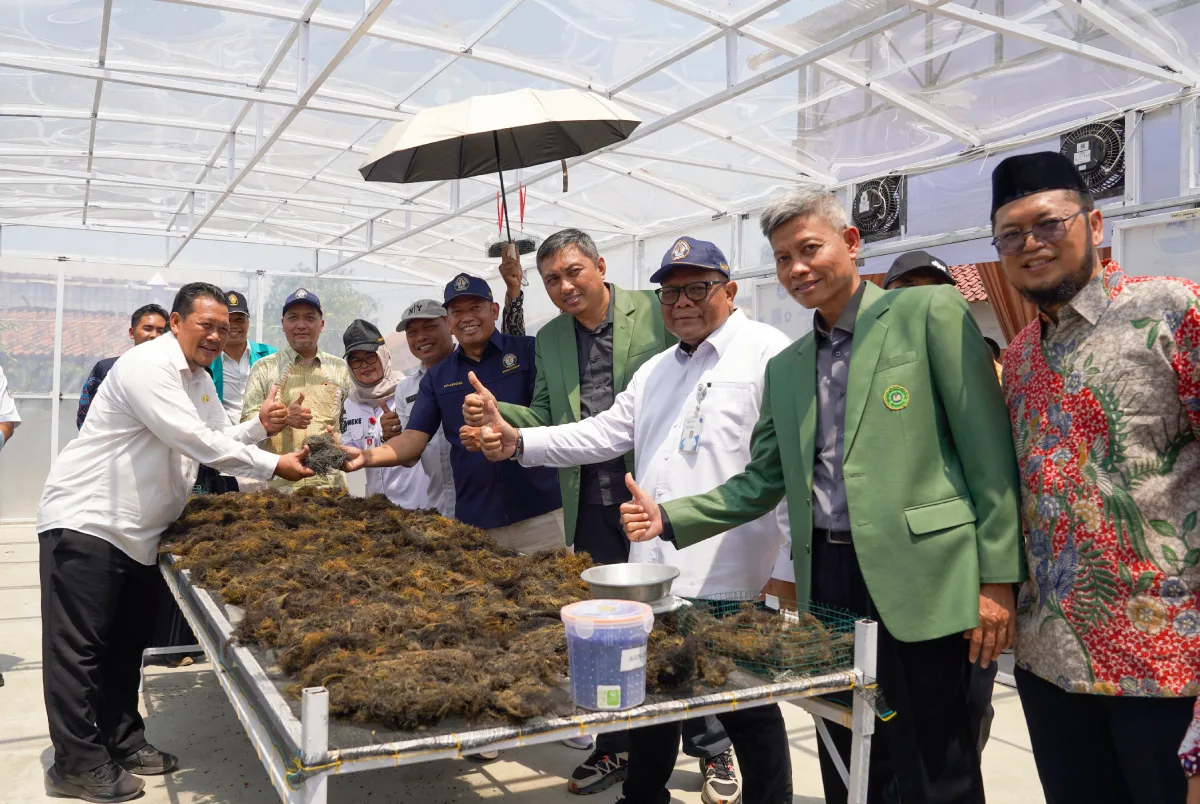
The event continued with a site visit and a demonstration of seaweed-drying technology by researchers from UNDIP’s Department of Chemical Engineering. At the Cahaya Mulia Appropriate Technology Service Center (Pos Pelayanan Teknologi Tepat Guna / Posyantek) in Randusanga Kulon Village, Brebes, seaweed at various stages of drying was displayed, ranging from partially dried seaweed with a dark green color to fully dried seaweed with a grayish-green color.
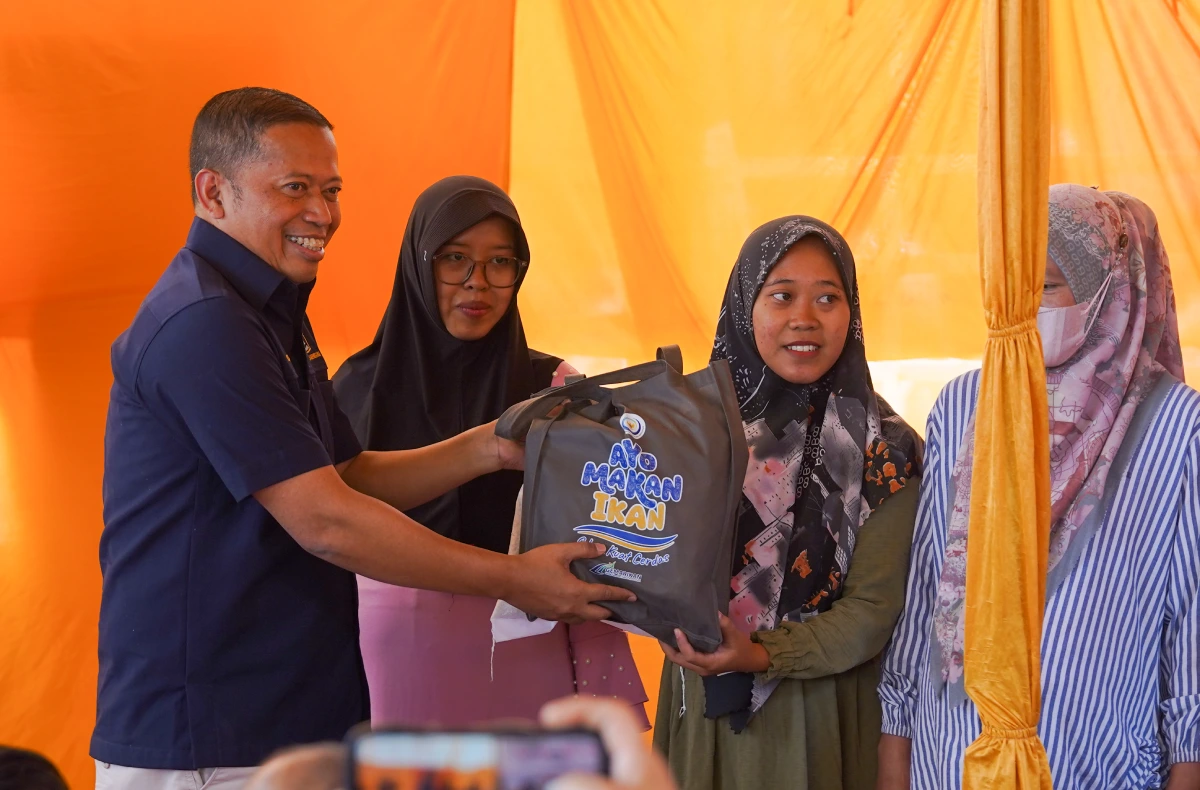
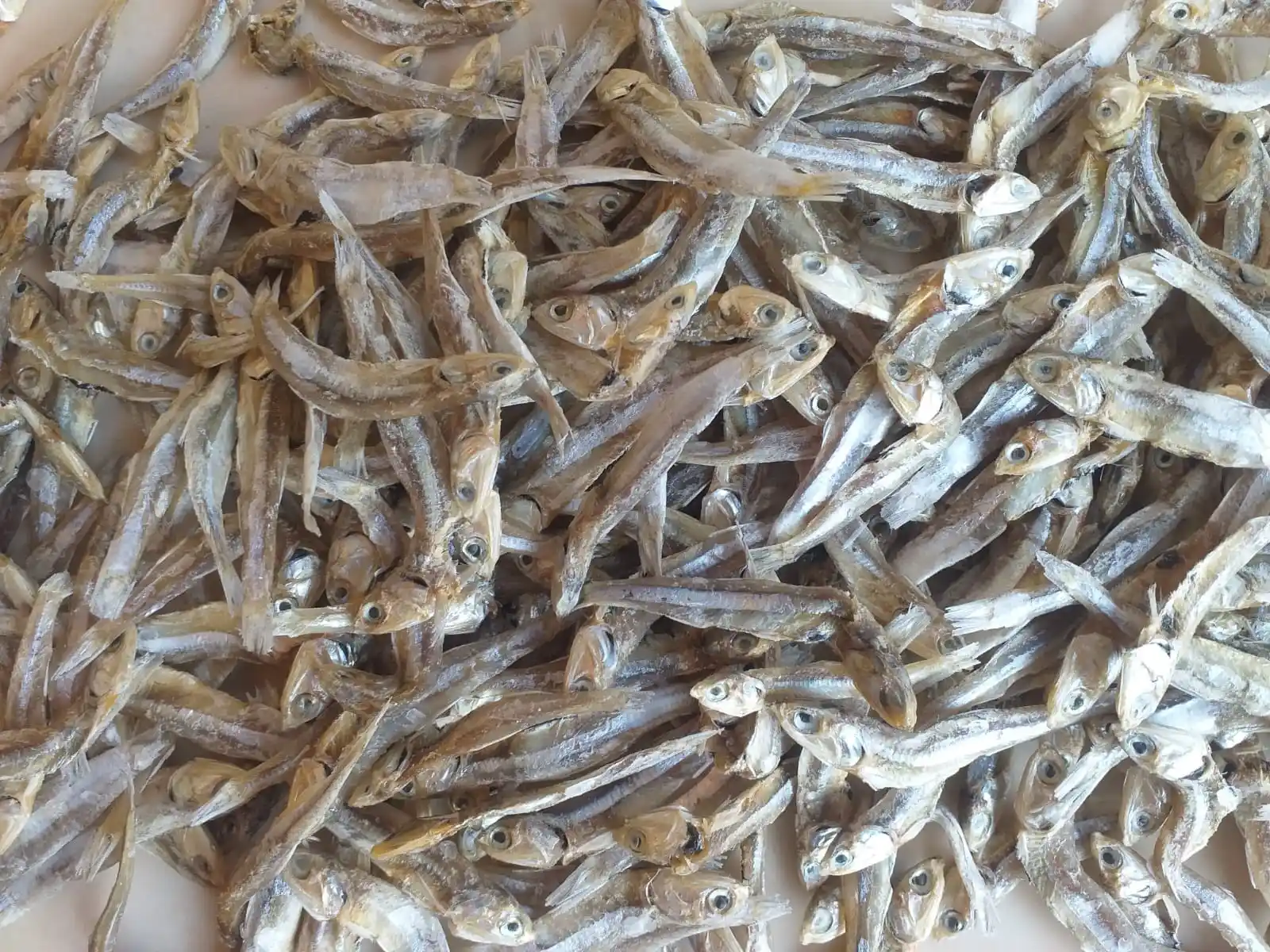
The series of activities also included the Gerakan Memasyarakatkan Makan Ikan (GEMARIKAN), or Fish Consumption Promotion Movement, in collaboration with the Directorate General of PDSPKP of the Ministry of Marine Affairs and Fisheries of the Republic of Indonesia and the Central Java branch of the Indonesian Fisheries Scholars Association (ISPIKANI). The program is an educational initiative that raises public awareness of the importance of fish consumption in improving family nutrition and supports efforts to prevent stunting.
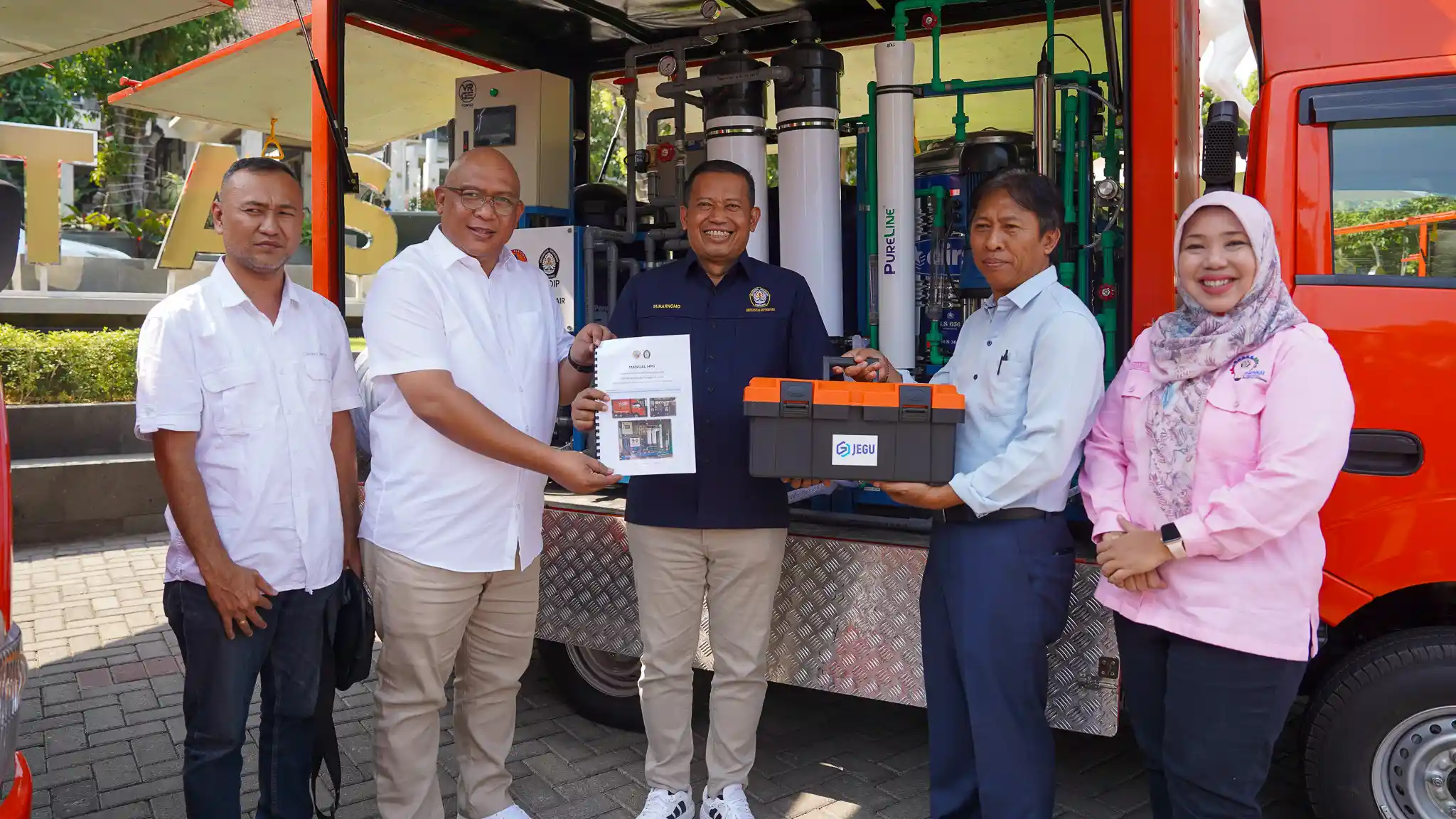
UNDIP Rector Prof. Dr. Suharnomo, S.E., M.Si. and Dean of the UNDIP Faculty of Engineering Prof. Dr. Ir. Jamari, S.T., M.T., IPU., ASEAN Eng. also participated in the symbolic handover of nutritious fish product packages to community beneficiaries of the GEMARIKAN program.
Also attending the event were the Central Java Deputy Governor, represented by Central Java Assistant for Economic and Development Affairs Urip Sihabudin, S.H., M.H.; Central Java Regional Secretary Sumarno, S.E., M.M.; officials from the Brebes Regency Government; faculty members from UNDIP and Unwahas; and the Head of the Bank Indonesia Representative Office. Collaboration among higher education institutions, the central government, regional governments, partners, and communities is expected to ensure that innovations do not remain at the research stage but instead develop into solutions that deliver tangible benefits. From UNDIP for the community, all parties are working together to develop everyday consumer products, reducing the need for imports and contributing to the local economy. (Public Communication/UNDIP/Tts)