


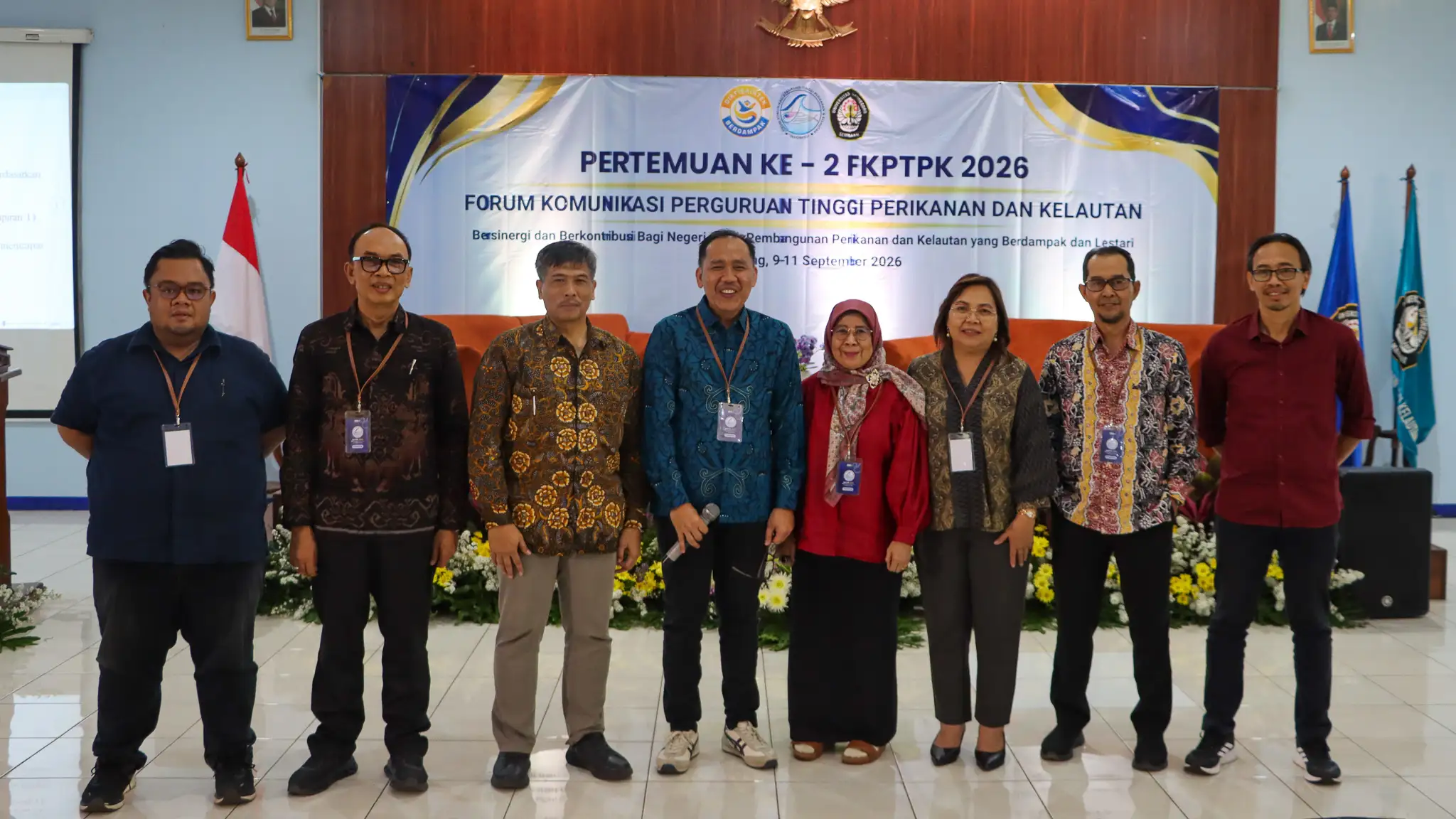

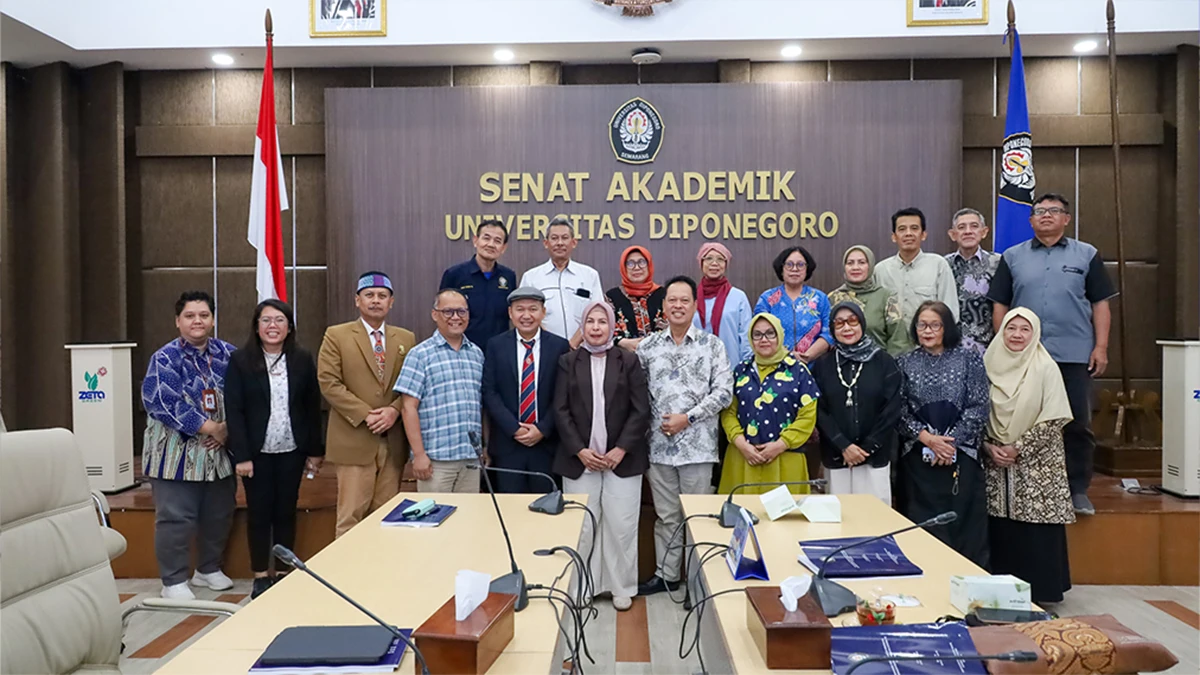
UNDIP, Semarang (18/8) – Universitas Diponegoro (UNDIP) held a scientific paper presentation by a professor candidate, organized by the UNDIP Board of Professors, on Tuesday, August 18, 2026, at the Academic Senate Meeting Room, SA-MWA Building, UNDIP Tembalang Campus.
On the occasion, a lecturer at the Department of Politics and Governance Studies, Faculty of Social and Political Sciences (FISIP) UNDIP, Dr. Sos. Dra. Fitriyah, M.S., presented a scientific paper entitled “Electoral Systems, Engineering, and the Operation of Electoral Political Informality in Indonesian Elections.” The paper represents a synthesis of Dr. Fitriyah’s more than two decades of research on electoral systems and democracy in Indonesia.
In her paper, Dr. Fitriyah examined the paradox of Indonesia’s electoral democracy, in which formal and competitive electoral procedures have been established but have not yet been fully accompanied by the strengthening of substantive democracy. Amid this process, various forms of political informality, including money politics, botoh (political investors), local strongmen, and political dynasties, continue to develop.
According to Dr. Fitriyah, political informality cannot simply be understood as individual misconduct. She identified a relationship between electoral system design, weak political party institutionalization, and the formation of incentive structures that encourage the use of informal strategies in electoral competition.
One focus of her research is how changes in electoral system design can influence the behavior of political actors. Electoral systems with increasingly intense competition among candidates, for example, can result in higher costs of competition. When political parties have yet to strengthen their roles in candidate recruitment and political representation fully, this can create opportunities for informal practices to develop.
“Informality is not an anomaly, but a predictable consequence of electoral system choices,” Dr. Fitriyah said during her presentation.
Dr. Fitriyah noted that the accumulation of such informal practices can contribute to democratic erosion. She therefore proposed several recommendations to improve electoral system design, including adjustments to electoral district magnitude, the adoption of a semi-open list system, stabilization of vote-conversion formulas, and stronger public funding for political parties linked to the performance of their candidate recruitment and cadre development functions. According to Dr. Fitriyah, electoral system improvements do not necessarily require replacing the entire system. Reform can instead focus on developing a more context-sensitive design to reduce the costs of competition, strengthen the role of political parties in candidate recruitment and cadre development, and enhance oversight of informal practices. (Public Communication/UNDIP/Hng)