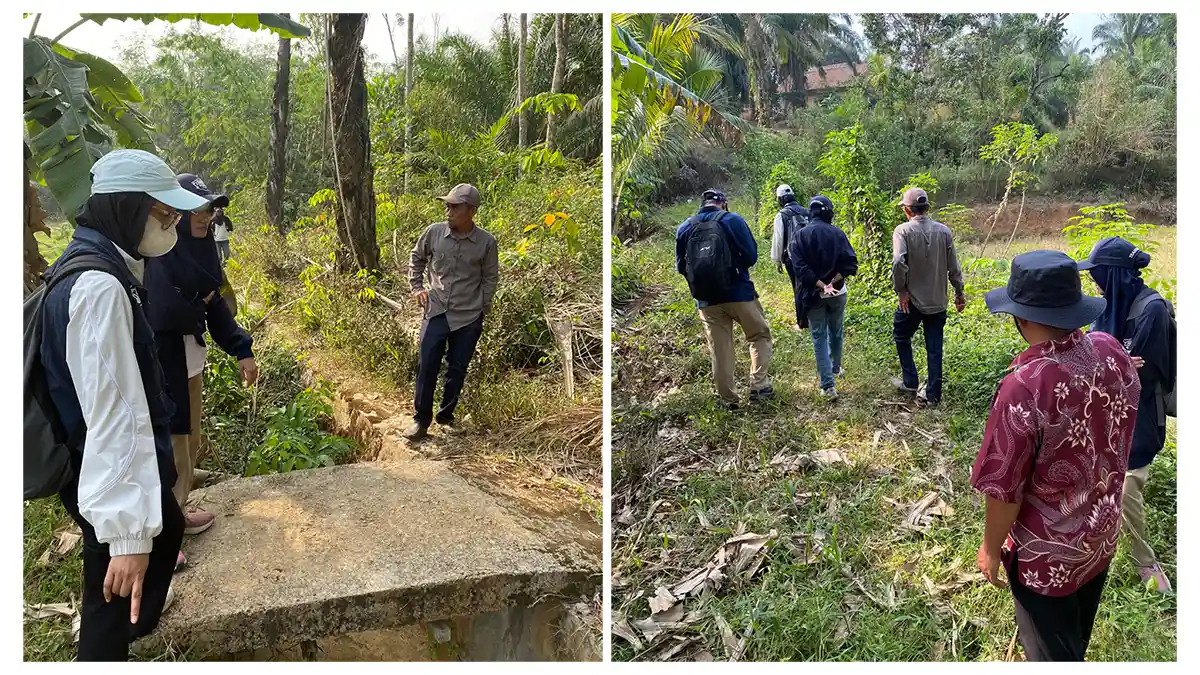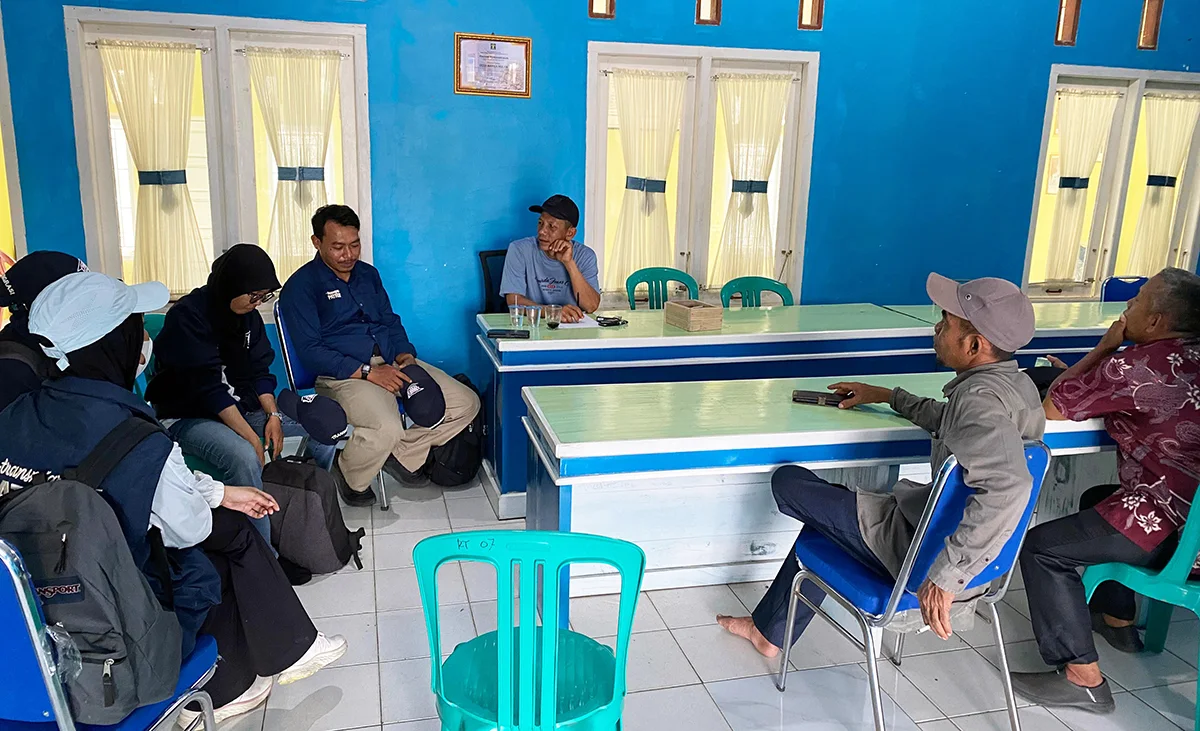

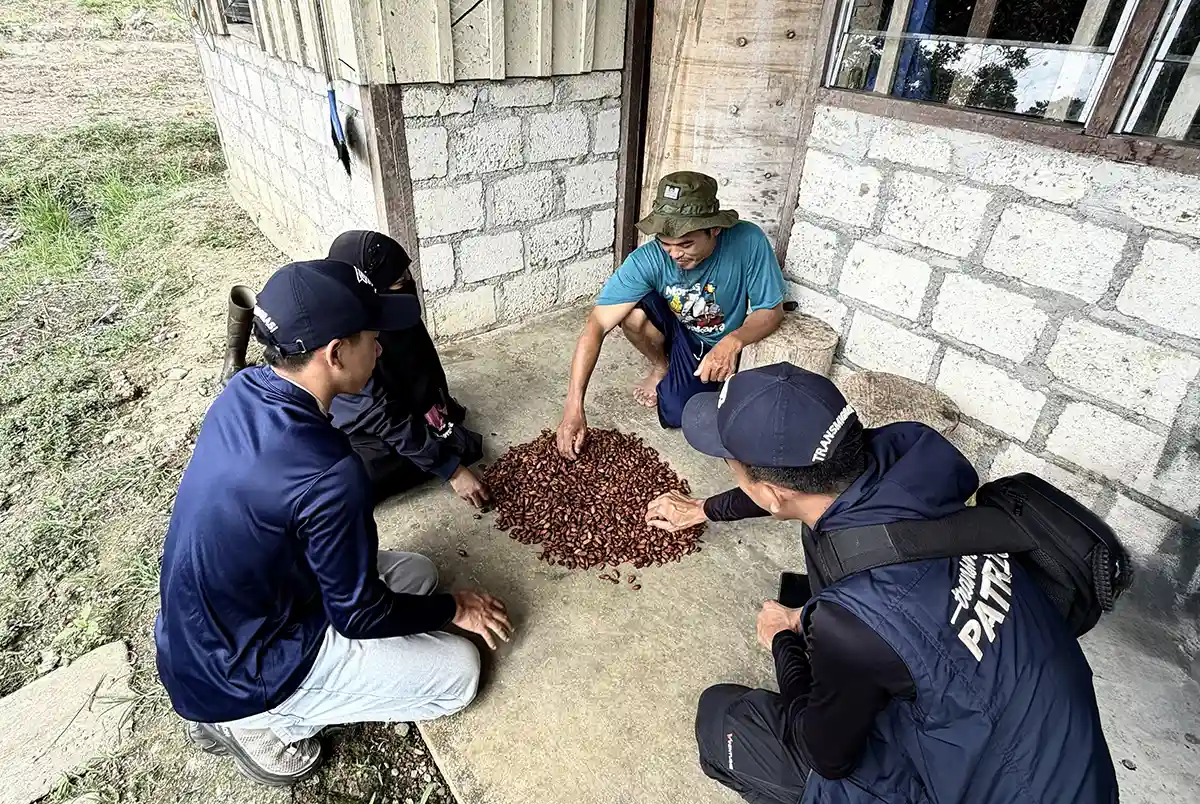
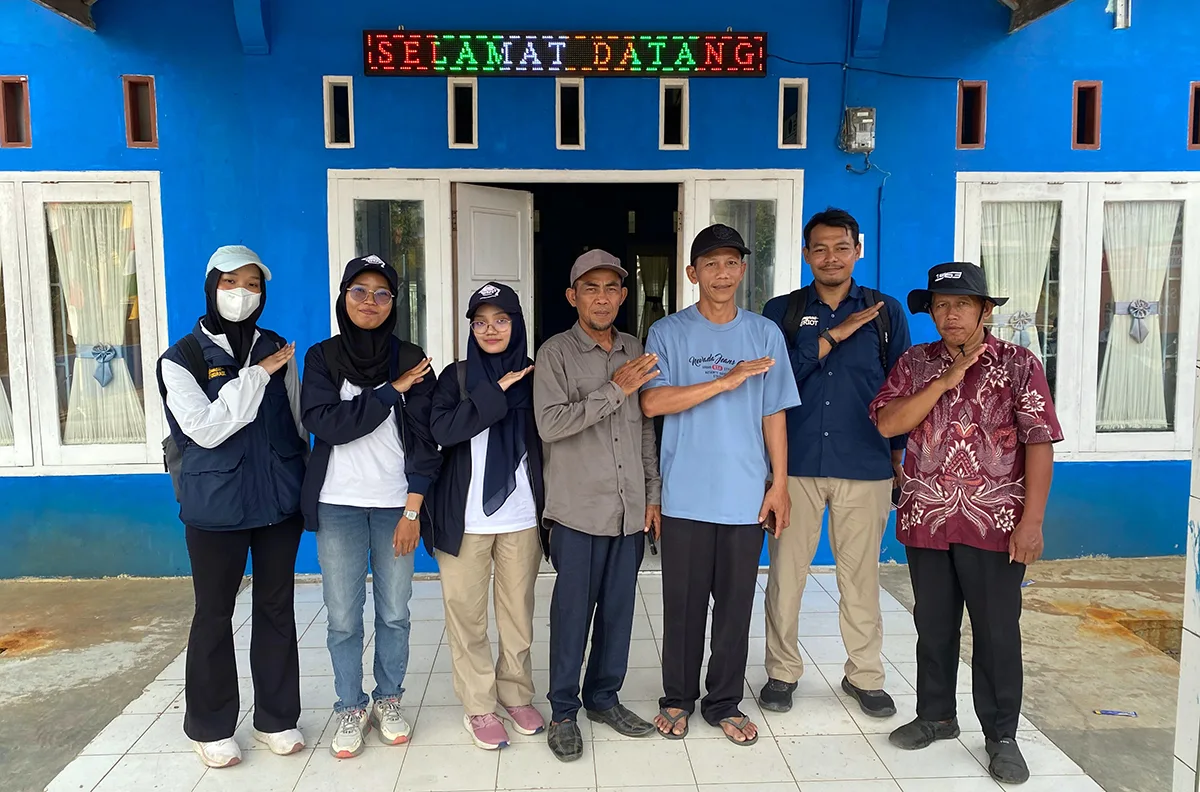
UNDIP, Kikim, Lahat Regency (16/9) – Team 1 of the Patriot Expedition Team (TEP) at Universitas Diponegoro (UNDIP), assigned to the Kikim Transmigration Area (KT), South Sumatra, conducted a village potential survey in Marga Mulya Village, East Kikim District, Lahat Regency, on Monday (31/8). The activity was part of the initial stage of mapping the potential and needs of communities in the Kikim transmigration area.
The survey was conducted by gathering information directly from village officials and residents regarding socioeconomic conditions, agricultural potential, and the availability of supporting facilities for agricultural activities. The information served as an initial reference for the team to understand the area’s characteristics before designing assistance programs tailored to the community’s needs.
During the information-gathering process, the team held discussions with Hamdan Sadikin, Chairman of the Village Consultative Body (BPD) and a farmer from Marga Mulya Village. Hamdan explained that agriculture is one of the community’s main activities. According to him, when weather conditions are favorable, farmers can harvest up to three times a year. “Rice farmers in our village usually harvest twice a year, and sometimes up to three times if the weather conditions are favorable,” Hamdan said.
Based on the initial information collected, Marga Mulya Village has approximately 756 households and a population of 2,460. Around 80 percent of the village’s population consists of transmigrant communities. In the agricultural sector, approximately 90 farmers cultivate around 50 hectares of land. This potential has become one of the sectors receiving attention in the mapping process conducted by TEP UNDIP.
However, agricultural activities still face several challenges, including the availability and distribution of irrigation water. Marga Mulya Village has one borewell in the rice field area, but it is located downstream, which limits its effectiveness in meeting the irrigation needs of the agricultural land. In addition to agricultural infrastructure, the team also gathered information on the community’s economic conditions. Based on initial survey data, farmers’ average income is around Rp2.5 million over three months.
These findings are still part of the initial data that requires further analysis to provide a more comprehensive picture of the agricultural and economic conditions of the Marga Mulya community. One potential development initiative currently being explored by TEP UNDIP Team 1 KT Kikim is the use of Solar-Powered Water Pumps (PATS) to support agricultural irrigation infrastructure in the transmigration area.
The program is one of the flagship initiatives of TEP UNDIP Team 1 KT Kikim under the supervision of UNDIP lecturer Dr. Ir. Jaka Windarta, M.T., IPU, ASEAN Eng. However, the implementation of PATS remains at the assessment and field survey stage. Data collection is underway to assess water-source conditions, irrigation needs, land characteristics, and community readiness. These stages are necessary to ensure that any technology solution developed can be adapted to local conditions and community needs.
The proposed development of irrigation infrastructure using Solar-Powered Water Pumps (PATS) has drawn attention from the Marga Mulya community, particularly among farmers. For residents, improved water availability is expected to help maintain land productivity and sustain agricultural activities.
Marga Mulya Village Secretary Jazuli also provided information on the village’s conditions and potential to the UNDIP Patriot Expedition Team. Jazuli said that support for irrigation infrastructure is an important need for farmers, particularly in maintaining water availability on agricultural land. “We hope that if the water infrastructure for the rice fields can be improved, farmers will also have an easier time managing their water needs. If there is sufficient water, we can manage our rice fields with greater confidence and hope for better harvests,” Jazuli said.
The survey in Marga Mulya Village is part of an effort to map the Kikim transmigration area, which comprises around 21 transmigration villages spread across East Kikim, Central Kikim, South Kikim, West Kikim, and Pseksu districts. The diverse characteristics of each village make the mapping process important for identifying the potential and needs of each area. Through direct surveys, TEP UNDIP seeks to obtain data based on actual field conditions and the experiences of local communities, who directly encounter various development challenges.
For TEP UNDIP Team 1 KT Kikim, the survey in Marga Mulya Village marks an initial step in understanding both the potential and development challenges in the transmigration area. The data and information collected in the field will subsequently serve as material for further assessment in determining the direction of programs expected to benefit the community.
Through a data-driven and community-participatory approach, UNDIP, through the Patriot Expedition Team, continues to promote the development of transmigration areas by taking into account local conditions, needs, and community characteristics. This effort also reflects the university’s commitment to advancing the Sustainable Development Goals (SDGs), particularly SDG 1 (No Poverty), SDG 7 (Affordable and Clean Energy), and SDG 8 (Decent Work and Economic Growth). (Public Communication/UNDIP)